Septic arthritis is an inflammatory condition of the joints caused by a bacterial or fungal infection that requires urgent medical intervention. The disease can rapidly lead to severe inflammation and joint damage. Early diagnosis is of critical importance. In this article, you will find everything you need to know, including the symptoms, diagnosis, and treatment of septic arthritis.
What is Septic Arthritis?
Definition of Joint Infection
Beginning with microorganisms entering the joint space, this condition rapidly creates inflammation in the joint fluid. While bacteria are the most common cause, fungi and rarely viruses can also lead to septic arthritis infection.
The disease usually affects a single joint. In adults, it is most frequently seen in the knee (50%), hip (25%), and shoulder (15%) joints. Multiple joint involvement is around 10% in children and 20% in adults. Large joints such as the knee, hip, and shoulder are the most commonly affected areas.
Seen in approximately 2 out of 100,000 cases, this disease is considered an orthopedic emergency. The infection progresses rapidly within a few hours. It can cause severe damage to the joint cartilage. Irreversible loss of joint function develops in 25-50% of bacterial arthritis cases. Even in 75% of recovered cases, functional impairment in the affected joint remains permanent.
Routes of Transmission of the Disease
Microorganisms reach the joint through three different pathways. Hematogenous spread is the most common route of transmission. Bacteria entering the bloodstream from an infection in another part of the body are transported to the joint via the blood circulation. Bacteria can enter the blood even during daily activities such as toothbrushing. A healthy immune system destroys these bacteria.
Direct inoculation is the second pathway. Microbes can enter the joint directly as a result of injections into the joint, surgical procedures such as arthroscopy, or penetrating trauma. Therefore, the risk of infection after joint prosthesis surgeries is high.
Spread by contiguity is the third form of transmission. Bacteria can pass into the joint from an osteomyelitis focus located in an adjacent bone or from soft tissue infections around the joint. This form of spread is seen less frequently compared to others.
Groups at Risk
In 47% of septic arthritis cases, another joint disease is pre-existing. Conditions such as rheumatoid arthritis, gout, and osteoarthritis pave the way for infection. Rheumatoid arthritis patients constitute the highest risk group due to both existing joint damage and the use of immunosuppressive drugs.
People with weakened immune systems carry a high risk. Diabetes, kidney failure, those undergoing cancer treatment, and HIV patients fall into this group. Individuals receiving corticosteroid therapy are similarly vulnerable.
The age factor is important. The risk increases because immune mechanisms are not yet fully developed in infants and children. In elderly individuals, the immune system weakens.
Patients with joint prostheses, intravenous drug users, and those who have recently suffered a joint injury are at risk. However, 22% of septic arthritis cases have no medical risk factors. The disease can develop even in healthy individuals.
Despite advanced antibiotic treatments, death rates due to septic arthritis have been reported as 5-15%. Therefore, early diagnosis is of vital importance.
What Are the Symptoms of Septic Arthritis?
Sudden-Onset Joint Pain
Septic arthritis symptoms appear suddenly and intensify in a short time. The most prominent finding is the feeling of intense pain in a single joint. The pain is so severe that it negatively affects daily life. It increases with movement and in some cases continues even at rest.
Mostly the knee or hip joint is affected. It has a throbbing pain character. It shows a gradual increase in intensity. The person may have difficulty falling asleep due to the pain.
Fever and Chills
High fever is a systemic effect of the infection. Body temperature rises between 38-40°C. Fever is seen in 40 to 60% of cases. In children, this rate reaches 80%.
Because bacteria attack the body, the body begins to issue warnings. A state of chills and shivering occurs. Weakness and general fatigue accompany it. Energy loss is experienced while the body fights the infection. Loss of appetite is particularly pronounced in the elderly and children. An increase in heart rate is also observed.
Swelling and Redness in the Joint
Edema forms around the affected joint. The swelling is generally soft in structure, and in some cases, it may appear in firmer forms. Edema may show spread toward the surroundings of the joint.
Regional redness occurs. The skin color around the joint begins to change. In the progressing process, this redness can turn into bruising. There is an increase in temperature in the joint. Especially in superficial joints like the knee, the skin appears shiny and tense.
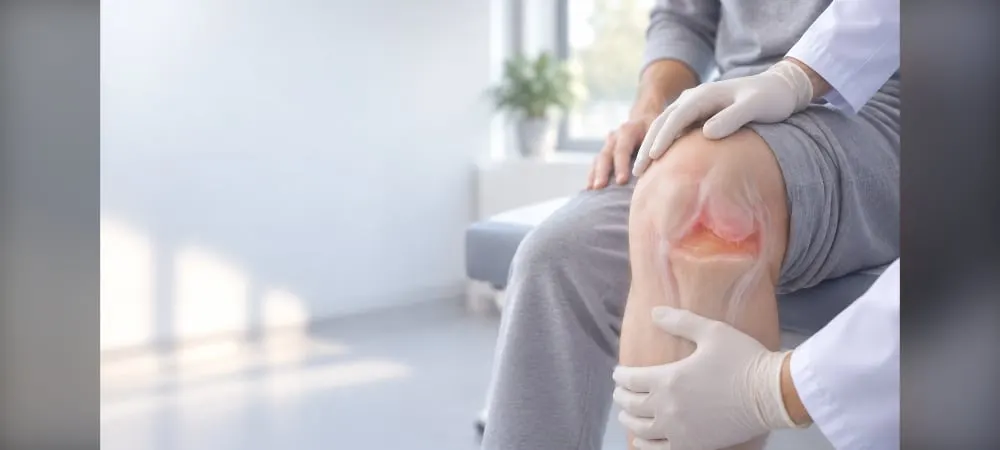
Physical examination detects redness, swelling, and increased temperature when compared to other joints. There is tenderness upon palpation.
Restriction of Movement
The patient has difficulty bending or bearing weight on their joint. Range of motion is limited. Since pain in the joint increases with movement, movement restriction is present in every patient to varying degrees.
Reluctance to use or move the affected joint is observed. Limping appears. Some individuals cannot move their joints at all. The triad of fever, joint pain, and restriction of movement supports septic arthritis.
Symptoms Seen in Children
In children, the hip joint is most frequently affected. A state of restlessness occurs. They do not want to walk due to pain. They avoid using the affected joint.
They become even more cranky when the joints are touched. Irritability and a sick appearance are prominent. They may adopt special positions to protect the affected joint. In a condition called pseudoparalysis, the child refuses to use the affected limb as if it were paralyzed.
Other disease symptoms such as nausea, vomiting, sore throat, or headache may also accompany. A decrease in appetite is observed.
How is Septic Arthritis Diagnosed?
Physical Examination and Clinical Evaluation
Your doctor first examines your affected joint. Swelling, redness, and increased temperature are looked for during the examination. Edema formed around the joint can be evaluated physically.
Joint movement is tested. The degree of movement restriction is determined. Sensitivity check is performed during touching. The intensity of the pain is evaluated.
The clinician's suspicion is the most important element in diagnosis. Other regions of your body are also checked. The throat, skin, and other joints are examined for signs of infection. Finding an infection in another region supports the diagnosis of septic arthritis.
Imaging Methods
X-ray imaging does not help with diagnosis in the early stages of the disease. Only soft tissue swelling is seen. In later stages, changes in the joint space can be detected.
Ultrasonography shows fluid accumulation in the joint. Particularly hip joint septic arthritis is more easily diagnosed with ultrasonography. It can be applied at the bedside. It guides joint aspiration.
Computed tomography detects joint structure and fluid better. MRI imaging, on the other hand, is the most effective imaging method. Inflammation in the joints is clearly seen on MRI. Early findings can be detected even 24 hours after the onset of the infection. Bone marrow edema and concomitant osteomyelitis can be differentiated with MRI.
Joint Fluid Analysis
Joint fluid analysis is the gold standard for diagnosing septic arthritis. Definitive diagnosis is made by this method. Joint aspiration must definitely be performed before antibiotic treatment.
Fluid taken from the joint is examined in the laboratory. The white blood cell count is generally greater than 50,000. In most cases, the value comes out between 50,000-150,000. 90% of the cells are of the neutrophil type. There is polymorphonuclear leukocyte dominance.
Bacterial culture is performed from the fluid sample. Gram staining test is applied. Gram-positive bacteria can be detected at a rate of 75-80%, and gram-negative bacteria at 40-50%. Bacteria and signs of inflammation are looked for under the microscope.
Joint fluid appears cloudy. The glucose level is more than 50 mg/dl lower than blood sugar. Protein and LDH values increase. Growth of microorganisms in the culture confirms the diagnosis.
Blood Tests and Laboratory Findings
Blood tests reveal signs of infection. Leukocyte count is higher than normal. Leukocytosis is seen in 50-60% of cases.
CRP and sedimentation values rise. In septic arthritis cases, CRP peaks in the first two days. Sedimentation reaches its highest level on days 3-5. High ESR and CRP support the diagnosis but are not definitive.
Procalcitonin level is also measured. High procalcitonin in the blood supports the diagnosis of infection. Its sensitivity is 54% and its specificity is 95%.
Two sets of blood cultures are drawn. This is important to detect bacteremia. The type of antibiotic to be used in treatment is determined.
Causes and Complications of Septic Arthritis
Bacteria Causing the Disease
Bacteria are the most common cause of septic arthritis infection. Staphylococcus aureus is responsible for approximately 50% of this disease. Living on the skin and inside the nose, this bacterium is found even in healthy individuals. It is particularly frequently encountered in children.
Streptococcus bacteria and its species are seen more in the elderly. Streptococcus pneumoniae is the type of bacterium that causes pneumonia and meningitis. These bacteria are frequently encountered in individuals with weakened immune systems.
Neisseria gonorrhoeae is an important causative agent leading to septic arthritis in adults. This bacterium, which causes gonorrhea infection, is sexually transmitted. Pain appears not at a fixed point, but in a migrating structure across the body.
Gram-negative bacteria are effective in diabetic patients, the elderly, and those using immunosuppressive drugs.
Viruses rarely cause septic arthritis. Hepatitis A, Hepatitis B, Hepatitis C, mumps, HIV, and adenovirus are among these viruses. Fungi are also rare causative agents.
Risk Factors
In 47% of cases, another joint disease is pre-existing. Conditions such as rheumatoid arthritis, osteoarthritis, and gout pave the way for infection. Those with joint prostheses are under high risk.
Immune system weakness is an important risk factor. Diabetes, chronic kidney disease, those receiving cancer treatment, and HIV patients take place in this group. Those using immunosuppressive drugs are similarly vulnerable.
Bacteria mixing into the blood from another infection focus in the body can reach the joint. Urinary tract, skin, or lung infections spread in this way. Microbes can enter following trauma or surgical interventions.
Skin fragility facilitates the entry of bacteria into the body. Psoriasis and eczema increase the risk of infection. Intravenous drug users carry a high risk at the injection site.
Complications Occurring When Left Untreated
When early diagnosis is not made, septic arthritis progresses rapidly. When left untreated, it causes serious harm to a person's health. Within a few days, joint cartilage can suffer irreversible damage.
Joint cartilage loss is the most common complication. Infection causes melting in the cartilage tissue. Restriction of movement can be seen permanently or temporarily. Joint deformity and chronic pain may develop.
Osteomyelitis is bone inflammation. This condition occurs when inflammation spreads to the bones. Osteomyelitis during the growth years leads to growth problems.
If bacteria mix into the blood, sepsis can occur. It leads to organ failure. Life risk begins. Despite antibiotic use, in-hospital mortality ranges between 7-15%. In case of disruption of treatments, joint inflammation may be seen again.
How is Septic Arthritis Treated?
Antibiotic Treatment
Septic arthritis treatment must be initiated urgently. Antibiotics are administered immediately after joint aspiration and culture samples are taken. Delays in treatment can lead to permanent damage, especially in the hip joint.
In the first stage, broad-spectrum antibiotics are used. Empirical treatment is applied until culture results come out. Drugs such as vancomycin and ceftriaxone are preferred during this period. Antibiotics covering staphylococci must definitely be administered.
Gram staining results guide antibiotic selection. If gram-positive bacteria are seen, vancomycin is used. In immunosuppressed patients, a third-generation cephalosporin is added. After culture results become clear, targeted treatment is transitioned to.
The duration of treatment depends on the bacterium causing the infection. In S. aureus infections, 2-3 weeks of antibiotics are required. In gram-negative bacteria, treatment extends to 4 weeks. The total treatment duration generally ranges between 3-6 weeks.
Draining of Joint Fluid
Removal of infected fluid from the joint is the cornerstone of treatment. Accumulated inflammatory material accelerates joint damage. Consequently, the drainage procedure is as important as antibiotic treatment.
Needle aspiration is the simplest method. Repeated aspirations are applied to superficial joints such as the knee and ankle. This procedure is for both diagnostic and therapeutic purposes.
Surgical Intervention
In some cases, medical treatment remains insufficient. When the infection continues to progress, surgical intervention is required. Early intervention by an orthopedics specialist is essential.
Arthroscopic drainage is a closed surgery method. By opening small incisions, infected fluid inside the joint is cleaned. This procedure generally takes 30-60 minutes. It is less invasive and the recovery period is short.
If the infection has spread, open surgical drainage is performed. The joint is completely opened and damaged tissues are cleaned. This procedure can take 1-2 hours. In advanced cases, joint prosthesis replacement may be required.
Post-Surgery Care and Follow-up
Patients are kept in the hospital for 2-7 days post-surgery. Strong intravenous antibiotic treatment is continued. This process is important to prevent the recurrence of the infection.
There may be pain and swelling in the joint region. Prescribed painkillers must be used regularly. Cold compresses help reduce swelling.
The suture area must be kept clean and dry. Dressings must be done regularly. Wound follow-up must not be neglected.
Physical Therapy and Rehabilitation
Physical therapy is started in the early period to preserve joint movements. Light exercises prevent the joint from stiffening. Isometric muscle strengthening and active range of motion exercises are applied.
Patients can generally return to their daily activities within 4-6 weeks. Heavy physical activities should be avoided. If a prosthesis has been implanted, the recovery period may take longer.
Frequently Asked Questions
How is Septic Arthritis Prevented?
Paying attention to personal care and hygiene rules is the first step in preventing the disease. If there is an open wound or cut on the skin, it must be kept clean regarding the risk of infection. Keeping wounds clean prevents bacteria from entering the body.
Other infections in the body should be treated early. Dental, urinary tract, or respiratory tract infections can lead to septic arthritis formation in later processes. These infections should not be neglected.
Chronic diseases such as diabetes must be well controlled. Keeping chronic diseases under control reduces the risk of infection. A healthy lifestyle should be adopted to strengthen the immune system.
Care should be taken regarding hygiene rules after joint surgery or injection. Individuals with weakened immune systems should consult a doctor without delay upon signs of infection.
How Long Does the Diagnosis Process Take?
Diagnosis is generally made during admission to the hospital. The diagnosis process is completed with the person's symptoms, imaging techniques, and blood tests. Upon completion of procedures, diagnosis can be made on the same day.
Rarely, making a definitive diagnosis can take two days. Joint fluid culture results come out within 24-48 hours. Early diagnosis is of critical importance in terms of preserving joint function.
How Long Does Treatment Take?
Treatment duration varies depending on the severity of the infection and the response to treatment. It generally lasts between 3-6 weeks. Standard treatment duration is 3-4 weeks.
In S. aureus infections, 2-3 weeks of antibiotic treatment is sufficient. In cases complicated with bacteremia, 4 weeks are required. In gram-negative bacteria, treatment extends to 4 weeks.
In gonococcal arthritis, 7 days of treatment is sufficient. In nongonococcal arthritis, it lasts 14-28 days. In the presence of concomitant bone inflammation, treatment should be extended to 4-6 weeks.
Is the Disease Permanent?
With early diagnosis and treatment, septic arthritis is generally treated successfully. However, it leads to loss of joint function in 25-50% of patients. If left untreated or if sepsis develops, it can be life-threatening.
Untreated septic arthritis progresses rapidly. Within a few days, joint cartilage can be damaged irreversibly. In the long term, joint deformity, permanent loss of movement, and chronic pain may develop.
After discharge, it is checked whether symptoms are easing. Restriction of movement and chronicized pain status are followed. This process lasts for about 6 months.
Regression of clinical signs is expected. In blood tests, CRP and leukocyte values are expected to drop to normal values around the 10th day. Early diagnosis and appropriate treatment are decisive in terms of quality of life.
In Summary: Septic Arthritis
Septic arthritis is a serious joint infection requiring urgent intervention. Early diagnosis is lifesaving. If you are seeing sudden-onset joint pain, fever, and swelling, consult a doctor immediately. When left untreated, it can lead to permanent joint damage.
Specifically, antibiotic treatment and draining of joint fluid play a critical role in controlling the disease. Treatment generally takes 3-6 weeks. You can reduce your infection risk by paying attention to hygiene rules and keeping your chronic diseases under control. Acting quickly when you notice symptoms enables you to protect your joint functions.
Department
Fill out the Form for Detailed Information and Communication!
}Start with the right assessment for What is Septic Arthritis? What Are the Symptoms? How is it Diagnosed and Treated?
Share your symptoms with our specialist physicians; let us determine the right diagnosis and treatment plan together.
Warning
If your symptoms started suddenly, are progressing rapidly, or significantly restrict your daily life, consult a physician without delay.
Plan your What is Septic Arthritis? What Are the Symptoms? How is it Diagnosed and Treated? journey with our specialists.
Fill in the form or book an appointment to learn about treatment options, the process and preparation.