What is Sarcoidosis? What are the Symptoms?
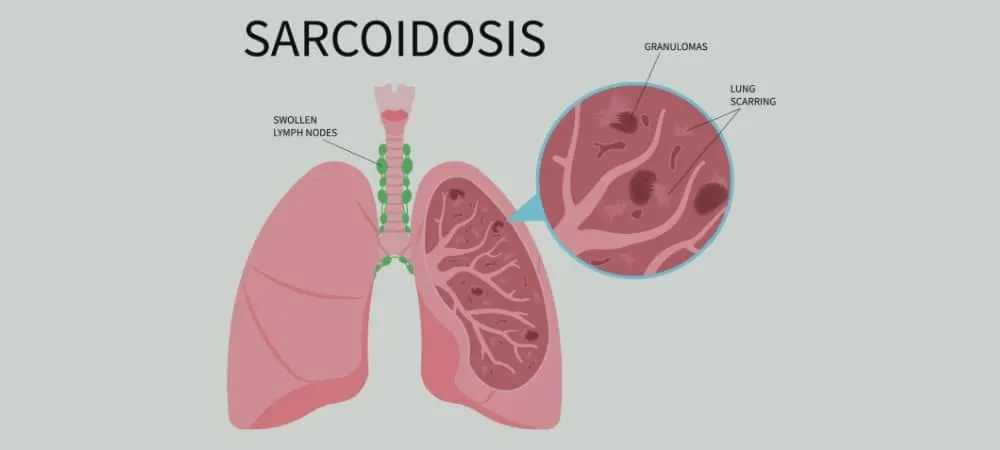
Sarcoidosis is an inflammatory disease that can affect multiple organs in the body, but it most frequently affects the lungs and lymph nodes. In patients with sarcoidosis, red, hard swellings called granulomas form. It is a disease that can progress from stage zero to stage four. Symptoms may worsen at each stage. Although symptoms may vary depending on where the granulomas form, patients often experience symptoms such as fever, muscle aches, weight loss, and fatigue.
What is Sarcoidosis?
Sarcoidosis is the name given to a disease where granulomas form in the body as a result of an overreaction of the immune system. Granulomas often form in the lungs or lymph nodes. The reason for the formation of granulomas in the body is the immune system's attempt to protect the body from what it perceives as harmful. Because they are made of fibrous tissue (the thickening of connective tissue in any organ), they feel hard to the touch. Since they can form in various parts of the body, the severity of symptoms may increase or decrease depending on their location and size, or they may be asymptomatic.
What are the Stages of Sarcoidosis?
Pulmonary sarcoidosis is defined according to the Siltzbach classification system. There are five stages from 0 to 4. The severity of the disease increases with each progressing stage. A sarcoidosis patient may experience transitions between these stages, moving forward or backward, but since there is lung damage at stage 4, it is irreversible.
Stage 0: No pulmonary sarcoidosis is observed on the X-ray. The lungs and lymph nodes appear normal.
Stage 1: Granulomas have formed only in the lymph nodes. Usually, no symptoms are observed at this stage, and it may resolve without treatment if it does not progress. In some patients, symptoms such as fever and joint pain are observed at stage 1. This condition is called Löfgren syndrome.
Stage 2: There are granulomas in both the lymph nodes and the lungs.
Stage 3: Granuloma formation is limited to the lungs.
Stage 4: There is permanent scarring in the lungs. It is an irreversible stage and is the time when the disease is most severe.
What are the Types of Sarcoidosis?
There are 10 types of sarcoidosis. These are named as pulmonary, ocular, neurosarcoidosis, cardiac, musculoskeletal, cutaneous, renal, hepatic, splenic and bone marrow, and Löfgren syndrome. 90% of the disease occurs in the pulmonary system, i.e., the lungs. The ocular type occurs in approximately 3/4 of patients. This affects the eyes. While nervous system elements such as the brain and spinal cord are affected in neurosarcoidosis, 10% of patients have this type. Cardiac and musculoskeletal types are rare. In the cutaneous type, lesions form on the skin.
What are the Symptoms of Sarcoidosis?
Symptoms may vary depending on where the granuloma forms. Most patients with sarcoidosis have symptoms related to the lungs, but symptoms related to other areas can also be observed. General sarcoidosis symptoms are as follows:
Fever,
Swelling of the lymph nodes,
Muscle aches,
Feeling exhausted,
Joint pain,
Night sweats,
Kidney stone formation,
Unexplained weight loss.
Symptoms of lung involvement:
Wheezing,
Chest pain,
Dyspnea (shortness of breath),
Cough.
Symptoms of eye involvement:
Eye pain,
Blurred vision,
Vision loss,
Redness or swelling in the eyes,
Sensitivity to light.
Symptoms of heart involvement:
Chest pain,
Palpitations,
Shortness of breath,
Arrhythmia (rhythm disturbance),
Heart failure.
Symptoms of skin involvement in sarcoidosis:
Light or dark spots on the skin,
Red swellings on the shins,
Bumps on the nose or cheeks, red-purple sores or rashes.
How Does Sarcoidosis Occur?
Although the exact cause of sarcoidosis is not known, it is thought that genetic and environmental factors have an effect. It is also thought that some people's immune systems are triggered when they encounter viruses, bacteria, or other chemicals, carrying the risk of contracting the disease.
How is Sarcoidosis Diagnosed?
When you go to a doctor for an examination with a suspicion of sarcoidosis, tests such as a physical examination and chest X-ray may be performed. A biopsy may also be resorted to. Since this condition can be confused with other diseases, there may be additional tests your doctor may want to perform.
Imaging tests: Chest X-ray, computed tomography, and MRI are frequently used in the diagnosis of sarcoidosis.
Biopsy: A sample is taken from the areas where the granuloma is thought to have formed. The samples taken are minimal in size.
Pulmonary function tests: A test that measures how well the lungs are working.
Blood and urine tests: These may be performed to examine the condition of the liver, kidneys, or other organs. In sarcoidosis, ACE levels usually increase. ACE is an enzyme that converts angiotensin 1 to 2. Angiotensin 2 causes the small blood vessels in the body to narrow and increases blood pressure.
ECG: Checks the electrical activity of the heart.
PET-CT: Can be used to determine which parts of the body the disease is in.
PPD test: This test can be used to distinguish between tuberculosis and sarcoidosis.
Slit-lamp examination: With this test, the eye is examined and the problems caused by sarcoidosis in the eye are detected.
How is Sarcoidosis Treated?
Sarcoidosis treatment generally aims to manage symptoms and prevent organ damage. Since granulomas form due to the functioning of the immune system, drugs that suppress the immune system are generally used. Treatment may vary depending on where the granulomas are located. Corticosteroids may be used in treatment. These drugs have an anti-inflammatory effect. They can be prescribed as creams or inhaler drugs. At the same time, a group of drugs called immunosuppressants can be used. These types of drugs try to prevent organ damage and inflammation. NSAID group drugs can also be preferred to relieve inflammation.
Other treatments may also be applied depending on the symptoms. Physical therapy can be performed to reduce fatigue and muscle pain, and pulmonary rehabilitation can be performed to relieve respiratory distress. You may need to be examined by your doctor again during and after treatment. This varies depending on the condition of the disease. Even if symptoms do not persist, follow-up examinations may last a lifetime.
Frequently Asked Questions About Sarcoidosis
Sarcoidosis can develop in people from all walks of life, but some factors can increase the risk of the disease. Age and gender factors are important. Sarcoidosis can occur in individuals of any age, but it is usually seen between the ages of 20 and 60. The rate of women contracting the disease is higher than that of men. In addition, genetic factors and race are also effective in increasing the risk. If someone has a sarcoidosis patient in their family, the person's probability of contracting the disease may be higher. Sarcoidosis is generally more common in people of African or Northern European descent. Sarcoidosis can increase the risk of cancer development or lymphoma in different organs such as the lungs, stomach, or liver. Sarcoidosis symptoms can be found in 4.4% of carcinoma patients, 7.3% of lymphoma patients, and 13.8% of Hodgkin patients. If sarcoidosis progresses, it can cause long-term problems. These include the risk of vision loss due to inflammation in the eye, and conditions that can rarely cause cataracts or glaucoma. It can also lead to kidney stones by affecting calcium levels in the body and rarely increase the risk of kidney failure. Permanent scarring in the lungs can cause respiratory problems and the risk of pulmonary hypertension. While rhythm disturbances and other functional problems can be seen in the heart, the condition can lead to death in some patients. Rarely, granulomas form in the nervous system, leading to central nervous system problems. The question "Does sarcoidosis kill?" can be answered as, it can result in death in some patients, albeit rarely. Ensuring that you take the prescribed medications for treatment as prescribed is an important point for better management of the disease. Even if your symptoms disappear, you should not stop your medications without consulting your doctor. You should report it to your doctor if you experience a new symptom. At the same time, choosing a healthy lifestyle by improving yourself in areas such as healthy eating, maintaining your weight, and managing stress can play a good role in improving your life. Besides this, you can exercise regularly and make your muscles stronger. If granulomas form in the heart and are not treated or if the disease progresses, it can damage the functioning of the heart. For the diagnosis of sarcoidosis, appointments can be made from chest diseases departments. The drugs used in the treatment of sarcoidosis may cause the patient to encounter some side effects. These side effects include weight gain, acne, insomnia, diabetes, high blood pressure, depression, irritability, and bruising on the skin. To avoid all these side effects, it is recommended to use your medications as recommended by your doctor. After starting sarcoidosis treatment, improvements in symptoms can be seen in a few weeks or a few months, but the recovery time may vary depending on how well the treatment is performed and the stage of the disease. Since the causes of sarcoidosis cannot be fully determined, there is no way to prevent it. Both amyloidosis and sarcoidosis diseases cause inflammation as a result of the immune system's response, but they manifest themselves with different symptoms. Amyloidosis is formed by the accumulation of abnormal proteins called amyloid in the body. These proteins are normally found in various parts of the body, but in amyloidosis, they accumulate between cells. As proteins accumulate, they can prevent organs from maintaining their normal functions and cause damage. It can affect many organs such as the heart, kidneys, intestines, and liver. Since both diseases can have serious consequences, it is recommended to consult a specialist doctor.
Sarcoidosis is a disease that can lead to serious health problems by affecting different organs. If you are also experiencing shortness of breath, a long-lasting cough, vision problems, or unexplained complaints, you should consult a specialist doctor without delay.
Our Hisar Hospital Chest Diseases specialists are with you in the diagnosis and treatment of sarcoidosis.
Make an Appointment | Contact Us
Start with the right assessment for What is Sarcoidosis? Symptoms, Stages, Treatment, and Frequently Asked Questions
Share your symptoms with our specialist physicians; let us determine the right diagnosis and treatment plan together.
Warning
If your symptoms started suddenly, are progressing rapidly, or significantly restrict your daily life, consult a physician without delay.
Plan your What is Sarcoidosis? Symptoms, Stages, Treatment, and Frequently Asked Questions journey with our specialists.
Fill in the form or book an appointment to learn about treatment options, the process and preparation.