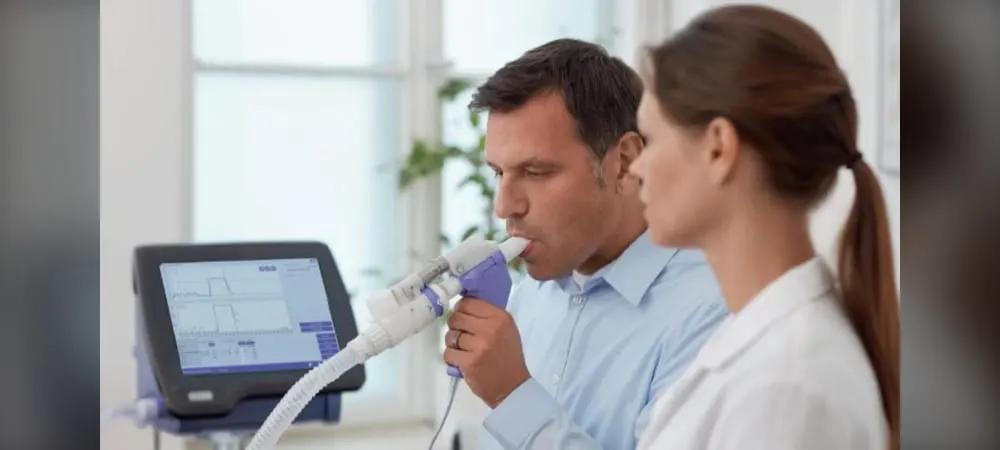
The answer to the question of what a pulmonary function test is, is a set of non-invasive tests that measure how well your lungs are working. These tests provide detailed information about the health of your respiratory system by determining breathing capacity, the amount of air entering and leaving the lungs, and airflow speed. It is used in the diagnosis of diseases such as asthma, COPD, and chronic bronchitis. In this article, we will answer the questions of why a pulmonary function test is performed, who performs it, when it is performed, and how it is performed.
What is a Pulmonary Function Test (PFT)?
Definition and Purpose of PFT
Pulmonary function tests are used to objectively evaluate the performance of your lungs. These tests, which do not require any intervention inside the body, provide detailed data about the health status of your respiratory system. They are physiological tests based on the principle of measuring changes in flow and volume that occur during breathing.
PFT is a set of objective measurements that evaluate your lung volumes, capacities, gas exchange ability, and airflow speed. It allows you to observe the onset or symptoms of any disease. At the same time, you can monitor the level of recovery during the treatment process of an existing disease.
Although the tests may seem simple, the results can determine the diagnosis and stage of many different diseases. A specialist may request various tests for disease risks predicted based on your existing symptoms. The results of these tests also help in determining which treatment will be applied against the disease.
Which Lung Functions Are Measured?
Pulmonary function tests measure the volume of air entering and leaving the lungs, whether there is a narrowing in the airways, and if there is narrowing, whether it opens with medication use. It evaluates your bronchial sensitivity, the oxygen transfer capacity of the lung, and provides information about the functions of your respiratory muscles.
The most commonly used PFT method is spirometry. It provides basic information by measuring the amount of air passing through the lungs and the flow rate during breathing. The amount of oxygen going to your blood and how well your lungs work during exertion are also measured.
During the test, you are connected to pulmonary function test devices via the mouth and are asked to breathe. The duration of the test may be extended to confirm the diagnosis. In some cases, you may be asked to cough, hold your breath, or breathe quickly and repeatedly.
Determination of Obstructive and Restrictive Diseases
PFT plays a critical role in the differential diagnosis of obstructive and restrictive type respiratory disorders. Obstructive diseases lead to difficulty in expelling air from the lungs due to narrowing in the airways. Diseases such as COPD and asthma fall into this group.
Restrictive diseases, on the other hand, cause the lungs not to inflate fully due to hardening of the lung tissue or the inability of the chest wall to expand. Pulmonary fibrosis and neuromuscular diseases are in this category.
Diseases that can be diagnosed with a pulmonary function test are as follows:
- Asthma
- COPD
- Chronic bronchitis
- Allergy
- Interstitial lung diseases
- Obesity hypoventilation syndrome
- Pulmonary sarcoidosis
- Asbestosis
- Respiratory restrictive diseases due to tumor or lung infection
- Lung damage
In Which Situations Is a Pulmonary Function Test Performed?
Your doctor recommends a pulmonary function test when certain symptoms or conditions are present. The test is used in a wide range from diagnosis to treatment follow-up.
Chronic Respiratory Symptoms
If you have complaints such as long-standing cough, wheezing, and shortness of breath, PFT is performed to find the underlying cause. This test is one of the first methods resorted to in cases where it needs to be determined whether shortness of breath is of cardiac or pulmonary origin.
The test is applied to people with persistent cough complaints. Symptoms such as chest tightness, productive cough, or wheezing during breathing may require the test to be performed. If you are having difficulty breathing or breathing deeply, your doctor may request a PFT.
Bronchial provocation tests play an important role in distinguishing chronic cough cases due to asthma in the differential diagnosis of chronic cough. These tests can determine the diagnosis, especially in patients with decreasing or increasing symptoms.
Diagnosis of Asthma and COPD
PFT is a gold standard test, especially in the diagnosis of COPD. Spirometric examination, i.e., pulmonary function test, is applied to diagnose the disease and determine its severity at the first application. The test is performed in patients suspected of having asthma due to complaints of cough, wheezing, and shortness of breath, which are typical for asthma.
With the asthma pulmonary function test, the presence and severity of narrowing in the airways are evaluated. The test is recommended for people who have smoked for many years and have complaints of cough and wheezing, and therefore for individuals over the age of 45 who have smoked for many years.
While respiratory capacity increases after medication in asthma patients, this opening is not seen in COPD patients. This is called a reversibility test and is critical in distinguishing the two diseases.
Preoperative Evaluation
PFT is performed in patients who will undergo lung or heart surgery to evaluate possible postoperative risks. The test can be applied to patients who will undergo surgery and before being placed under general anesthesia to evaluate surgical risk.
Proper evaluation of the respiratory system in the preoperative period can reduce the risks the patient may encounter during and after the operation. One of the most frequently used tests in preoperative evaluation is spirometry.
Occupational Exposure Follow-up
PFT is used to monitor lung health in people exposed to harmful substances such as asbestos and coal dust. It is recommended that those exposed to polluted air or occupational diseases be tested regularly.
PFT is applied to people with occupational diseases who need to be followed up, and similarly to those who want to obtain an athlete eligibility report in some sports branches. A chest X-ray and pulmonary function test to be performed at the start of employment show whether there is any involvement in the airways or tissue in subsequent follow-ups.
Monitoring Treatment Effectiveness
PFT can be performed at regular intervals to evaluate the effectiveness of drugs used in chronic diseases such as asthma and to monitor the response to treatment. Thanks to the pulmonary function test, your doctor can evaluate the effect of the drugs used for treatment.
Monitoring of treatment effectiveness in people with chronic respiratory symptoms is carried out with PFT. The test is used to determine the severity of diseases that cause hardening of the lung tissue, such as pulmonary fibrosis and sarcoidosis. With these measurements, information is obtained about the diagnosis of the disease, its severity, the selection of appropriate treatment, and the follow-up of the applied treatment.
How Is a Pulmonary Function Test Performed?
Pre-Test Preparation Process
You must follow some rules to get accurate results from the test. Your doctor may ask you to stop using bronchodilator medications before the test. You should stop short-acting medications 2 hours before and long-acting ones 12 hours before.
If you smoke, quit smoking at least 24 hours before the test. Alcohol consumption is also prohibited up to 4 hours before the test. You should avoid heavy exercise 30 minutes before the test. It is recommended that you do not drink caffeinated beverages such as coffee and tea as they may affect test results.
You do not need to be fasting on the day of the test, but avoid eating heavy meals. Wait at least 2 hours from your last meal until the test. Choose comfortable and loose clothing instead of clothes that will compress your chest and abdomen.
Height and weight measurement is definitely done, it is never taken by asking the patient. Height is especially important because taller people have higher lung volumes. Before the test, your doctor learns the type, dose, and last usage time of the medications you use, if any.
Maneuvers Performed During the Test
You remain in a sitting position during the test. You are asked to remove your clothes and jewelry that will make breathing difficult. A clip is attached to your nose so that you only breathe through your mouth.
You place the disposable mouthpiece connected to the spirometer device firmly between your lips. You should ensure that there is no air leakage between the mouthpiece and your lips. First, you breathe normally 4-5 times.
Then, upon the technician's command, you take as deep and strong a breath as possible. Without waiting, you start to exhale quickly and forcefully. You continue to exhale by forcing yourself in this way for at least 6 seconds.
After exhaling for a sufficient time, you are asked to take a deep breath again and the test is terminated. You may feel dizzy, tired, or start coughing during the test. In this case, tell the specialist about your discomfort, and you will be provided with a break to rest.
Duration and Repetition of the Test
Pulmonary function test measurements can take between 15 and 45 minutes. Usually, the spirometry part is completed within 15-20 minutes. The duration of the test may be extended depending on the person's performance.
The same maneuvers are repeated at least 3 times in a row. Among the correctly performed tests, the one with the highest values is selected. A maximum of 8 attempts are made; if unsuccessful, this situation is reported to your doctor.
In later stages, measurements can be made in a closed room for body plethysmography. In gas diffusion measurement, a low amount of carbon monoxide is given to the air you breathe, and how much gas your lungs absorb is measured. In the cardiopulmonary exercise test, your heart rate and the amount of oxygen in your blood are detected while walking on a treadmill.
Post-Test Process
You can return to your normal life immediately after the test is completed. You do not need any rest period. The obtained data are compared with normal values according to your age, gender, and height.
Your doctor evaluates the results and determines the status of your lung functions. The results are used in the diagnosis of lung diseases and the creation of a treatment plan. If necessary, the test can be repeated in line with your doctor's requests.
Pulmonary Function Test Results and Evaluation
Test results are presented to you in the form of numerical data and percentage values. The results are interpreted by comparing them with expected normal values determined according to your age, gender, height, and race. This evaluation provides important information about how efficiently your lungs are working.
FEV1 and FVC Values
FVC, or forced vital capacity, shows the total volume of air you can force out of your lungs quickly and forcefully after taking a deep breath. This value measures lung capacity. Healthy people can exhale 80% of their lung volumes in 6 seconds or less. In people with airway obstruction, this time can extend up to 20 seconds.
FEV1 refers to the forced expiratory volume in the first second. It measures how much air you exhale in the first second after taking a deep breath. This parameter provides information especially about the restriction in large airways. FEV1 value decreases in obstructive lung diseases.
The most frequently used parameters in the evaluation of the pulmonary function test are FVC and FEV1. By evaluating these two measurements together, comprehensive information about your lung function is obtained.
Meaning of the FEV1/FVC Ratio
The FEV1/FVC ratio shows the ratio of the air exhaled in the first second to the total air volume. This ratio is critical in distinguishing obstructive diseases from restrictive diseases. In a healthy individual, the normal value is 70-80%.
If the FEV1/FVC ratio is found to be below 70%, the presence of obstruction is mentioned. In obstructive disorder, a disproportionate decrease in maximum airflow with maximum volume is seen in the air expelled from the lung. This indicates that there is narrowing in the airways during exhalation.
A bronchodilator response test is performed for the differential diagnosis of obstructive diseases. After the test, 400 mcg of salbutamol is inhaled, and measurements are repeated after 15 minutes. An increase of over 12% and 200 ml in the FEV1 value is considered positive.
Interpretation of Results
If FEV1/FVC is decreased but FVC is normal, there is an obstructive disorder. If FEV1/FVC is normal but FVC is decreased, there is a restrictive disorder. If both are decreased together, a mixed type, i.e., both obstructive and restrictive disorder, is present.
Low FEV1 indicates that there may be narrowing in the airways. Low FVC means a decrease in lung capacity. A decrease in the FEV1/FVC ratio may be a sign of obstructive lung disease.
In restrictive disorder, while the FEV1/FVC ratio is normal, both FVC and FEV1 are decreased. Restrictive disorder is also mentioned in cases where FVC is decreased but the FEV1/FVC ratio is increased (85-90%). Test results should be evaluated by the physician together with your symptoms and examination findings.
Frequently Asked Questions About Pulmonary Function Test
You can find frequently asked questions by patients about the pulmonary function test and their answers in this section. This information will help you prepare for the test and better understand the process.
Why is PFT performed?
If you have long-standing symptoms such as chronic cough and wheezing, PFT is performed to find the underlying cause. If you are experiencing shortness of breath, the test is applied to learn whether it is of cardiac or pulmonary origin. Before surgery, your doctor may request the test due to symptoms that may indicate a lung problem.
PFT is necessary to understand whether there is narrowing in the airways in your lungs and to determine whether enough oxygen is being carried to your blood. It is also performed to observe the effects of smoking, to evaluate the effect of drugs used for treatment, and to detect the effects of external factors such as air pollution on your lungs.
Who performs PFT?
PFT is usually performed by trained technicians and doctors in the Chest Diseases department. Chest Diseases specialists, who deal with diseases of the lungs and respiratory system, have the expertise to interpret PFT results in the most accurate way.
The test is carried out in hospitals and outpatient clinics, in spirometry laboratories specifically designed for this purpose. Similarly, Internal Medicine and Family Medicine Specialists can also request PFT. The technician on duty in the laboratory informs you about the test.
When is PFT performed?
It is recommended that the test be performed for those who have shortness of breath, have been smoking for years, have an occupational disease, and have a long-standing cough complaint. If there are symptoms such as chest tightness, productive cough, or wheezing, it is time for the test.
PFT is applied to those who have been smoking for a long time, whether they have complaints or not, to those who will undergo surgery under general anesthesia, and to those who use bronchodilator drugs due to lung diseases. Therefore, the test can be performed at different times for both diagnosis and treatment follow-up.
Are there any side effects of the test?
PFT is a safe test. You may feel dizzy, tired, or start coughing because you take deep breaths during the test. In such cases, tell the specialist performing the test about your discomfort.
In some people, side effects such as a feeling of mild discomfort or temporary dizziness may be seen during the test. These side effects are usually mild and temporary. You will be provided with a break to rest, and you can continue the test more comfortably. However, if there is a serious respiratory condition, you should inform the healthcare professionals in advance.
Do test results come out immediately?
PFT results are usually obtained instantly from the device. The device records the maneuvers performed during the test and creates a report in the form of graphs and numerical values. However, a detailed evaluation is required for this report to be interpreted by the physician and for a diagnosis to be made.
For example, most tests take 30 to 60 minutes to complete. The interpretation of the results should be done by a doctor or specialist. Results can be affected by many factors and may not be sufficient to make a diagnosis on their own.
Which diseases does PFT show?
The main diseases that can be diagnosed with PFT are as follows:
- Asthma and allergy
- COPD and chronic bronchitis
- Interstitial lung diseases
- Pulmonary fibrosis and lung sarcoidosis
- Asbestosis
- Obesity hypoventilation syndrome
- Weakness of respiratory muscles
- Tracheal narrowing
The test can reveal abnormalities in lung function but is not a diagnostic tool for cancer. Imaging studies are required to detect tumors.
In Summary, Pulmonary Function Test
The pulmonary function test is a reliable and effective method for evaluating the health of your lungs. If you have symptoms such as chronic cough, shortness of breath, or wheezing, it is quite normal for your doctor to request this test. The test is safe, fast, and painless. Thanks to its results, your doctor can determine which disease you have and plan the most appropriate treatment.
Similarly, you can also monitor how effective your current treatment is with this test. If you have smoked for many years or have been exposed to harmful substances, having regular check-ups is important for your lung health.