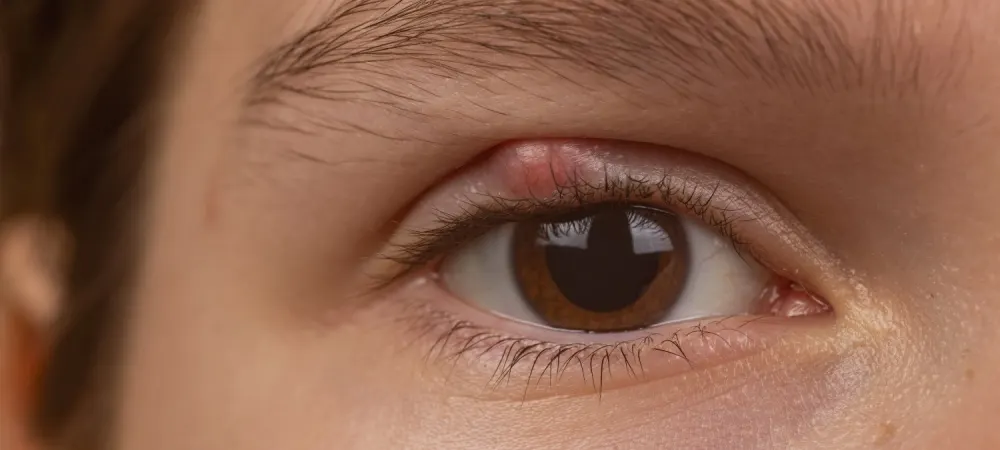
What is a Chalazion (Eyelid Cyst)?
A chalazion is a cyst that appears on the eyelid, which is generally harmless and does not show pain symptoms. It occurs as a result of the blockage of the meibomian glands in the eyelid. These glands help keep the eye surface moist by secreting the oily part of the tear film. However, blockage of the glands leads to the accumulation of oil inside them, resulting in the formation of a cyst. Initially, a chalazion may be small and unnoticeable, but over time it can grow and create a visible swelling on the eyelid. This swelling is usually red or pink in color and feels firm to the touch. A chalazion generally does not pose a serious health problem and responds well to treatment applied by a doctor. However, it may have a tendency to recur, so it is important to pay attention to eye hygiene and follow the treatment method specified by the doctor.
What Are the Symptoms of an Eyelid Cyst?
An eyelid cyst can manifest itself with various distinct symptoms. Some of the symptoms of an eyelid cyst are as follows:
Swelling: A visible swelling on the eyelid is the most common symptom of an eyelid cyst. It may be small and unnoticeable at first, but it becomes more prominent as it grows over time. This swelling is usually located in the middle or edge of the eyelid and can gradually feel firm and smooth to the touch.
Redness: Seeing redness in the area where the eyelid cyst is located is a commonly encountered symptom. Redness occurs due to inflammation or irritation in the eyelid. This redness is usually prominent on the skin surrounding the cyst, and sometimes the cyst itself may appear red.
Tenderness and pain: An eyelid cyst may be painless at first, but as it grows, it can cause tenderness and pain. Discomfort may be felt when the eyelid is touched or when blinking.
Watery eyes: An eyelid cyst can cause watery eyes or excessive tear production. This condition occurs as a result of the cyst affecting the natural functioning of the eye and partially blocking the tear duct.
Vision impairment: Large cysts can affect the natural position of the eyelid and cause vision impairment. The cyst can cause the eyelid to press against the eye and partially obstruct the field of vision.
Inflammation: In some cases, an eyelid cyst can become infected and lead to inflammation. An infected cyst becomes red, warm, and sensitive, and the surrounding tissues may be affected. Inflammation can cause a general feeling of discomfort and sensitivity in the eye.
How Does an Eyelid Cyst Form?
An eyelid cyst, medically known as a chalazion, forms as a result of the blockage of the meibomian glands in the eyelid. Meibomian glands are small glands located in the eyelids that secrete the oily part of the tear film. This oily secretion helps keep the eye surface moist and prevents tears from evaporating. However, for various reasons, the ducts of these glands can become blocked, and the oil accumulating inside the blocked duct leads to cyst formation. Some factors that can be effective in the formation of an eyelid cyst include:
Neglecting eyelid hygiene: Not cleaning the eyelids regularly increases the risk of meibomian gland blockage. Makeup residue, dirt, and oil deposits can clog the ducts of the glands.
Skin problems: Skin diseases such as acne can prevent the meibomian glands from functioning properly and create a predisposition to cyst formation. Such skin problems can affect the oil secretion of the glands and lead to blockage.
Infections: Eyelid infections, especially frequently recurring styes (hordeolum), can pave the way for the blockage of meibomian glands and the formation of a chalazion. Infected glands may carry a risk of inflammation and blockage.
Stress and a weakened immune system: Stress and a weakened immune system can affect the body's general health and negatively impact the functions of the eyelid glands. This situation can cause the glands to become blocked and lead to cyst formation.
How Is an Eyelid Cyst Diagnosed?
An eyelid cyst is usually diagnosed by an ophthalmologist through clinical evaluation. The diagnostic process is based on the patient's medical history, symptoms, and physical examination. During the examination, the doctor takes the patient's history, evaluates general eye health, and carefully examines the eyelid. They evaluate the size, firmness, and location of the cyst. They also check for any signs of redness, tenderness, or inflammation on the skin of the eyelid. The doctor may request some of the following tests for a definitive diagnosis:
Examination of the eye structure: Using a special tool called an ophthalmoscope, the doctor can examine the internal structure of the eyelid and the eye surface. This examination can be useful to evaluate how the cyst affects the inner part of the eyelid and whether there are any changes in other structures of the eye.
Differential diagnosis: The doctor performs a differential diagnosis to ensure the eyelid cyst is not confused with other similar conditions. Swellings on the eyelid include styes, eyelid infections, and tumors. A stye is usually a more painful and infected condition, so the doctor carefully examines whether the cyst shows signs of infection.
Advanced imaging: In rare cases, especially when more information is needed about the structure of the cyst or in cysts that do not respond to treatment, the doctor may resort to advanced imaging methods. Imaging techniques such as ultrasonography or MRI show the internal structure of the cyst and its relationship with surrounding tissues in more detail.
How Is an Eyelid Cyst Treated?
An eyelid cyst, medically known as a chalazion, is usually harmless and resolves on its own in most cases. However, when a chalazion becomes uncomfortable or does not go away for a long time, various treatment methods can be applied. Some eyelid cyst treatments applied under doctor supervision may include:
Antibiotic eye drops or ointment: If the chalazion is infected or carries a risk of infection, the doctor may prescribe antibiotic eye drops or ointment. These medications can help the cyst heal by keeping the infection under control.
Steroid injection: Steroid injections can reduce the inflammation of the cyst and allow it to shrink quickly. This method is particularly effective for large or persistent cysts. Steroids are injected directly into the cyst and usually provide rapid healing.
Curettage (Surgical drainage of the cyst): If the cyst does not respond to home treatment and medication, surgical intervention may be required. Curettage is the process of surgically draining the contents of the cyst and is mostly performed while the patient is under local anesthesia. A small incision is made from the inside of the eyelid to remove the cyst contents.
Warm compress: A warm compress is a commonly used method in the treatment of a chalazion. Applying a warm, damp cloth to the eyelid for 10-15 minutes several times a day, in the manner and frequency specified by the doctor, can be beneficial. A warm compress can help open the blocked ducts of the meibomian glands, allowing the oil to be released and helping the cyst to shrink.
Frequently Asked Questions
This condition usually heals on its own within a few weeks under doctor supervision. This process can be accelerated with home treatment methods such as warm compresses and eyelid massage. However, surgical intervention may be required for cysts that do not respond to treatment or are infected, and the healing time may be prolonged. An eyelid cyst is generally not dangerous and is harmless in most cases. A chalazion rarely poses a serious health risk unless it becomes infected or reaches very large dimensions. A chalazion usually does not spread and remains localized to a single eyelid. Unless infected, it does not tend to spread to the other eyelid or other parts of the body. However, recurring chalazia may be a sign of another underlying health problem. There is usually no scarring after chalazion surgery because the procedure is performed by making a small incision from the inside of the eyelid. The post-surgical scar often remains within the natural folds of the eyelid and becomes invisible over time. However, as with any surgical intervention, the healing process varies from person to person, and slight scarring may occur in some cases. A chalazion manifests as a firm and painless swelling on the eyelid. It is usually red or pink in color, located in the middle or edge of the eyelid, and can grow over time. It may also be accompanied by symptoms such as redness, tenderness, and mild watering of the eye. A stye (hordeolum) is a painful swelling usually caused by infected meibomian glands, but it carries the risk of turning into a chalazion if not treated or if it recurs frequently. Failure of a stye to heal or its constant recurrence can cause the cyst to turn into a chalazion. Applying a warm compress in the treatment of a chalazion can help healing by opening the blocked meibomian glands. In the application, first, a clean cloth or a clean towel is dipped in warm water. The warm cloth or towel is gently placed on the closed eyelid for 10-15 minutes. Repeating this process at the intervals specified by the doctor can help the cyst shrink and provide relief. In addition, it is necessary to pay attention to hygiene rules when applying a warm compress.
If you are experiencing swelling, redness, or pain in your eyelid, consult an Ophthalmology specialist without delay. You can regain your health with early diagnosis and personalized treatment methods at the Hisar Hospital Intercontinental Ophthalmology Department.
Click now to make an online appointment.
Start with the right assessment for What is a Chalazion (Eyelid Cyst)? Symptoms, Causes, and Treatment Methods
Share your symptoms with our specialist physicians; let us determine the right diagnosis and treatment plan together.
Warning
If your symptoms started suddenly, are progressing rapidly, or significantly restrict your daily life, consult a physician without delay.
Plan your What is a Chalazion (Eyelid Cyst)? Symptoms, Causes, and Treatment Methods journey with our specialists.
Fill in the form or book an appointment to learn about treatment options, the process and preparation.