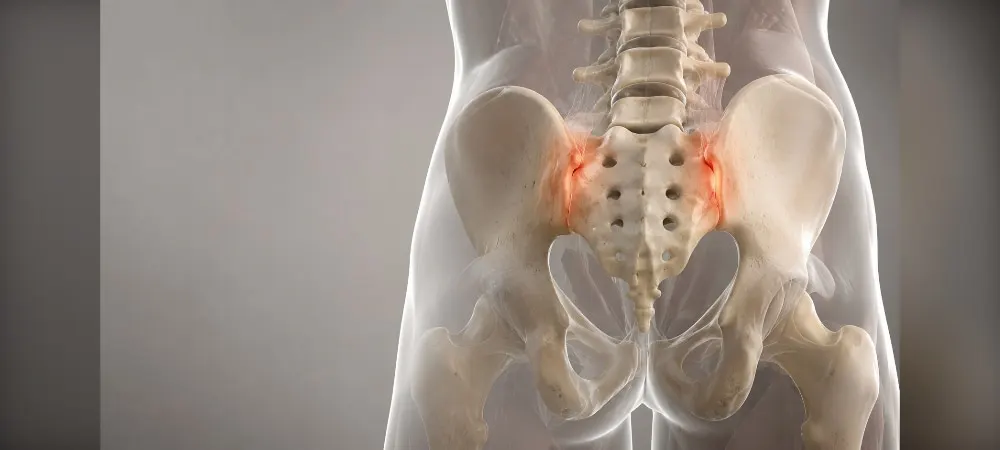
Sacroiliitis is a condition that occurs due to the inflammation of the joint between the spine and the hip bone, which can make your daily life difficult. Sharp lower back pain and aches felt in the hip and groin area are among the symptoms of this condition. The important thing is to learn the answers to questions such as what is sacroiliitis and what causes sacroiliitis, and to determine the correct treatment method. In this article, we will examine in detail the symptoms of sacroiliitis, diagnostic methods, and sacroiliitis treatment options.
What is Sacroiliitis?
The inflammation of the sacroiliac joint, located between the lower part of your spine and your pelvic bones, is defined as sacroiliitis. This condition can occur on its own or alongside rheumatic disorders such as ankylosing spondylitis or psoriatic arthritis. If you have bilateral pain, rheumatic diseases must also be checked. Otherwise, treatments performed may lead to a waste of time.
Symptoms generally begin to manifest between the ages of 20 and 30. However, sacroiliitis can also appear in various age groups. Genetic factors combined with certain lifestyle habits can trigger the disease. Therefore, by making the right lifestyle adjustments, you can stop symptoms from appearing or progressing.
Anatomy of the Sacroiliac Joint
The sacroiliac joint is located between the triangular bone called the sacrum and the bone on the side of the hip. There are two sacroiliac joints in your body, one on the right and one on the left. These joints are important transfer points connecting the upper part of your body to the lower part.
The sacroiliac joint undertakes the task of load transfer between your spine, hips, and legs. There are very strong ligaments around the joint to withstand the high pressure acting upon it. The range of motion is at most between 2-4 degrees, meaning it is not as mobile as the knee or hip joint.
During movements such as walking and standing, your body is exposed to gravity. The sacroiliac joint controls the transmission of this pressure, acting as a shock absorber for your spine. It protects your spine by providing shock absorption. In addition, it transfers your body weight evenly to your legs.
What Causes Sacroiliitis?
Rheumatic diseases hold an important place among the causes of sacroiliitis. Conditions such as ankylosing spondylitis, psoriatic arthritis, and rheumatoid arthritis originate from the immune system attacking joint tissue. It is possible to manage symptoms with drug treatments and physical therapy.
Trauma and injuries can cause inflammation to begin in the joint. Sacroiliitis may develop after a fall or a traffic accident. Receiving a direct blow to the sacroiliac joint triggers inflammation.
Although rare, infections can lead to inflammation in the sacroiliac joint. Bacterial infections spread into the joint and cause problems. In this case, the problem can be eliminated with antibiotic treatments.
The load on the pelvic region increases during pregnancy and childbirth. Hormonal changes and relaxation in the pelvic region contribute to sacroiliitis. Along with the weight gained during pregnancy, the load placed on the sacroiliac joint increases.
In addition to these, osteoarthritis, spinal curvatures, leg length discrepancy, and heavy lifting can also be counted among the causes of sacroiliitis.
Risk Factors
The risk increases in individuals who sit or stand for long periods. Working in strenuous jobs and engaging in contact sports create stress on the joint. In cases of rapid weight gain and obesity, the load placed on the joint is distributed unevenly.
Previous hip or spine surgeries constitute a risk factor. Issues affecting the skeletal system such as gout, scoliosis, and excessive loading on the spine also increase the risk of sacroiliitis. Curvatures forming in the spine with advancing age can also trigger this condition.
What Are the Symptoms of Sacroiliitis?
Although symptoms vary from person to person, sacroiliitis generally manifests in the lower back and hip region. The intensity of the pain can range from mild to severe. Symptoms become more pronounced when you wake up in the morning or after remaining inactive for a long time.
Pain and Stiffness
The most common problem among sacroiliitis symptoms is pain in the lower back and hip region. This pain can create a sharp, stabbing sensation. Sometimes it also occurs as a burning or aching sensation. The pain may be unilateral, meaning it is concentrated on only one side of your body. In some cases, it affects both sides simultaneously.
Pain radiating from your hip toward your groin area is also observed. You may feel discomfort descending toward your legs. There is an important detail: pain originating from sacroiliitis does not go below the knee. If your pain extends all the way to your feet, this indicates that there may be a herniated disc or sciatica problem.
Morning stiffness is typical of sacroiliitis. When you wake up, you feel stiffness and rigidity in your lower back region. This stiffness can last for half an hour or longer. It decreases as you move, but may increase again later in the day. The increase in pain after rest and its decrease with movement are characteristics that distinguish sacroiliitis from other lower back problems.
Night pains are also common. Especially in the second half of the night and towards morning, the pain intensifies. Symptoms worsen even further when you shift your weight to one side while lying down. This condition negatively affects your sleep quality and causes you to wake up tired.
Limited Mobility
Pain in the sacroiliac joint limits your daily movements. Simple activities such as going up and down stairs, bending over, and reaching become difficult. When you bend forward, you experience pain on the right or left side of the lower back or the problem of not being able to bend fully. Some feel stiffness in that area even if they bend fully.
Sitting for a long time increases your pain. Office workers or individuals who drive are particularly affected by this condition. When you stand up, the pain decreases. You experience a loosening sensation as you walk and feel relieved. Therefore, taking light walks instead of remaining inactive can reduce your symptoms.
Standing for a long time, running, and walking with large strides also exacerbate the pain. Movements such as lifting heavy objects and turning create extra difficulty. Approximately 25 percent of chronic back pain is related to the sacroiliac joint. This rate is quite high and should not be ignored.
Getting up from a sitting position becomes difficult. You may experience limping or a feeling of unsteady walking while walking. You notice an imbalance in your pelvic region. The disruption of joint stability leads to this balance problem.
Other Symptoms
Tenderness to touch develops in the region where the sacroiliac joint is located. During a physical examination, you feel pain when the doctor presses on that area. In rare cases, localized swelling may occur. This swelling is more pronounced in cases of infection or severe inflammation.
Some patients experience sensory disturbances such as tingling and electric-like sensations. Pain may also be observed in the lower abdominal region; this stems from the straining of the groin-hip muscle. Even knee symptoms can be a sign of a sacroiliac joint problem.
Fatigue and malaise are complaints that accompany sacroiliitis. Constant pain tires your body and consumes your energy. A mild fever or a feeling of fever may be experienced. Pains increase during the day. Discomfort that starts mildly in the morning intensifies in the afternoon.
Sacroiliitis symptoms share similarities with other lower back pain problems. Therefore, you must consult a doctor for a definitive diagnosis. Facet joint degeneration, herniated discs, and muscle spasms give similar symptoms. With proper evaluation, it is understood whether the source of the pain is the sacroiliac joint.
How is Sacroiliitis Diagnosed?
Your doctor applies a series of examinations and tests in case of suspected sacroiliitis. First, they ask about your medical history and learn when your symptoms began. Understanding which movements increase your pain is important in the diagnosis process. Physical examination and imaging methods are evaluated together for a definitive diagnosis.
Physical Examination
The doctor checks your back, hips, and legs. They press with their fingers on the sacroiliac joint region to look for tenderness. They determine the exact point where the pain is concentrated. They ask you to assume various positions to test your range of motion.
Special provocation tests are applied. In the method known as the Patrick or FABER test, your leg is bent, rotated outward, and opened to the side. This movement stresses the sacroiliac joint and reveals pain if present. The Mennel test is also among frequently used methods. If both tests are positive, the suspicion of a sacroiliac joint problem increases.
Gaenslen's test, distraction, and compression tests are also added to the evaluation. In these tests, various movements are performed while lying on your back. The doctor applies pressure to the joint region or attempts to widen your pelvis. It is determined whether the pain originates from the sacroiliac joint. Even if the tests do not provide a definitive diagnosis on their own, they yield meaningful results when evaluated together with an MRI.
Imaging Methods
X-ray imaging is the first preferred method. Narrowing of the joint space or changes on the joint surfaces may be seen. However, X-rays may not be sufficient for diagnosis on their own. Between 1 and 9 years may pass between the onset of symptoms and the appearance of changes on X-rays.
Magnetic resonance imaging is the most successful method in early diagnosis. Because MRI can show bone marrow edema, it detects the disease in the early period. Special imaging techniques called T2 and STIR sequences show inflammation in detail. If there is an increase in fluid in the joint, this is an important finding for the diagnosis of sacroiliitis.
Bone marrow edema is the most important and necessary finding to diagnose active sacroiliitis. If only structural changes are seen without edema, the MRI is not considered positive. However, bone marrow edema can also be seen in mechanical lower back pain. Therefore, MRI results must definitely be evaluated together with clinical findings.
Computed tomography shows even the smallest changes in bone structures. It is preferred in patients with negative X-ray findings or those who cannot undergo an MRI. The radiation dose of low-dose CT is equivalent to X-rays, while its diagnostic accuracy is higher. Wear and tear on joint surfaces and structural impairments reaching the bone are clearly seen with CT.
Laboratory Tests
Blood tests are performed to distinguish infections and issues causing inflammation. Erythrocyte sedimentation rate and C-reactive protein values are measured. In patients with active sacroiliitis, CRP values are found to be high and show a significant correlation with bone marrow edema. Sedimentation values, on the other hand, do not show a statistical correlation with bone marrow edema.
Laboratory tests are of limited help in sacroiliac joint dysfunction except in cases of infection. If fever is present, infections such as brucella are considered, and special tests are performed. In case of suspected rheumatic disease, HLA-B27 and other markers can be checked. Consequently, the diagnosis of sacroiliitis is made by evaluating doctor examination, special tests, and imaging methods together.
How is Sacroiliitis Treated?
Once diagnosed, your treatment plan is shaped according to the severity of your symptoms and the cause of the pain. The main goal is to relieve symptoms and preserve joint function. If there is a problem originating from a rheumatic disease, drug therapy comes to the forefront. In cases of sacroiliitis caused by trauma or lifestyle, physical therapy plays a more dominant role.
Drug Treatment Options
Painkillers and anti-inflammatory drugs are the first-preferred methods in sacroiliitis treatment. Nonsteroidal anti-inflammatory drugs aim to relieve your pain by reducing inflammation and edema in the joint. Over-the-counter options such as aspirin, ibuprofen, or naproxen are available. However, you should not use these drugs for more than 10 consecutive days without talking to your doctor.
If your pain is severe, the doctor may prescribe muscle relaxants. Muscle relaxants treat muscle pain by preventing nerves from sending pain signals to the brain. Corticosteroid drugs are powerful options that relieve pain and inflammation. Your doctor may directly inject corticosteroids into the affected joint.
Physical Therapy and Exercise
Physical therapy is one of the most effective methods in sacroiliitis treatment. The physiotherapist uses manual therapy techniques to properly manipulate the sacrum and ilium bones. Thus, joint mobility increases and the compression within the joint decreases. After restoring mobility with manual therapy, you must definitely exercise. Manual therapy alone is not sufficient; the brain must be taught that this mobility has been regained.
A treatment frequency of twice a week is sufficient, and the process averages 3-4 weeks. Exercises aim to strengthen the muscles around the joint and ensure its stability. Exercise programs that particularly strengthen core muscles are applied. Examples of exercises targeting the muscles surrounding the sacroiliac joint are:
- Bridge exercise and bridge with leg raise
- Abdominal and side plank movements
- Single-leg deadlift
- Back extensions and superman movement
- Pelvic tilt exercise
When choosing exercises, attention is paid to which movements cause problems in daily life. Activities such as getting out of a chair or walking provide clues that extension is problematic.
Injection Therapy
If inflammation within the joint is very severe and no change can be achieved in your pain with physical therapy, injection therapy is applied. Corticosteroid injections are performed by injecting a mixture of local anesthetic and steroid drugs into the joint. The purpose of the procedure is to reduce fluid increase and edema within the joint.
The injection is performed under a special imaging method called fluoroscopy. You will not feel pain during the procedure, which is applied under sedation. Local anesthetics immediately block nerve signals, while corticosteroids provide long-term relief. The injection provides a 50% reduction in pain, but may not be sufficient on its own.
It is recommended to rest for a few days after the procedure. The pain typically takes 2 to 5 days to begin diminishing. Since injections provide short-term relief, repeated injections may be needed. However, it is not recommended to perform injections using cortisone medication more than a few times a year.
Surgical Treatment
Surgical options are evaluated in a small number of patients who are resistant to non-surgical treatments and have chronic and unbearable pain. Surgery is recommended in cases where non-surgical treatments have been tried for at least 12 weeks but remained ineffective. In a procedure called sacroiliac joint fusion, the sacrum and ilium bones are fused together to eliminate joint movement.
The method widely preferred today is the minimally invasive technique. This method provides less pain and faster recovery after surgery. The joint is reached through small incisions, and surgical implants are used to fuse the joint. Since a stable joint will not cause pain, you can move more comfortably.
Frequently Asked Questions About Sacroiliitis
Does sacroiliitis heal completely?
Sacroiliitis is a condition in many people where you can treat the cause with medication and manage its symptoms with physical therapy. The success of treatment varies depending on the cause and severity of the disease. If it is caused by a rheumatic disease, you can keep symptoms under control with drug therapy. Sacroiliitis caused by trauma or mechanical problems, on the other hand, shows improvement with physical therapy and exercises.
In some cases, conservative treatments are sufficient and your symptoms disappear completely. However, in chronic cases, pain may recur from time to time. If symptoms return or worsen, you must definitely contact your doctor. Sacroiliitis is generally not a fatal disease. However, if left untreated, it can cause limited mobility and a decrease in your quality of life.
Which doctor treats sacroiliitis?
If the symptoms of the disease are observed in a person, a physical examination is performed by an orthopedic specialist. Your orthopedic doctor first evaluates your sacroiliac joint region and applies the necessary tests. Subsequently, a treatment schedule can be drawn up after a diagnosis is made using imaging techniques.
Especially if your pain is on both sides, you may need to be referred to the rheumatology department. Eliminating rheumatic diseases is a must. In addition, physical therapy and rehabilitation specialists play an active role in your treatment process. Physiotherapists determine your exercise program and apply manual therapy.
How does sacroiliitis affect daily life?
Sacroiliitis disrupts your quality sleep and causes you to feel constantly fatigued. Because your night pains increase, you experience resting problems. If you work in jobs that require sitting for long periods, your pain intensifies. Similarly, you experience difficulties in professions that involve standing.
Your daily activities become restricted. Simple movements such as bending, reaching, and using stairs become painful. Your social life is affected. Walking or participating in sports activities becomes difficult. Therefore, it is important to receive early treatment. You can return to your normal life with an appropriate treatment plan.
Can sacroiliitis be seen during pregnancy?
In individuals experiencing sacroiliitis during pregnancy, this discomfort generally occurs only while pregnant. Sacroiliic joint problems are seen in both sexes, more frequently in women. It occurs more often in young and middle-aged women. Pregnant women and new mothers are more sensitive to this condition[304].
Pain may be observed due to the loads increasing during pregnancy. This is one of the most important causes of lower back pain increasing in pregnancy. Starting from the middle of pregnancy, under the influence of pregnancy hormones, joint cartilages take on a soft consistency and pelvic bones become more mobile. This condition can lead to the widening of the pelvic wings, especially in the front.
If a disciplined recovery program is not applied in the postpartum period, uneven loads will continue to be placed on the sacroiliac joint. You need to perform exercises targeting the enlarged abdomen and relaxed abdominal muscles. Walking excessively despite pain throughout pregnancy can lead to the chronification of the inflammatory process.
Sacroiliitis in Summary
Sacroiliitis is a condition that creates severe discomfort in your lower back and hip region, but it can be managed with the right approach. If your pain increases in the mornings or sitting for long periods causes you difficulty, you must definitely consult a specialist. Once diagnosed, drug therapy, physical therapy, or injection options alleviate your symptoms. The important thing is to make an early diagnosis and begin treatment. You can return to normal by exercising regularly and adjusting your lifestyle. If your symptoms recur, contact your doctor. Sacroiliitis is generally a treatable condition, and it is possible to regain your quality of life.
Fill out the Form for Detailed Information and Contact!
Start with the right assessment for What is Sacroiliitis? What Are Its Symptoms? How Is It Diagnosed and Treated?
Share your symptoms with our specialist physicians; let us determine the right diagnosis and treatment plan together.
Warning
If your symptoms started suddenly, are progressing rapidly, or significantly restrict your daily life, consult a physician without delay.
Plan your What is Sacroiliitis? What Are Its Symptoms? How Is It Diagnosed and Treated? journey with our specialists.
Fill in the form or book an appointment to learn about treatment options, the process and preparation.