Alopecia Barbae
Alopecia barbae is a skin condition that affects the aesthetic appearance of individuals, particularly men, in their daily lives, posing an issue that can cause both physical and psychological effects. Manifesting as the shedding of beard hair from certain areas, this condition arises as an autoimmune disease that even simple stress can sometimes trigger. Managed with early diagnosis and appropriate treatment, alopecia barbae can directly affect a person's quality of life.
What is Alopecia Barbae?
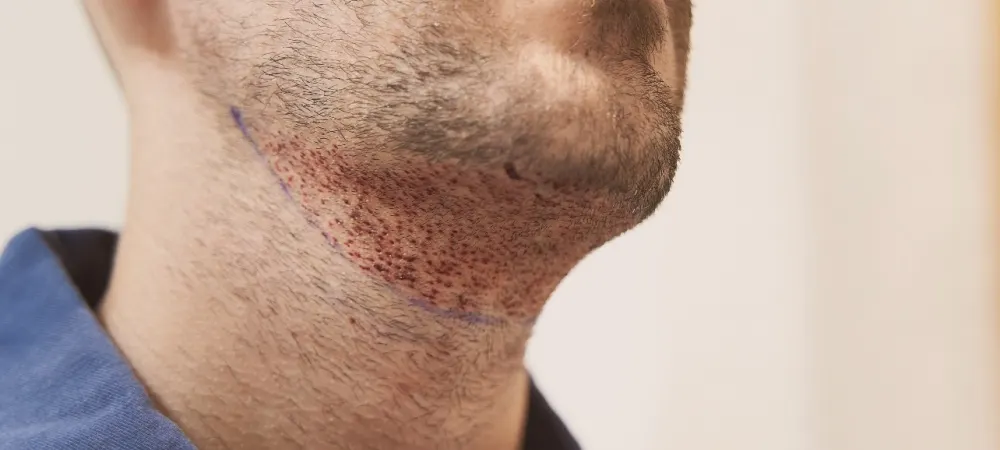
Alopecia barbae is medically termed "alopecia areata barbae" and is also commonly known as patchy beard loss. This condition is an autoimmune disease characterized by the sudden and clearly demarcated loss of hair in round or oval shapes within the beard region of men. The body's immune system mistakenly attacks the hair follicles, disrupting their function and leading to hair shedding. While alopecia barbae generally occurs in the beard area, in some cases it may also affect other hair-bearing areas such as eyebrows, eyelashes, or the scalp. It can also be evaluated as the type of alopecia areata seen in the beard. Although it can appear at any age, it is generally more common in young men.
Alopecia barbae is not a contagious disease. However, due to its psychological effects, it can negatively impact social life. In advanced cases, the permanent loss of function in the hair follicles can result in permanent bald patches in the shed areas.
What Are the Symptoms of Alopecia Barbae?
The onset of alopecia barbae can often present with small hair loss patches that are not very prominent. However, over time, these shedding areas may enlarge or new areas may be added. Symptoms of alopecia barbae can vary from person to person, but generally manifest in the following ways:
Round or oval hair loss areas in the beard: This is the most common symptom. While hair sheds completely in certain regions, the surrounding areas remain normal.
Itching or a mild stinging sensation in the affected areas: Some patients may feel mild itching or tingling in these regions before shedding begins. Alopecia barbae causes yellow vellus hairs to emerge in these areas.
Smooth and healthy-looking skin: There is usually no redness, scaling, or sores in the shed area. The skin looks healthy, but hair does not grow.
Fragile, thin, or discolored hairs: Newly emerging hairs can sometimes be colorless, thin, and weak.
Nail abnormalities (rare): In some cases, ridging or pitting of the nails may be observed along with alopecia areata and alopecia barbae.
Alopecia barbae is usually painless, but it causes aesthetic discomfort. While it may remain limited to one or two regions in some individuals, multiple patches of hair loss can form in others.
How Does Alopecia Barbae Develop?
The primary cause in the development of alopecia barbae is the immune system attacking its own cells. As a result of an autoimmune response, the immune system perceives hair follicles as foreign structures and attempts to destroy them. Consequently, hair follicles weaken, hair falls out, and new hair growth in that region is prevented. Factors that may cause alopecia barbae include:
Stress and Psychological Factors: Intense stress, traumas, and sudden emotional changes can trigger alopecia barbae. In many cases, the disease appears following a stressful event in a person's life.
Genetic Predisposition: The risk is higher in individuals with a family history of alopecia areata or alopecia barbae. Genetic predisposition can influence the immune system's response.
Autoimmune Diseases: Individuals with autoimmune diseases such as thyroid disorders, vitiligo, and lupus have an increased likelihood of developing alopecia barbae.
Infections and Physical Traumas: Skin infections, traumatic skin damage, or irritating chemical products can activate the immune system.
How Is Alopecia Barbae Diagnosed?
Alopecia barbae is primarily diagnosed through a clinical examination. An experienced dermatologist can diagnose the condition by observing characteristic symptoms. However, various laboratory tests may also be required for a definitive diagnosis. Alopecia barbae can be diagnosed using the following methods:
Clinical Examination: During the clinical examination, the physician evaluates the lesions in the affected area in detail. The placement, size, number, and distribution of pustules around the hair follicles are assessed. The presence of lesions exclusively in shaved areas is an important finding for diagnosis.
Bacteriological Examination: Bacteriological examination is necessary for a definitive diagnosis. Samples taken from the pustules are cultured in the laboratory to determine which bacterium is causing the infection. At the same time, antibiotic sensitivity testing is performed to identify the most effective treatment option.
Gram Staining: The Gram staining test can be used for rapid diagnosis. The sample taken from the pustule is examined under a microscope to obtain information about the presence and type of bacteria. The result of this test can be obtained on the same day. Differential diagnosis is extremely important because there are many diseases that can be confused with alopecia barbae. Folliculitis, acne, seborrheic dermatitis, contact dermatitis, and fungal infections can exhibit a similar appearance.
Dermoscopy: Examination with dermoscopy can aid in diagnosis. This method allows for a better evaluation of the condition of the hair follicles, as well as the depth and extent of the infection.
Blood Test: Blood tests may be performed in severe cases. White blood cell count, sedimentation rate, and C-reactive protein values indicate the severity of the infection.
Biopsy: Although rare, in cases where the diagnosis cannot be definitively established, a small piece of skin can be taken from the hair loss area and examined under a microscope. Tissue examination may be performed particularly in chronic cases and situations unresponsive to treatment.
Diagnosis is crucial because alopecia barbae can be confused with numerous conditions. Specifically, folliculitis, acne, seborrheic dermatitis, contact dermatitis, and fungal infections can display similar appearances.
Alopecia Barbae Treatment
Alopecia barbae treatment can vary from person to person. While the condition regresses spontaneously in some cases, medication may be necessary in others. Treatment for alopecia barbae is planned according to the prevalence and duration of the disease, as well as the person's age and general health status. Treatment is generally carried out with topical and systemic medications. Topical treatments are the first choice in mild cases. Ointments containing specific active agents are applied to the affected area 2-3 times a day. This treatment usually lasts for 1-2 weeks.
Cortisone injection therapy is also a common treatment method. Cortisone injections yield particularly effective results in localized areas. Cortisone injections for alopecia barbae must be administered by a specialist physician. Systemic medications are required in moderate and severe cases. Medications are used for a specified duration, and selection is made based on culture results where applicable. Antiseptic solutions are utilized as supportive therapy. Specifically, appropriate antiseptic solutions can be effective in management.
Modifying shaving habits is an important part of treatment. Shaving should be avoided during the course of the disease, and an electric shaver should be used if necessary. If a razor is to be used, disposable razors should be preferred. Warm compress application relieves symptoms. Compresses with a warm, damp cloth are applied 2-3 times a day for 10-15 minutes. This procedure facilitates the opening of lesions and reduces discomfort.
Pain relief medications are used for symptomatic treatment to decrease pain and inflammation. Additionally, garlic is sometimes used colloquially in alopecia barbae treatment to stimulate hair follicles. Garlic applications for alopecia barbae can be evaluated as a complementary approach; positive effects may be observed in some individuals when treatment is supported with garlic. Furthermore, apple cider vinegar can also be used as a natural supporter in treatment.
Strict adherence to hygiene rules is required. The face should be washed twice a day with antibacterial soap, a clean towel should be used, and shaving equipment should be cleaned regularly. Long-term treatment may be necessary in chronic cases. Nutritional support is important to strengthen the immune system. A diet rich in vitamins, minerals, and protein is recommended. Treatment success is evaluated through regular follow-ups. In cases unresponsive to treatment, cultures are repeated and the treatment plan is adjusted.
When you notice symptoms of alopecia barbae, you can consult a dermatology specialist without delay to undergo necessary evaluations. Thanks to early diagnosis, you can halt hair shedding and initiate treatments that support hair regrowth.
Frequently Asked Questions
Alopecia barbae is not contagious. It is not transmitted from person to person through contact, air, or the sharing of personal items. This condition is an autoimmune state where the body's own immune system attacks the hair follicles and is solely related to personal immune issues. Itching is not seen in most people with alopecia barbae. However, some individuals may experience mild itching, tingling, or a stinging sensation in that area just before hair loss begins. These symptoms are usually brief and not painful. If itching is present, consulting a dermatologist is necessary. Alopecia barbae is not contagious because it is not a microbial or fungal-sourced disease. It develops as a result of an immune system disorder. In other words, actions like shaking hands, close contact, or sharing shaving tools do not transmit alopecia barbae from one person to another. It develops entirely on an individual basis. Recovery time varies from person to person. While it resolves spontaneously in a few months for some patients, it can last for years in other cases. The process can be accelerated with early diagnosis and treatment. As long as the hair follicles in the shed area remain viable, the chance of regrowth is quite high. Alopecia barbae is not directly caused by a single vitamin deficiency. However, deficiencies in vitamins such as B12, vitamin D, zinc, and biotin can weaken the immune system and contribute to the development of this condition. Therefore, checking vitamin levels through blood tests is important. Individuals with alopecia barbae can shave areas where there is no hair loss. However, since the shed areas can be sensitive, shaving with excessive pressure should be avoided. Razors should be changed frequently. If shaving causes skin irritation, taking a break is recommended. Stress is one of the most important factors triggering alopecia barbae. Intense emotional pressure, sudden traumas, or anxiety disorders can affect the immune system and cause the disease to begin. Therefore, psychological support and stress control are important during the treatment process. Alopecia barbae is not a fungal infection. It is an autoimmune disease that develops as a result of the immune system malfunctioning and attacking the hair follicles. Since it can mimic fungal diseases in appearance, a dermatology specialist must be consulted for a definitive diagnosis. The specialist to consult with suspected alopecia barbae is a dermatologist, a skin diseases doctor. The dermatologist establishes a diagnosis by performing dermoscopy, blood tests, or biopsies if deemed necessary, and creates the most appropriate treatment plan for the patient. Self-intervention should be avoided. Hairs that regrow in the shed area after alopecia barbae are often initially thin in structure and appear as white vellus hairs. During this period, rather than worrying about white hairs growing, it should be understood that this condition is part of the recovery process. The appearance of white beard hairs is usually temporary; as melanin production returns to normal, these hairs can darken over time. However, it is also possible for them to remain permanently white in some individuals.
If you are experiencing symptoms of alopecia barbae, you can schedule an appointment with our Dermatology specialists for an accurate diagnosis and personalized treatment.
Early evaluation is of great importance for your skin health.
Start with the right assessment for What is Alopecia Barbae? 5 Symptoms, Causes, and Effective Treatment Methods
Share your symptoms with our specialist physicians; let us determine the right diagnosis and treatment plan together.
Warning
If your symptoms started suddenly, are progressing rapidly, or significantly restrict your daily life, consult a physician without delay.
Plan your What is Alopecia Barbae? 5 Symptoms, Causes, and Effective Treatment Methods journey with our specialists.
Fill in the form or book an appointment to learn about treatment options, the process and preparation.