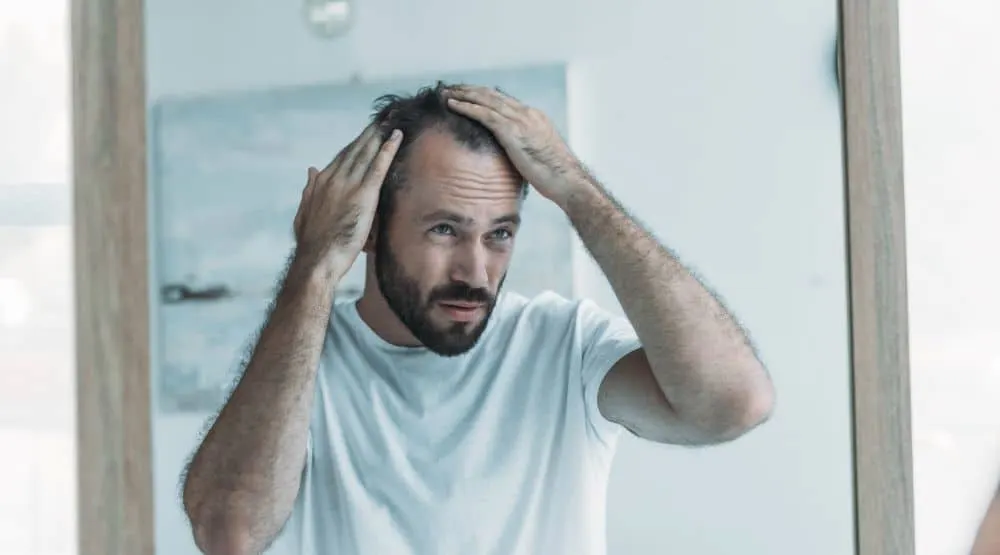
The dermatological condition commonly known in Turkey as saçkıran refers to hair loss in specific areas of the body. Some cases of alopecia areata progress to severe levels, creating aesthetic concerns for individuals and potentially affecting their quality of life. For this reason, early diagnosis of alopecia areata is of great importance to prevent the condition from progressing.
What Is Alopecia Areata?
Known in medical literature as alopecia areata, this condition is a hair loss disorder that affects millions of people. It usually occurs when the immune system mistakenly attacks hair follicles. This results in round or oval hairless patches in various areas of the scalp. In addition to the scalp, alopecia areata can also affect other parts of the body. For example, it can cause round, patch-like hair loss on the beard, mustache, eyebrows and other body regions. In severe cases, forms of alopecia areata such as complete baldness (alopecia totalis) or loss of all body hair (alopecia universalis) may develop.
This condition can affect individuals of all age groups, genders and ethnic origins, and its onset can be as sudden as finding hair on the pillow or noticing bare skin patches in the mirror. For many people, the emotional impact of alopecia areata can be as challenging as its physical symptoms. Coping with uncertainty about when hair will regrow, managing social situations and dealing with image concerns are common struggles faced by those living with this condition.
What Are the Symptoms of Alopecia Areata?
Symptoms of alopecia areata are generally limited to hair loss itself, but may appear with several signs. Symptoms of alopecia areata may include the following:
Round or oval hair loss: Among the early symptoms of alopecia areata are round or oval patches of hair loss in certain areas of the scalp. These areas are hairless and white, so they are clearly visible on the scalp.
Itching or discomfort: Some people with alopecia areata may feel mild itching or discomfort in the affected areas. This may occur together with hair loss and may cause the person to avoid touching these areas.
Change in hair color: With alopecia areata, changes in hair color may occur in affected areas. These changes may take the form of whitening or graying of the affected hair.
Nail changes: Nail changes may also be among the symptoms of alopecia areata. During the disease, signs such as ridging or pitting may be seen on the nails.
Symptoms of alopecia areata vary from person to person; they may be more pronounced in some individuals and milder in others. In addition, symptoms may change over time or disappear.
What Causes Alopecia Areata?
Although the exact cause of alopecia areata is unknown, it is thought to result from a combination of genetic, environmental and immunological factors. The causes of alopecia areata are as follows:
Genetic Predisposition: There is evidence that alopecia areata is inherited. If you have a relative with alopecia areata, your risk of developing it may be high.
Autoimmune Response: Alopecia areata is an autoimmune disorder in which the body's immune system mistakenly targets its own hair follicles. This autoimmune reaction causes inflammation around the hair follicles, leading to their shrinking and eventually stopping hair production. Although what causes this is still being researched, it is thought to be a complex interaction triggered by genetic and environmental factors.
Environmental Triggers: Exposure to environmental factors such as certain chemicals, pollutants or allergens may contribute to the development of alopecia areata. In addition, traumatic events such as physical injury, surgery or severe emotional stress have been associated with the onset of alopecia areata in some cases.
Immunological Imbalance: Imbalances in the immune system, particularly an overactive immune response, play a central role in the development of alopecia areata. The production of inflammatory cytokines and abnormal activity of immune cells such as T cells contribute to the destruction of hair follicles in affected individuals.
How Is Alopecia Areata Diagnosed?
Early diagnosis is extremely important for effectively managing and treating alopecia areata. Healthcare professionals may use the following methods to diagnose alopecia areata:
Clinical Examination: The diagnosis of alopecia areata begins with a detailed clinical examination by dermatologists. The characteristic sign of alopecia areata is the sudden appearance of round or oval hair loss on the scalp, in the beard area, on the eyebrows or in other hairy areas of the body. Compared with other types of hair loss, affected areas may be smooth, without inflammation or scarring.
Medical History: Healthcare professionals may ask about the patient's medical history, including family history, autoimmune conditions or any family history of hair loss. In some cases, information about recent stressful events or illnesses may be requested, since alopecia areata can develop in relation to stress.
Trichoscopy: Trichoscopy is a non-invasive diagnostic technique used to examine hair and scalp at magnified levels. This method allows healthcare professionals to observe the hair shaft, hair follicle and other structures of the scalp, helping in the diagnosis of alopecia areata.
Scalp Biopsy: In some cases, a scalp biopsy may be performed to confirm the diagnosis of alopecia areata. During a scalp biopsy, a small tissue sample is taken from the affected area and examined under a microscope. This may be done to rule out other causes of hair loss and to obtain additional information about inflammatory changes occurring in the hair follicles.
Blood Tests: Blood tests may be requested to assess general health status and to check for underlying medical conditions associated with alopecia areata, such as thyroid disorders and autoimmune diseases. Although there is no specific blood test for alopecia areata, in some cases markers of inflammation or autoimmunity may be elevated.
How Is Alopecia Areata Treated?
There is currently no definitive cure for alopecia areata. However, there are many treatment options available to manage this condition and to encourage hair regrowth. Treatment methods for alopecia areata are as follows:
Corticosteroid creams or ointments: Corticosteroids applied directly to the affected scalp help reduce inflammation and encourage hair growth.
Antralin cream: This topical medication may potentially encourage hair follicles to resume normal hair growth by altering the skin's immune response.
Topical immunotherapy: In some cases, topical immunotherapy is applied to the scalp to provoke an allergic reaction that may trigger hair growth.
Corticosteroid injections: Corticosteroid injections administered directly into bald patches on the scalp may help suppress the immune system's response and encourage hair growth.
Platelet-rich plasma (PRP) injections: PRP, obtained from the patient's own blood, may promote hair growth when injected into the scalp.
Corticosteroid tablets: In severe cases of alopecia areata, oral corticosteroids may be prescribed to suppress the immune system's response and prevent further hair loss.
JAK inhibitors: This method has shown promising results in treating alopecia areata by suppressing the autoimmune response.
Excimer laser therapy: Targeted light therapy delivers UVB rays to affected areas of the scalp, regulating the immune response and potentially encouraging hair growth.
Low-level laser therapy: LLLT devices may help hair growth by emitting low-energy laser light, which is thought to improve blood circulation in the scalp.
Hair Transplantation: For individuals experiencing extensive or persistent hair loss, hair transplantation may provide a definitive solution. During this procedure, hair follicles are surgically transplanted from areas of the scalp with healthy hair growth.
Frequently Asked Questions
Alopecia areata usually begins with small, round bald patches that appear suddenly on the scalp or other hairy areas of the body. These patches may grow over time and merge with neighboring patches, leading to larger areas of hair loss. The onset of alopecia areata may vary between individuals in terms of severity and progression. The duration of alopecia areata varies greatly between individuals. In some cases, hair may regrow within a few months, while in others it may persist for years. Treatment effectiveness, underlying health factors and individual response to therapy are factors that affect the recovery process. Alopecia areata usually does not cause itching. However, some people may feel mild itching or tingling in the affected areas before hair loss. Itching is more often associated with other scalp conditions or secondary infections that may develop due to scratching or irritation of the skin. No, alopecia areata is not contagious. It is not transmitted through direct contact, sharing personal items or through the air. Alopecia areata is considered an autoimmune condition that occurs when the body's immune system mistakenly targets hair follicles. However, it is known that psychological stress has an effect on the immune system, and this may contribute to the development or worsening of autoimmune conditions such as alopecia areata. In addition, the emotional impact of hair loss itself can increase stress and anxiety, creating a cycle in which psychological factors may affect the condition. Although vitamin deficiencies may contribute to various hair-related problems, there is no direct link between a specific vitamin deficiency and alopecia areata. However, obtaining essential vitamins and minerals through a balanced diet is important for overall hair health. Coping with hair loss can be emotionally challenging, and people with alopecia areata may benefit from support groups, counseling or therapy to deal with the emotional effects of the condition. Connecting with other people who understand their experience can provide valuable support and encouragement. If you have symptoms of alopecia areata, you may apply to the nearest healthcare facility for early diagnosis and treatment.
Start with the right assessment for What Is Alopecia Areata? What Are Its Symptoms?
Share your symptoms with our specialist physicians; let us determine the right diagnosis and treatment plan together.
Warning
If your symptoms started suddenly, are progressing rapidly, or significantly restrict your daily life, consult a physician without delay.
Plan your What Is Alopecia Areata? What Are Its Symptoms? journey with our specialists.
Fill in the form or book an appointment to learn about treatment options, the process and preparation.