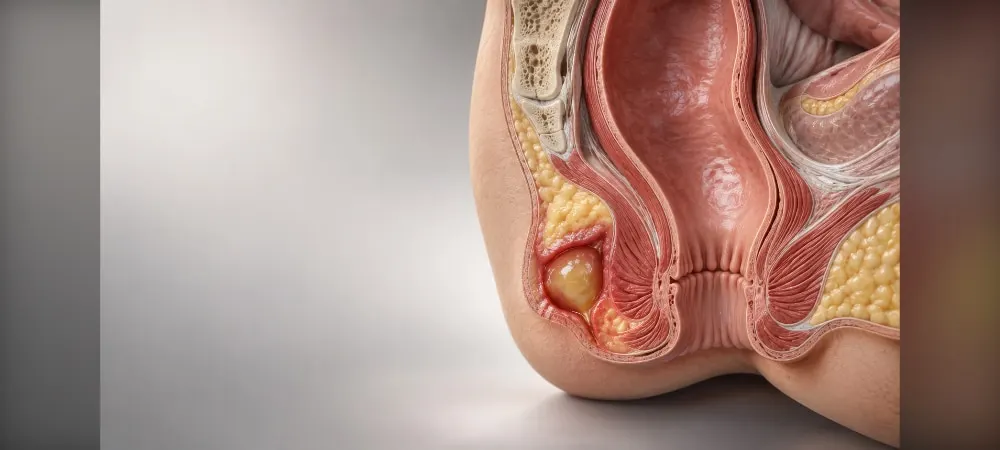
An anal abscess is a pus-filled swelling that forms in and around the anus. It is a very common health problem that many people are too embarrassed to talk about. It usually develops when bacteria infect the tissues or glands in and around the anus.
Symptoms of an anal abscess include severe pain, fever and fatigue. If such abscesses are not treated promptly, they can lead to more serious health problems. In some cases, a delay in treatment can even progress to a life-threatening condition such as Fournier's gangrene. For this reason, it is very important to see a specialist without delay when you notice the symptoms.
In this article, we will explain in clear and simple language what a perianal abscess is, its symptoms, causes and treatment methods. We will also answer frequently asked questions.
What Is a Perianal Abscess?
A perianal abscess, one of the most common disorders of the anal region, is a sac filled with infected fluid or pus beneath the skin around the anus. This health problem is a serious condition that can be extremely painful and requires early treatment.
What is an anal abscess and how does it form?
A perianal abscess is a localized collection of infected fluid under the skin around the anus. It usually occurs as a result of blockage of the glands inside the anus. The normal function of these glands is to secrete mucus, which makes the passage of stool easier. However, when these glands become blocked for various reasons, bacteria begin to accumulate inside them and cause infection.
During the infection, while our body fights the bacteria, a fluid called pus forms and collects in the tissues around the anus. This is how an abscess forms. It appears as redness and swelling around the anus. In some cases the abscess forms close to the skin surface, while in other patients it may develop in deeper tissues.
Perianal abscesses mostly result from blockage of the ducts of the small glands located around the dentate line of the anal canal, followed by bacterial infection at this site. Causes of this blockage may include:
- Diarrhea or constipation
- Trauma to the anal region
- Poor personal hygiene
- Sexually transmitted diseases
- Immune system problems
.
In which age groups is it more common?
A perianal abscess can affect people of any age group. However, it is more common in certain age groups.
It is more common in children, especially in boys under one year of age. It occurs in 0.5–4.3% of infants. Children younger than one year account for 57–86% of perianal abscess cases. For this reason, swelling and redness around the anus in babies must always be taken seriously.
In adults, perianal abscess is most often seen between the ages of 20 and 60. It is also more common in men than in women. Perianal abscess cases increase especially in spring and summer, when stools become softer.
If a perianal abscess occurs in a child older than two years, some underlying diseases should be considered. These include conditions such as autoimmune neutropenia, leukemia, AIDS, diabetes mellitus and Crohn's disease. Therefore, in perianal abscesses developing in older children in particular, it is essential to investigate whether there is another underlying health problem.
What Are the Symptoms of an Anal Abscess?
The symptoms of an anal abscess usually begin suddenly and progress quickly. Recognizing these symptoms early makes the treatment process easier and can prevent more serious problems.
Anal pain, swelling and throbbing
The most prominent symptom of an anal abscess is severe, unbearable pain around the anus. This pain may be mild at first but becomes more intense over time. In addition to pain, there is noticeable swelling and redness in the anal region. The swelling can grow rapidly due to the accumulation of pus and may feel warm to the touch.
Especially at night, many patients feel a pulsating, throbbing sensation in the anal region. This throbbing indicates that the abscess is actively growing and usually appears in the final stage of the abscess. In advanced cases, the patient becomes unable to sit.
Fever, fatigue and discharge
An anal abscess is not just a local infection; it also triggers a general response in the body. Symptoms such as fever, fatigue, chills and sweating may be present. The fever is usually above 38°C, which indicates that the infection is progressing.
When the abscess matures, the pus accumulated inside may sometimes reach the skin surface on its own and drain out. This discharge usually has a foul odor and temporarily relieves the pain. However, the temporary relief is misleading, because the infection remaining in the deeper tissues may cause it to recur.
Increased pain during bowel movements
An anal abscess causes markedly increased pain during or after bowel movements. The pain may also worsen when coughing or sitting. Because the abscess presses on the muscles and vascular structures around the anus, the pain intensifies during defecation.
The person becomes reluctant to go to the toilet and tries to hold the stool in. However, holding in stool can lead to constipation and make the condition even worse. When hard stool presses on the infected area, the abscess may enlarge or rupture.
What causes an abscess in the anus?
An anal abscess occurs due to infection of bacteria or glands in the anus and the surrounding tissues. This infection usually results from blockage of the ducts of the small glands located around the dentate line of the anal canal.
It may also occur as a result of immune system problems, poor hygiene, sexually transmitted diseases or trauma. It has also been observed to develop after prolonged diarrhea. The presence of a chronic anal fissure is also one of the common causes of an anal abscess.
If the pain is severe enough to affect daily life, an anal abscess should definitely be considered and a healthcare professional should be consulted without delay.
What Causes a Perianal Abscess?
The formation of an abscess in the anus may depend on various factors. In this section, we will examine in detail the main causes and risk factors of perianal abscesses.
Anal gland blockage
The most common cause of perianal abscesses is blockage and infection of the secretory glands located around the anus. These glands normally produce lubricating secretions during defecation, making the process easier. However, when the openings of these glands become blocked, the secretions accumulate inside and create an ideal breeding ground for bacteria.
As a result of the blockage, pus-filled tissue cavities form around the anus and rectum. In some cases, stool particles or foreign bodies can block the drainage duct of the anal gland. As a result, the secretion that cannot drain creates tunnels in the surrounding tissues and causes infection.
Weakened immune system
People with a weakened immune system have a higher risk of developing a perianal abscess. The following conditions in particular increase the risk:
- Diabetes (sugar disease)
- HIV/AIDS infection
- Patients receiving cancer treatment
- People using cortisone and cortisone-derived medications
- People using other medications that suppress the immune system
When the immune system is inadequate in fighting infections, bacterial infections that can normally be easily controlled may spread rapidly and cause abscess formation. Therefore, it is very important for people with immune system problems to seek specialist help immediately when they notice symptoms of a perianal abscess.
Poor hygiene and sexually transmitted diseases
Inadequate hygiene in the anal region creates a suitable environment for bacterial growth. In particular, constant moisture in the anal region makes it easier for bacteria to multiply. This increases the risk of infection of the anal glands.
Sexually transmitted diseases can also contribute to the development of a perianal abscess. These infections can cause inflammation in the tissues of the region and trigger abscess formation. Regular check-ups and early treatment of sexually transmitted diseases can reduce the risk of abscess formation.
Chronic constipation and diarrhea
Prolonged constipation and diarrhea are important factors that increase the risk of perianal abscess formation. In constipation:
- Hard stool can damage the anal region
- Straining during defecation puts pressure on the anal glands
- Delayed passage of stool increases bacterial growth in the area
On the other hand, chronic diarrhea also:
- Causes constant irritation in the anal region
- Weakens the natural defense barrier of the area
- Impairs the healthy function of the anal glands
Therefore, ensuring regular bowel movements plays an important role in reducing the risk of perianal abscess.
Bowel diseases such as Crohn's disease and ulcerative colitis
Inflammatory bowel diseases are important risk factors for the development of a perianal abscess. Crohn's disease in particular frequently leads to abscess formation in the anal region.
An anorectal abscess or anal fistula develops in 10–20% of patients with Crohn's disease. In this disease, chronic inflammation in the intestinal wall spreads to the surrounding tissues and triggers abscess formation. In addition, immune system irregularities in Crohn's disease also increase the risk of infection.
Ulcerative colitis can similarly increase the risk of a perianal abscess. In this disease, inflammation in the lining of the large intestine can also spread to the anal region and pave the way for abscess formation.
In conclusion, there may be many different causes behind the development of a perianal abscess. In some cases a single factor is responsible, but abscess formation generally occurs when multiple risk factors come together. Therefore, people who show symptoms of a perianal abscess must see a specialist physician to determine the underlying causes.
Diagnostic Methods
An accurate and prompt diagnosis plays a critical role in the success of anal abscess treatment. Timely diagnosis reduces the risk of complications and speeds up the healing process.
Diagnosis by physical examination
The most effective and commonly used method for diagnosing an anal abscess is physical examination. After listening to your complaints, the specialist doctor checks for redness, swelling and pain around the anus. This examination is usually sufficient for diagnosis.
The stages of the physical examination include the following:
- Visual inspection: The doctor examines the anal area to assess the presence and size of the swelling.
- Digital rectal examination: The doctor examines the rectum with a gloved finger to assess the characteristics of the swelling.
- Finger examination: In deep abscesses, tenderness or firmness may be felt when the inside of the anus is touched with a finger.
Especially in superficial abscesses, these methods are usually sufficient and a diagnosis is reached quickly. However, in some cases a more detailed examination may be required.
Use of ultrasound, MRI and CT
In some cases, especially in deep abscesses and complex cases, additional imaging methods are used. These imaging techniques help determine the exact location and size of the abscess.
Ultrasonography: It helps show the presence and extent of an abscess. It can be performed both endoanally and perianally. It is used especially for evaluating small abscesses or superficial fistulas.
Magnetic Resonance Imaging (MRI): It is the method that most accurately shows the location and size of the abscess and its relationship with surrounding structures. Thin-slice MRI makes it possible to map fistula tracts. It is preferred in recurrent or complex abscesses.
Computed Tomography (CT): It is used especially in widespread infection or deep abscesses. It shows the spread of the abscess and the presence of cellulitis in detail.
MRI is regarded by many specialists as the "gold standard" for evaluating anal sepsis. It is highly successful in determining the exact location and extent of the infection.
How can you tell if a swelling in the anus is an abscess?
To tell whether a swelling in the anus is an abscess, you need to pay attention to certain signs. First of all, if there is redness next to the swelling and increased warmth when touched, it may be an abscess.
The signs of an abscess are as follows:
- Swelling and redness: Easily noticed in superficial abscesses.
- Tenderness to touch: Severe pain is felt when the swollen area is touched.
- Increased warmth: The area becomes warmer due to the infection.
In some cases, methods such as anoscopy, sigmoidoscopy or colonoscopy may also be used by the physician. These methods are used to visualize the inside of the anal canal, and with them the doctor can distinguish an abscess from other conditions (hemorrhoids, anal fissure).
If you feel a swelling in the anus, be sure to see a specialist instead of trying to diagnose yourself. Early diagnosis and proper treatment are vital to prevent complications.
Perianal Abscess Treatment and the Drainage Process
The fundamental approach in treating an anal abscess is draining the pus from the abscess. Early treatment both reduces pain quickly and prevents serious complications.
What is perianal abscess drainage?
Perianal abscess drainage is the procedure of draining the swelling around the anus and the infected fluid inside it. This procedure is performed without damaging the tissues, and it speeds up healing by preventing the spread of the infection. Drainage greatly reduces pain by allowing the abscess to be emptied quickly. Abscess drainage not only clears the existing infection but also reduces the risk of new infections developing in the body.
How is the surgical intervention performed?
The surgical procedure generally proceeds as follows:
- Anesthesia: Local anesthesia is used for superficial abscesses, and general anesthesia for large and deep abscesses.
- Incision: A small incision is made in the skin and the pus is completely drained.
- Drain placement: In large or deep abscesses, a catheter may be placed in the area for continuous drainage.
After the procedure, stitches are usually not needed and the wound is left open. This prevents the abscess from recurring and allows healing to take place from the inside out.
When is antibiotic treatment needed for a perianal abscess?
Antibiotic treatment alone is not an adequate solution for a perianal abscess. However, in certain situations antibiotics may be given in addition to surgical drainage:
- In patients with a weakened immune system
- When there is widespread infection
- In patients with diabetes
- As supportive treatment after surgery
- When there is severe cellulitis (infection under the skin)
The reason antibiotics alone are insufficient in treating an abscess is that the medication cannot sufficiently penetrate the encapsulated pus inside the abscess.
Use of painkillers and stool softeners
For pain management after surgery:
- Prescription or over-the-counter painkillers may be used
- Stool softeners are given to reduce pain during bowel movements
- A diet rich in fibrous foods is recommended
Stool softeners are particularly important because hard stool can damage the surgical area and delay healing.
Warm water baths and dressing
The most effective supportive treatment during recovery is the warm water sitz bath. This practice:
- Should be done 2–3 times a day for 15–20 minutes
- Should use water at a temperature that does not burn the elbow
- Should not have any medication or chemicals added to it
- Should be done in a sitting position (without squatting)
A warm water bath increases blood flow to the area, helps reduce inflammation, relaxes the muscles around the anus and reduces pain. In addition, dressings should be changed regularly and the area should be kept clean.
Complete recovery is expected within 5–8 weeks after treatment. However, untreated perianal abscesses cannot heal on their own and can lead to serious complications.
Frequently Asked Questions
We answer the questions people wonder about anal abscesses with the opinions of specialists. Here are the most frequently asked questions about this condition and their answers.
1. Does an anal abscess go away on its own?
No, an anal abscess is not a condition that can go away on its own. It is a condition that requires urgent surgical intervention. If left untreated, the abscess progresses and can lead to more serious problems. Abscesses located deeper in particular must be treated. Waiting for it to go away on its own causes the disease to progress and makes its treatment more difficult.
2. Is there a risk of a perianal abscess recurring?
Yes, there is a risk of recurrence of a perianal abscess. It may recur especially when the fistula tract is not completely removed or the underlying infection is not brought under control. Recurrence of 5–10% may be seen in simple fistulas and up to 20% in complex fistulas. In addition, the likelihood of recurrence increases if adequate hygiene is not maintained after treatment.
3. What happens if the abscess bursts?
When an abscess bursts on its own, the pus inside turns into a discharge and the pain eases somewhat. However, this does not mean it has been treated, because the source of the infection remains inside. If foul-smelling discharge and fever accompany it, serious complications may develop. Abscesses that burst spontaneously usually lead to fistula formation.
4. How is it different from hemorrhoids?
An anal abscess and hemorrhoids are different conditions. Hemorrhoids are swollen veins inside or outside the anus that usually cause painless bleeding. An abscess, on the other hand, forms from a collection of pus resulting from infection, causes severe pain and is warm to the touch. Hemorrhoids are firmer and can usually be treated with creams.
5. Which doctor should I see?
For symptoms of an anal abscess, you should see a general surgery specialist. General surgeons are doctors who specialize in the diagnosis and treatment of anal diseases. Colorectal surgeons in particular are the most qualified in this field. For early diagnosis and treatment, you should see a specialist without delay as soon as your symptoms begin.
6. How long does it take to recover after surgery?
The recovery time may vary depending on the type of surgery. In simple abscesses, a return to daily life within 2–3 weeks is usually possible. In complex cases, recovery can take 4–8 weeks. There may be pain and swelling in the first few days. An anal abscess that has been drained heals completely after a process of three to four weeks.
7. Does it damage the vagina?
In women, fistulas located close to the vagina (anteriorly) are considered complex because the internal anal sphincter is shorter in women due to the vagina lying in front. Because of the proximity of these two areas, they may be involved together. However, with proper treatment, a perianal abscess usually does not damage the vagina. If there is any doubt, both a general surgeon and an obstetrician-gynecologist should be consulted.
8. Is a perianal abscess sexually transmitted?
No, a perianal abscess is not a condition that is transmitted directly through sexual contact. An anal fistula is not an infectious disease and is not sexually transmitted. However, sexually transmitted infections can be a risk factor and may trigger abscess formation.
Perianal Abscess in Summary
In conclusion, an anal abscess is a common health problem that is serious and requires urgent treatment. A pus-filled swelling around the anus can lead to dangerous complications if not treated early. In particular, when you have symptoms of severe pain, fever and swelling, you should see a general surgery specialist without delay.
To reiterate, an anal abscess does not heal on its own and definitely requires surgical drainage. Antibiotics are usually not sufficient alone, but they may be used together with the drainage procedure. In addition, warm water baths, proper hygiene and stool softeners help the healing process.
The most important point to pay attention to during recovery is regular follow-up and cleanliness. This reduces the risk of the abscess recurring. In addition, if there are underlying conditions such as Crohn's disease or immune system problems, treating them is also important.
Ultimately, an anal abscess is not something to be ashamed of, but a health problem that needs to be treated. Thanks to early diagnosis and treatment, you can avoid serious complications and return to your daily life in a short time. Seeking specialist help immediately when you notice the symptoms is the best approach for your health.
Fill Out the Form for Detailed Information and Contact!
Start with the right assessment for What Is a Perianal Abscess (Anal Abscess)? What Are the Symptoms? How Is It Treated?
Share your symptoms with our specialist physicians; let us determine the right diagnosis and treatment plan together.
Warning
If your symptoms started suddenly, are progressing rapidly, or significantly restrict your daily life, consult a physician without delay.
Plan your What Is a Perianal Abscess (Anal Abscess)? What Are the Symptoms? How Is It Treated? journey with our specialists.
Fill in the form or book an appointment to learn about treatment options, the process and preparation.