An incisional hernia usually occurs when tissues or organs protrude through weak points left by previous abdominal surgery. This condition, which presents with symptoms such as abdominal swelling, pain and restricted movement, can seriously affect your quality of life.
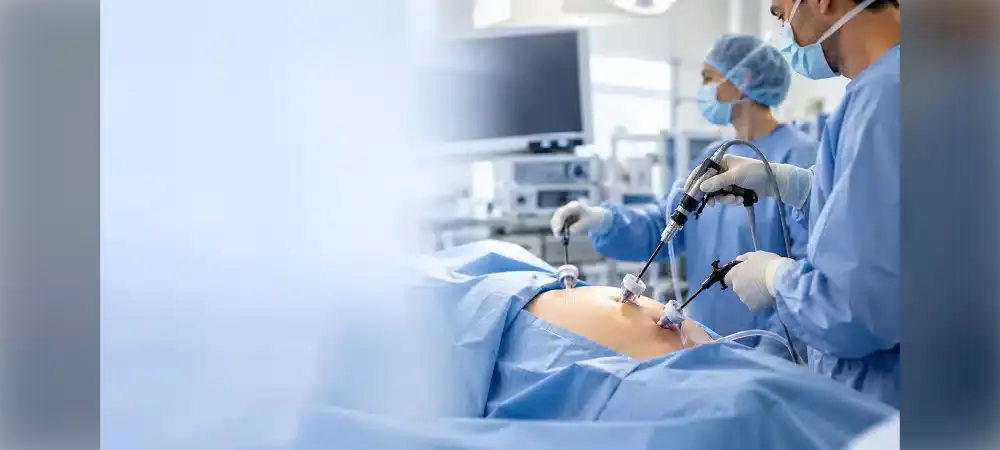
Laparoscopic incisional hernia surgery offers a modern, minimally invasive method to solve this problem. Unlike traditional open surgery, if you ask what incisional hernia repair is, we can say that it is a procedure performed through a few small incisions in the abdomen. In addition, most patients can be discharged after staying in the hospital for only one night, and discomfort after surgery is minimal.
What Is an Incisional Hernia?
An incisional hernia is a health problem that develops after abdominal surgery and can significantly affect your quality of life. This condition, which develops due to weakening of the abdominal wall, can lead to serious complications if not treated properly.
What does incisional hernia mean?
Incisional hernia is the name given to hernias that form at or very near the incision site of a previous abdominal operation. In this case, the tissues of the abdominal wall that were cut during surgery do not heal completely, and over time the abdominal organs bulge outward through this weakened area. In other words, the incisional hernia, which is among the anterior abdominal wall hernias, is one of the common problems encountered after surgical procedures performed on the abdomen.
Incisional hernias generally appear within the first 3-6 months after surgery. However, in some cases they may develop months or even years later. According to statistics, an incisional hernia is estimated to develop in at least 15-20% of abdominal operations. According to another study, the incidence varies between 2% and 11%.
After which operations does it occur?
Incisional hernias can occur after any type of abdominal surgery. In particular:
- Stomach and intestinal surgeries
- Cesarean sections
- Gallbladder surgeries (open and laparoscopic)
- Gynecological surgeries
- Surgeries performed after trauma
In addition, hernias called "port-site hernias" can develop at instrument entry sites after laparoscopic (closed) surgeries. This is especially the case for the 10, 12 and 15 mm entry sites where the camera and special instruments are used.
When the initial surgical causes of the patients were examined, it was observed that 3.9% had undergone gastrectomy, 7% colectomy, 3.9% peptic ulcer perforation, 17.2% trauma (liver and spleen injuries), 10.2% open cholecystectomy, 3.9% laparoscopic cholecystectomy, and 53.9% other causes (gynecological surgeries and patients who had undergone laparotomy for adhesive ileus).
How does weakness of the abdominal wall develop?
Weakness of the abdominal wall after a surgical incision can develop in several ways. First, cutting the supporting tissue of the abdominal wall during surgery naturally weakens this area. In addition, a wound infection after surgery adversely affects the healing process and paves the way for hernia formation.
The risk factors that play a role in hernia formation are as follows:
- Obesity
- Chronic lung diseases (COPD)
- Diabetes
- Advanced age (in some studies, young age has also been found to be a risk factor)
- Wound infection
- Smoking
- Inadequate or inappropriate surgical technique
- Conditions that increase intra-abdominal pressure (coughing, constipation, heavy lifting)
When the normal healing process after surgery is not completed, abdominal organs are pushed outward through the weakened area under the influence of intra-abdominal pressure. Over time, these hernias can grow to giant sizes, and loops of intestine can become trapped within the sac, leading to serious problems such as intestinal gangrene.
What Symptoms Does an Incisional Hernia Cause?
An incisional hernia can present with various symptoms, and these symptoms vary according to the location and size of the hernia and the patient's physical condition. The discomfort usually begins with mild complaints but may lead to more serious problems over time. For this reason, it is important to recognize the symptoms early.
Swelling and lump formation
The most obvious sign of an incisional hernia is a swelling or soft lump in the area of the surgical incision. This swelling:
- Becomes more noticeable when standing
- Enlarges during movements that increase intra-abdominal pressure, such as coughing, straining or heavy lifting
- Usually shrinks or disappears completely when resting or lying down
These bulges in the hernia area can develop in more than one place and may grow rapidly over time. For this reason, when you notice one, you should see a doctor without delay.
Pain and restricted movement
An incisional hernia can cause pain and a feeling of discomfort. The severity of the pain varies according to the size and location of the hernia. In particular:
- Pain and tenderness felt on or around the hernia
- Discomfort that increases during exercise
- Pain that becomes more pronounced at the end of the day or after standing for a long time
- A feeling of restriction when moving or especially when using the abdominal muscles
The severity of symptoms usually decreases while the patient is resting. However, symptoms become more severe during movements that increase intra-abdominal pressure (coughing, straining, heavy lifting).
Symptoms of entrapment in the hernia sac
The most serious complication of an incisional hernia is entrapment of organs in the hernia sac. This condition is called a "strangulated hernia," "incarcerated hernia," or, in medical terminology, an "incarcerated/strangulated hernia." In this case, the intestine or other organs that have entered the hernia become trapped and blood flow may be blocked.
Hernia entrapment can cause the following symptoms:
- Sudden-onset severe abdominal pain
- Nausea and vomiting
- Loss of appetite
- Inability to pass gas or stool
- Abdominal bloating
- Redness, bruising or tenderness in the hernia area
- Fever
These symptoms indicate an emergency, and medical help must be sought immediately. If left untreated, life-threatening conditions such as tissue death (necrosis) due to insufficient blood flow to the trapped intestine, intestinal perforation, and inflammation of the peritoneum (peritonitis) can occur.
When symptoms of an incisional hernia are noticed, it is vital to consult a specialist before more serious complications develop. Early diagnosis and appropriate treatment are the most effective way to prevent serious health problems.
What Is Laparoscopic Incisional Hernia Repair?
Laparoscopic incisional hernia repair is a minimally invasive surgical technique. In this modern approach, the hernia in the abdominal wall is repaired through small incisions using special instruments. This method, which has become widespread over the last two decades, provides a low risk of infection, a short hospital stay and lower complication rates.
How is laparoscopic surgery performed?
In laparoscopic incisional hernia surgery, special instruments are placed into the abdomen through a few small incisions. First, a 0-degree camera is inserted into the abdominal cavity through a 10 mm trocar, and the hernia area is viewed in detail. Thanks to this camera, the surgeon can clearly see the hernia sac and its contents.
During the procedure, the hernia contents (usually intestine or fatty tissue) are returned to the abdomen. Then a special patch (mesh) is placed to reinforce the weak tissues in the hernia area. This patch is usually placed inside the abdomen and secured to the supporting tissue with tacks or sutures.
The average operation time is around 70 minutes. After the procedure is completed, the small incisions in the abdomen are closed with sutures.
Why is the use of a patch (mesh) important?
The use of a patch is extremely important in incisional hernia repair, because repairing hernias with sutures alone significantly increases recurrence rates. Research has shown that simple suture repair without mesh is associated with recurrence rates of over 50%, compared with 20% for mesh repair.
Two types of patches are generally preferred in laparoscopic surgery:
- Polypropylene mesh: Durable and integrates well with body tissue
- Patches derived from expanded polytetrafluoroethylene (ePTFE): They have a special structure that does not adhere to the intestines on the side placed inside the abdomen
Because patches are placed inside the abdomen in the laparoscopic method, special patches are generally preferred that do not adhere to the intestines on one side and adhere to the tissue on the other. In this way, a strong repair is achieved and complications such as intestinal adhesions are prevented.
What are the differences from open surgery?
Laparoscopic incisional hernia repair offers many advantages over open surgery:
- Smaller incisions leave fewer scars
- There is less pain after surgery
- The hospital stay is shorter, averaging about 2.5 days
- The time to return to normal activity is about 5 days
- The risk of infection is lower
In addition, studies have shown that no postoperative complications were seen in 96.72% of patients in the laparoscopic group, compared with 93.75% in patients who underwent open surgery. Although a risk of intestinal injury (1.64%) may be seen in the laparoscopic method, it has been reported that the technique can be performed as safely as open surgery in suitable patients.
Recent studies have shown that laparoscopic approaches provide a lower incidence of wound infection and a shorter recovery time. However, currently only about 25% of incisional hernias are repaired laparoscopically.
What Are the Advantages of the Laparoscopic Method?
Laparoscopic incisional hernia surgery provides patients with many benefits compared with the open surgical method. This modern approach offers advantages in many respects, from the recovery process to your comfort after surgery.
Fewer incisions and less scarring
While a single large incision is usually made in traditional open surgery, in the laparoscopic method only a few small openings of 0.5-1 cm are made in the abdomen. Thanks to these small incisions:
- Visible scarring after surgery is reduced to a minimum
- The incisions become almost invisible after healing
- Better cosmetic results are achieved
In particular, instead of the large incisions of open operations, incisional hernias on both sides can be repaired through tiny openings with the laparoscopic method. Thus, even when you wear a bikini, it is not apparent that you have had surgery.
Less pain and faster recovery
Laparoscopic surgery causes less pain than traditional open operations. This is because the procedure is performed through small incisions and because fewer of the various hormones released in the body in response to trauma are produced owing to these small incisions. As a result:
- Discomfort after surgery is minimal
- Usually only simple painkillers are needed
- The time to return to normal daily activities is much shorter than with open surgery
While recovery after open surgery can take 4-6 weeks, patients who undergo laparoscopic surgery can usually return to normal activities within 1-2 weeks. Some patients can even start work about 10 days after surgery.
Low risk of infection
The risk of infection is significantly lower in laparoscopic incisional hernia repair than in open surgery. The reasons for this include:
- Minimal contact of the abdominal cavity with the external environment
- The small size of the surgical field
- Tissues being merely separated rather than cut
- Less tissue damage
Because the abdominal cavity has minimal contact with the external environment, the likelihood of contracting an infection is much lower compared with open operations. In addition, the risk of intra-abdominal adhesions is also minimal in laparoscopic surgery.
Short hospital stay
One of the greatest advantages of laparoscopic incisional hernia repair is the short hospital stay:
- Most patients can be discharged the same day or stay in the hospital for only one night
- Patients can usually get up and eat 3-4 hours after surgery
- Discharge from the hospital is possible by the next day at the latest
A short hospital stay provides a great advantage in terms of patient comfort and also reduces costs for healthcare systems. In this way, you do not need to postpone your holiday plans or work schedule for a long time.
All of these advantages have made laparoscopic incisional hernia surgery a method preferred by many patients and surgeons today.
Who Are Suitable Candidates for This Surgery?
Laparoscopic incisional hernia surgery may not be suitable for everyone. Some patient groups may benefit more from this modern surgical approach. Your doctor evaluates various factors when determining the most appropriate treatment method for you.
Recurrent hernia cases
People who have previously undergone incisional hernia surgery and in whom the hernia has recurred are ideal candidates for the laparoscopic method. The laparoscopic approach is especially effective in the treatment of recurrent hernias because:
- Scar tissue and distorted anatomy in the area of a previous open operation make a new open operation more difficult and increase the failure rate. In some studies, this rate can reach up to 30%.
- Because the repair is performed using healthy tissues in the laparoscopic approach, the failure rate is lower.
- Instead of performing open surgery again in the same area, the laparoscopic method allows intervention from a new angle.
- The risk of recurrence after operations previously performed with the open method is higher, especially in young men with strong musculature and in athletes.
Those in suitable general health
Ideal candidates for laparoscopic surgery are as follows:
- Patients healthy enough to receive general anesthesia
- Individuals who feel pain and swelling in the surgical area
- Patients who expect a quick recovery
- Those who need to return to work early (returning to work within 5-7 days after surgery is possible)
- Those with cosmetic concerns who prefer a method that leaves minimal scarring
However, this method may not always be suitable for very elderly patients (over 70 years of age), those with fluid accumulation in the abdomen, those who have previously undergone major abdominal surgery, or severely obese individuals.
Those experiencing entrapment in the hernia sac
Entrapment of organs in the hernia sac is a serious condition and requires emergency intervention. People who show these symptoms are generally candidates for surgical intervention:
- Patients showing signs of entrapment in the hernia sac
- Those experiencing severe and persistent abdominal pain
- Those who notice redness, hardness or discoloration in the hernia area
- Those with complaints such as nausea and vomiting
- Those showing signs of cessation of bowel movements
In this case, emergency surgical intervention is vital to prevent impairment of the blood circulation of the trapped tissue. If a strangulated hernia (strangulation) develops, open surgery may be preferred instead of the laparoscopic approach.
In conclusion, the most appropriate surgical approach for incisional hernia repair will vary depending on the patient's individual condition, the characteristics of the hernia and the experience of the surgeon. For this reason, the treatment decision should be made by an experienced surgeon following a comprehensive evaluation.
In Summary: Laparoscopic Incisional Hernia Surgery
An incisional hernia is a health problem that forms at previous surgical incisions and can seriously affect your quality of life. If you experience symptoms such as abdominal swelling, pain and restricted movement, you should consult a specialist without delay.
The laparoscopic method offers many advantages over traditional open surgery. First of all, thanks to the smaller incisions, scarring after surgery is kept to a minimum. In addition, you have less pain and return to your daily life more quickly.
The recovery process after surgery is usually much shorter. In most cases, staying in the hospital for one night is sufficient, and you can return to your normal activities within a few days. Moreover, the risk of infection is also much lower than with open surgery.
As with all surgical procedures, laparoscopic incisional hernia repair may not be suitable for everyone. For this reason, you should have a detailed discussion with your doctor to determine the most appropriate treatment method for you.
In conclusion, thanks to modern surgical techniques, incisional hernia is no longer as frightening as it once was. With early diagnosis and the right treatment approach, you can overcome this problem and quickly return to a healthy life. Seeking medical help without delay when you notice symptoms is the most effective way to prevent possible complications.
Frequently Asked Questions
1. When does an incisional hernia become dangerous?
An incisional hernia becomes dangerous when the organs in the hernia sac become trapped. In this case, sudden-onset severe abdominal pain, nausea and vomiting occur. If not treated, the hernia swelling enlarges, the pain intensifies, and the swelling does not shrink even at rest. It is a condition that requires emergency medical help.
2. When can I return to work after laparoscopic surgery?
If you have an office job, you can return to work a few days after surgery. Those who work in physically light jobs can usually return to work within 1 week. If you work in a heavy job, you will need a longer recovery period.
3. Is the patch (mesh) permanent in the body?
Yes, the patch used in the surgery is permanent. By integrating with the patient's tissues through its own strength, the patch forms new and reliable tissue that prevents the hernia from recurring. The effectiveness and reliability of polypropylene mesh have been proven by countless studies.
4. Can the hernia recur after surgery?
There is a risk of recurrence in hernias occurring at abdominal incisions. This rate is between 20% and 45%. With the use of a mesh, the recurrence rate generally falls below 5%, and in the surgical series of some surgeons, rates of less than 1% can be achieved.
5. Is laparoscopic surgery painful?
It is normal to experience some pain and discomfort after surgery. However, recovery after the laparoscopic method is faster than after open surgery, and the pain can usually be controlled with simple painkillers.
6. What should I pay attention to after surgery?
You should wear an abdominal corset for at least 3 weeks after surgery. You should avoid heavy lifting, physical exertion and strenuous sports for at least 8 weeks. You should abstain from sexual intercourse for about 2 weeks. You should try not to become constipated and should quit smoking.
7. Is this surgery covered by the SGK (Social Security Institution)?
Inguinal hernia repair, laparoscopic (bilateral), including all materials, is covered by the SGK. Similar coverage applies to incisional hernia, but it is recommended that you consult your doctor and the SGK for details.
8. Which is better, open surgery or laparoscopic surgery?
Laparoscopic incisional hernia repair can be performed as safely as the open technique in suitable patients. No statistically significant difference has been found between the two methods in terms of perioperative characteristics and postoperative complications.