The labrum is a cartilage structure located in the hip and shoulder joints. A tear in this structure is a serious condition. Often seen in athletes and highly active individuals, this condition can negatively affect joint function. If left untreated, it may lead to long-term damage. In this article, you will find answers to questions such as what is a hip labral tear, what is a shoulder labral tear, and what is a glenoid labral tear. Additionally, you will learn detailed information about labral tear symptoms, labral tear diagnosis, and labral tear treatment.
What is a Labral Tear?
The labrum, which provides stability to your joints and reduces friction during movement, is a specialized cartilage structure found in the hip and shoulder joints. This ring of soft tissue surrounds the joint socket and helps the joint function properly. A labral tear is damage to this structure resulting from trauma, overuse, or degenerative processes.
What is a Hip Labral Tear?
The hip labrum is a crescent-shaped cartilage tissue that covers the edge of the hip socket, called the acetabulum, in the pelvic bone. This triangular cross-section structure is composed of fibrocartilage and exhibits both flexibility and durability. By increasing the depth of the hip joint, it ensures the compatibility of the femoral head with the acetabulum.
A hip labral tear is the disruption of the integrity of this structure. It occurs against a background of bony abnormalities such as femoroacetabular impingement or acetabular dysplasia. Similarly, congenital hip dysplasia increases this risk. It has a high incidence in sports involving sudden turns, such as running, football, and basketball.
The labrum acts like a gasket in the joint. It ensures that synovial fluid remains in the joint space and contributes to keeping the articular cartilage healthy. Branches of the obturator and superior-inferior gluteal arteries supply this structure. There are numerous free nerve endings in the labral tissue, which is why tears can create a very painful condition.
What is a Shoulder Labral Tear?
The shoulder labrum is the cartilage structure surrounding the socket part of the shoulder blade, called the glenoid. It deepens the shoulder joint socket by up to 50%. It ensures that the humeral head remains stable within the socket and serves as the attachment point for the ligaments surrounding the joint.
Also referred to as the gasket of the shoulder joint, this structure makes it possible for the shoulder to have a wide range of motion. Damage to the labrum can lead to the development of instability and recurrent dislocations in the shoulder. It can tear as a result of a fall, the arm remaining fixed while hanging, or repetitive overhead movements.
Throwing athletes and weightlifters, in particular, are prone to this injury due to repetitive shoulder movements. A tear can occur as a result of acute trauma or wear and tear over time.
What is a Glenoid Labral Tear?
A glenoid labral tear is damage to the ring of soft fibrous tissue surrounding the shoulder socket. There are two main types: Bankart lesions and SLAP lesions.
A Bankart lesion is seen in 87% to 100% of shoulder dislocations. When the shoulder bone is forced out of the socket, it can strike the glenoid labrum and tear this cartilage. Approximately 73% of anterior shoulder dislocations involve a bony Bankart lesion.
A SLAP tear, on the other hand, occurs as a result of the labrum, where the biceps tendon attaches, separating from the bone structure. It is usually the result of labral degeneration. Both types of tears make the shoulder joint unstable and increase the likelihood of recurring dislocations.
What Are the Symptoms of a Labral Tear?
Labral tear symptoms can vary from person to person. The location and size of the tear, as well as the patient's activity level, affect the severity of the symptoms. Symptoms may start slowly and increase over time, or they may appear suddenly after trauma.
Pain in the Hip and Groin Area
The most common symptom of a hip labral tear is groin pain. The pain is usually sharp and stabbing in the groin area, on the front of the hip, and sometimes on the front of the knee. Patients describe the pain in a way known as the "C sign"; they place their hand in a C-shape on the side of the hip to indicate the painful area.
The pain intensifies after sitting for a long time or while moving. Daily activities such as getting out of a car, crossing legs, going up and down stairs, and squatting trigger the pain. A sharp discomfort is felt, especially during movements of rotating the hip inward or outward.
Rarely, a tear in the hip labrum can also cause pain in the back. This makes diagnosis difficult. The pain can sometimes radiate to the front of the thigh or the trochanteric region on the side of the hip.
Shoulder Pain and Weakness
In a shoulder labral tear, pain begins around the shoulder joint and can radiate to the upper arm, neck, and shoulder blade area over time. Patients feel a deep pain in the shoulder. This pain intensifies during activities such as bringing the arm into an overhead position, throwing an object, or carrying a load.
Sleep quality may be impaired due to night pain. Pain that increases, especially with overhead activities, makes daily life difficult. In addition, a feeling of weakness and fatigue in the arm emerges. A loss of speed and accuracy is observed in throwing athletes.
A sensation as if the shoulder is about to dislocate occurs. This feeling of insecurity severely limits the patient's range of motion. Sudden weakness may be experienced in certain arm positions.
Sensation of Catching and Locking in the Joint
When a torn piece of the labrum enters the joint space, a sensation of catching or locking is experienced. A sudden catching or impingement occurs while moving the hip. Similarly, a sensation of catching within the joint is observed during shoulder movements.
These mechanical symptoms point to a structural problem within the joint. Patients experience difficulty in their daily activities. A feeling of the joint giving way may also occur.
Limited Range of Motion
Patients with a labral tear experience limited range of motion in the joint. In the hip, there is difficulty, especially in internal rotation and flexion movements. Pain and limitation are experienced when fully bending or rotating the hip inward.
In the shoulder joint, a feeling of stiffness occurs during movement. Due to pain, the patient avoids bringing their leg or arm into certain positions. A decrease in performance and increased pain after activity are observed in athletes.
Popping and Clicking Sounds
In a hip labral tear, popping sounds may be heard when the hip joint moves, rotates, or is under load. These sounds cause pain or discomfort. In a shoulder labral tear, a click or catching sound is felt during movement.
Not every click means a labral tear, but if it is accompanied by pain, it must be evaluated. A feeling of clicking, popping, or snapping coming from the joint is among the common symptoms. These sounds are usually painful and indicate a mechanical problem within the joint.
Causes and Risk Factors for a Labral Tear
A labral tear can develop due to various reasons. Femoroacetabular impingement underlies 80-90% of hip tears. In the shoulder, trauma and repetitive movements are usually responsible. Individual risk factors also play a role in the formation of tears.
Sports Injuries and Trauma
Acute injuries such as falling on the hip, hip dislocation, or subluxation can directly affect the labrum. Sudden turning and twisting movements also increase the risk of tearing. In the shoulder joint, labral damage occurs in the front part after a forward dislocation.
Movements such as rapid changes in direction, jumping, and sudden acceleration-deceleration place high shear forces on the labrum. A direct blow or fall can also be a trigger. Exposure to high-impact sports increases the likelihood of experiencing a tear.
Those involved in sports that require constant hip use, such as football players, basketball players, and cyclists, are at risk. Activities that require flexibility and strength, such as ballet, strain the hip joint and apply stress to the labrum. Marathon runners and tennis players may also experience this problem due to their intense physical activities.
Repetitive Joint Movements
Activities that require frequent bending and rotating of the hip lead to microtraumas on the labrum. Sports such as football, ice hockey, martial arts, golf, and yoga are particularly risky. Repetitive rotation and flexion movements pave the way for the labrum to wear out.
Microtraumas accumulated over years cause the labral tissue to weaken. Constantly repeated movements increase the risk of wear on the joint surfaces in the hip. This condition is more pronounced in individuals who train intensely.
Age-Related Degenerative Changes
Elasticity in cartilage and labral tissue decreases with age. The healing capacity drops, and it becomes easier for micro-damage to accumulate and turn into a tear. Over the age of 40, the natural degeneration of labral tissue increases the risk of tearing.
While traumatic causes are at the forefront in young athletes, wear and tear are effective in the older age group. Structural changes in the joint accelerate the degenerative process. Labral wear is frequently seen in conjunction with hip osteoarthritis.
Congenital Anatomical Factors
Developmental dysplasia of the hip means that the hip socket is shallow. This can increase the load on the labrum. Deformities in the hip joint lead to serious problems in cases of excessive strain.
In individuals with joint laxity, abnormal movements occur due to looseness in the ligaments. The probability of seeing a traumatic tear is higher in athletes with hypermobility. Structural incompatibilities between the femoral head or acetabulum increase joint loading, placing excessive stress on the labrum.
Obesity creates a predisposition to injuries as it places extra load on the hip joints. Due to anatomical differences and hormonal factors, the probability of a labral tear is higher in women than in men.
How Is a Labral Tear Diagnosed?
To make an accurate diagnosis, physicians use multiple methods together. The process begins with patient history and physical evaluation, followed by support from imaging techniques.
Physical Examination and Patient History
The physician first asks when the pain started, which movements increase it, and whether there is any history of injury. Sports activities, daily life habits, and the course of symptoms are listened to in detail.
During the physical examination, the range of motion of the joint is evaluated. The FADIR test is frequently applied to the hip; while the hip is in a flexed position, it is brought inward and rotated inward. The occurrence of groin pain suggests a labral tear. The FABER test and hip muscle strength are also checked.
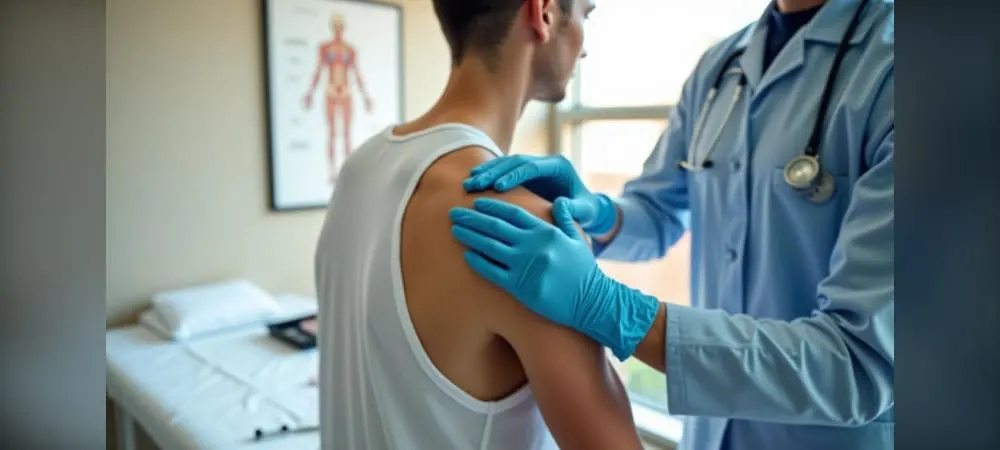
In the shoulder, special provocation tests are performed. The stability of the joint, muscle strength, and tenderness points are examined. However, physical examination alone is not sufficient for a definitive diagnosis.
Magnetic Resonance Imaging (MRI)
MRI shows soft tissues in detail. It is the most suitable method for imaging cartilage structures such as the labrum. Standard X-rays detect abnormalities in bone structure but do not show the labrum, which is soft tissue.
3-Tesla MRI devices have high magnetic field strength. It offers accuracy close to MR Arthrography without the need to enter the joint with a needle. This is advantageous in terms of both patient comfort and cost.
MR Arthrography
MR Arthrography is accepted as the gold standard in the diagnosis of labral tears. Imaging is performed by injecting a contrast agent into the joint. The contrast fluid seeps into the tear line, making the tear much more visible.
The sensitivity of this method in the diagnosis of labral tears has been found to be 91%, and its specificity 93%. Especially in the shoulder joint, it provides additional findings in 80% of cases for labral pathologies compared to standard MRI. The structure of the labrum and the details of the tear are clearly imaged.
Diagnosis via Arthroscopy
In uncertain cases, diagnostic arthroscopy is applied. A small camera is placed into the joint, and the structures are observed directly. This minimally invasive method allows for a detailed examination of intra-articular tissues.
Arthroscopy can be used for both diagnostic and treatment purposes. In necessary cases, it is possible to perform a repair in the same session. Additionally, a local anesthetic is injected into the hip joint under imaging guidance. A significant reduction in pain supports that the problem is within the joint.
How Is a Labral Tear Treated?
The treatment plan is shaped according to the size of the tear, the patient's age, activity level, and accompanying joint problems. An individualized approach is applied for every patient.
Conservative Treatment Methods
In early-stage tears and those with mild symptoms, non-surgical methods are the first option. Rest, activity modification, and avoiding movements that trigger pain are the initial steps. Painkillers and anti-inflammatory drugs reduce discomfort.
However, these methods provide limited benefit in most patients. In cases that do not respond to conservative treatment for 3-6 months, surgical options come to the fore. Within the scope of biological treatments, PRP or stem cell applications can be used to support tissue healing.
Physical Therapy and Exercises
A physical therapy program is the most important part of the treatment. It aims to compensate for the lack of static support by strengthening the muscles around the joint. In the shoulder, the focus is on the rotator cuff and scapular muscles, and in the hip, on the gluteal and core muscles.
Exercises maintain joint range of motion and prevent muscle atrophy. Flexibility-enhancing movements and neuromuscular control studies are included in the program. Programs organized by avoiding positions that may cause impingement accelerate healing.
Intra-articular Injection Treatment
Corticosteroid or hyaluronic acid injections reduce intra-articular inflammation. These applications temporarily relieve pain, facilitating the patient's participation in physical therapy. However, injections do not repair the tear; they only provide symptomatic relief.
Arthroscopic Surgical Repair
Arthroscopic surgery is preferred for patients who do not respond to conservative methods. In this minimally invasive method, the joint is entered through small incisions of about 1 cm. The torn area is imaged with a camera and special instruments, and a repair is performed.
The tear line is sutured or stabilized by cleaning it depending on its condition. If there is bony impingement, it is corrected in the same session. Arthroscopic surgery provides less tissue damage, less pain, and faster recovery compared to open surgery. Patients are usually discharged on the same day or the next day.
Post-operative Recovery Process
The first 4-6 weeks are critical for healing. During this period, crutches are used, and the joint does not bear full weight. A physiotherapy program usually begins from the 1st week.
Basic daily activities are gradually regained in the first 6 weeks. A return to light sports is possible from the 3rd month. The full recovery process is completed in an average of 4-6 months. For athletes, the return to sports can extend up to 6-9 months. A return to desk jobs occurs within 2-3 weeks.
Problems That May Be Encountered If Not Treated
Untreated tears increase mechanical stress in the joint. This triggers cartilage damage and paves the way for osteoarthritis. Chronic pain, limited movement, and a decrease in the quality of daily life are observed.
Instability and recurrent dislocations can develop in the shoulder. In the hip, the need for a prosthesis may increase over time. Appropriate treatment in the early period plays a vital role in preventing these complications.
Frequently Asked Questions About Labral Tears
Does a Labral Tear Heal on Its Own?
Most labral tears do not heal on their own. Since the labrum is cartilaginous, blood circulation is low, and its healing capacity is quite low. However, small tears can heal by responding to non-surgical methods such as physical therapy and intra-articular injection treatments.
In large tears, arthroscopic repair surgery is required. Physical therapy may be sufficient for small tears with mild symptoms, but surgery is recommended for tears that affect active life. With appropriate treatment and rehabilitation, significant improvement in terms of functionality can be achieved.
How Long Does Labral Tear Surgery Take?
Arthroscopic repair surgery for a hip labral tear takes an average of 1 hour. If other problems such as hip impingement syndrome accompany the labral tear, this time can extend up to 1.5-2 hours. Depending on the procedure to be performed, the surgery varies between 45 minutes and 2 hours.
Similarly, shoulder labral tear surgery is also performed using the arthroscopic method. The procedure is completed with 3-4 incisions around the shoulder, the largest of which is 1 cm. Patients are discharged one day after the surgery.
Which Doctor Should I See for a Labral Tear?
For complaints of a labral tear, an orthopedics and traumatology specialist should be consulted. Orthopedics specialists provide professional support in the treatment of hip and shoulder labral tears. Physical medicine and rehabilitation departments can also assist in the treatment process.
The specialist doctor makes a diagnosis through physical examination and imaging methods. Then, they determine treatment options such as rest, physical therapy, injections, or arthroscopic surgery.
What Should Be Considered After Surgery?
Although the recovery process varies from person to person, it can generally take from a few weeks to a few months. A full return to sports can take 6-12 months. In the first period, you should avoid carrying weight and stay away from sudden movements in accordance with the doctor's instructions.
Post-operative pain is controlled with prescribed painkillers. Ice application, rest, and gentle exercises under the guidance of a physiotherapist help reduce pain. Physical therapy is critical for regaining joint mobility and increasing muscle strength.
Pay attention to your sitting, standing, and sleeping positions. Follow the physiotherapist's recommendations and do not skip your regular check-ups. Healthy eating and adequate water consumption support the healing process.
In Summary, Labral Tear
A labral tear is a condition that can lead to serious discomfort in your joints. However, with an accurate diagnosis and timely intervention, it is possible for you to regain full functionality. If you are experiencing persistent pain in the groin or shoulder area, do not take the situation lightly. Consult an orthopedics specialist to get a definitive diagnosis.
You can start with non-surgical methods such as physical therapy and exercises. In cases that do not respond to conservative treatment, arthroscopic surgery is an effective solution. Follow your physiotherapist's recommendations during the recovery process and be patient. Thanks to early diagnosis and appropriate treatment, you can return to your daily life in a healthy way.
Start with the right assessment for What is a Labral Tear? What Are the Symptoms? How Is It Diagnosed and Treated?
Share your symptoms with our specialist physicians; let us determine the right diagnosis and treatment plan together.
Warning
If your symptoms started suddenly, are progressing rapidly, or significantly restrict your daily life, consult a physician without delay.
Plan your What is a Labral Tear? What Are the Symptoms? How Is It Diagnosed and Treated? journey with our specialists.
Fill in the form or book an appointment to learn about treatment options, the process and preparation.