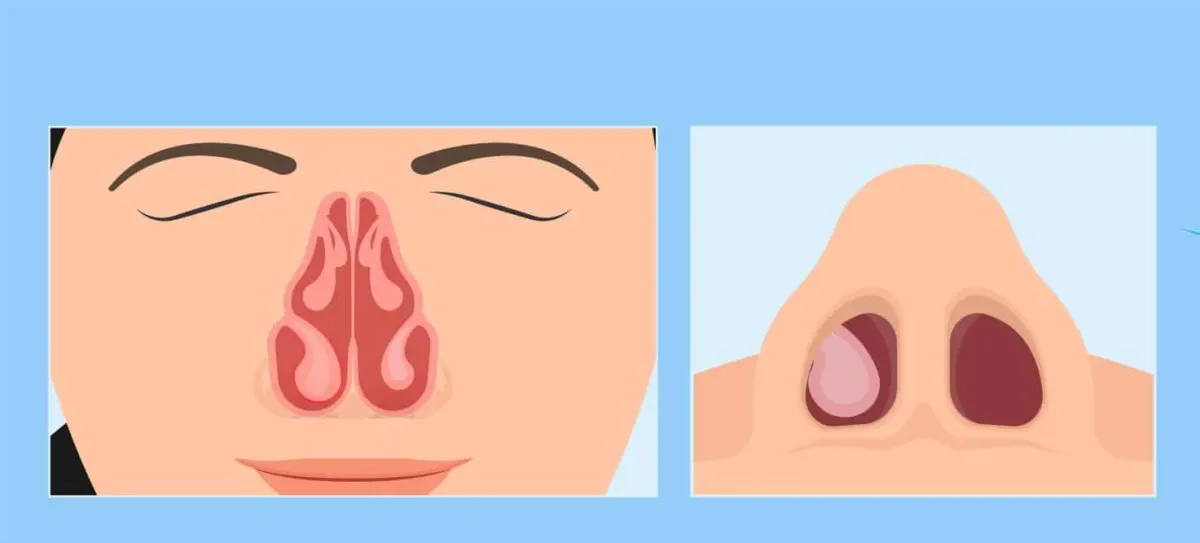
Nasal turbinates (conchae), which direct airflow within the nasal cavity to provide humidification, are located on the walls of the nasal cavity and keep the passage open for humidifying the air entering through the nose and bringing it to body temperature. When turbinate hypertrophy occurs, however, the enlarged turbinates block the nasal passages and cause various health problems, primarily with breathing.
What Is Turbinate Hypertrophy (Enlarged Nasal Turbinates)?
Turbinate hypertrophy, also known as enlarged nasal turbinates, causes narrowing of the nasal cavity and obstruction of airflow. As a result, symptoms such as nasal congestion and difficulty breathing, as well as postnasal drip, recurrent sinusitis and sleep disturbances, may occur. Enlargement of the nasal turbinates has many different causes arising from genetic, environmental or personal factors. Because treatment of turbinate enlargement varies depending on the severity of symptoms and the person's general health, it should be evaluated by an Ear, Nose and Throat (ENT) specialist and appropriate treatment options should be determined.
What Are the Symptoms of Turbinate Hypertrophy (Enlarged Nasal Turbinates)?
Turbinate hypertrophy, a condition in which the nasal turbinates (conchae) abnormally enlarge, can cause many complaints, primarily nasal congestion and accompanying difficulty breathing. The main symptoms that may occur can be listed as follows:
Nasal Congestion: With swelling of the nasal turbinates, the nasal cavity may become blocked, causing difficulty breathing. Nasal congestion may be felt on one or both sides of the nose.
Difficulty Breathing: The enlarged turbinate may block airflow and make breathing difficult. The person may experience greater difficulty breathing, especially during physical activity or when lying down.
Snoring: People with turbinate enlargement are prone to snoring, because the enlarged turbinate may narrow the airway and cause vibrations, leading to snoring.
Nasal Discharge: Nasal discharge may occur due to enlargement and inflammation of the nasal turbinates. Nasal discharge is usually clear and watery.
Headache: Prolonged nasal congestion may cause fluid accumulation in the sinuses and headache.
If you are experiencing symptoms of turbinate hypertrophy, it is important to consult an ear, nose and throat specialist (ENT doctor). Your doctor will examine you to make an accurate diagnosis and recommend appropriate treatment methods.
What Are the Causes of Turbinate Hypertrophy (Enlarged Nasal Turbinates)?
Turbinate hypertrophy may be associated with genetic, environmental and personal factors that cause abnormal enlargement of the nasal turbinates. The most common causes are the following:
Chronic sinusitis: Chronic sinusitis is a condition of recurrent inflammation of the nose and sinuses. Prolonged sinusitis may lead to swelling and hypertrophy of the nasal turbinates.
Allergic rhinitis: Allergic rhinitis, an inflammation inside the nose that develops in response to allergens, may cause swelling and enlargement of the nasal turbinates.
Nasal irritants: Exposure to irritating substances increases the likelihood of turbinate enlargement. For example, environmental factors such as cigarette smoke, chemical irritants or air pollution may cause the nasal turbinates to enlarge.
Genetic factors: In some people, due to genetic predisposition, turbinate enlargement is more likely. This may be seen more frequently in people with a family history of turbinate enlargement.
Hormonal changes: In some situations such as puberty and pregnancy, hormonal changes may contribute to enlargement of the nasal turbinates.
Other medical conditions: Medical conditions such as sinusitis, nasal polyps or nasal tumors may disrupt nasal anatomy and trigger the development of turbinate hypertrophy.
How Is Turbinate Hypertrophy (Enlarged Nasal Turbinates) Diagnosed? How Is It Identified?
Since turbinate hypertrophy must be diagnosed by an ear, nose and throat specialist, an examination is necessary for diagnosis. First, after the patient's complaints and medical history are taken, a physical examination is performed. To identify the enlarged nasal turbinates, the doctor looks inside the nose with a camera by nasal endoscopy. In some cases, such as curvature of the nasal septum, the enlargement may not be visible on endoscopy. In such cases, imaging methods such as computed tomography (CT) scan or magnetic resonance imaging (MRI) may be needed. When enlargement of the nasal turbinates is seen, diagnostic methods targeting the cause are also applied. Taking a family history, genetic predisposition, allergy and hormone tests are used to determine whether it is caused by a medical condition.
How Is Turbinate Hypertrophy (Enlarged Nasal Turbinates) Treated?
Treatment of turbinate hypertrophy may vary depending on the severity of symptoms, the patient's general health and the size of the nasal turbinate. Commonly used treatment methods can be described as follows:
Drug Treatment: To relieve symptoms and stop the enlargement, the doctor may prescribe nasal sprays or oral medications. These drugs generally help reduce inflammation and swelling of the nasal turbinates.
Nasal Sprays: Corticosteroid-containing nasal sprays help reduce inflammation of the nasal turbinates and relieve nasal congestion. Newer-generation nasal sprays prevent nasal dryness and allow long-term use. However, since they may have side effects with long-term use, they should be used under medical supervision.
Allergy Treatment: If enlargement of the nasal turbinates is related to allergic rhinitis, allergy treatment may be applied. Treatment helps control swelling of the nasal turbinates by reducing allergic reactions. In allergy treatment, medications or immunotherapy (allergy vaccine) may be used to reduce sensitivity to allergens.
Surgical Intervention: If symptoms cannot be controlled with drug treatment or if symptoms are very severe, surgical intervention may be required. Surgical options include turbinate radiofrequency (reduction of the nasal turbinates with radiofrequency), submucosal resection (surgery performed under the nasal turbinate mucosa) or laser ablation (removal by heat). The main purpose of these methods is to reduce the size of the nasal turbinates and relieve nasal congestion.
If you have a problem of nasal turbinate enlargement, you can consult your doctor to determine the appropriate treatment method according to the severity of symptoms and the size of the nasal turbinate.
How Is Turbinate Hypertrophy Surgery (Nasal Turbinate Reduction Surgery) Performed and by Which Methods?
Nasal turbinate reduction surgery is a surgical procedure performed to reduce the size of the nasal turbinates and relieve nasal congestion. Surgery is usually performed under general anesthesia or with local anesthesia combined with sedation. Some of the common methods used in surgery can be listed as follows:
Turbinate Radiofrequency: In this method, a radiofrequency device is used to reduce the size of the nasal turbinates. In the procedure performed with endoscopic methods, reduction is achieved by entering the nasal turbinates.
Submucosal Resection: In this method, the tissues under the nasal turbinates that trigger growth are removed. The surgeon makes an incision to access the tissues inside the nasal turbinates and removes the excess tissue.
Laser Ablation: Laser ablation is a method performed using laser beams to reduce the size of the nasal turbinates. The laser focuses on the tissues inside the nasal turbinates and causes them to shrink. This method is generally effective for small turbinate enlargements.
What Is Radiofrequency Reduction of Turbinate Hypertrophy (Enlarged Nasal Turbinates)?
The radiofrequency method helps reduce tissue size by applying controlled heat to reduce the size of the nasal turbinates. Since this procedure is less invasive (minimal incision) compared with surgical intervention, it provides less discomfort and a quicker recovery period. After surgery, improvement in symptoms and a decrease in nasal congestion may be observed. Although the recovery process varies individually, complete recovery is generally achieved within a few weeks.
Frequently Asked Questions About Turbinate Hypertrophy (Enlarged Nasal Turbinates)
Since enlargement of the nasal turbinates is a condition seen in many people, both children and adults, questions arise in mind about its symptoms and treatment. Some of the frequently asked questions about turbinate enlargement can be answered as follows: If enlargement of the nasal turbinates is not treated, symptoms such as breathing problems that adversely affect the person's daily life may occur. Symptoms may wear the person down both physically and mentally, causing inefficiency. For diagnosis, treatment and follow-up processes related to enlargement of the nasal turbinates, it is recommended to consult an ear, nose and throat (ENT) specialist. In some cases, it may also be necessary to consult an allergy specialist and a pediatrician. Enlargement of the nasal turbinates is a common condition in preschool and school-age children. The reason it is common in children is related to weakness of the immune system and the development of the nasal cavity structure. In addition, allergies and infections in children may also cause enlargement of the nasal turbinates. Nasal turbinate reduction surgery, when performed with the closed method also known as endoscopic nasal surgery, is done by entering the nose and making a small incision. The advantage of closed surgery is that since there is no large incision, it causes little discomfort and a rapid recovery process. Nasal turbinate enlargement surgery should be performed when other treatment options are insufficient and when the person's symptoms become severe and seriously affect daily life. The time to return to daily life after nasal turbinate reduction surgery varies from person to person, but generally daily activities can be resumed within a few days after surgery. To prevent swelling and redness of the nose, care should be taken to keep the head elevated during the first days. After nasal turbinate reduction surgery, in rare cases, the nasal turbinates may grow back. This condition, which may result from unsuccessful surgical intervention or genetic predisposition, is called recurrent hypertrophy. However, regrowth after surgery is generally a very rare complication. Nasal turbinate reduction surgery is generally a safe procedure, but like any medical intervention, it carries some risks. These risks include complications such as anesthesia-related risks, bleeding, infection, wound healing problems, changes in nose shape, nasal congestion or nasal discharge. In rare cases, problems such as regrowth or incomplete resolution of hypertrophy may also occur.
For early diagnosis and treatment of turbinate hypertrophy, it is important to see a doctor and not to underestimate symptoms such as nasal congestion.
Start with the right assessment for What Is Turbinate Hypertrophy (Enlarged Nasal Turbinates)? What Are Its Causes, Symptoms and Treatment Methods?
Share your symptoms with our specialist physicians; let us determine the right diagnosis and treatment plan together.
Warning
If your symptoms started suddenly, are progressing rapidly, or significantly restrict your daily life, consult a physician without delay.
Plan your What Is Turbinate Hypertrophy (Enlarged Nasal Turbinates)? What Are Its Causes, Symptoms and Treatment Methods? journey with our specialists.
Fill in the form or book an appointment to learn about treatment options, the process and preparation.