What is an ingrown hair and how does it form?
It usually occurs in young, hairy men, but it can also be seen in men who are not very hairy and in women. The condition commonly known as ingrown hair, the sacral dermoid cyst, is the embedding of hairs under the skin, most often in the tailbone (sacrococcygeal) region, the infection of this nest, and its subsequent transformation into a discharging abscess. The disease is basically an infection of the subcutaneous tissue. Apart from the tailbone region, it can also be seen in the groin, navel and armpit. Although the exact cause is not fully known, it is thought to develop when small inflammations of the hair roots in the tailbone region gradually enlarge, and hairs settle into this inflamed nest with sitting and hip movements.
How can you tell if you have an ingrown hair?
Since the disease occurs in an area the person cannot see themselves, it is noticed after the complaints it causes. If there is discharge, pain, swelling and a bad odor in the tailbone region, you must see a physician. The disease is often considered a small pimple and is expected to heal on its own. When the tailbone region is examined, very small holes or swelling may be seen in the midline; rarely, the disease can develop without any hole. The disease manifests itself with complaints that begin within a day or two, cause pain and swelling, such as an ingrown hair abscess, or with long-standing discharge and itching.
How and when is it treated?
It must be treated as soon as it is detected, because an ingrown hair does not heal on its own; on the contrary, the affected area grows over time, and if neglected, it may involve a wider area, requiring removal of a larger area of skin and subcutaneous tissue during surgery. The main treatment of ingrown hair is surgical removal of the affected area. In suitable patients, non-surgical procedures using certain chemical agents may also be used. However, if an abscess forms, surgical drainage of the abscess is needed urgently. If you consult a physician before an abscess develops, definitive surgery is planned. Contrary to popular belief, patients do not need to lie face down for a long time after ingrown hair surgery. During this rest period, the patient can lie in any position they like, walk around, and take a bath after 48 hours. They can return to daily activities 3-5 days after surgery. After surgery, the tailbone region must be kept dry and hairless. For this purpose, hair removal with depilatory creams or laser epilation is helpful. With properly selected treatment methods and experienced hands, recurrence is not seen as much as feared. Some recurrences can be treated with dressings. Ingrown hair is a skin problem frequently encountered in daily life but often underestimated. This condition, especially appearing after shaving or epilation, can cause discomfort both aesthetically and in terms of health. In men, ingrown hair is seen especially in the beard area and around the tailbone, while in women it is more common in the bikini line and leg areas. As long as infection does not develop, it may go unnoticed, but when it progresses it manifests with pain, discharge and recurrent inflammation.
What Is an Ingrown Hair?
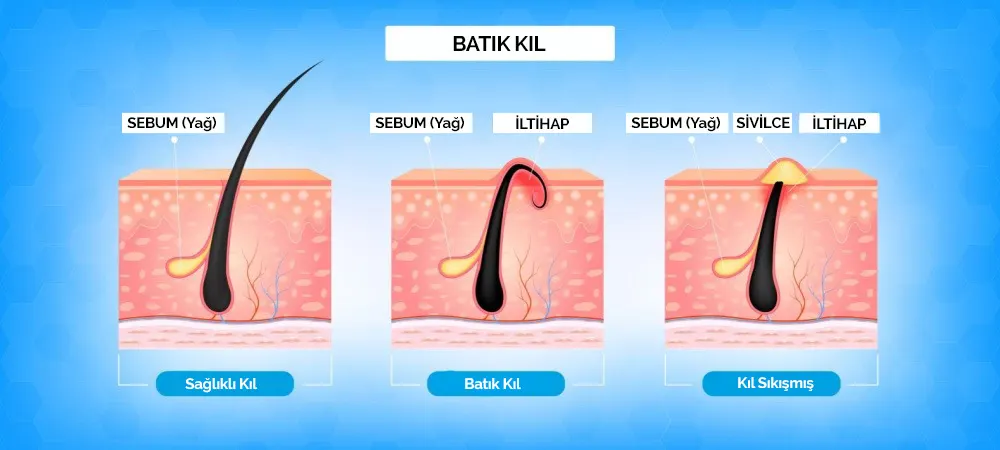
Ingrown hair, called in medical terminology "pilonidal sinus" or "ingrown hair", is a skin condition. This problem occurs when the hair, instead of growing in its natural direction, curls into the skin and grows. Under normal conditions, the hair that should emerge from the hair follicle and reach the skin surface changes direction for various reasons and remains under the skin. In the formation of the disease, hairs that enter under the skin eventually form a capsule. If infection develops within this capsule, inflammation begins. Initially appearing as a small swelling or discharge, when it progresses it can lead to abscesses, foul-smelling discharge and serious disturbances.
Pilonidal ingrown hair is one of the most common forms and is usually seen in young men. Ingrown hair in the beard is a common problem after shaving. Armpit ingrown hair and leg ingrown hair can develop especially in women after epilation. Ingrown hair in the genital area, ingrown hair in the vagina and ingrown hair in the groin require special attention because they are more sensitive areas. Ingrown hair on the buttocks and ingrown hair on the abdomen are among rarer forms. Since these areas are usually areas that are regularly shaved or epilated, the risk of ingrown hair is higher.
What Are the Symptoms of Ingrown Hair?
Symptoms of ingrown hair usually appear a few days after shaving or epilation. Early symptoms include small, red and raised bumps on the skin. These bumps may initially resemble pimples. Pain and tenderness are among the most common symptoms of ingrown hair. Increasing pain on touch is felt in the affected area. This pain may increase especially with friction from clothing or during movement. Itching is also a frequent symptom and creates a constant urge to scratch.
Signs of inflammation become more pronounced over time. Redness and swelling are seen around the affected area. When an ingrown hair becomes inflamed, small white or yellow-headed pimple-like formations may appear. These formations may contain pus and can present as an ingrown hair abscess. In chronic cases of ingrown hair, hyperpigmentation may develop; in this case dark patches form in the affected areas. Scar tissue formation is also possible and may leave permanent marks. In severe cases, cellulitis-like signs of infection may appear; in this case systemic symptoms such as fever and widespread redness and swelling may occur.
What Causes Ingrown Hair?
The main cause of ingrown hair is disruption of the natural growth pattern of the hair. This develops under the influence of many factors. Genetic predisposition is among the most important risk factors. Individuals of African descent and people with curly hair in particular are at higher risk. The causes of ingrown hair can be listed as follows:
Incorrect Shaving Techniques: Incorrect shaving techniques are among the most common causes of ingrown hair. Shaving against the direction of hair growth, using dull razors or shaving while pulling the skin very tight increases the risk of ingrown hair. Inadequate skin preparation before shaving also contributes to the problem.
Epilation Methods: Epilation methods can also cause ingrown hair. Follicle damage may occur during removal of hair from the root, and newly growing hair may undergo directional change. This risk especially increases after regular waxing procedures.
Tight Clothing: Tight garments and friction trigger the development of ingrown hair. Especially synthetic fabrics and tight clothes create pressure on the skin and prevent the natural growth of hair. Friction during sports activities has a similar effect.
Hormonal Changes: Hormonal changes can affect hair growth and thickness, increasing the risk of ingrown hair. This risk rises during periods when hormone levels change, such as puberty, pregnancy and menopause.
Sweating and Lack of Hygiene: Sweating can cause hairs to stick to and pierce the skin. Along with skin type, personal hygiene habits also play an important role. Accumulation of dead skin cells can clog hair follicles and prepare the ground for ingrown hair.
Prolonged Sitting: In people who sit constantly, such as desk workers and drivers, friction in the tailbone region increases. This also increases the risk of ingrown hair.
How Is Ingrown Hair Diagnosed?
Diagnosis of ingrown hair is usually made by clinical examination. An experienced general surgeon can easily make a diagnosis based on characteristic symptoms and patient history. During physical examination, the red, raised bumps in the affected area and signs of inflammation around the follicles are examined.
In terms of differential diagnosis, it must be distinguished from other skin diseases that present similarly. It may be confused with conditions such as folliculitis, seborrheic dermatitis, acne vulgaris and contact dermatitis. Therefore, patient history and the timing of symptom onset are important.
Biopsy may be required in suspicious cases or chronic conditions. However, this is usually not necessary in routine practice. Biopsy is considered mainly in atypical presentations or cases that do not respond to treatment. Laboratory tests are generally not necessary for diagnosis. However, if infection is suspected, a culture sample may be taken. In the presence of systemic signs of infection, a complete blood count and inflammatory markers may be evaluated.
How Is Ingrown Hair Treated?
Treatment of ingrown hair aims both to heal existing lesions and to prevent new formations. The treatment approach is individualized according to the severity of the patient's condition and the affected area.
Conservative treatment methods are the first choice in most cases. Application of warm compresses reduces inflammation and makes it easier for the hair to reach the skin surface. Applying a warm compress 2-3 times a day for 10-15 minutes is recommended. Topical treatments are used to control inflammation, while creams containing antibiotics are used to prevent infection. Corticosteroid creams reduce inflammation and itching. These medications should be used under physician supervision and for appropriate durations. In addition, creams containing retinoids help open hair follicles and accelerate the shedding of dead skin cells. However, these products can cause skin sensitivity and require careful use. Chemical peeling applications remove the dead skin layer, making it easier for hairs to reach the skin surface. Products containing glycolic acid and salicylic acid can be used for this purpose.
The definitive treatment of ingrown hair is often achieved by surgical intervention. Ingrown hair surgery methods are determined according to the extent of the disease, the status of recurrence and the patient's general health. One of the most frequently preferred methods is simple excision. In this method, the area where the sinus is located is surgically removed and the wound may be left open or closed. Minimally invasive techniques that achieve healing with less tissue damage have also come to the fore in recent years. In particular, phenol ingrown hair laser treatment and endoscopic pilonidal sinus treatment (EPSiT) are in this group. Laser ingrown hair surgery permanently destroys hair follicles, providing a radical solution to the problem. These methods both give better cosmetic results and can shorten recovery time.
Frequently Asked Questions
Ingrown hair is usually seen more often in young men between the ages of 15 and 35. Those with excessively hairy build, people who work sitting for long periods (such as drivers or desk workers), individuals who do not pay attention to hygiene, and people prone to sweating are in the risk group. Also, the likelihood of occurrence increases in individuals with a family history of ingrown hair. Ingrown hair usually manifests as swelling, pain, redness and foul-smelling discharge in the tailbone. Small holes called sinus openings may be noticed on the skin surface. If infection develops, abscesses may form, and discomfort may be felt while sitting or moving. Especially when infected, ingrown hair can cause severe pain. In cases where an abscess forms, pain becomes more pronounced, and even simple movements such as sitting or walking can cause discomfort. Ingrown hair usually does not heal on its own. Symptoms may lessen over time and flare up, but the sinus structure remains under the skin. Because of the risk of infection and recurrent abscesses, medical intervention is always necessary. Discharge and inflammation on the surface can be cleaned with sterile gauze. Daily washing, drying and keeping the area dry is important. However, the inside of the sinus cannot be completely cleaned without surgical intervention. Self-treatment should not be attempted; help must be sought from a qualified healthcare professional. Ingrown hair surgery can be performed with different techniques. The most commonly used method is surgical removal of the sinus. Techniques with open wounds or closed with sutures can be used. In minimally invasive methods, the sinus can be cleaned with laser or endoscopic devices. In more extensive cases, the area is closed with healthy tissue by the flap method. Especially if proper treatment has not been performed or hygiene rules have not been followed, ingrown hair may recur. To prevent recurrence, attention should be paid to hair removal, sweating should be kept under control, and post-surgical recommendations should be followed. Although ingrown hair cannot be completely prevented, risk can be reduced. Hair density can be reduced with methods such as regular shaving and laser epilation. Excessive sweating should be prevented, tight clothing should be avoided, and the time spent sitting should be reduced. Daily personal hygiene and skin care are also very important. Symptoms can be relieved with home methods; warm compresses, antiseptic cleansing and moisturizer use may be preferred for this purpose. However, complete healing of the sinus tissue usually requires medical or surgical intervention. Procedures done at home provide only temporary relief. If ingrown hair is suspected, you should consult the General Surgery department. The diagnosis and treatment process is carried out by a general surgeon. If surgery is needed, surgical procedures are again performed within this specialty. If you are experiencing complaints such as pain, swelling or discharge in your tailbone, you may consult our general surgery specialist without losing time. You can regain your quality of life with early diagnosis and correct treatment. Book an Appointment Now.
Start with the right assessment for Don't Ignore Ingrown Hair!
Share your symptoms with our specialist physicians; let us determine the right diagnosis and treatment plan together.
Warning
If your symptoms started suddenly, are progressing rapidly, or significantly restrict your daily life, consult a physician without delay.
Plan your Don't Ignore Ingrown Hair! journey with our specialists.
Fill in the form or book an appointment to learn about treatment options, the process and preparation.