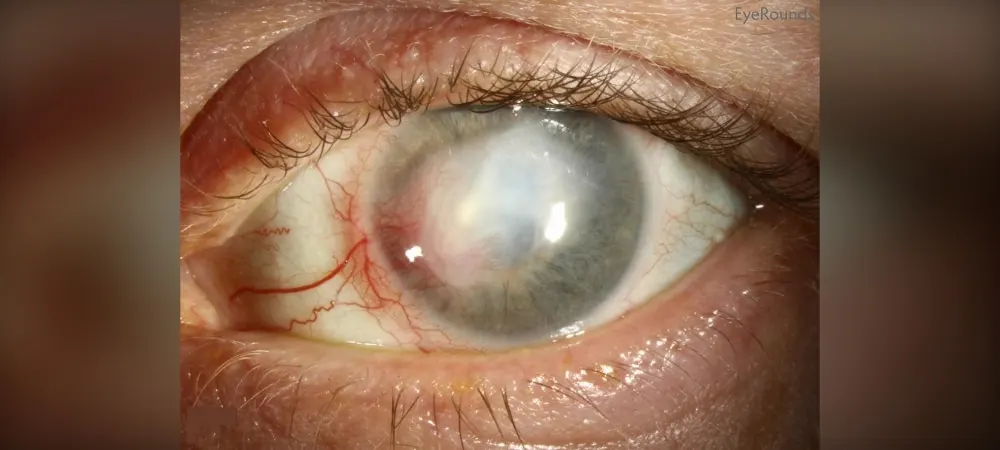
Eye herpes is a serious eye disease that presents with approximately 58,000 new cases each year and can lead to permanent vision loss if left untreated. Also known as herpetic keratitis, this condition occurs when the herpes virus infects the cornea, the clear layer of your eye. In this article, you will find answers to questions such as what is eye herpes, what causes eye herpes, and what are the symptoms of eye herpes. We will also examine herpetic keratitis diagnosis and eye herpes treatment options in detail.
What is Herpetik Keratit (Eye Herpes)?
Herpetic keratitis is a disease that occurs when herpes viruses infect the transparent layer of your eye, the cornea. This infection formed in the cornea can cause permanent damage if left untreated. The disease is usually triggered by the herpes simplex virus or varicella zoster virus.
The Role of HSV-1 and HSV-2 Viruses
There are two different types of the herpes simplex virus. Eye involvement usually occurs due to Type 1 HSV. While HSV-1 is more commonly associated with lip and eye infections, HSV-2 is typically responsible for genital region infections.
The virus enters the body through the mouth-nose mucosa and skin. Transmission requires close contact with a person who has herpes. Transmission does not occur through the air or swimming pools.
It is known that 60% of the population is infected with the herpes virus by the age of 5. During childhood, it can be transmitted through a kiss from a family member, sharing items such as towels, or droplets from the saliva of an infected person. Herpes viruses have the capacity to cause latent infection, and the disease in the cornea often appears following this latent infection.
Eye involvement related to HSV can be seen in different clinical pictures such as blepharitis, conjunctivitis, corneal ulcers, necrotizing stromal keratitis, immune stromal keratitis, and iridocyclitis. Especially in developed countries, herpes simplex keratitis is the most common cause of corneal blindness.
Varicella Zoster Virus and Eye Involvement
Varicella zoster virus is the virus that causes chickenpox in children. After the chickenpox infection heals, the virus continues to remain dormant in nerve clusters. Waiting in a latent state in the trigeminal ganglion located in the skull, the virus can later reactivate and affect the eye and its surrounding area.
Shingles is more common in immunosuppressed individuals and those over 45 years of age. For those over 75, the incidence rate increases by 1/100 each year as a result of the activation of latent VZV. The ophthalmic branch of the fifth cranial nerve innervates the skin of the eyelid, eyebrow, forehead, and tip of the nose.
Eye involvement occurs in 52-70% of all herpes zoster ophthalmicus cases, and these cases make up 10-20% of shingles cases. Varicella zoster virus remains latent in neurons after the primary infection and can reactivate especially in situations such as immunosuppression, trauma, and stress. In the presence of eye involvement, clinical pictures such as conjunctivitis, scleritis, keratitis, and uveitis can develop.
Incidence of the Disease
Eye herpes is a very common disease in the community. In the United States, approximately 500,000 people are affected by HSV-induced eye herpes. In developed countries, the incidence of the infection is 150 in 10,000.
The community frequency of eye herpes is 149 in 100,000. Eye herpes frequently affects a single eye, and only 3% of patients have both eyes involved. It has been determined that 40% of individuals affecting both eyes have an allergic constitution.
In America, approximately 450,000 people contract eye herpes every year, and about 46,000 patients experience recurring HSV eye infections. The varicella zoster virus can also cause eye involvement, particularly in elderly individuals.
What Causes Eye Herpes?
When the virus enters the body for the first time, it does not cause a prominent disease in most people. When the virus is first contracted from someone with a cold sore, there is only a 1-6% chance of developing eye herpes within 1 week. In the remaining 94-99% of cases, the virus settles in nerve cells without showing any symptoms and waits in a dormant state. This silent period can last for years.
Ways the Virus is Transmitted
Usually during childhood, the virus is acquired from other adults through a cold sore on the lip or secretions. Close contact with an infected person is required. Herpes viruses spread through direct contact with infected saliva. HSV-1 can be transmitted, in particular, by touching the eye with hands.
The virus can remain contagious as long as it is kept moist. During an active herpes infection, for example when there is a cold sore on the lip, the risk of transmission to the eye through self-contact increases. Contact with infected body fluids or objects can also lead to transmission.
Latent Infection and Reactivation
The HSV virus that enters the body remains dormant in nerve cells. The virus can pass into the neuron via peripheral nerves and hide there for years. Viruses present as latent specifically in the trigeminal ganglion can later reactivate.
Approximately one-third of those infected with HSV experience a secondary infection at some point in their lives. The moment the immune system weakens, the virus migrates to the lip or eye and causes disease. Recurrent infections are usually less pronounced than the initial infection and heal more quickly.
Having herpes in both eyes indicates a weakness related to the immune system. This situation shows that your body's virus-fighting capacity has severely decreased.
Factors Triggering Reactivation
The herpes virus activates under certain conditions. A decline in the immune system is the primary cause of eye herpes. The main factors triggering reactivation are:
Stress and fatigue: The decrease in body resistance is the biggest opportunity for the virus to wake up
Sunlight: Excessive exposure to UV rays
Febrile illnesses: Infections such as flu and colds
Trauma: Blows to the eye or surgical procedures
Hormonal changes: Situations such as the menstrual period
Cortisone use: Long-term corticosteroid therapy
Certain factors such as sun exposure and menstruation are directly related to the reactivation of HSV. Stress-related fever, sunburn, dental, or surgical procedures can also trigger outbreaks. Therefore, keeping these triggering factors away from your life can help prevent the recurrence of the disease.
What are the Symptoms of Eye Herpes?
Eye herpes symptoms usually start unilaterally and are frequently confused by patients with a simple eye infection or allergy. Specific complaints arise while the virus infects the cornea. Recognizing these symptoms early accelerates the treatment process.
Early Stage Symptoms
Symptoms may be mild in the initial stages. A burning and stinging sensation in your eye is among the initial findings. Additionally, redness, watering, and sensitivity to light develop in the eye. Extreme sensitivity to light is called photophobia and is one of the characteristic findings of the disease.
You feel a foreign body sensation in your eye as if there is constantly dust or an eyelash inside. Mild blurred vision is also among the early symptoms. A clear discharge and sticky eyelashes in the mornings can be observed. Swelling and redness of the eyelid are also among frequently observed findings.
Advanced Infection Findings
As the disease progresses, complaints intensify. Fluid-filled blisters may appear on the eyelid. Transparent, small, pearl-like blisters develop in clusters on a red base on the face. The vesicles rupture and then crust over, healing within a few days.
Severe eye pain is an important sign of advanced infection. Pain occurs in the eye and the surrounding skin area. Severe blurring of vision begins. A wound, meaning keratitis, forms on the cornea.
Ulcers in the shape of "tree branches" can appear on the corneal surface. This structure, called a dendritic ulcer, is a typical finding of the disease. The cornea can be stained with fluorescein or rose bengal dye to detect the typical dry tree branch-shaped ulcer.
Using steroid drops without an examination in acute infection can lead to the rapid progression of the infection and the formation of geographic ulcers. This condition can result in permanent vision loss.
Corneal Damage and Vision Problems
The virus reactivated by decreased immunity can cause a superficial infection in the cornea or lead to stromal keratitis, which can reduce vision by creating a reaction in deeper tissues. If the virus descends into deeper layers, it can cause scar tissue in the cornea, leading to permanent visual impairments.
In recurrent attacks, deeper layers of the cornea can be affected, and the risk of vision loss increases. If treatment is delayed or recurs frequently, clouding can occur in the cornea. Corneal thinning can develop, and vision can decrease permanently. In advanced situations, ulcers or scarring can form on the cornea.
If the ocular herpes infection involves the central part of the cornea, permanent vision loss may occur. While conjunctivitis generally does not lead to vision loss even if no treatment is given, permanent vision loss is frequently seen in cases of eye herpes. Therefore, early diagnosis and appropriate treatment carry great importance.
Herpetic keratitis is a serious eye disease caused by herpes viruses infecting the cornea, which is the transparent layer of the eye. If left untreated, this infection can lead to permanent damage in the corneal tissue and cause vision loss. The disease mostly occurs as a result of herpes simplex virus (HSV) or varicella zoster virus (VZV) infection.
How is Herpetic Keratitis Diagnosed?
Making the correct diagnosis is the first step in herpetic keratitis treatment. Your ophthalmologist first performs a detailed examination to make the diagnosis. Listening to the patient's history forms the beginning of the diagnostic process.
Slit-Lamp Examination and Detection of Dendritic Ulcer
Slit-lamp examination is the first and most important step in the diagnosis of herpetic keratitis. This detailed examination is a diagnostic method used to inspect the structures of the eye, including the cornea, lens, iris, and retina. Thanks to a special microscope with a bright, narrow beam of light, the eye specialist evaluates the cornea in detail.
The cornea is examined under a biomicroscope to detect typical lesions. A special dye called fluorescein is used particularly to see lesions on the corneal surface. Through this, ulcers in the shape of "branches" specific to the herpes virus can be clearly detected.
One of the most frequent findings is superficial wounds in the shape of tree branches, called dendritic ulcers. After being stained with fluorescein dye, these lesions become prominent and can be seen more clearly under the biomicroscope. Staining the cornea with rose bengal dye can detect the typical dry tree branch-shaped ulcer.
The physical examination looks at corneal sensitivity and epithelial staining properties with fluorescein. In more advanced cases, lesions can turn into geographic ulcers. An experienced eye physician can usually make the diagnosis with a clinical examination.
Advanced Imaging with Corneal OCT
Corneal optical coherence tomography is a non-invasive imaging method that provides detailed cross-sectional images of the cornea at the micron level. OCT provides a major advantage, especially when deep layer involvement is present.
Thanks to this method, structural changes such as corneal thickening, edema, and membrane involvements can be observed. Healing or worsening in the cornea can be monitored objectively during the treatment process. However, it is used as a supportive method rather than diagnostic on its own.
Laboratory Tests (PCR, ELISA, Viral Culture)
Laboratory tests come into play in cases where clinical findings are not clear or are atypical. If there is suspicion, a corneal scraping can be taken for further testing to look for the genetic material of the virus using a PCR test.
Polymerase chain reaction is a molecular technique that can detect HSV DNA with high sensitivity and specificity. It is accepted as the gold standard in the laboratory diagnosis of herpetic keratitis thanks to its ability to give positive results even in low viral load situations. Core particles of the virus are detected by polymerase chain reaction.
The ELISA method is used to detect antigens or antibodies specific to the virus. However, this test is more suitable for evaluating the systemic immune response. If an active virus is present, a definitive diagnosis is made by culture. Viral culture is a classic method for HSV isolation, but it is time-consuming and its sensitivity is low compared to PCR.
In herpes uveitis, it is very important to differentiate between Herpes simplex, zoster, and cytomegalovirus because their treatments differ. The definitive distinction is to take eye fluid and perform a PCR test.
How is Herpetic Keratitis Treated?
The treatment plan is designed according to the type of infection, its spread, and the stage of the disease. The goal is to suppress the virus, bring eye inflammation under control, and prevent permanent vision loss. Topical and systemic antiviral treatments are applied.
Antiviral Eye Drops and Gels
Drug therapy is always the first step. Antiviral drops and gels that stop the virus from multiplying are used while the infection is active. Virgan (ganciclovir ophthalmic gel 0.15%) is used in the treatment of acute herpetic keratitis. It is applied as 1 drop 5 times a day until complete corneal healing. After healing, it is continued as 1 drop 3 times a day for a duration of 7 days. The treatment duration is usually 21 days.
Other antiviral options include Viroptic (trifluridine) eye drops and Vira-A (vidarabine) ointment. When used at regular intervals, these medications reduce the viral load and ensure the healing of the infection. If contact lenses are worn during treatment, their use must be stopped.
Corticosteroid Therapy
In cases where deeper corneal structures are involved, topical steroids may be added to the treatment. When inflammation developing as a result of the immune system's excessive reaction is also observed, eye drops containing corticosteroids are used in addition to antiviral treatment. However, steroid drops must definitely be given together with antiviral treatment. Since it can increase the multiplication of the virus when used alone, it is always used at the same time as antiviral drops.
Systemic Antiviral Medications
If the infection is widespread or an adequate response to drop therapy is not obtained, systemically taken antiviral medications can be added to the treatment. In the Acyclovir Prevention Study, it was found that orally taken acyclovir reduced the likelihood of eye herpes returning by 41% in patients who had experienced an infection the previous year. It recorded a 50% reduction in the recurrence rate of stromal keratitis. An oral acyclovir protocol of 2000mg during the active period of the disease and 800mg during the convalescent period is applied.
Corneal Transplant and Surgical Options
Corneal transplants can be performed for corneal scars that cause permanent vision loss after recurrent infections. The success rate is around 50-80%. Penetrating keratoplasty is a full-thickness transplant procedure where all layers of the cornea are replaced. In the DALK method, only the front layers of the cornea are replaced. This method significantly reduces the risk of tissue rejection.
Conclusion
Eye herpes is a disease that can be controlled when recognized early and treated correctly. When you notice symptoms such as burning, redness, or sensitivity to light in your eye, it is critically important to consult an ophthalmologist immediately. Especially if intervened before the virus spreads to deeper layers, the risk of permanent vision loss is significantly reduced.
Keeping your immune system strong, staying away from stress, and protecting yourself from the sun help prevent the recurrence of the disease. Therefore, regular check-ups and adhering to the treatment plan recommended by your doctor are the most effective ways to protect the health of your eyes.
Frequently Asked Questions
Is eye herpes contagious?
The virus is contagious during the active infection period. If you have herpes in your eye, especially if you touch your eye and then contact other surfaces or people, you can spread the virus. However, the risk of contagion decreases significantly after treatment starts. Paying attention to hand hygiene and not sharing personal items prevents transmission.
Does eye herpes recur?
Because the virus is permanently present in your body, the disease can recur. When your immune system weakens or you are exposed to triggering factors, it can become active again. Regular check-ups and preventative treatments recommended by your doctor reduce the risk of recurrence.
Can I continue wearing contact lenses?
You need to stop wearing contact lenses during the treatment period. Lenses can cause additional irritation on the corneal surface and delay healing. After your eye has completely healed, you can return to wearing lenses with your doctor's approval.
How long does eye herpes take to heal?
The healing time depends on the severity of the disease. Superficial infections usually resolve within 2-3 weeks. In cases with deep tissue involvement, healing may take longer. Starting treatment early shortens the healing time.
Do I need to wear sunglasses?
If you are experiencing sensitivity to light, wearing sunglasses will provide relief. Additionally, since UV rays can trigger the disease, it is beneficial to wear protective eyewear when you go outside. Protection from the sun gains importance, especially in the summer months.
In which situations should I go to the doctor urgently?
If you experience sudden vision loss, severe eye pain, or unbearable sensitivity to light, you need to consult an eye doctor immediately. If symptoms are worsening rapidly, intervention must be made without waiting.
Herpetic keratitis is a serious eye disease caused by the herpes virus infecting the cornea. Get detailed information about its symptoms, diagnosis, and treatment methods.
Start with the right assessment for What is Herpetik Keratit (Eye Herpes)? What are the Symptoms? How is it Diagnosed and Treated?
Share your symptoms with our specialist physicians; let us determine the right diagnosis and treatment plan together.
Warning
If your symptoms started suddenly, are progressing rapidly, or significantly restrict your daily life, consult a physician without delay.
Plan your What is Herpetik Keratit (Eye Herpes)? What are the Symptoms? How is it Diagnosed and Treated? journey with our specialists.
Fill in the form or book an appointment to learn about treatment options, the process and preparation.