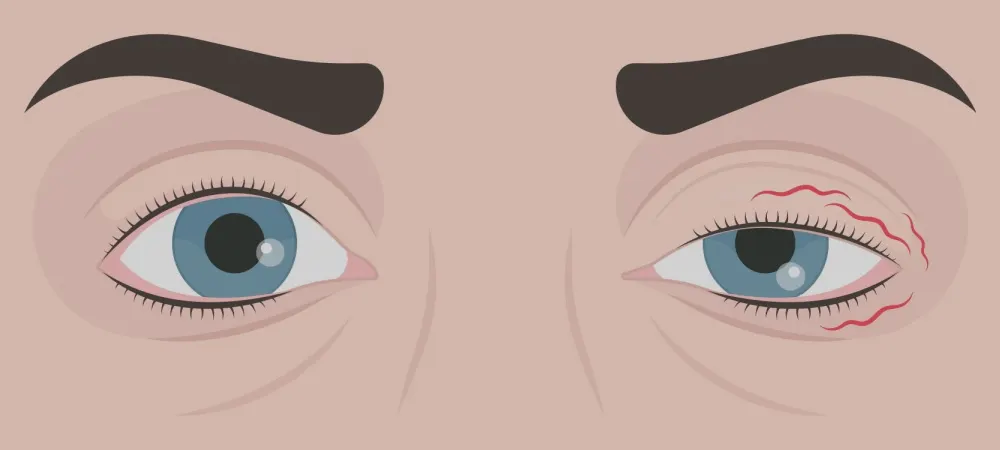
Eye twitching is a condition that can occur in people of all age groups and often resolves on its own. It manifests as involuntary contractions of the eyelid or muscles around the eye. It can be seen in individuals who look at screens for long periods or exert excessive effort. In this article, we will provide you with information about eye twitching.
What is Eye Twitching?
Eye twitching is a condition that occurs due to the uncontrolled contraction of the eyelid, eyebrows, muscles around the eye, or eye muscles. The twitching affects the muscles in the eyelid and causes involuntary blinking. Eyelid twitching can make blinking feel more pronounced. In more severe cases, the twitching can result in forceful eyelid closure lasting for minutes, hours, or days.
The symptoms become more apparent over time. There are many types of eye twitching, and each of these twitches may have a different cause. The most common type of eye twitching is called myokymia. This type of twitching or uncontrolled contraction is very common, and many people may encounter this complaint at some point in their lives. The twitching can involve the upper or lower eyelid, but it usually affects one eye at a time, manifesting as right eye twitching or left eye twitching. Eye twitching can range from a barely noticeable level to severe eye twitching. Most of the time, it resolves on its own without requiring treatment, but advanced cases of eye twitching can be treated under medical supervision and with doctor-recommended medication.
What Causes Eye Twitching?
The cause of eye twitching is often unknown to individuals because the underlying reasons are not investigated. In some cases, eye twitching can arise from many reasons such as looking at a screen for long periods, eye strain, exerting high effort, eyelid strain, impact, eye irritation and dry eye, side effects of certain medications, stress, and anxiety. The most common type of eyelid twitching, called myokymia, can be triggered by the following reasons:
Alcohol consumption,
Looking at bright light,
High caffeine intake,
Eye strain,
Exhaustion,
Irritation on the eye surface or inside the eyelids,
Smoking,
Stress,
Wind or air pollution.
Benign eyelid contractions that can develop due to the mentioned reasons are a movement disorder that develops in the muscles around the eye, called dystonia. The exact cause is unknown, but researchers believe it stems from a dysfunction of specific cells in the nervous system called the basal ganglia. Other conditions that may be seen as a cause of eyelid twitching are:
Blepharitis,
Dry eyes,
Light sensitivity,
Dystonia.
Brain and nervous system disorders such as Bell's palsy, dystonia, Multiple Sclerosis, Parkinson's disease, and Tourette syndrome can also cause eye twitching.
How is Eye Twitching Diagnosed?
The diagnosis of eye twitching can be made by evaluating the patient's symptoms. The complaint of eye twitching usually passes in a short time and does not require any treatment. In cases where the complaints persist, one should be examined at the nearest healthcare facility and receive treatment. A specialist physician should be consulted to identify the condition causing the eye twitching.
How is Eye Twitching Treated?
Eye twitching can cause discomfort to individuals if it is long-lasting, but this process is usually not painful. For this reason, many people do not need treatment when they experience eye twitching and wait for it to pass on its own. When patients experiencing eye twitching who do not see spontaneous recovery apply to healthcare institutions, there is no specific diagnostic test that allows for the direct detection of this condition. Therefore, in the diagnosis of the disease, a detailed history of the patient is taken, and then brain magnetic resonance imaging (MRI) and neurological examinations are performed to rule out the presence of different diseases. After these examinations, the diagnosis of the disease can be made and the treatment process can be initiated. To prevent involuntary contractions of the eye, taking measures such as reducing caffeine consumption, ensuring a regular and adequate sleep pattern, resting sufficiently, and reducing activities that require high effort helps people experiencing eye twitching to recover without receiving any medication.
In addition to these, it is extremely important for people who work at desk jobs and look at screens for long periods to rest their eyes at certain intervals, not to neglect getting fresh air, and to take similar precautions for their eye health. People with eye allergies should use the eye drops prescribed by their physicians. People with complaints such as eye itching, burning, and stinging are likely to have problems such as dryness or infection in their eyes. Eye twitching can occur as a result of these and similar diseases. To prevent and treat eye twitching, one should be examined and the medications recommended by the doctor should be used regularly. People experiencing dry eye problems should see a doctor as soon as possible and use eye drops regularly if recommended. Individuals should be protected from UV rays in sunny weather.
Physical contact with the eye should be avoided. Physical contact increases the risk of germ transmission and creates the possibility of contracting an infection.
In individuals experiencing muscle contractions due to intense stress or side effects of certain medications, muscle relaxant drugs can be used with physician recommendation. Furthermore, if an eye disease causing eye twitching is detected during a doctor's examination, treatment for this disease should be applied first.
Individuals of all age groups can experience the problem of eye twitching. If you are experiencing long-lasting and uncomfortable right eye twitching or left eye twitching, you can go to the nearest healthcare facility and have an eye examination. Especially if you are experiencing a long-term eye twitching condition, you may be experiencing chronic eye twitching. You should undergo a detailed eye examination to learn what the underlying cause is, if any. You should receive treatment aimed at the main cause and take measures to protect your eye health.
What Should Be Considered After Eye Twitching Treatment?
We mentioned the treatments that should be applied for non-chronic eye twitching. These treatments include measures such as resting, reducing caffeine, and protection from UV light. It is recommended to pay attention even after these treatment methods are applied to prevent the eye twitching from becoming chronic and to ensure the continuity of the treatment. Maintaining a regular sports life and healthy living conditions is important.
Frequently Asked Questions
Unilateral eye twitching usually occurs due to reasons such as fatigue, stress, insomnia, caffeine, and excessive alcohol consumption. It is usually not permanent and passes after a short time. In patients where eye twitching is long-term, that is, chronic, a condition called "benign blepharospasm" occurs. This condition affects both eyes at once. Unlike eye twitching, if benign blepharospasm is not treated, the condition worsens over time and can lead to vision problems in the advanced stage. Problems it may cause include blurred vision, sensitivity to light, and spasms in the face. Although eye twitching is usually a temporary condition, it can be a harbinger of some diseases. These diseases may include blepharitis, which is inflammation of the eyelid, conjunctivitis, which is eye inflammation, Bell's palsy, dystonia, Multiple Sclerosis, Parkinson's disease, and Tourette Syndrome. Eye twitching is an involuntary condition. Mostly, this condition passes on its own, but in some cases, there is a different underlying cause. People experiencing long-term eye twitching should be examined, and the underlying cause should be found and treated. If eye twitching has not become chronic, it can last from a few minutes to a few days. Chronic eye twitching lasts longer and, if left untreated, can continue for a long time and damage the eye and surrounding structures. Most eye twitching resolves on its own and does not require any treatment. However, medical support is recommended if it becomes chronic. If eye twitching progresses, blurred vision, light sensitivity, and facial contractions may be seen. Eye twitching can develop due to psychological problems such as stress, anxiety disorder, and anxiety. Stress, anxiety disorder, anxiety, and similar situations can cause eye twitching. These conditions tighten the eye muscles and can cause eye twitching. Measures such as resting the eyes, looking at the screen at intervals, protecting the eyes from direct sunlight and using UV-protective sunglasses, and reducing caffeine consumption can be good for eye twitching. Eye twitching can be a harbinger of some diseases such as dystonia, MS (Multiple Sclerosis), and Parkinson's. If eye twitching lasts a long time, it is necessary to be examined and have the necessary tests done. Eye twitching can be caused by some neurological diseases. These diseases include basal ganglia diseases. The Basal Ganglia is the structure responsible for the part of the brain tasked with movement control.
If you are experiencing the complaint of eye twitching and your persistent twitches are bothering you, you can make an appointment with our specialist Ophthalmology physicians for a detailed eye examination.
Do not postpone your eye health. Early diagnosis always provides more effective results.
Start with the right assessment for What is Eye Twitching? Causes, How to Relieve It, Symptoms and Treatment
Share your symptoms with our specialist physicians; let us determine the right diagnosis and treatment plan together.
Warning
If your symptoms started suddenly, are progressing rapidly, or significantly restrict your daily life, consult a physician without delay.
Plan your What is Eye Twitching? Causes, How to Relieve It, Symptoms and Treatment journey with our specialists.
Fill in the form or book an appointment to learn about treatment options, the process and preparation.