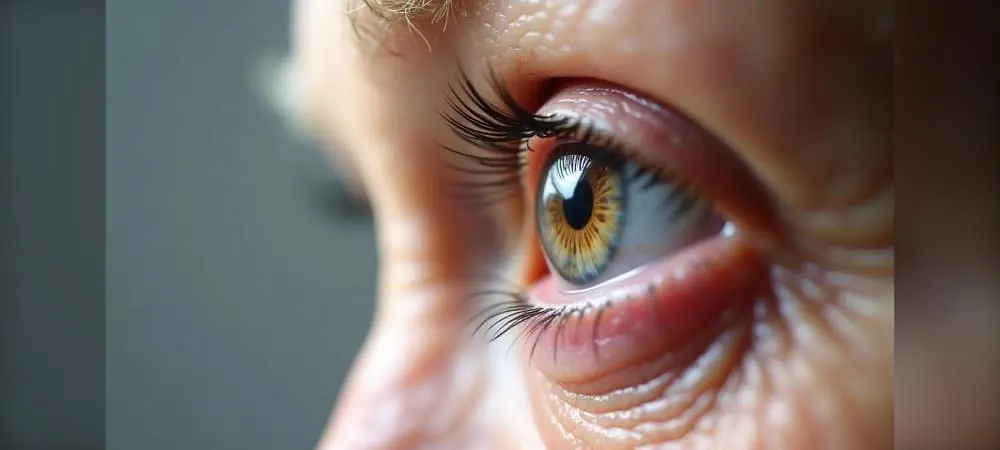
Entropion is the turning inward of your eyelid, causing your eyelashes to start rubbing against the surface of your eye. This condition leads to uncomfortable symptoms such as a foreign body sensation, burning, and pain in the eye. When left untreated, it can cause permanent vision loss. In this article, you will find everything you need to know about entropion symptoms, entropion diagnosis, and entropion treatment. Additionally, we will cover topics such as what entropion surgery is, how it is performed, and the recovery process.
What is Entropion?
Your eyelid normally acts as a shield to protect your eye and keep it moist. In the case of entropion, the edge of your eyelid turns inward toward your eyeball. As a result of your lower or upper eyelid turning inward, your eyelashes begin to contact the transparent layer of your eye, namely the cornea and the conjunctiva.
This continuous friction leads to irritation, redness, and pain in your eye. When contact of the eyelashes on the cornea continues for a long time, keratitis, persistent tearing, and decreased vision may occur. Entropion is a frequently seen condition among eyelid diseases.
Entropion symptoms generally start gradually and can worsen over time. The inward turning that initially occurs occasionally transforms into progressively increasing inward turning of your eyelid. When appropriate treatment is not applied, it can lead to serious irreversible problems.
Affected Areas
Entropion mostly occurs in your lower lids, but it can also be seen in your upper eyelids. It is a common condition especially in individuals over 60 years of age. The inward turning of your lower lid and eyelashes generally develops due to aging.
The intense inward turning of your upper lid and eyelashes, on the other hand, is usually caused by trachoma disease contracted in childhood. Sometimes it can also occur congenitally. The congenital inward turning of eyelashes is not dangerous in the first year and can be monitored.
When your eyelid turns inward, the eyelashes start rubbing against the cornea, which is the transparent layer of your eye. In addition, your eye membrane called the conjunctiva is affected by this condition. Long-term friction can lead to the formation of ulcers and scar tissue on your cornea.
Severity of the Disease
If entropion is not treated, it can cause permanent vision loss. The inward-turning eyelashes create sensitivity in the cornea, and long-term contact can lead to permanent damage, resulting in visual impairment.
Entropion complications include corneal ulcer, infection, vision loss, and permanent eye damage. Chronic conjunctivitis may also develop. Damage occurs in your corneal tissues, and this condition seriously threatens your eye health.
Entropion is one of the reasons for eyelid surgery, and its surgical treatment must be performed with great precision. When appropriate recovery cannot be achieved or as a result of severe injuries, deformities can occur in your eyelid that cause it to turn inward. Therefore, you can regain your eyelid functions with early diagnosis and appropriate treatment.
Causes of Entropion
Age-Related Entropion
There may be different factors behind the inward turning of your eyelid. The aging process is the most common cause of entropion. As you age, the muscles and supportive tissues around your eye naturally weaken and loosen.
The ligaments holding your eyelid begin to lose their elasticity. When the orbicularis oculi muscle supporting your lower eyelid relaxes, the outer edge of your lid curls inward. This condition sets the stage for your eyelid to turn toward the eye or outward, much like a loose tennis net.
As a result of the loss of tension in your eyelid, your lid margin can easily change position. Also known as senile entropion, this condition usually affects your lower eyelid. Age-related tissue laxity, muscle weakening, and connective tissue changes play a role together.
Congenital Entropion
Entropion can also occur congenitally. Although congenital entropion is rare, it stems from structural abnormalities in your eyelid. There is shortening or a kink in the tarsal plate that gives shape to the lid in infants.
Developmental disorder of the lower lid retractors and structural defects in the tarsal plate are held responsible. In congenital entropion cases, upper lid involvement is frequently seen. An extra skin fold on the eyelid can cause curled eyelashes.
Trauma and Burn-Related Entropion
Blows, cuts, or burns to your eyelid can disrupt your anatomical structure and lead to entropion. Skin injured due to chemical burns and traumas can alter the normal curve of your eyelid.
Known as cicatricial entropion, this condition develops as a result of scar tissue formation. Injuries affecting the inner surface of your lid leave scar tissue. The scar tissue leads to shortening in your lower lid posterior lamella and causes your lid to turn inward.
Changes occurring in the tissues during the healing process after eye surgeries can also lead to entropion. Surgical applications such as tumor removal can cause your eyelids to be pulled toward the eye or outward.
Infections and Other Causes
Trachoma infection is the most common infection worldwide causing entropion and vision loss. It causes scarring in your inner eyelid. It is common in developing countries of Africa, Asia, Latin America, the Middle East, and the Pacific Islands.
Severe infections occurring in your eyelids or surrounding tissues can create scar tissue and lead to entropion. Conditions such as chronic blepharitis, erythema multiforme, mucous membrane pemphigoid, Stevens-Johnson syndrome, and pemphigus contribute to the development of cicatricial entropion.
Involuntary contractions occurring in the muscles that close your eyelid can create spastic entropion. Muscle spasms are seen more frequently when there is a discomfort or irritation in your eye. The uncontrolled contraction of your orbicularis muscle causes your lid margin to roll inward toward the cornea.
Entropion Symptoms and Signs
Early Stage Symptoms
Entropion symptoms generally appear gradually. At first, you feel a mild discomfort in your eyelids. A constant feeling of discomfort, as if there is something in your eye, develops. It feels as if dust has gotten into your eye.
This foreign body sensation becomes more prominent at certain times of the day. You notice the friction of your eyelashes especially when you blink. This condition, which is occasional at first, intensifies over time and becomes constant.
In the early period, you may notice a mild spasm in your eyelids. Involuntary contractions can be experienced in your eyelid muscles. These contractions develop in response to the discomfort in your eye.
Complaints Emerging in the Eye
Redness and irritation start in your eye with the friction of your eyelashes against the eye. Continuous contact on your eye surface leads to inflammation. Redness is particularly prominent at the edges of your eyelids.
A sharp stinging and burning sensation arises in your eye. This sensation becomes more severe especially when blinking. The eyelashes rubbing against your cornea cause pain.
Excessive tear production begins. Your body produces more tears to reduce the irritation in the eye. Constant watering can lead to blurred vision. In addition, mucous discharge and crusting on the eyelid are observed.
Your sensitivity to light increases. Bright lights become uncomfortable. Irritation and inflammation on your eye surface cause this condition called photophobia.
Your vision quality may decrease due to tear accumulation and friction on the cornea. Since the risk of eye infection increases, yellow or green discharge can be seen.
Complications and Risks
Serious complications develop if entropion treatment is not performed. Continuous friction of the eyelashes can cause scratches and open sores on your corneal surface. Corneal ulcers are painful and carry a risk of infection.
Corneal ulcers create a gateway for bacterial or viral infections. Corneal infection called keratitis leads to permanent clouding and vision loss. In delayed cases, even ulcers, thinning, or perforations in the cornea can be seen.
Chronic irritation and recurrent infections can cause the formation of permanent scar tissue on your corneal surface. This scar tissue blurs your vision by preventing light from entering the eye. As a result, the risk of permanent vision loss emerges.
Untreated entropion significantly reduces your quality of life by causing continuous eye irritation and pain. Eyelid inflammation called blepharitis may intensify.
How is Entropion Diagnosed?
Eye Examination
Entropion diagnosis is made by a physical examination performed by an ophthalmologist. Your doctor first conducts a detailed interview with you. They ask when the symptoms you experience started, how long they have been continuing, and their severity.
They obtain information about the diseases you have had, the medications you use, and surgeries you have had previously. Your previous eye conditions, surgeries, or traumas must definitely be shared. This information helps your doctor understand the cause of entropion.
The physical examination focuses on your eyelids and surrounding structures. Your doctor carefully examines the position of your eyelid, the direction of the eyelashes, and their contact with the eye surface. The movement and position of your eyelid are evaluated.
Your doctor checks how tight or loose your eyelid is. They observe how your lid moves during blinking. This evaluation helps determine the type and severity of entropion.
Damage to the eye surface must be examined. Special dyes can be used to see the effect of the eyelashes on the cornea and conjunctiva. Fluorescein dye makes scratches or irritation on the cornea prominent.
If necessary, your tear production and corneal status can also be examined. Measurement of intraocular pressure and retinal examination can be performed as part of a routine eye exam. This comprehensive evaluation provides information about the general health of your eye.
Diagnostic Methods
Most of the time, your doctor's observation is sufficient for entropion diagnosis. The inward turning of your eyelid and the friction of the eyelashes against the eye are clearly seen. Although clinical evaluation is usually sufficient to make a diagnosis, additional tests can be performed to evaluate the extent of the condition.
Slit-lamp examination allows your doctor to examine your eye surface in detail. This special microscope examines your eyelids, eyelashes, and eye surface in detail under high magnification. This tool called a biomicroscope plays an important role in diagnosis.
Tear film evaluation assesses your tear production and eye surface health. These tests check the moisture balance and protection mechanisms in your eye. It also provides information about your tear quality.
Corneal staining detects whether there is any damage in the cornea. Your doctor applies dye to your eye and makes damaged areas visible. This method reveals even the smallest scratches on the cornea.
After making the diagnosis, the doctor determines the treatment method most appropriate for your condition. A treatment plan is created according to the type and severity of entropion and the underlying causes. Early diagnosis increases treatment success and reduces the risk of complications.
Entropion Treatment
Entropion treatment varies depending on the cause and severity of your condition. The main goal is to return your eyelid to its normal position, stop the eyelashes from rubbing against the eye, and protect your eye surface. Although permanent solution is usually surgical intervention, some temporary methods are also available.
Temporary Treatment Methods
In mild cases or in the period leading up to surgery, temporary treatments are applied to alleviate symptoms. Artificial tear drops and ointments reduce irritation by protecting your eye surface. They provide relief by keeping your cornea moist but do not correct the underlying problem.
Skin tapes can be used to temporarily hold your eyelid in the correct position. By taping your lower eyelid to your cheek, it prevents the eyelashes from touching the cornea. Similarly, protective contact lenses can protect your eye surface from friction.
In some cases, botulinum toxin injections can correct entropion by temporarily relaxing your eyelid muscles. It reduces the inward turning of your eyelid by preventing muscle spasm. However, this method usually provides temporary relief.
Surgical Treatment (Entropion Surgery)
The permanent treatment of entropion is surgical. The surgery is performed in a hospital environment under local anesthesia. The procedure takes about 20 minutes and you can be discharged on the same day.
The surgical method is determined according to the cause of your entropion. It aims to reshape your eyelid and strengthen the supporting tissues. Different techniques such as the Wies procedure, lateral tarsal strip, and Jones procedure can be applied.
Your lid is gently pulled outward with eyelid stitches. Relaxed muscle tissue can be removed to tighten your lid. If there is scar tissue or tissue loss, repair is performed using a graft.
Postoperative Recovery Process
A light bandage is placed over the eye after surgery. Swelling and bruising are seen within the first few days but decrease over time. You can find relief by applying a cold compress.
Your doctor prescribes antibiotic drops to prevent infection. Pain relievers are sufficient for your mild discomforts. You need to avoid heavy lifting and rubbing your eyes in the first days.
Stitches are usually removed after 5-10 days. You notice improvement within a few days. Regular doctor check-ups are important to follow your recovery process.
Probability of Recurrence
The success rate of entropion surgery is generally high. Significant improvement in symptoms is observed in most patients after surgery. Simple suture techniques can sometimes loosen over time.
Repeat surgeries may be required in approximately 15 percent of patients. As the eyelid tissue continues to relax, it can be seen again. More comprehensive surgical techniques usually provide permanent results.
Frequently Asked Questions
Patients ask many questions about entropion. The answers given to these questions help you understand the treatment process.
What happens if entropion is not treated?
Untreated entropion can lead to complications such as corneal abrasions, infections, and scarring on the eyelid or cornea. This condition makes future treatment difficult.
Continuous friction of the eyelashes causes permanent damage to the cornea. Serious irreversible problems can emerge. The risk of vision loss increases over time. Therefore, you must consult your ophthalmologist immediately when you notice symptoms.
Is entropion surgery painful?
Surgery is performed under local anesthesia. You do not feel pain during the procedure. The area around your eye is numbed and you may only feel a slight pressure sensation.
You may experience mild discomfort after surgery. However, this condition is easily controlled with pain relievers. Most patients state that they had a comfortable surgery. Swelling and bruising decrease within a few days.
What is the recovery time to normal after surgery?
Recovery time varies from person to person but generally involves a process of several weeks. Noticeable improvement appears on average 10 days later. Post-surgical recovery time is usually 1-2 weeks and full recovery can take several weeks.
Complete recovery takes place in a process like one month. You notice improvement within a few days. Follow-up appointments are essential to monitor progress. Depending on your lifestyle and compliance with doctor's recommendations, the process can shorten or lengthen.
Can entropion be seen at any age?
Yes, entropion can develop in children, but it is less common compared to adults. Pediatric cases may require special treatment approaches. Congenital conditions can be seen in infants.
In contrast, entropion is more common in older adults due to the natural aging process. Aging weakens eyelid tissues and muscles. It is frequently seen especially in individuals over 60 years of age. It can occur due to different reasons in every age group.
Does entropion recur?
The success rate of entropion surgery is generally high. Most patients notice significant improvement in their symptoms after surgery. However, repeat surgeries may be required in approximately 15 percent of patients.
As the eyelid tissue continues to relax, it can be seen again. Simple suture techniques can sometimes loosen over time. It is usually not seen again in operations performed with appropriate technique. Regular eye examination is necessary for follow-up in terms of infection and recurrence.
Entropion in Summary
Entropion poses a serious risk to your eye health. Although the inward turning of your eyelid may seem like a minor discomfort at first, it can lead to permanent vision loss over time. Therefore, you must consult your ophthalmologist immediately when you notice symptoms.
Early diagnosis increases your treatment success. Surgery has a high success rate and provides permanent recovery in most patients. Although temporary methods provide relief, the permanent solution is surgery. By complying with the treatment plan recommended by your doctor, you can protect your eye health and regain your quality of life.
Entropion occurs with the inward turning of the eyelid. Its symptoms include stinging, burning, and pain in the eye. When left untreated, it can lead to permanent vision loss.
Start with the right assessment for What is Entropion (Turning In of the Eyelid)? What are the Symptoms? How is it Diagnosed and Treated?
Share your symptoms with our specialist physicians; let us determine the right diagnosis and treatment plan together.
Warning
If your symptoms started suddenly, are progressing rapidly, or significantly restrict your daily life, consult a physician without delay.
Plan your What is Entropion (Turning In of the Eyelid)? What are the Symptoms? How is it Diagnosed and Treated? journey with our specialists.
Fill in the form or book an appointment to learn about treatment options, the process and preparation.