De Quervain's tenosynovitis is a condition that occurs as a result of excessive strain on the tendons in the wrist. New mothers are particularly susceptible to this condition. Recovery is typically seen within 3 to 4 weeks after starting treatment. In this article, you will find answers to questions such as what De Quervain's tenosynovitis is, what its symptoms are, and how it is diagnosed and treated. You will also find detailed information about exercises, splint use, and the recovery process.
What is De Quervain's Tenosynovitis?
Our hand and finger movements are the result of a complex system. Tendons are the structures that transfer the force produced when muscles contract to the bones. Tendons form the ends of muscles that attach to bones and act as highly durable connective tissues made of collagen.
Structure of the Tendon and Tendon Sheath
Tendons are structures in our body that provide force transmission. They transmit the energy generated when muscles contract to the bone, enabling movement. There are numerous tendons at the hand and wrist level.
A special structure is required for tendons to glide and move comfortably. Each tendon is surrounded by a membrane-like structure called a tendon sheath. This sheath facilitates the gliding movement of the tendon and reduces friction. Without the tendon sheath, tendons would be strained and damaged during movement.
The connective tissues surrounding the tendons allow for the transfer of muscle power for joint movement. These structures also play a role in the nourishment of the tendons.
Definition of the Disease and Its Effects on the Wrist
De Quervain's tenosynovitis occurs when the two tendons that move the thumb become compressed and inflamed at the wrist level. These two tendons are called the abductor pollicis longus (APL) and the extensor pollicis brevis (EPB). They perform the function of lifting the thumb upward and moving it away from the other fingers.
The tendons pass through a narrow tunnel in the wrist near the base of the thumb. This tunnel is called the first dorsal compartment or the first extensor compartment. As a result of the narrowing of the sheath or the thickening of the tendons, friction increases. This process leads to inflammation, edema, and thickening in the tendon sheath.
In other words, tendons should normally glide easily through this tunnel. However, for various reasons, swelling and edema occur in the tendon sheath. This condition is called tenosynovitis. The tendons lose their ability to move comfortably within the tunnel, and thumb movements become difficult.
The disease is named after the Swiss surgeon Fritz de Quervain, who first described it. Daily strenuous activities or performing the same activity for long periods can create edema and inflammation in the tendons. Pain increases during gripping, twisting the wrist, or repetitive hand movements. Even simple activities such as holding a pen, opening a jar, or using a phone can cause discomfort.
Causes of De Quervain's Tenosynovitis
Among the causes of De Quervain's tenosynovitis, excessive or repetitive use of the thumb and wrist stands out. Inflammation and thickening occurring in the tendon sheaths trigger this condition. Movements you make unconsciously in your daily activities can accumulate over time and lead to discomfort.
Repetitive Movements and Overuse
Any activity that irritates the thumb tendons paves the way for the disease. Constantly repeating a specific movement due to work or hobbies gradually wears down the tendon fibers. Keyboard and mouse use, sewing, knitting, and gardening are among these activities.
Repetitive gripping or holding movements strain the tendon sheath. Movements you make while gripping an object tightly are particularly risky. Sports such as tennis, golf, and skiing cause repetitive strain on the wrist and thumb. Similar problems are seen in people who use hammers or other tools.
Bending the wrist while keeping the fingers in a curled position for a long time puts excessive load on the area. Instead of keeping the hand in a fixed position for a long time, it is necessary to move it at certain intervals. Changing the position of the wrist prevents the tendons from being strained.
Pregnancy and Hormonal Changes
New mothers are particularly susceptible to De Quervain's tenosynovitis. The constant load on the thumb while picking up, feeding, or carrying the baby triggers the disease. The reverse hand position formed while holding the baby strains the tendons.
Hormonal fluctuations during pregnancy and breastfeeding facilitate this condition. Edema accumulation in the body increases during pregnancy and the postpartum period. Changes in estrogen and progesterone levels affect the fluid balance in the tendon sheaths. Thickening and edema occur due to increased fluid in the tissues around the joints and tendons.
Hormonal balances that change during pregnancy create pressure on the tendons passing through narrow channels. This leads to complaints of painful movement and discomfort. It is also popularly known as "mommy's wrist."
Trauma and Injuries
Direct trauma to the wrist or tendon can cause the disease. A sudden impact such as a fall or a blow causes damage to the tendon. Increased load on the tendons after previous wrist fractures increases the risk.
Scar tissue restricts the movement of the tendons and paves the way for inflammation. Weight exercises performed with unaccustomed weights also cause tendon strain. Sudden movements or incorrect techniques catch the tendons unprepared.
Occupational Groups at Risk
The risk of developing the disease is higher in people between the ages of 30 and 50. It is seen more frequently in women than in men. Those working in occupations involving repetitive movements are in the risk group:
- Office workers and computer users
- Waiters, cashiers, typists
- Carpenters, painters, masons
- Musicians and pianists
- Seamstresses and tailors
- Gardeners
- Childcare workers
Inflammatory diseases such as rheumatoid arthritis increase the risk of De Quervain's tenosynovitis. Chronic diseases such as diabetes also create a predisposition to tendon inflammation.
Symptoms of De Quervain's Tenosynovitis
Symptoms of De Quervain's tenosynovitis usually begin on the thumb side of the wrist. While pain can develop gradually, it can also appear suddenly and sharply. These symptoms make thumb movements and performing daily tasks difficult over time.
Pain in the Thumb and Wrist Area
Pain felt on the thumb side of your wrist is the most prominent finding of the disease. The pain usually starts at the base of the thumb and radiates toward the wrist. In some cases, the pain can extend to the forearm and even the elbow.
Pain increases when you use your hand, wrist, and thumb. Pain becomes prominent during activities such as opening a jar, holding a pen, using a phone, or carrying a baby. Difficulty arises in gripping or squeezing objects.
Strong gripping and twisting movements trigger the pain. Complaints such as being unable to lift a teapot are common. It is known that pain is felt more intensely in the morning hours.
Swelling and Tenderness
Swelling may occur around the base of the thumb. There is a possibility of regional edema formation. In some cases, a fluid-filled cyst may develop.
Tenderness over the area where the thumb joins the wrist is a common finding. Tenderness and pain increase when the area is touched. Pain is felt upon touch in the affected tendon region.
Irritation of the nerve over the tendon sheath can cause numbness in the thumb and index finger. Numbness may be seen in the wrist or thumb.
Movement Restriction
As the disease progresses, you will have difficulty performing thumb movements. Pain is accompanied by movement restriction and loss of function. Restriction occurs in wrist movements.
Since the tendons cannot glide comfortably within the sheath, friction increases. A sensation of catching or snapping may be experienced during movements. Difficulty in making a fist begins.
You will experience significant difficulty in daily tasks such as opening a bottle, holding a jar, or carrying a bag. Quality of life decreases when daily activities begin to become difficult. In the advanced period, pain can be felt not only with movement but even at rest.
Finkelstein's Test and Its Importance
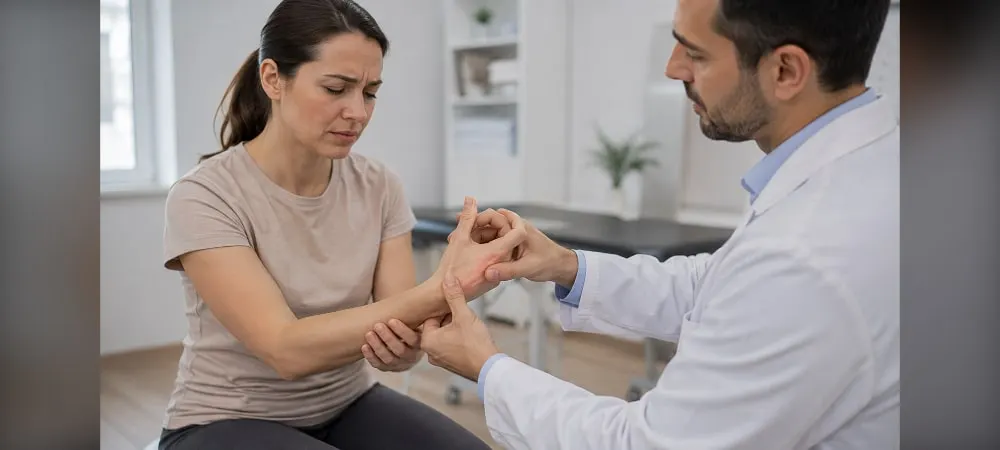
The Finkelstein test is a distinctive test used in the diagnosis of De Quervain's tenosynovitis. This test requires you to fold your thumb into your palm.
In the test, you are first asked to place your thumb into your palm and make a fist. The other four fingers are closed over the thumb to bring it into a fist position. Then, the wrist is bent toward the little finger side.
If sharp pain occurs in the thumb base region during this maneuver, the test is positive. If pain occurs on the thumb side of your wrist, a diagnosis of De Quervain's tenosynovitis is likely. Pain is usually felt when you move your wrist during the test.
The Finkelstein test is a three-step process that can accurately diagnose the disease. In the first step, pain is evaluated with light active movement, then the test is repeated with increased pressure if necessary.
Diagnosis of De Quervain's Tenosynovitis
After listening to your complaints, your doctor can diagnose De Quervain's tenosynovitis with a physical examination. In most cases, imaging methods are not needed for diagnosis. Examination findings are usually sufficient to make a diagnosis.
Physical Examination Process
Your doctor first examines your thumb and wrist manually. They ask when the pain started and which activities worsen the pain. They check for pain by pressing on the area near the base of the thumb.
Tenderness is checked by palpation over the radial styloid process. It is checked whether there is swelling and thickening over the first dorsal extensor compartment. Pain occurring in the same area during movement of the thumb supports the diagnosis.
The Finkelstein test is a fundamental part of the diagnostic process. As mentioned earlier, this test checks whether the thumb tendons have become painful. Pain occurring in the wrist during the test largely supports the diagnosis of De Quervain's tenosynovitis.
Three clinical findings are sought for diagnosis: tenderness over the radial styloid, pain during resisted movement of the thumb, and pain during bending of the wrist in certain directions. Physical examination findings are mostly sufficient for diagnosis.
Imaging Methods
Since X-rays do not show tendons, they have no place in the diagnosis. However, they may be taken for possible additional problems such as thumb osteoarthritis or rheumatic diseases. X-rays can be used to rule out other conditions such as arthritis in the wrist joint.
Ultrasound and magnetic resonance imaging are used to confirm the diagnosis when necessary. Ultrasound shows fluid accumulation and thickening in the tendon sheath. It offers the possibility of dynamic evaluation and reveals structural changes in the tendon.
Magnetic resonance provides detailed soft tissue imaging. Tendon variations can be shown. In advanced cases, ultrasound or MRI is preferred to see the tendon structure in detail. It is especially important for distinguishing conditions that may be confused with nerve compression.
Differential Diagnosis and Similar Diseases
When diagnosing De Quervain's tenosynovitis, it is necessary to rule out other diseases with similar symptoms. An accurate diagnosis is extremely necessary for effective treatment.
In carpal tunnel syndrome, numbness is seen in the median nerve distribution. Numbness that wakes you up from sleep at night is particularly typical. Numbness, not pain, is at the forefront in the thumb.
Osteoarthritis at the base of the thumb causes deeper-seated pain. Pain increases with gripping and squeezing. Radiologically, narrowing can be seen in the joint space.
In Wartenberg's syndrome, burning and tingling are felt on the radial surface. It can be triggered by a tight watch or repetitive movements. The Finkelstein test is usually negative.
Intersection syndrome is seen higher up on the radius. There is inflammation at the intersection of the tendons. It is common in cyclists and rowers.
A sensation of catching and locking is typical in trigger finger. Nodule palpation can be performed. Symptoms occur on a different side of the tendons.
Treatment of De Quervain's Tenosynovitis
The treatment process is planned according to the severity of the disease. Simple measures may be sufficient in the early stage. In advanced situations, more comprehensive treatment methods are resorted to.
Rest and Splint Use
You need to avoid activities that strain your wrist and thumb. Repetitive gripping and bending movements can increase inflammation in the tendon sheath. It is especially recommended that you stay away from movements that trigger pain.
Special splints that keep your thumb and wrist fixed are used. These splints reduce stress on the tendons by restricting thumb movement. The splint is usually worn all day or during painful activities. Night use is also recommended.
Applying a cold compress to the area reduces swelling and inflammation. It is beneficial to apply cold for 10-15 minutes several times a day. Ice application is particularly effective in the first days when pain starts.
Drug Therapy and Corticosteroid Injections
Painkillers and anti-inflammatory drugs are used with doctor's recommendation. These drugs relieve pain and reduce inflammation in the tendon sheath.
Corticosteroid injections are quite effective in treatment. The injection is applied to the tendon sheath to rapidly reduce inflammation. Cortisone injections performed under ultrasound guidance give safer results. The success rate is around 80 percent. It can also be safely applied during pregnancy and breastfeeding.
Physical Therapy and Exercises
Exercises performed under the supervision of a physiotherapist increase the flexibility of the tendons. Stretching and strengthening exercises restore the mobility of the area. Ultrasound therapy, TENS, and laser applications support the treatment process.
Manual therapy techniques reduce adhesions in the tendon sheath. Kinesiological taping can reduce pain by supporting the thumb.
Surgical Treatment Options
In cases where there is no response to non-surgical methods, surgical intervention may be required. The surgery is usually performed under local anesthesia. In the surgical procedure, the tendon sheath is opened to release the compressed tendons.
The operation time is short, and you can be discharged on the same day. The nerve that provides sensation to the thumb is carefully protected. The procedure is a type of operation that does not require hospitalization.
Recovery Process After Treatment
The surgical area is protected with a short-term bandage. The bandage is usually removed after 5-7 days. Stitches are removed after 12-14 days. Full recovery usually takes 3-4 weeks. Most patients return to their normal lives within a few weeks. Post-operative physiotherapy can accelerate recovery in some patients.
Frequently Asked Questions About De Quervain's Tenosynovitis
Questions in your mind about the disease help you understand the treatment process. In this section, we will clarify the most frequently wondered topics.
How Does De Quervain's Tenosynovitis Go Away?
First of all, you need to use the drugs prescribed by your doctor regularly and rest for a while. You should stay away from activities that strain your thumb and wrist. Splint use is an important part of the treatment.
Physical therapy methods reduce problems in the thumb and wrist area. In most mild and moderate cases, these methods provide recovery without requiring surgery. When conservative treatments do not yield results, surgical intervention may be necessary.
In mild cases, symptoms may pass with rest and exercises. However, in most cases, medical intervention is required. There is a risk of becoming chronic if left untreated.
What Happens If It Is Not Treated?
If you do not treat the disease, movement restriction may become permanent. Pain begins to become chronic, and hand use becomes increasingly difficult. A situation that negatively affects your daily life emerges.
In the following processes, the tendon thickens, and different health problems may develop. Your grip strength decreases, and your daily activities become difficult. Since the pain increases gradually, the response to conservative methods decreases in untreated cases.
Increased inflammation in the tendon sheath severely restricts the mobility of the tendons. Adhesions due to friction may occur. Rarely, the tendon sheath may rupture, or the tendon may tear. In some people, loss of function in the thumb and wrist may be permanent.
How Long Is the Recovery Time?
Recovery is typically seen within 3 to 4 weeks after starting treatment. How long you have been exposed to pain is not included in this period. Early diagnosis provides faster recovery.
Most patients return to their daily activities within 4 to 6 weeks. The recovery time depends on what causes the inflammation and the severity of the symptoms. You can usually return to desk jobs within 1-2 weeks. For jobs requiring strength, 3-6 weeks of rest is recommended.
After surgery, stitches are usually of the absorbable type and do not need to be removed separately. Pain and swelling decrease in the first 1-2 weeks after surgery. Full function and strength usually return in 4-6 weeks.
Which Exercises Are Performed?
In the acute period, exercise may increase your pain. During the recovery process after treatment, light stretching and strengthening exercises can be applied under doctor control. You should not exercise while feeling pain.
Your doctor may recommend movements that will increase wrist strength and flexibility. For example, you can gently grip a tennis ball for a few minutes. If you do not feel pain after resting for a few minutes, repeat the grip with a little more pressure.
Stretching exercises that strengthen the fingers and wrist protect tendon health. Thumb stretching and wrist rotation exercises can be beneficial. Exercises must be performed under expert guidance. Thumb and wrist exercises are started immediately after surgery.
In Summary, De Quervain's Tenosynovitis
De Quervain's tenosynovitis is a treatable condition. When you feel pain in your thumb and wrist, you should consult a doctor immediately. When an early diagnosis is made, the recovery process is much shorter. In most cases, rest, splint use, and simple treatment methods are sufficient. You can return to your normal life within an average of 3-4 weeks.
If you ignore the symptoms, chronic pain and movement restriction may develop. Do not leave this condition, which makes your daily activities difficult, untreated. You will get successful results when you follow your doctor's recommendations. When necessary, surgical intervention also offers a safe and effective solution.
Fill Out the Form for Detailed Information and Contact!
Start with the right assessment for What is De Quervain's Tenosynovitis? What Are Its Symptoms? How Is It Diagnosed and Treated?
Share your symptoms with our specialist physicians; let us determine the right diagnosis and treatment plan together.
Warning
If your symptoms started suddenly, are progressing rapidly, or significantly restrict your daily life, consult a physician without delay.
Plan your What is De Quervain's Tenosynovitis? What Are Its Symptoms? How Is It Diagnosed and Treated? journey with our specialists.
Fill in the form or book an appointment to learn about treatment options, the process and preparation.