What Is Behçet's Disease? What Are the Symptoms?
Behçet's disease, also known as Silk Road disease, is a condition that can affect many organs and is characterized by recurrent sores in the mouth and genital area, and by inflammation of the blood vessels and eyes. The answer to "What does Behçet's disease mean?" is explained through its symptoms, since the causes of the disease are not fully known. Among the symptoms of Behçet's disease, recurrent sores that heal and then reappear, particularly in the mouth and genital area, stand out. Because these sores are confused with other diseases, they can sometimes delay treatment. In cases where the disease cannot be fully defined, general treatments aimed at relieving symptoms may be preferred.
What Is Behçet's Disease?
Behçet's disease is a vascular disease characterized by recurrent oral and genital ulcers, uveitis (eye inflammation) and skin lesions. It can affect the joints, skin, central nervous system and digestive system. It is named after Turkish dermatologist Hulusi Behçet, who first described it in 1937. Although it can be observed all over the world and in various ethnic groups, it is more common than expected in countries along the "Silk Road" route. Although the etiology of the disease has still not been explained, there are risk groups in which the disease is seen more frequently. For example, infections caused by herpes simplex and hepatitis viruses increase the risk of developing the disease. Because of the disease's association with infectious diseases and the immune system, the question "How is Behçet's disease transmitted?" may come to mind; however, the disease is not contagious.
How Does Behçet's Disease Develop?
The causes and mechanism of development of Behçet's disease are not fully known. It is thought to develop as a result of recurrent inflammation in the body. It is estimated that it occurs when the body's immune system attacks its own healthy cells. Proinflammatory and T helper 1 type cytokines are held responsible for the disease mechanism. Although the causes have not been fully clarified, risk factors such as genes and environmental variables exist. Some factors that increase the risk of developing the disease can be listed as follows:
Age: The disease can be seen in the 20–60 age range, but it is more common in the 30–40 age range. Although very rarely, it can also be observed in pediatric patients.
Sex: Although some studies report that it is more common in male patients, this varies by region. Overall, although there is no significant risk difference by sex, symptoms follow a more severe course in male patients.
Environmental variables and infectious agents: Recent studies suggest that infectious agents, an environmental factor, may play a role in the development of the disease. Some streptococcal strains that trigger antibody production when they enter the body, Helicobacter pylori, Borrelia burgdorferi, mycobacteria and similar microorganisms are thought to have a triggering effect on the disease.
Genetic factors: People living in certain regions and those with a family history of the disease are at higher risk than others. In studies conducted on patients, some changes have been observed in the structure of HLA tissue antigens, cytokines and T regulatory cells.
What Are the Symptoms of Behçet's Disease?
In Behçet's disease, symptoms may vary depending on the system and region affected. In general, the symptoms of Behçet's disease are as follows:
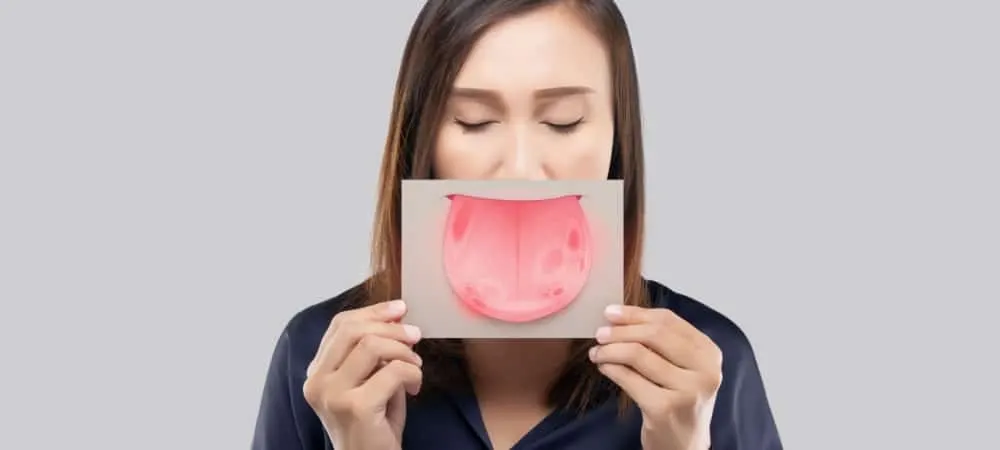
Mouth sores: Approximately 1–3 cm in diameter, yellow, painful sores are observed. These sores usually heal without forming a crust. They are numerous and recurrent on the palate, tongue, gums and tonsils. Behçet's disease can cause problems such as tongue sores that make it difficult to meet basic needs.
Genital ulcers: These are round or oval sores that look as if they have been punched out with a hole punch. They resemble the sores that appear in the mouth; scar formation after these sores is specific to Behçet's disease. When not accompanied by another infection, the sores heal within 10–30 days. This type of sore is seen in the vast majority of patients.
Eye problems: Behçet's disease also has widespread effects on the eyes. Redness, stinging and blurred vision may occur in the eye. Vision loss in the eye progresses with each attack. Although eye involvement in Behçet's disease initially resembles a simple infection, it can progress to blindness. Eye problems are observed more severely in male patients. The question that often comes up when eye-related symptoms are mentioned, "What is Behçet's uveitis?", can be answered as inflammation of the uvea, the middle layer of the wall of the eye.
Skin symptoms: Different types of sores can appear on the skin. Some sores may develop that are red, painful and show increased heat. Lumpy, nodular lesions may appear especially on the legs. Some sores may develop as firm, red and very painful.
These 4 clinical findings are distinctive for Behçet's disease. In addition to these symptoms, different symptoms may also be observed. These symptoms are:
Joint swelling and pain: The ankles, knees and elbows are most commonly affected. Swelling, redness and tenderness may occur.
Ulcers in the small and large intestine: Lesions similar to those seen on the body and in the mouth can also form inside the intestines. Abdominal pain and blood in the stool may be observed.
Brain inflammation: Inflammation may occur especially in the meninges. It can present as headache, neck pain, fever and loss of coordination.
Vascular inflammation: Inflammation can cause blood vessels to become blocked, narrowed or completely closed. When it occurs in large vessels, it can cause serious health problems.
Problems may also occur in organs such as the lungs and kidneys due to the disease.
When lymphatic involvement occurs, enlargement of the lymph nodes and spleen may rarely be seen.
In some patients whose disease progresses, paralysis and vision loss may occur.
How Is Behçet's Disease Diagnosed?
There is no specific test to identify Behçet's disease. However, blood and urine tests and skin biopsy may be performed to rule out other diseases with symptoms seen in the patient. In addition, imaging methods such as CT, MRI and X-ray may be used. In Behçet's disease, diagnosis is made with the help of Behçet's disease diagnostic criteria by taking the patient's history. The criteria established by the International Study Group used in diagnosis can be explained as follows:
In addition to recurrent mouth sores at least 3 times in 12 months, the presence of at least two of the findings listed below suggests Behçet's disease.
Genital sores (sores in the anal area, spot formations in the genital area, enlarged testicle in men)
Different types of sores on the skin
Eye infections (uveitis, vitreous infection)
Pathergy (Non-Specific Skin Reaction)
How Is Behçet's Disease Treated?
The answer to "What helps Behçet's disease?" may vary, because Behçet's disease has no complete cure. The main goal in treatment procedures is to improve the functions of internal organs affected by the disease and to prevent the recurrence of attacks, called Behçet's disease crises. Cortisone-containing medications, immunosuppressants and some medications that slow or reduce the inflammatory process are preferred. For people in whom the disease cannot be fully defined, topical cortisone creams may be used to treat the symptoms of Behçet's disease skin lesions. For Behçet's disease mouth sores, mouth rinses may be applied in addition to cortisone and immunosuppressive tablets. In patients for whom pain is unbearable, local anesthetics may be used to reduce pain.
Although the answers to "What is Behçet's disease, and how is it treated?" cannot always be fully answered through various tests, early detection of the disease is important for managing it.
Frequently Asked Questions
Among the outcomes of Behçet's disease, the most dangerous is death caused by problems in the blood vessels. Among the causes of this outcome, complications such as perforations resulting from sores in the intestine and tears in blood vessels can be counted. About 5% of Behçet's patients experience serious outcomes such as death. Although such serious consequences of the disease may lead parents to ask questions such as "Is Behçet's disease hereditary? Will it pass to my child?", the disease is not entirely hereditary. However, having a family history of the disease increases a person's risk of developing it. If treatment for Behçet's disease is not given, the course of the disease may worsen. In severe cases, serious problems that can significantly affect the patient's life, such as permanent vision loss and paralysis, may occur. Disease symptoms may increase in attacks during some periods and ease during others. During these periods the question "Is Behçet's disease temporary?" may come to mind, but the disease does not completely resolve. Treatment should not be stopped because of periodic easing of symptoms. For the question "Which department does Behçet's disease fall under?", the answer involves not a single department but a team effort. In Behçet's disease, diagnosis and treatment are carried out under the leadership of a rheumatology specialist. The diagnosis and treatment process continues through evaluation and intervention by a team of dermatology, neurology, ophthalmology and rheumatology specialists. Behçet's disease is a disease linked to the immune system. It cannot be transmitted from the patient to another person. The answer to the question "Is Behçet's disease genetic?", which often follows, is also debated. Genetic transmission is not certain; it can only be evaluated as a risk of appearing in the next generation. There is no specific test that can be described as a Behçet's disease test. Blood and urine tests and imaging methods such as CT, MRI and X-ray may be used to assist diagnosis. With the results of these tests, other suspected diseases can be evaluated. Behçet's disease may manifest with sores in the genital area and on the skin. Biopsy may be preferred to examine these lesions. If you are experiencing recurrent sores and eye problems due to Behçet's disease, you can start your treatment process as soon as possible by consulting a rheumatology specialist at Hisar Hospital.
Start with the right assessment for What Is Behçet's Disease? Symptoms, Treatment and Causes You Should Know
Share your symptoms with our specialist physicians; let us determine the right diagnosis and treatment plan together.
Warning
If your symptoms started suddenly, are progressing rapidly, or significantly restrict your daily life, consult a physician without delay.
Plan your What Is Behçet's Disease? Symptoms, Treatment and Causes You Should Know journey with our specialists.
Fill in the form or book an appointment to learn about treatment options, the process and preparation.