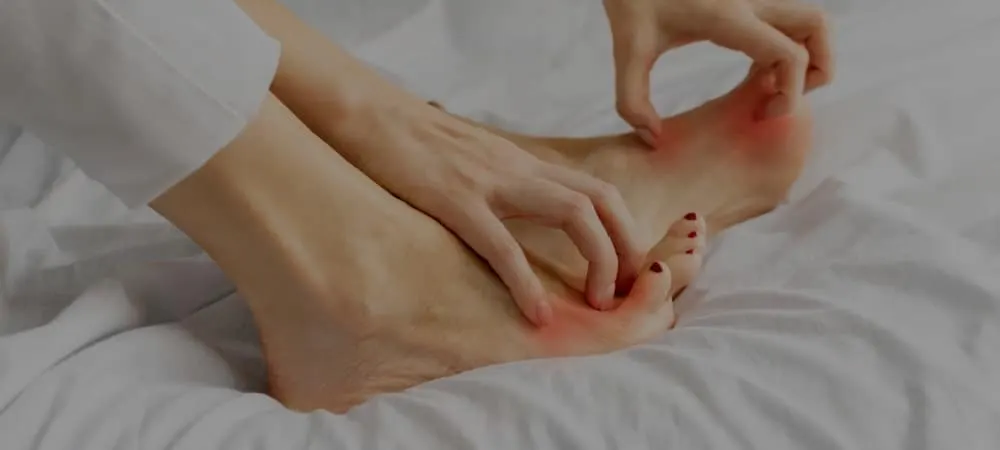
Athlete's Foot
Although athlete's foot affects millions of people and is often seen as a simple condition, it can cause significant discomfort and lead to more serious complications if left untreated. Understanding this common condition, from its causes to treatment options, is crucial for maintaining proper foot health and preventing recurrent infections.
What is Athlete's Foot?
Medically known as tinea pedis, athlete's foot is a fungal infection that primarily affects the skin of the feet. This condition is mostly caused by microscopic organisms called dermatophytes, which thrive in warm and moist environments. These fungi belong to a group of organisms that feed on the keratin protein found in the outer skin layer, hair, and nails.
The fungi responsible for foot infections can survive for long periods in environments such as swimming pools, locker rooms, and communal showers. They are particularly resilient and can even live on surfaces like towels, shoes, and socks. This makes reinfection a common problem. While athlete's foot is generally not dangerous in healthy individuals, it can pose problems especially for those with weakened immune systems or diabetes.
What Are the Symptoms of Athlete's Foot?
Symptoms of athlete's foot can vary significantly from person to person, but they usually start mild and worsen over time if left untreated. The most common initial symptom is itching between the toes, which may start mild and gradually intensify. This itching is accompanied by a burning or stinging sensation that can make walking uncomfortable.
Visual symptoms may include redness, scaling, and mild swelling on the affected skin. In most cases, the skin between the toes appears soft, white, and macerated (soggy appearance). As the infection progresses, small blisters may form on the skin, or cracks and peeling can occur. These symptoms typically begin between the fourth and fifth toes and spread to other areas of the foot.
Some individuals experience a more severe condition where the skin becomes very dry and hyperkeratotic, leading to moccasin-like scaly skin covering the bottom and sides of the foot. In advanced cases, the infection can spread to the nails, causing a condition known as onychomycosis, which leads to thickening, discoloration, and brittleness of the nails.
What Causes Athlete's Foot?
Athlete's foot occurs when fungi penetrate the skin through small cuts, scrapes, or moist skin. The dermatophytes responsible for the infection thrive in warm and moist environments, making sweating feet particularly vulnerable. Conditions that trigger the development of athlete's foot include:
Walking barefoot in public areas: The infection is highly contagious and can be transmitted through direct contact with infected skin scales or indirect contact with contaminated surfaces. Walking barefoot in public areas such as swimming pools, gyms, and communal showers significantly increases the risk of infection.
Wearing tight or non-breathable shoes: Feet that remain moist for long periods provide an ideal environment for fungal growth. Therefore, individuals with excessive sweating problems or those who wear tight, non-breathable shoes are susceptible to athlete's foot.
Sharing personal items: Shared towels, shoes, or socks allow fungi to easily spread from one person to another.
Weak immune system: Certain risk factors make some individuals more prone to developing athlete's foot. These include a weakened immune system, poor peripheral circulation, or diabetes.
How is Athlete's Foot Diagnosed?
Diagnosis of athlete's foot is usually straightforward and begins with a visual examination by a healthcare professional. Common symptoms such as itchy, red, and scaly areas are sought. However, additional tests may be required in cases where the diagnosis is unclear. These tests can be listed as follows:
Skin scraping test: A small sample of the affected skin is taken and examined under a microscope. This test helps identify the fungus causing the infection.
Culture test: For a more definitive diagnosis, especially in recurrent cases, it may be necessary to grow and identify the fungus in a laboratory.
Wood’s lamp examination: Ultraviolet light is used to detect certain fungal infections. Some fungi become fluorescent (bright) under this light.
It is important to remember that other conditions, including eczema, psoriasis, and bacterial infections, can also mimic the appearance of athlete's foot. Therefore, a professional diagnosis is crucial. It is essential to see a specialist, especially if over-the-counter treatments do not provide relief or if the condition worsens despite self-treatment.
How is Athlete's Foot Treated?
Treatment for athlete's foot generally involves a multi-faceted approach combining medication with proper foot care practices. For mild-to-moderate cases, over-the-counter antifungal medications are usually effective. These medications should be applied according to instructions for several weeks, even if symptoms improve earlier.
For more severe or resistant cases, healthcare providers may prescribe stronger antifungal medications. Oral medications are especially useful when the infection has spread to the nails or covers a large area of the foot. Proper foot care is crucial during treatment and to prevent recurrence. This includes keeping feet clean and completely dry, especially between the toes. Wearing breathable shoes and moisture-wicking socks can help maintain a dry environment. It is recommended to change shoes daily to allow them to dry completely between uses.
Prevention is also an important aspect of treatment. It involves avoiding walking barefoot in public areas, not sharing personal items such as shoes or towels, and regularly using antifungal powders or sprays in shoes. For individuals with sweaty feet, changing socks during the day and using antiperspirant products on the feet can help maintain drier conditions.
Treatment success generally depends on patience and consistency. Although symptoms may improve relatively quickly, it is important to complete the full course of treatment to prevent recurrence. Additionally, it is crucial to treat all affected areas. For example, if both feet show symptoms, even if one appears less affected, both should be treated.
Frequently Asked Questions
For the fastest treatment of athlete's foot, it is first necessary to regularly use antifungal medications prescribed under a doctor's supervision. In addition, constantly keeping the feet dry, wearing cotton socks, and choosing breathable shoes accelerate the healing process. It is important to pay regular attention to foot hygiene and thoroughly dry the feet after every wash. The main symptoms of athlete's foot include itching between the toes, redness, scaling, and a burning sensation. In particular, a white, soft appearance and peeling can be observed on the skin surface. In some cases, bad odor, cracks, and blistering may also be seen. If several of these symptoms are present, it is necessary to consult a dermatology specialist. Although saltwater provides temporary relief in some cases, it is not sufficient on its own for the treatment of athlete's foot. Saltwater baths can dry the skin and slow down fungal growth, but they do not completely eradicate the fungus. Saltwater application can be used in addition to the antifungal treatment recommended by a doctor. Cologne can temporarily slow down the spread of fungus due to the alcohol it contains, but it has no therapeutic effect. Furthermore, cologne can dry the skin, setting the stage for cracks and new infections. Therefore, instead of cologne, antifungal products available from pharmacies should be preferred. Blistered areas caused by athlete's foot should never be popped. Popping can cause the infection to spread and lead to secondary bacterial infections. Blistered areas should be kept clean and treated under a doctor's supervision. Athlete's foot is highly contagious and can also spread to the hands. There is a high risk of the fungus spreading to the hands, especially while applying cream to the foot area or scratching. Therefore, hands should be washed frequently during athlete's foot treatment, and disposable gloves should be used if possible. Skin peeling is a common symptom during an athlete's foot infection. However, manually peeling or scratching this peeling is strictly not recommended. Forced peeling can cause wounds on the skin and spread the infection. Peeling should happen on its own. Athlete's foot treatment is generally performed by dermatology (skin diseases) specialists. In some cases, especially for diabetes patients, endocrinology specialists may also be involved in the treatment process. In severe cases or if there is nail involvement, podiatry specialists may also be consulted. Localized swelling may occur during an athlete's foot infection. This swelling is usually caused by the body's inflammatory response to the infection. Swelling can be more pronounced, especially in cases where the infection has progressed or a bacterial infection has been added. Athlete's foot can often be an indicator of a weakened immune system. Frequently recurring athlete's foot infections may be a sign of diseases affecting the immune system, such as diabetes and HIV. It can also indicate poor foot hygiene, excessive sweating, or the use of inappropriate footwear.
If you are experiencing symptoms of athlete's foot, you can schedule an appointment with our expert dermatologist without delay or contact us by filling out the form below. Thus, you can ensure early diagnosis and correct treatment.
Start with the right assessment for What is Athlete's Foot? Symptoms, Causes, and Treatment Methods
Share your symptoms with our specialist physicians; let us determine the right diagnosis and treatment plan together.
Warning
If your symptoms started suddenly, are progressing rapidly, or significantly restrict your daily life, consult a physician without delay.
Plan your What is Athlete's Foot? Symptoms, Causes, and Treatment Methods journey with our specialists.
Fill in the form or book an appointment to learn about treatment options, the process and preparation.