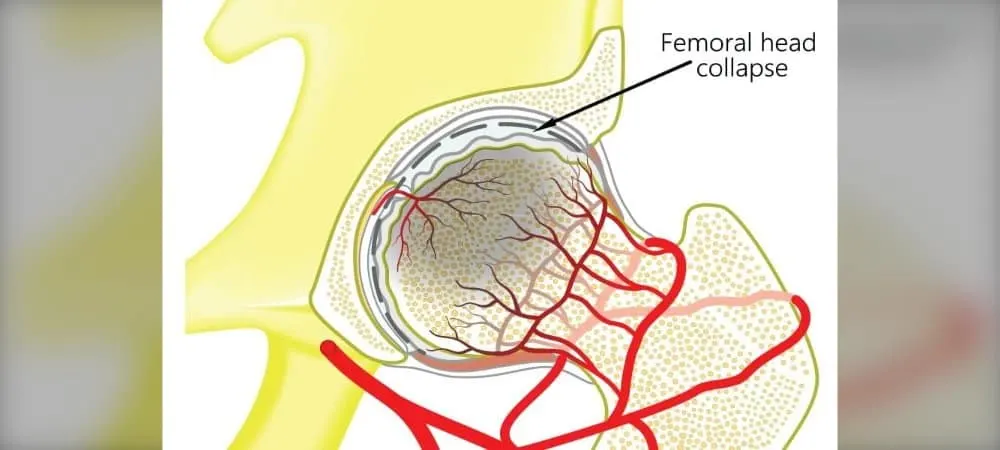
Avascular necrosis refers to a serious health problem that begins with the interruption of blood flow to bone tissue. When blood flow stops, bone tissue is damaged and begins to die over time. This condition is particularly common in the hip joint, but it can also affect the shoulder, knee, and other joints.
What is Avascular Necrosis Disease?
Interruption of blood flow in bone tissue
Your bones are living tissues and need blood to constantly regenerate. When blood flow is cut off, bone cells are deprived of oxygen and nutrients. This deprivation leads to the death of bone tissue.
The problem begins when blood vessels inside the bone are damaged or blocked. Blood cannot reach the affected area, and the bone tissue cannot be nourished. This process may not be noticed initially, but it causes serious damage over time.
A healthy bone constantly regenerates itself. Old bone cells are replaced by new ones. However, without blood flow, this regeneration stops, and the bone begins to collapse over time.
The development process of the disease
The disease usually progresses in stages. In the first stage, bone tissue is deprived of blood flow, but there is no visible change in its structure yet. You may not feel pain during this period.
In the second stage, dead bone tissue begins to accumulate. Your body tries to repair the damaged tissue, so pain may occur during this process. The bone still maintains its structure.
In the advancing stages, the bone tissue weakens and begins to collapse. Cracks form on the joint surface. At this point, pain intensifies, and joint movements become difficult.
In the final stage, the bone collapses completely, and the joint can no longer function properly. The joint cartilage is also damaged. This leads to arthritis-like symptoms and significantly affects your daily life.
In which areas is it seen?
The question of what is avascular necrosis of the hip is frequently asked because the disease most often affects the hip joint. The hip joint carries your body weight and is rapidly damaged when blood flow is interrupted.
The shoulder joint is the second most frequently affected area. It can also be seen in the knee, ankle, and elbow joints. In some cases, more than one joint is affected at the same time.
The disease can also develop in the bones of the hands and feet. It can occur after trauma, especially in the wrist and foot bones. The jawbone is also among the rarely affected areas.
Symptoms in each joint are similar, but their severity varies depending on the affected area. In large joints such as the hip and shoulder, the disease leads to more serious problems.
What are the Symptoms of Avascular Necrosis?
Early-stage symptoms
You may not see any symptoms in the initial stage of the disease. When bone tissue is deprived of blood flow, your body does not feel it immediately. This silent period can last for months.
The first symptom of avascular necrosis is usually mild discomfort. This symptom appears when you feel pressure on the joint or perform certain movements. Pain comes and goes occasionally at first.
Pain increases when you use the affected joint and decreases when you rest it. You may feel stiffness in the joint when you wake up in the morning. This stiffness eases as you move.
Advanced-stage symptoms
As the disease progresses, the intensity of the pain increases and becomes constant. You feel pain even while resting. It may cause you to wake up from sleep at night.
Joint movement becomes increasingly difficult. Even simple daily activities become painful. For example, climbing stairs, bending over, or tying shoelaces becomes difficult.
Joint limitation begins. You cannot move your joint as comfortably as before. Your range of motion narrows, and you cannot reach certain positions.
Over time, you may start to limp. Your body develops different walking patterns to avoid pain. Muscle weakness also occurs because you use the joint less due to pain.
Symptoms of avascular necrosis of the hip
When looking for an answer to the question of what is avascular necrosis of the hip, it is important to know the symptoms. Hip pain is felt in the groin, the front of the hip, or the side.
The pain sometimes radiates to the knee. For this reason, some patients think the problem is in the knee. However, the actual source is in the hip joint.
Pain becomes noticeable when walking or running. You may feel a sharp pain in your hip when going down stairs. Standing for long periods also becomes difficult.
Crossing your legs or opening your legs to the side while sitting becomes difficult. Hip pain increases when putting on socks or tying shoelaces.
Symptoms in other joints
When avascular necrosis develops in the shoulder, it becomes difficult to lift the arm. Brushing your hair or reaching for top shelves causes pain. You cannot roll over onto your shoulder while sleeping at night.
When seen in the knee, pain occurs when walking or climbing stairs. The knee joint may swell and fluid may accumulate inside. You cannot fully bend or straighten your knee.
If the disease is in the wrist or ankle, using that joint is painful. Your grip strength in your hands decreases, so you have difficulty holding objects. Walking and running in the ankle become difficult, and similarly, you experience balance problems.
Causes of Avascular Necrosis
More than one factor can cut off the blood flow to bone tissue and is among the causes of avascular necrosis. While some conditions directly damage bone vessels, others gradually reduce blood flow.
Trauma and injuries
Bone fractures can directly damage blood vessels. Broken pieces cut or compress the thin vessels inside the bone. Blood cannot reach that area, and the bone tissue begins to die.
Hip dislocation is particularly risky. When the hip joint is dislocated, the vessels feeding the femoral head are stretched or torn. Serious traumas resulting from accidents also create the same effect.
Sports injuries sometimes affect blood flow. Repetitive impacts or overuse lead to micro-damage within the bone. When these damages accumulate, blood flow can be impaired.
Corticosteroid use
Using high-dose steroid medications increases the risk. These drugs trigger fat accumulation in blood vessels. Fat accumulation blocks the vessels, and bone tissue is deprived of blood.
If you are receiving long-term steroid treatment for diseases such as asthma, lupus, or rheumatoid arthritis, you need to be careful. The risk increases in direct proportion to the dose and duration used.
Some patients may develop the disease even after short-term high-dose steroid use. Your body's response to corticosteroids varies from person to person.
Alcohol consumption
Excessive alcohol consumption damages your blood vessels. Alcohol raises blood fat levels, and these fats clog the vessels. Similarly, it reduces the regeneration capacity of bone cells.
Consuming high amounts of alcohol regularly for many years significantly increases the risk. Alcohol also impairs the calcium absorption of bones and weakens bone tissue.
Blood diseases and metabolic disorders
Sickle cell anemia distorts the shape of blood cells. Abnormally shaped cells clog small vessels and prevent blood flow to bone tissue. Avascular necrosis is frequently seen in people with this disease.
Blood clotting disorders cause blockages in bone vessels. Clots cut off blood flow, and the tissue becomes unable to be nourished.
Metabolic disorders such as Gaucher disease create fat accumulation within the bone. High cholesterol also facilitates vascular occlusions, thus reducing blood flow.
Risk factors
If you go deep-sea diving, you carry the risk of decompression sickness. Rapid pressure changes create gas bubbles in the blood, and these bubbles clog the vessels.
Patients receiving radiotherapy are also at risk. Radiation damages bone tissue and its vessels. Drugs used after organ transplantation show similar effects.
Smoking narrows your blood vessels and reduces blood flow. Obesity puts excessive load on your joints and negatively affects blood circulation. In some cases, your family history also plays a role, and genetic predisposition increases the risk of the disease.
How is Avascular Necrosis Diagnosed?
To make an accurate diagnosis of avascular necrosis, your doctor uses several different methods together. A single test may not be sufficient, so multiple examinations are required. The diagnostic process begins with listening to your symptoms and continues with imaging techniques.
Physical examination
Your doctor first listens to your symptoms and asks when they started. They want to learn which movements increase and decrease the pain. They ask questions about injuries you have had in the past, medications you use, and your habits.
During the examination, they ask you to move the affected joint. They check whether you feel pain while turning your joint in different directions. They measure your range of motion and determine how different it is from normal.
They press on your joint to identify sensitive points. They look for swelling or redness. They test the strength of your surrounding muscles, as muscles may have weakened due to pain.
They observe your gait and evaluate whether there is any limping. When looking for an answer to the question of what is avascular necrosis of the hip, your doctor pays particular attention to your walking pattern. Physical examination results determine the need for imaging.
Imaging methods
X-ray is usually the first imaging method used. However, changes may not be seen on X-rays in the early stage. When the disease progresses, deterioration in bone structure becomes evident on X-rays.
MRI imaging is the most sensitive method. It shows changes in bone tissue even in the early stage. It clearly reveals the areas where blood flow is cut off. MRI is very valuable for determining the stage of the disease.
Computed tomography shows bone structure in detail. It is particularly effective in detecting bone collapses and fracture lines. It provides the necessary information for surgical planning.
Bone scintigraphy can show the decrease in blood flow early on. In this method, a special substance injected into your body accumulates in bone tissue. Problematic areas appear differently in the image.
Importance of early diagnosis
The earlier the diagnosis of avascular necrosis is made, the higher the success of treatment. In the early stage, the bone has not yet collapsed, and recovery can be achieved with simpler treatments.
When diagnosed late, the bone structure is impaired. In this case, surgical intervention becomes inevitable. A joint prosthesis may be required, and the recovery process is prolonged.
It is important to go to the doctor as soon as symptoms begin. You should have regular check-ups, especially if you have risk factors. For example, you need to be careful if you use long-term steroids or have had a joint injury in the past.
Early diagnosis makes it possible to preserve joint functions. You can lead a pain-free life and perform your daily activities normally. By stopping the progression of the disease, you avoid serious complications.
How is Avascular Necrosis Treated?
The treatment approach changes depending on the stage of the disease. Your doctor first evaluates how much the bone structure has been damaged, then determines the most appropriate avascular necrosis treatment method for you. The goal is to prevent further damage to the bone tissue and preserve joint functions.
Conservative treatment methods
Rest is the first step in the early stage of the disease. You need to reduce the load on the affected joint. You can alleviate the pressure on your joint by using a cane or crutches.
Painkillers reduce your daily discomfort. Your doctor prescribes painkillers at the appropriate dose for you. Some drugs also reduce inflammation and control swelling.
Physical therapy helps maintain joint movement. Exercises strengthen your muscles and increase joint flexibility. However, it is important to avoid movements that put excessive load.
Non-surgical treatments
Electrical stimulation can encourage bone formation. This method accelerates the regeneration of bone cells. It has been observed to improve blood flow in some patients.
Hyperbaric oxygen therapy provides high-pressure oxygen. When your body receives more oxygen, bone tissue finds a way to be nourished. This treatment can be particularly beneficial in the early stage.
Cholesterol-lowering drugs can reduce blockages in blood vessels. By clearing the fats accumulated in bone vessels, they can improve blood flow, thus slowing the progression of the disease.
Surgical treatment options
Bone decompression surgery is performed in the early stage. The surgeon lowers the pressure by opening holes in the bone. This procedure also encourages the formation of new blood vessels.
Bone grafting adds healthy bone tissue. The surgeon takes bone from another part of your body or a donor and places it in the damaged area. Blood vessels are also added along with the graft.
Bone reshaping removes the damaged part. Healthy bone sections are rearranged to carry the load. This method aims to protect the joint.
Joint prosthesis is the last option. It is applied when the bone has completely collapsed and other treatments have not worked. The damaged joint is replaced with an artificial joint. You may encounter this option, especially when looking for an answer to the question of what is avascular necrosis of the hip.
Factors affecting treatment choice
Your age affects the treatment decision. Joint-preserving methods are preferred in young patients. In older ages, a prosthesis may be more appropriate.
The stage of the disease is a determining factor. Simple treatments are sufficient in the early stage. In advanced cases, surgery becomes inevitable.
The location of the affected joint is important. Large joints such as the hip and shoulder require different approaches. Small joints such as the hand and foot can heal with simpler treatments.
Your general health status also plays a role. You must be in a condition to withstand surgical risks. Your chronic diseases affect the treatment choice.
Recovery process after treatment
The recovery time varies according to the treatment method. Conservative treatments can take months, but surgical interventions require longer recovery. You need to be patient and follow your doctor's instructions.
Regularly attending the physical therapy program accelerates recovery. You perform strengthening exercises before your muscles weaken. You gradually increase your joint range of motion.
Regular check-ups follow treatment success. Your doctor monitors bone healing with imaging tests. If necessary, they adjust the treatment plan and make changes.
Frequently Asked Questions
Some questions about the disease are frequently on patients' minds. The answers to these questions guide you to understand the treatment process and take the right steps.
Does avascular necrosis heal?
The success of the disease's recovery depends on early diagnosis and appropriate treatment. When detected in the early stage, the bone tissue has not yet collapsed, and recovery is possible with conservative methods.
Simple methods such as rest, painkillers, and physical therapy are sufficient for some patients. Bone tissue has the capacity to repair itself, but this process takes time. You need to be patient and stick to the treatment plan.
Full recovery is more difficult in advanced stages. When the bone structure is impaired, surgical intervention may be required. Surgeries such as joint prosthesis relieve pain and restore function, but the bone cannot return to its former state.
The chance of recovery is higher in young patients. The body's regeneration capacity decreases with age, so treatment results vary from person to person. Lifestyle changes and regular check-ups support the recovery process.
Which doctor should be consulted?
For your joint pain, you should first consult an orthopedist. Orthopedists are experts in bone and joint diseases. They have the necessary knowledge to diagnose avascular necrosis and create a treatment plan.
In some cases, a rheumatologist may also be involved in the process. A rheumatology consultation may be requested, especially to investigate the underlying causes of the disease. Teamwork increases treatment success.
A physical therapist plays an important role in the recovery process. They prepare and implement your exercise program. They accompany you regularly during the rehabilitation process.
When surgery is required, you are referred to an orthopedic surgeon. It is important to choose a surgeon with surgical experience. Similarly, the choice of hospital also affects the quality of treatment.
What happens if it is not treated?
Avascular necrosis left untreated gradually worsens. Bone tissue eventually collapses completely, and the joint loses its function. Pain intensity increases and seriously affects your daily life.
Joint movement can be completely restricted. Even simple activities become impossible to perform. Walking, climbing stairs, or bending over becomes impossible. For this reason, early treatment is essential.
Untreated disease damages the joint cartilage. Arthritis develops, and permanent disability occurs. Neighboring joints also begin to be damaged because the body transfers the load to other joints.
Your quality of life drops significantly. Pain becomes constant, and your sleep pattern is disrupted. Your work life and social relationships are negatively affected. Over time, psychological problems such as depression and anxiety may emerge.
Can exercise be done?
Doing the right exercises supports recovery. However, you should avoid movements that put excessive load on the joint. A physical therapist teaches you the appropriate exercises and ensures you perform them under their supervision.
Low-impact activities such as swimming are ideal. In water, the load on your joints decreases, and you strengthen your muscles. Cycling also provides conditioning without straining the joints.
You should stay away from high-impact exercises such as running, jumping, or heavy lifting. These movements damage bone tissue and advance the disease. You should also avoid sudden movements and strenuous sports.
If you feel pain during exercise, you should stop immediately. Pain is your body's warning sign. For example, if a movement causes discomfort, stop doing that movement. Rest periods allow your muscles and bones to perform repairs.
In Summary: Avascular Necrosis
Although avascular necrosis is a serious health problem, it can be managed with early diagnosis and correct treatment. It is important to consult a doctor immediately when you feel unexplained pain in your joints. You should have regular check-ups, especially if you have risk factors.
Treatment success is much higher in the early stage of the disease. Recovery can be achieved with simple methods, and you can preserve your joint functions. However, surgical intervention may be required if it is too late.
For your health, follow your doctor's recommendations and stick to the treatment plan. With the right approach, you can lead a pain-free life and return to your daily activities.
Avascular necrosis occurs with the interruption of blood flow to bone tissue. Learn about its symptoms, diagnostic methods, and treatment options. Early diagnosis is important!
Start with the right assessment for What is Avascular Necrosis? What are the Symptoms? How is it Diagnosed and Treated?
Share your symptoms with our specialist physicians; let us determine the right diagnosis and treatment plan together.
Warning
If your symptoms started suddenly, are progressing rapidly, or significantly restrict your daily life, consult a physician without delay.
Plan your What is Avascular Necrosis? What are the Symptoms? How is it Diagnosed and Treated? journey with our specialists.
Fill in the form or book an appointment to learn about treatment options, the process and preparation.