Achilles tendinitis is a common condition, especially among runners and active individuals. Symptoms such as pain, swelling and limited movement can negatively affect your daily life. In this article, we will answer the questions of what Achilles tendinitis is, what its symptoms are and how it is diagnosed. We will also examine Achilles tendinitis treatment options and Achilles tendinitis exercises in detail.
What Is Achilles Tendinitis?
Achilles tendinitis is a condition caused by inflammation and irritation of the Achilles tendon, which is located at the back of your leg. It develops as a result of overloading of the tendon and can become chronic over time.
The Achilles Tendon and Its Function
The Achilles tendon is the largest and strongest tendon in your body. This structure, which connects your calf muscles to your heel bone, plays a critical role in daily activities such as walking, running and jumping.
Your tendon comes into play with every step. When you lift your foot off the ground and when you put it down, a great force is generated on this structure. Especially during running and jumping, the Achilles tendon carries a load several times your body weight.
Thanks to this tendon, you can rise onto your toes, climb stairs and run. Its flexibility and durability form the basis of your physical activities.
How Does Tendinitis Develop?
Achilles tendinitis develops as a result of repetitive movements and overexertion. When your tendon is continuously loaded, small tears and damage begin to accumulate. Your body tries to repair this damage, but if the rest period is insufficient, full healing does not occur.
Over time, this damage accumulates and causes thickening and hardening of your tendon. The inflammatory process begins and your tendon structure weakens. A tendon that has lost its normal elasticity becomes more vulnerable to further injury.
The stiffness you feel with your first steps in the morning or at the start of activity is an indicator of these changes in your tendon. Pain may decrease after warming up, but the problem persists.
Non-Insertional and Insertional Achilles Tendinitis
When answering the question of what Achilles tendinitis is, it is necessary to mention two different types. The non-insertional type occurs in the middle part of your tendon. It is generally seen in young and active individuals.
The symptoms of this type of Achilles tendinitis appear just below your calf muscle. The area where your tendon thickens can be felt by hand. It is more common in runners and athletes.
The insertional type, on the other hand, develops at the point where your tendon attaches to the heel bone. It can be seen in every age group, although it is encountered more often in people with a sedentary lifestyle. Bone spurs may also form in this area.
Both types show similar Achilles tendinitis symptoms, but treatment approaches may differ. Early diagnosis increases the chance of success in the Achilles tendinitis treatment process.
Symptoms of Achilles Tendinitis
Recognizing the symptoms is the first step toward early intervention. Achilles tendinitis symptoms usually start slowly and become more severe over time. Some days they may be milder, while on other days they may become unbearable.
Pain and Stiffness
When you get out of bed in the morning, you feel a sharp pain behind your heel. Your first few steps are especially difficult. This morning stiffness is a characteristic symptom of Achilles tendinitis.
Your pain is usually concentrated in the lower part of your calf muscle or just above your heel. Tenderness increases when you press on it by hand. The pain is more noticeable when you start activity after a period of inactivity.
You feel discomfort when climbing stairs or rising onto your toes. The pain becomes sharper during high-impact activities such as running. Symptoms may decrease after warming up, but they reappear when the activity is over.
You may feel a slight throbbing even at rest. Pain that wakes you from sleep at night indicates the seriousness of the condition. Symptoms generally worsen in cold weather.
Swelling and Tenderness
Swelling develops around your tendon. This swelling may be more noticeable in the mornings. You notice a slight bulge behind your ankle.
The swollen area is tender to the touch. Discomfort increases when tight shoes put pressure on it. Your tendon feels thicker and harder than normal.
Redness may also be seen in the area. Your skin may feel warm to the touch. This warmth is an indicator of the ongoing inflammation underneath.
Edema can become chronic over time. The swelling varies between morning and evening. Swelling increases after standing for a long time.
Limited Movement and Other Symptoms
You cannot move your ankle fully. The ability to lift your foot upward decreases. Even your normal walking may become difficult.
Your flexibility is lost. Movements you used to do comfortably now cause pain. Daily activities such as squatting or going down stairs become challenging.
If you hear a crackling or creaking sound in your tendon, this is a serious warning. These sounds point to damage within the tendon. These sounds you feel during movement should not be ignored.
You feel weakness in your leg. You may lose your balance while rising onto your toes. Standing on one foot becomes difficult. Limping may begin and becomes especially noticeable after long walks.
Symptoms are usually on one side, but they can be seen in both feet. Your pain after activity can last for 24 hours. If symptoms continue for weeks, you should definitely consult a specialist for Achilles tendinitis treatment.
Causes and Risk Factors of Achilles Tendinitis
Multiple factors play a role in the development of Achilles tendinitis. Your lifestyle, anatomical characteristics and the activities you perform directly affect the health of your tendon. Understanding these factors helps you take preventive measures.
Overuse and Sports Activities
A sudden increase in activity intensity is the primary cause of Achilles tendinitis. When you double your running distance within a week, your tendon cannot adapt to this sudden change. Your body has no time to adapt.
Sports such as running, basketball and tennis constantly strain your tendon. With every step and every jump, high tension is created on the tendon. These repetitive movements lead to micro-damage over time.
Weekend athletes are especially at risk. Staying inactive for five days of the week and doing intense activity on two days harms your tendon. Intermittent strain instead of regular activity increases the risk of injury.
Insufficient warm-up is also an important factor. Starting activity with cold muscles reduces tendon flexibility. Sports that require sudden starts and stops are more dangerous when performed without a warm-up.
Anatomical Factors
Your foot structure affects the risk of Achilles tendinitis. If you have flat feet, your tendon is stretched extra while walking. This constant tension causes irritation over time.
Tightness of your calf muscles also creates risk. Short and tense muscles pull your tendon excessively with every movement. A lack of flexibility creates pressure even during normal movements.
A leg length difference disrupts your balance. When one of your legs is shorter than the other, your body weight is not distributed equally. The tendon on the longer side constantly carries extra load.
In addition, there are ankle alignment problems. Feet that turn inward or outward create abnormal pressure points on the tendon. This mechanical imbalance triggers inflammation.
Age and Other Risk Factors
As you get older, your tendon structure changes. After the age of 30, flexibility decreases and blood flow slows down. Your tendon does not heal as easily as before. Achilles tendinitis is more common in middle-aged and older individuals.
Gender also plays a role. Men are affected more than women. The reason for this is that men generally participate in more intense and high-impact activities.
Some health conditions increase the risk. If you have diabetes, your tendon healing slows down. Blood pressure medications may weaken the tendon structure. Autoimmune diseases such as psoriasis also affect connective tissue.
Your body weight creates extra pressure on your tendon. Excess weight increases the load with every step. Obesity raises the risk of developing Achilles tendinitis.
Choosing the wrong shoes is often overlooked. Worn soles, insufficient support or high-heeled shoes strain your tendon. If you do not replace your sports shoes regularly, their cushioning properties are lost.
In cold weather, your muscles become stiffer. If you exercise outdoors in the winter months, your tendon is more sensitive. Therefore, you should allow extra time for warming up.
Diagnostic Methods for Achilles Tendinitis
An accurate diagnosis is necessary for effective Achilles tendinitis treatment. After listening to your symptoms, your doctor uses various methods to evaluate the condition of your tendon. This process usually begins with a physical examination and, when necessary, is supported by imaging tests.
Physical Examination
Your doctor first visually examines your leg and ankle. They look for swelling, redness or thickening in the tendon area. The visual assessment gives the first clues about the seriousness of the problem.
Then they examine your tendon by hand. By pressing lightly along the tendon with their fingers, they identify tender points. They check for the presence of thickened or irregular tissue. Meanwhile, you report the degree of pain you feel.
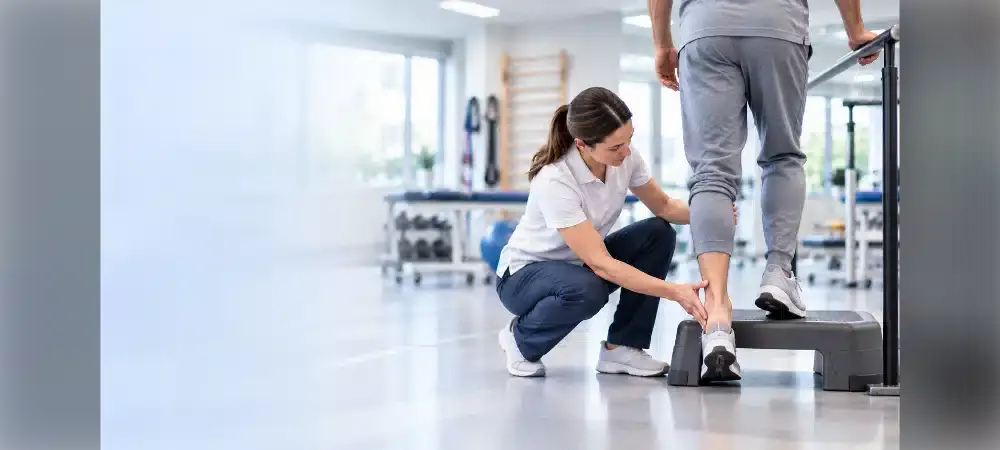
Movement tests are performed. You are asked to move your foot up and down. Your doctor measures the flexibility of your ankle. You may be asked to rise onto your toes or stand on one foot. Pain and weakness are evaluated during these movements.
The Thompson test is frequently performed. When you lie face down, your doctor squeezes your calf muscle. If the situation is normal, your foot moves downward. If there is no movement, this may be a sign of a tendon tear. The test is simple but quite informative.
In addition, your gait is observed. Limping or an abnormal way of stepping is noted. The stair-climbing movement may be tested. These functional assessments show the degree to which your daily life is affected.
Imaging Methods (MRI and Ultrasound)
If the physical examination does not provide sufficient information, imaging methods are used. Ultrasound is the most commonly used first imaging technique. The device uses sound waves to image the internal structure of your tendon.
An ultrasound examination is quick and painless. The doctor moves a probe over your tendon. Real-time images appear on the screen. Tendon thickness, the presence of tears and blood flow can be evaluated. Within the same session, your healthy side is also examined for comparison.
This method shows fluid accumulation within the tendon. Calcification or bone spurs can be detected. Thanks to real-time imaging, the doctor can watch the tendon during movement. It is economical in terms of cost.
MRI imaging provides more detailed information. It is preferred especially in complex cases. Each layer of your tendon is imaged separately. Changes in the surrounding tissues are also clearly revealed.
An MRI scan takes approximately 30-45 minutes. You need to remain still inside the tunnel. The noise is quite loud, so earplugs are provided. The results give a clear answer to the question of what Achilles tendinitis is.
This imaging method determines the degree of tendon degeneration. It distinguishes partial tears from complete tears. It provides critical information for treatment planning. It helps in deciding whether surgery is necessary.
In some cases, an X-ray may be taken. An X-ray does not show the tendon, but it reveals bone problems. Bone spurs or calcification are detected. It is used to rule out other possible causes.
Imaging results are evaluated together with physical examination findings. Your doctor combines all this information to reach a definitive diagnosis. Afterwards, an Achilles tendinitis treatment plan suitable for you is created.
Treatment of Achilles Tendinitis
Treatment options vary according to the severity of your condition. Most cases heal with non-surgical methods. However, in chronic and severe cases, surgical intervention may be required.
Non-Surgical Treatment Methods
The first choice is always the conservative approach. Giving your tendon an opportunity to rest starts the healing process. When intervention is made in the early period, simple methods are quite effective.
Ice application reduces inflammation. Apply ice to the painful area for 15-20 minutes several times a day. Use a thin cloth to prevent the ice from coming into direct contact with the skin. This application quickly reduces swelling.
Compression bandages provide support. An elastic bandage or compression sock applies light pressure to your tendon. You should not wrap it too tightly; blood circulation must not be obstructed. Its use is especially beneficial after activity.
Keeping your foot above heart level reduces edema. When sitting or lying down, place a pillow under your foot. This simple action prevents fluid accumulation.
Rest and Activity Modification
You should temporarily stop running and jumping. Stay away from high-impact sports until your tendon heals. This rest period usually varies from a few weeks to a few months.
Instead, turn to low-impact activities. Swimming provides conditioning without putting stress on your tendon. Cycling is also a good alternative. You should not feel pain during these activities.
Make changes in your daily routine. Use the elevator instead of the stairs. Avoid standing for long periods. If your job requires standing, take frequent sitting breaks.
Achilles Tendinitis Exercises
Stretching exercises are the foundation of treatment. Regularly stretching your calf muscles reduces the tension on the tendon. Stand facing a wall and lean forward, keeping one foot behind. Hold the position for 30 seconds.
Eccentric strengthening exercises are especially effective. Rise onto your toes and slowly lower yourself down. The lowering movement should take longer than the upward movement. This exercise strengthens the tendon structure.
At the beginning, exercises should be light. Over time, increase the number of repetitions and the difficulty. Stop if you feel pain. A physical therapy specialist can prepare a personalized program for you.
Medication and Injections
Pain relievers alleviate symptoms. Medications such as ibuprofen or naproxen reduce inflammation. Take them with meals to prevent stomach upset. Avoid long-term use.
Topical creams and gels provide local relief. Apply them to the affected area several times a day. These products reduce systemic side effects. Their effectiveness increases if you apply them while massaging.
Corticosteroid injections are controversial. These injections may weaken the tendon. Your doctor rarely recommends them except in urgent situations. PRP injections are considered as an alternative, but their effectiveness is still being researched.
Surgical Treatment
Surgery is the last resort. If you do not respond to six months of conservative treatment, surgery is considered. If there is serious damage or a tear in your tendon, early intervention may be required.
During surgery, the damaged tissue is cleaned. The surgeon removes the degenerated parts. If there are bone spurs, these are removed as well. The recovery process takes several months.
Rehabilitation after the operation is critical. In the first weeks, you use a cast or a boot. Physical therapy begins afterwards. Full recovery and return to sports usually take 4-6 months.
Frequently Asked Questions
Patients wonder about similar questions regarding Achilles tendinitis. The answers to these questions help you better understand the situations you will encounter during the treatment process.
How long does it take for Achilles tendinitis to heal?
The healing time depends on the severity of your condition. Mild cases improve within 2-4 weeks. Moderate problems require 6-12 weeks of treatment. Chronic Achilles tendinitis, on the other hand, can last 3-6 months. When you start treatment early, your chance of recovery increases. If you comply with rest and exercises, the process speeds up.
When can I return to sports?
Rushing causes reinjury. Even when you are pain-free, do not start intense activity right away. First start with light movements such as walking. Then try running at a slow pace. If you feel no pain at all, gradually increase the intensity. Returning to sports is generally safe 4-6 weeks after full recovery. Do not start strenuous activities without your doctor's approval.
Does Achilles tendinitis recur?
If you do not take precautions, the risk of recurrence is high. After recovering, do regular stretching exercises. Do not suddenly increase your activity level. Continue to use appropriate footwear. Keep your calf muscles strong. These habits reduce the likelihood of recurrence.
Which shoes should I choose?
Choose shoes with adequate heel support. It is important for the sole to be soft and flexible. Replace worn shoes immediately. Avoid high-heeled shoes. Flat-soled or very thin-soled sports shoes are also not suitable. Use orthotic insoles if necessary.
What should I pay attention to in daily life?
Move slowly when climbing stairs. Avoid sudden movements. When you get up in the morning, do not walk right away; do light stretches first. If you need to stand for a long time, sit down from time to time. Do not walk barefoot on cold floors or surfaces. Always warm up before activity.
Does Achilles tendinitis go away completely?
Most people recover fully. Early diagnosis and correct treatment increase your chance of success. However, in some cases, permanent weakness may remain. In chronic cases, the tendon structure may not return completely to its former state. Regular Achilles tendinitis exercises and precautions should be continued for life.
Which doctor should I see for Achilles tendinitis?
Consult an orthopedic specialist. Sports medicine physicians are also experienced in this matter. A physical therapy specialist helps you during the rehabilitation process. You can make your first visit to your family physician, who will refer you if necessary.
What should I do if exercises cause pain?
Mild discomfort is normal, but sharp pain is a warning sign. If you feel pain, stop the exercise. Reduce the intensity of the movement. Lower the number of repetitions. Rest for a few days, then try again. If there is constant pain, inform your doctor.
Should I apply cold or heat?
Use ice in the acute phase. Apply cold for the first 48-72 hours. It reduces swelling and pain. In the chronic stage, mild heat may be beneficial. However, ice is generally safer. Never apply very hot heat.
What happens if it is not treated?
Neglected Achilles tendinitis gets worse. The tendon gradually weakens and the risk of rupture increases. A complete rupture is a serious complication and requires surgery. In addition, chronic pain lowers your quality of life. Early intervention is always best.
Achilles Tendinitis in Summary
Achilles tendinitis is a condition that can heal completely when intervened early. Do not ignore the pain behind your heel. Take action immediately when you notice the symptoms. Rest, ice application and regular exercises are sufficient in most cases.
Be patient during the treatment process. Rushing and returning to sports early can make the situation even worse. Gradual progress is the key. Choosing the right shoes and slowly increasing your activity level prevent recurrence.
If you experience persistent discomfort, be sure to consult a specialist. With an appropriate treatment plan, you can return to your daily life without pain.
Fill Out the Form for Detailed Information and Contact!
Start with the right assessment for What Is Achilles Tendinitis? What Are Its Symptoms? How Is It Diagnosed and Treated?
Share your symptoms with our specialist physicians; let us determine the right diagnosis and treatment plan together.
Warning
If your symptoms started suddenly, are progressing rapidly, or significantly restrict your daily life, consult a physician without delay.
Plan your What Is Achilles Tendinitis? What Are Its Symptoms? How Is It Diagnosed and Treated? journey with our specialists.
Fill in the form or book an appointment to learn about treatment options, the process and preparation.