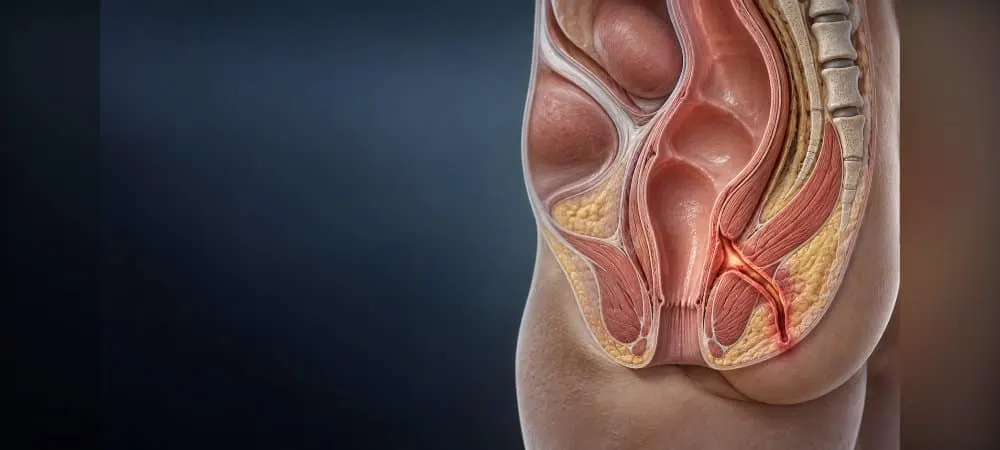
An anal fistula is an abnormal tunnel that forms between the inside of the anus and the skin around the anus. In fact, this condition occurs when an anal abscess that was left untreated or drained late has perforated both toward the bowel side and toward the skin side. More common in men, this condition does not heal on its own and must be treated.
Symptoms of an anal fistula usually appear as discharge from the anus, bad odor, pain and swelling. Anal fistula treatment is mostly carried out surgically, and if it is not addressed early, it can cause persistent infection and skin irritation. For this reason, it is important to see a specialist when you notice the symptoms.
In this article you will find answers to your questions such as what an anal fistula is, how it develops, what its symptoms are and what the treatment methods are. You will also learn about the methods used in the diagnostic process, so you will understand everything you need to know about this condition.
What Is an Anal Fistula?
Known as canal-shaped structures that form in the anal region, anal fistulas are abnormal tunnels that develop between the inside of the bowel and the skin around the anus. This condition arises as a result of anal abscesses that were left untreated or drained late, and it causes persistent discharge and pain.
What does anal fistula mean?
An anal fistula is the formation of an unnatural channel between the last part of the bowel and the area around the skin of the anus. It is an infected tunnel extending from an area of the anal wall where an abscess has formed to a point on the skin. In fact, it is a condition in which any cavity of the body or the tissues of a hollow organ lose their integrity and join with another tissue or the skin. These tunnels carry inflammation and infection and create a constant feeling of discomfort.
How does it differ from a rectal fistula?
Anal fistula and rectal fistula are different terms describing the same condition. Also called a perianal fistula, this condition refers to the abnormal connection that forms between the anus and the surrounding skin. On the other hand, an anal abscess and an anal fistula are different from each other. An anal abscess presents with redness, burning and swelling in the anus, whereas an anal fistula is characterized by throbbing pain.
An anal abscess is pus that accumulates around the anus as a result of inflammation. A fistula, on the other hand, is like the final stage of this abscess and is a permanent channel that forms when the abscess does not heal completely. Put simply, an abscess is an acute infection, whereas a fistula is a chronic condition.
How does a fistula form?
Anal fistulas usually form as follows:
- Development after anal abscesses: The most common cause is an anal abscess that does not heal completely or is drained incorrectly. The infected material in the abscess remains inside and over time opens a path outward.
- Spread of infection: When an infection in an anal gland cannot drain naturally, it creates a tunnel to achieve drainage, and a fistula forms.
- Chronic diseases: It can develop due to bowel diseases such as Crohn's disease, tuberculosis, after radiotherapy, or rarely because of cancer.
- Trauma and surgery: Previous anal injuries or earlier operations can also pave the way for fistula formation.
However, if fistulas are not treated or surgery is avoided, abscess attacks may occur from time to time, and this can lead to the formation of new tunnels. For this reason, early diagnosis and appropriate treatment are very important.
In conclusion, an anal fistula is a condition that does not heal on its own, often requires surgical intervention and carries a risk of recurrence.
Causes of Anal Fistula
More than one factor plays a role in the development of an anal fistula. Certain diseases and conditions can trigger this problem. In this section, we will examine the most common causes of anal fistula.
Development after an anal abscess
The most common cause of anal fistulas is anal abscesses that were left untreated or inadequately treated. Research shows that a fistula develops in one out of every two to four people who have an anal abscess. Abscesses usually occur as a result of blockage or infection of the anal glands inside the anus. These glands normally secrete an oily fluid, but when they become blocked, infection and inflammation can develop.
When the abscess does not heal completely or is not drained properly, the pus inside spreads to the surrounding tissues and forms a tunnel. Over time, this tunnel opens a hole in the skin, drains to the outside and becomes a fistula. If you feel recurrent discharge, itching or pain in the area, especially after an anal abscess, a fistula may have developed.
Crohn's disease and other bowel diseases
Crohn's disease is the second most common cause of anal fistulas. This chronic inflammation of the bowel can trigger the development of fistulas by damaging the bowel wall. It has been found that about 33% of Crohn's patients develop a fistula by the 10th year of the disease, and 21% of these are perianal fistulas.
In addition, other inflammatory bowel diseases such as ulcerative colitis and diverticulosis can also pave the way for fistula formation. These diseases cause inflammation in the bowel and can lead to loss of tissue integrity and the formation of abnormal channels.
Trauma and surgery
Trauma to the anal region or previous surgical procedures can also lead to the development of an anal fistula. In particular:
- Complications after anal fissure (tear) surgery
- Injuries sustained during childbirth
- Blows to the anal region
- Complications in the bowel after digestive system surgery
In addition, radiotherapy applied to the pelvic region can also cause tissue damage and trigger the development of a fistula. Approximately 7-10% of patients receiving radiation therapy are at risk of developing a fistula.
Immune system disorders
Diseases that weaken the immune system can facilitate the development of an anal fistula. In particular:
- Immune system deficiencies such as HIV/AIDS
- Tuberculosis (TB)
- Diabetes and other chronic diseases
Because these diseases slow the body's healing processes and reduce resistance to infections, the likelihood of developing a fistula increases even after a simple abscess.
In conclusion, anal fistulas usually occur when the body's own healing mechanisms are insufficient. Every anal abscess that is not appropriately treated in the early period carries a potential risk of a fistula. Therefore, when you notice symptoms such as swelling, pain or discharge in the anal area, it is important to see a healthcare professional without delay.
Symptoms of Anal Fistula
Various symptoms can be seen in an anal fistula, and the severity of these symptoms varies from person to person. Understanding these symptoms well is very important for correct diagnosis and treatment.
Anal discharge and bad odor
The most obvious sign of an anal fistula is continuous or intermittent discharge from the anus. This discharge usually has a bad odor and can stain your underwear. The amount and odor of the discharge vary depending on the severity of the infection.
This discharge from the anus can cause skin irritation and itching. In particular, when the infected fluid comes out, it gives off a bad odor and can negatively affect your social life. In some patients, the discharge may be yellowish, pus-like or bloody.
Throbbing pain and swelling
Patients with an anal fistula usually feel a throbbing pain in the anus. This pain may become worse especially:
- When sitting
- During defecation
- When moving
- When coughing
Along with the pain, swelling, redness and increased warmth may also be seen in the anal area. The swelling is often tender to the touch and can create a feeling of fullness.
Formation of an opening in the skin
As the fistula progresses, a visible opening may form in the skin around the anus. This opening is the outer end of the fistula tract, and discharge can be seen coming from it.
Sometimes the patient may not notice this opening. However, if the opening becomes blocked, an abscess can form because of the infected material accumulating inside, and swelling may occur. Irritation, redness and tenderness may also be seen in the skin around the opening.
Stool and gas leakage
In an anal fistula, especially when it has gone untreated for a long time or after surgery, problems with stool and gas leakage may occur. This is related to damage to the anal muscles during fistula surgery and is called "incontinence."
The degree of incontinence depends on how the disease has developed and on the surgeon's experience. In some cases, difficulty controlling bowel movements may be experienced. This problem can seriously affect a person's quality of life and limit their social life.
Fever and weakness
If the infection in the anal fistula worsens, systemic symptoms may also appear in the body. These are:
- Fever
- Chills
- A general feeling of tiredness
- Weakness
These symptoms are more pronounced especially when an abscess is present. The presence of such general symptoms in your body indicates that the infection is progressing and may require emergency medical intervention.
When you notice these symptoms, it is extremely important to see a specialist for early diagnosis and treatment. Since an anal fistula is a condition that does not heal on its own, ignoring the symptoms can make the situation even worse.
How Is an Anal Fistula Diagnosed?
The first step of correct treatment is correct diagnosis. Various methods are used to diagnose an anal fistula, and through these methods the structure and location of the fistula and its relationship with the surrounding tissues can be determined.
Physical examination
The most important step in the diagnostic process is the physical examination performed by an experienced surgeon. The diagnosis of an anal fistula can usually be made by listening to the patient's complaints and by the doctor's examination. The doctor carefully examines the area around the anus and checks for the external opening of the fistula and for discharge.
During the examination, a digital rectal examination is performed, and an attempt is made to locate the internal opening of the fistula. If there is a very simple and superficial fistula, treatment can begin without the need for an additional diagnostic method.
Anoscopy and rectoscopy
Anoscopy is a quick and simple endoscopic examination method that allows detailed examination of the anal canal and the last part of the rectum. This procedure is performed with the help of a short, rigid, lighted tube called an anoscope.
This examination takes an average of 1-2 minutes and usually does not require anesthesia. With anoscopy:
- The internal opening of the fistula can be identified
- The condition inside the anal canal can be assessed
- A biopsy can be taken when necessary
Rectoscopy, on the other hand, allows a more detailed examination of the last section of the large intestine. Especially in recurrent fistulas or complex cases, colonoscopy or rectoscopy may be required to rule out inflammatory bowel disease.
MR fistulography
MR fistulography is considered the gold standard in the diagnosis of anal fistulas. This method allows detailed examination of fistulas using magnetic fields and radio waves.
With MR fistulography:
- The fistula tunnel can be mapped
- The sphincter muscles and other structures of the pelvic floor can be seen in detail
- Complications that the fistula may cause can be detected
During the MR fistulography procedure, a catheter is placed at the entrance of the fistula and a contrast agent is given through it. This allows clearer imaging. The procedure usually takes 30-60 minutes and does not involve radiation.
Fistulogram and other imaging methods
Fistulography involves injecting a dye into the fistula and taking an X-ray. The dye makes the fistula appear more clearly on the film. Some doctors may also use a fistula probe, an instrument specially designed to determine the fistula tunnel.
Other imaging methods used include:
- Endoanal ultrasonography: Used to identify the fistula, the sphincter muscles and the surrounding tissues.
- Injected dye solution: Helps locate the opening of the fistula.
- Examination under anesthesia: For a more comprehensive examination of the fistula, the surgeon may prefer to examine under anesthesia.
In conclusion, for the correct diagnosis and treatment of an anal fistula, it is very important to determine the exact anatomical location of the fistula, its internal opening and its relationship with the sphincter muscles. Therefore, after the physical examination, your doctor will use the diagnostic methods they consider appropriate.
Anal Fistula Treatment Methods
The aim of anal fistula treatment is to eliminate the fistula tract, cure the infection and prevent recurrence. The form of treatment varies according to the type and location of the fistula and its relationship with the anal muscles.
Fistulotomy
Fistulotomy is an effective surgical method applied especially in simple fistulas. In this procedure, the fistula tract is laid completely open and the infected tissue inside is cleaned. The tract is left open and allowed to heal from the outside inward.
This method is generally preferred for fistulas that are superficial and have no or very little involvement with the sphincter muscles. After the procedure, patients heal within 3-4 weeks. However, in some cases complications such as fecal incontinence may occur.
Seton placement
Seton treatment is a method used especially in complex fistulas and to protect the sphincter muscles. In this technique, a special thread or elastic material passed through the fistula tract provides drainage of the infection and prevents damage to the muscles.
Seton placement is a staged treatment process that usually lasts several months. During this time the seton is adjusted regularly. The greatest advantage of this method is that it provides treatment while preserving the anal sphincters, which enable stool continence.
Laser treatment
Laser treatment of anal fistula is considered a minimally invasive method. In this procedure, after the fistula tract is cleaned, the walls of the tract are burned and closed with a radial laser probe placed inside. The procedure usually takes 10-15 minutes and is performed under local anesthesia.
The advantages of laser treatment include less pain, a fast recovery process and no damage to the anal muscles. However, it may not be suitable for every case, and its success rate is around 70-80%.
Fistula plug and biological glues
Fistula plugs or biological glues are alternative methods used to close the fistula tract. In this procedure, specially prepared plugs are placed into the cleaned fistula tract or fibrin glue is injected.
Biological glues are naturally absorbed by the body and allow the fistula tract to close. This method is a suitable option especially for patients who want to preserve the sphincter muscles.
Endoscopic treatment with fistuloscopy
Fistuloscopy is a modern method that allows the inside of the fistula tract to be visualized and treated with a special camera. In this technique, the inside of the fistula tract is cleaned completely and cauterized using electrocautery, laser or radio waves.
While this minimally invasive method provides rapid healing, its recurrence rates are not higher than those of classical surgery. Its painless and quick recovery process is one of its important advantages.
Use of anal fistula cream
In the treatment of anal fistula, creams are generally used as preparation before surgery or as supportive treatment in mild cases. In the first stage, a well-planned diet and medications or creams that make defecation easier may be used.
However, surgical intervention is generally required for permanent treatment of an anal fistula. Creams are recommended mostly as additional treatment to reduce pain, control infection and speed up the healing process.
Anal Fistula in Summary
An anal fistula is a sensitive health problem of the anus and generally does not heal on its own. As a result, it is very important to consult a specialist as soon as you notice the symptoms. Bothersome symptoms such as discharge, pain or swelling can negatively affect your life.
Treatment options include fistulotomy, seton placement, laser and biological glues. Among these, your doctor will determine the treatment most suitable for your condition. Remember that early treatment reduces the risk of complications and speeds up your recovery.
Problems in the anal area are often difficult to talk about. However, delaying treatment out of embarrassment can make the situation even worse. Speaking openly with your doctor is the first step toward correct diagnosis and treatment.
Today, thanks to advanced treatment methods, an anal fistula is no longer as frightening a condition as it once was. With the right treatment, complete recovery can be achieved and you can return to your normal life in a short time.
Finally, simple habits such as healthy bowel regularity, regular exercise and drinking plenty of water can help protect your anal health. Paying attention to the signals your body gives is of great importance for leading a healthy life.
Frequently Asked Questions
There are many questions that come to people's minds about anal fistula. In this section, we answer the ones most frequently asked.
Does an anal fistula heal on its own? No, an anal fistula does not heal on its own. If left untreated, abscesses recur over time and fistula tracts may multiply. Therefore, it is very important to see a specialist doctor early.
Is anal fistula surgery painful? The modern surgical methods used today are quite comfortable. There may be mild pain for the first few days, but this pain can be controlled with painkillers.
Is there a risk of stool leakage after surgery? This risk may be seen especially in complex fistulas. However, thanks to sphincter-preserving techniques, this rate has decreased considerably today. In procedures performed by an experienced surgeon, the risk is very small.
How long is the recovery period? Healing is achieved within 2-3 weeks in simple fistulas and within 4-8 weeks in complex fistulas. This period may vary depending on the treatment method applied.
Does an anal fistula recur? There is a risk of recurrence when the fistula tract is not completely removed. Recurrence of 5-10% may be seen in simple fistulas and up to 20% in complex fistulas.
Can it be treated without surgery? Because of the structure of the fistula, it is not possible for it to close with medication or herbal treatment. Minimal interventions such as laser treatment or a biological plug can be applied, but recurrence rates are high.
Fill Out the Form for Detailed Information and Contact!
Start with the right assessment for What Is an Anal Fistula? What Are the Symptoms? How Is It Diagnosed and Treated?
Share your symptoms with our specialist physicians; let us determine the right diagnosis and treatment plan together.
Warning
If your symptoms started suddenly, are progressing rapidly, or significantly restrict your daily life, consult a physician without delay.
Plan your What Is an Anal Fistula? What Are the Symptoms? How Is It Diagnosed and Treated? journey with our specialists.
Fill in the form or book an appointment to learn about treatment options, the process and preparation.