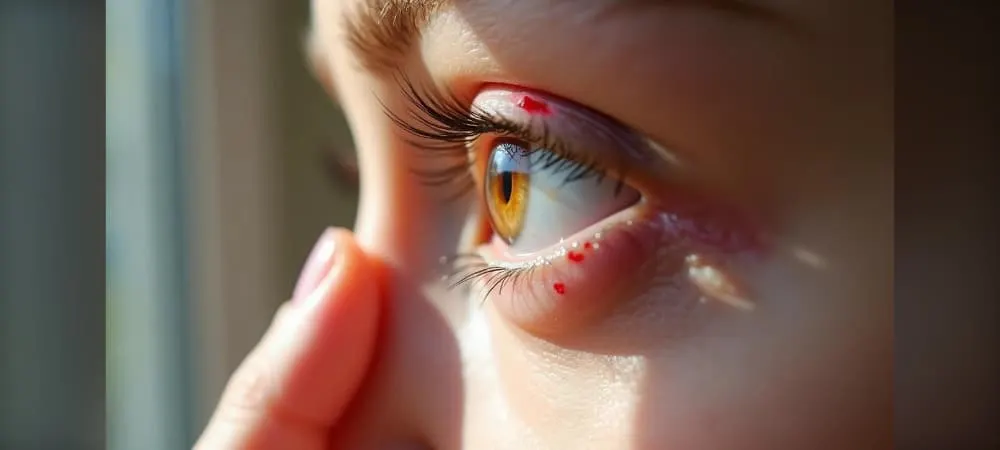
Allergic conjunctivitis is a reaction of the membrane covering the white part of the eye to allergenic substances. In fact, approximately half of all cases of allergic conjunctivitis are of the seasonal type.
In this article, you will find answers to questions such as what is allergic conjunctivitis and what are the symptoms of allergic conjunctivitis. You will also learn about diagnostic methods, allergic conjunctivitis eye drop options, and treatment paths.
What Is Allergic Conjunctivitis and How Does It Develop?
Definition of eye allergy
The conjunctiva is a thin membrane that covers the inner surface of your eyelids and the white part of the eye. This tissue protects your eyes from external factors such as smoke, bacteria, allergens, and wind. Allergic conjunctivitis is an inflammation that occurs as a result of the conjunctiva's reaction to allergenic substances.
It affects a high proportion of the population worldwide, ranging from 15 to 40 percent. It is more common among children and young adults. Allergic conjunctivitis is not contagious, so it does not spread from person to person.
Causes of allergic reaction
When your body detects an allergen, your immune system produces histamine. Histamine is a chemical that causes blood vessels to dilate, swelling, and itching. In fact, the reason for these reactions is the conjunctiva's attempt to protect the eye.
Your immune system perceives normally harmless substances as threats and overreacts. Genetic factors and environmental factors play a role in this hypersensitivity. The risk increases if there is a family history of eye allergies.
Pollen, which increases in the spring and summer months, triggers this problem. Similarly, polluted air, dusty environments, or contact with animals increases your eyes' exposure to allergens. After increased contact, the conjunctiva goes into defense mode.
Which substances can cause allergies?
Many different substances can lead to eye allergies. The most common triggers are:
Pollen: Tree, grass, and weed pollens are the primary cause of seasonal allergies
House dust mites: These are microscopic organisms found in mattresses, carpets, and furniture
Animal dander: Dander and skin flakes from cats, dogs, and other pets
Mold spores: Fungi that multiply in humid environments
Chemical substances: Perfume, detergent, cigarette smoke, exhaust gas
Contact lenses: The lenses themselves or proteins accumulated on them
Eye drops: Some medicated eye drops and lens solutions
In some individuals, eye allergies can also develop against certain foods or insect bites. Allergies caused by pollen are usually seasonal, while those caused by animal dander and dust continue throughout the year.
What Are the Symptoms of Allergic Conjunctivitis?
Early symptoms
Itching is the most characteristic symptom of allergic conjunctivitis. If there is no itching, allergy should not be suspected. It occurs with equal intensity in both eyes and causes a constant urge to rub your eyes. In fact, this is the most obvious sign of your body's defensive reaction against allergens.
Redness is also a common early finding. As a result of the dilation of blood vessels in the conjunctiva, the white part of the eye takes on a reddish color. This redness is usually more pronounced in the morning hours. Similar redness also develops inside the eyelids.
Watery eyes increase especially after contact with an allergen. The clear fluid flowing from the eyes is a result of the body's effort to get rid of allergens. Unlike infection, there is no yellow or green discharge. Transparent and abundant tears are seen.
Symptoms of severe allergic conjunctivitis
Swelling of the eyelid is a common finding. It becomes prominent especially in the mornings and is seen along with slight drooping. You may have difficulty opening your eyelids due to the swelling.
You experience an increase in sensitivity to light. This condition, known as photophobia, rarely occurs in more advanced cases. At the same time, a burning and stinging sensation develops in the eye. Roughness may form on the inner surface of the eyelid.
A stringy, white, sticky discharge is seen. This transparent or white-colored mucous discharge is different from the yellow-green discharge in infection. Blurred vision may also accompany the clinical picture. Discomfort increases with contact lens use.
Ocular and extraocular findings
Allergic conjunctivitis is often accompanied by nasal allergy. In addition, you may experience runny nose, sneezing, and nasal congestion. Darkening and bruising may develop under the eyes. This condition is due to the slowing of blood circulation.
Complaints increase in the evening hours. Symptoms worsen due to excessive exposure to the allergen after spending time outdoors. Findings related to asthma and allergic eczema may also be added to the clinical picture.
Effect of symptoms on daily life
A constant feeling of discomfort can disrupt your concentration. Your sleep quality decreases, and you generally experience feelings of irritability and fatigue. These symptoms create discomfort in daily activities.
In children, constant eye rubbing and lack of attention are observed. It negatively affects school success and social relationships. In infants, itching cannot be expressed; instead, they constantly rub their eyes. Frequent blinking and sensitivity to light should be a warning sign for parents.
Types and Characteristics of Allergic Conjunctivitis
Characteristics of seasonal eye allergy
There are five different types of allergic conjunctivitis, and each shows its own unique characteristics. The seasonal type accounts for approximately half of all allergic conjunctivitis cases. It occurs in the spring and summer months depending on the pollen density in the air.
Grass pollens are the most common cause during the May-July period. You see tearing, burning, and redness of equal intensity in both eyes. Mild swelling may develop on your eyelids. In addition, allergic rhinitis findings such as runny nose, sneezing, and nasal congestion accompany it.
When the pollen season ends, symptoms resolve spontaneously. Dark circles may be seen under your eyes. You experience similar complaints during the same periods every year.
Chronic allergic conjunctivitis
This form, also known as the perennial type, continues throughout the year. House dust mites, animal dander, and mold spores are held responsible. It does not show seasonal changes, but the symptoms are milder.
It occurs due to allergens of organic origin that do not show seasonal characteristics. Itching, burning, and light sensitivity are prominent. Long-term use of prescribed medications may be required.
Vernal type seen in children
Vernal keratoconjunctivitis is a seasonal form common in the 5-15 age group. It usually starts after the age of 5 and resolves spontaneously in the 20s. It occurs more frequently in males.
It is common in regions with warm and dry climates. Large papillae form on the inner surface of the eyelids. Severe itching is the most prominent complaint. In addition, sensitivity to light, foreign body sensation, and blurred vision are seen.
If the corneal layer is affected, vision problems may develop. 75 percent of patients have additional diseases such as asthma, atopic eczema, or allergic rhinitis. The duration of the disease rarely exceeds 5-10 years.
Contact lens-induced allergy
Giant papillary conjunctivitis develops against contact lenses or lens cleaning products. There are bumps called papillae on the conjunctiva lining the underside of the upper eyelid. It can develop in about half of those who use contact lenses.
You complain of discomfort when you use lenses. Intense mucus secretion and foreign body sensation are seen. Proteins accumulated on the lens surface cause an allergic reaction. In some cases, eye prostheses and stitches placed in the eye can also create this clinical picture.
Type seen in atopic patients
Atopic keratoconjunctivitis is the form with the highest risk of blindness. It starts in the 20s and continues for many years. It usually affects young men.
It is seen in people with asthma, rhinitis, atopic dermatitis, or food allergies. Ocular findings usually develop a few years after the onset of other atopic findings. The skin of the eyelids becomes red, thickened, and flaky.
Severe itching is the most important symptom. Inflammation of the eyelash base is common. Abnormal vascularization and cataracts may be seen in the corneal layer.
Diagnostic Methods and Examination Process
Ophthalmologist examination
A detailed history and examination are very important in diagnosis. Your eye doctor will start talking to you and ask when your symptoms started. Findings of itching, redness, and tearing that recur in the spring and summer months suggest allergic conjunctivitis.
Having allergic rhinitis, eczema, or asthma along with eye findings supports the diagnosis. A family history of allergies is also questioned. The relationship of your symptoms with certain seasons or triggers in the home environment is investigated. Details such as contact lens use, cosmetics, and eye drop use are important.
In the physical examination, your eyelids and the inner parts of the eyelids are checked. Your eye doctor examines your eyes with a slit-lamp microscope. Thanks to this device, the dilation in the blood vessels is clearly imaged. Small, raised swellings can be detected on the inner part of the eyelids.
These bubbles are known as papillae and are especially common in contact lens-induced allergies. The physician also evaluates findings related to allergic rhinitis, asthma, and eczema, in addition to redness and tearing in the eyes. The corneal layer is also examined carefully.
Differential diagnosis: Is it infection or allergy?
Allergic conjunctivitis can show similar symptoms to other eye diseases. In addition, it is important to distinguish the difference between eye infection and allergy. Both conditions cause redness and discomfort, but their causes are different.
The most characteristic feature of allergy is itching. Burning and redness are seen, but there is usually no pain. In eye infection, there is yellow or green discharge. Symptoms such as severe pain and blurred vision point to infection.
Allergic conjunctivitis is not contagious from person to person. Infection is contagious and caution should be exercised. More serious conditions such as uveitis and acute glaucoma can also cause similar complaints. Therefore, examination with a microscope is essential for an accurate diagnosis.
Tests and laboratory examinations
Diagnosis is usually easily made with patient history and examination findings. In most cases, there is no need for blood or skin allergy tests. Especially in individuals with only eye involvement, systemic tests do not provide help in diagnosis.
Tests may be requested in severe cases that do not respond to treatment or that last throughout the year. Allergy skin test is suitable for patients with clear and recurrent allergies. In the skin test, various allergenic substances are administered under the skin to examine the body's reaction.
In the blood test, immunoglobulin E antibodies formed as a result of an allergic reaction are tested. At the same time, an eosinophil test can be performed in tears. Provocation tests are applied according to necessity. In some patients, if there is both systemic allergy and eye allergy, the diagnostic value of the tests increases.
Treatment Options and Ways of Protection
Protective measures
The most basic principle of treatment is to stay away from the substance that causes the allergy. You should keep your windows closed during the pollen season. By closing the windows in your home and car, you prevent pollen from entering.
Using sunglasses or protective glasses protects your eyes from pollen and wind. When you enter the house from outside, take off your jacket, hat, and shoes immediately. Before going to bed at night, take a shower to clean the pollen from your skin and hair. If you have long hair, it is important to tie your hair up while sleeping.
Avoid rubbing your eyes with your hands. Hands come into contact with many surfaces during the day and carry allergens to your eyes without you realizing it. Washing hands regularly with soap and water is a simple but effective method. Also, you should reduce carpets and dust-collecting items to avoid dust.
Applying a cold compress provides relief by alleviating itching and redness. Keeping the humidity level in the home environment below 50 percent and using special mattress covers is beneficial.
Allergic conjunctivitis eye drop types
Antihistamine eye drops reduce itching and redness by blocking the effects of histamine. They provide rapid relief and are applied 2-3 times a day. Drops containing substances such as olopatadine and ketotifen are effective options.
Mast cell stabilizers show a protective effect by preventing the allergic reaction in advance. It is recommended to start using them before the allergic season begins. They can be used for months without side effects.
Dual-action eye drops contain both an antihistamine and a mast cell stabilizer. They are used twice a day and help with existing symptoms while preventing future symptoms.
Corticosteroid eye drops are used for a short time in severe cases. They have a strong effect, but long-term use can lead to side effects such as cataracts and increased intraocular pressure. Therefore, they must be used under doctor supervision.
Medication treatment options
Artificial tear drops clean the eye surface and reduce the allergen load. Using them cold is more effective. Systemic antihistamine drugs are preferred, especially in patients accompanied by allergic rhinitis findings.
Allergy vaccines are applied in cases that do not improve with medication. Immunotherapy can last 3-5 years but can provide permanent benefit. Tolerance is developed by gradually introducing the body to allergens.
Lifestyle changes
You should pay attention to eye hygiene. Using clean towels and pillowcases reduces the risk. Avoid sharing eye makeup products and stay away from products that have expired.
Contact lens users should always keep their lenses clean and should not leave them in their eyes overnight. Contact lenses should not be worn during allergy periods. After recovery, daily disposable lenses should be preferred instead of monthly lenses.
Follow pollen counts and spend less time outdoors on days when density is high. Regular exercise, healthy nutrition, and adequate sleep can reduce allergic reactions.
Long-term treatment planning
Treatment can be extended up to four months. In seasonal allergy, it is beneficial to use protective drops before symptoms start. Since it is a disease that progresses with recurrences, treatment should be carried out in sufficient doses and durations.
A personalized treatment plan is created by taking into account the patient's age, accompanying diseases, and living conditions. If complaints do not respond to the given treatment, different options are evaluated.
Frequently Asked Questions
Patients often ask similar questions about allergic conjunctivitis. Below you will find answers to the most curious topics.
How is allergic conjunctivitis distinguished from infection?
Itching is the most important symptom that distinguishes allergic conjunctivitis from infection. While itching is rarely seen in infection, there is severe itching in allergy. The color of the discharge also helps to distinguish. In allergy, you see transparent and clear discharge, while in infection, there is thick yellow or green discharge.
Allergic conjunctivitis usually starts in both eyes at once. Infection, on the other hand, mostly occurs in one eye. In addition, allergic conjunctivitis is not contagious, but infection is contagious. While antibiotic drops are used in infection, antihistamine drops are preferred in allergy.
Which drop should be used for eye allergy?
The choice of drops varies according to the severity of the symptoms. Antihistamine and dual-action allergy drops are used in treatment. In some cases, soft steroid drops and topical anti-inflammatory drops may be recommended.
You should definitely get a doctor's advice for over-the-counter drops. Special drops formulated for children should be preferred and applied in the correct dose. Before using eye drops, you should wash your hands, not touch the tip of the dropper to your eye, and not exceed the dosage.
Does allergic conjunctivitis go away on its own?
Symptoms may regress when the allergen substance is removed. Seasonal eye allergy usually lasts a short time and passes within 1 week with appropriate treatment. However, since the underlying allergic predisposition continues, complaints start again when the trigger appears again.
Acute conjunctivitis usually lasts 7-8 days, and with treatment, this period decreases to an average of 4-5 days. In untreated eye allergies, the severity of burning, stinging, and itching in the eye increases, and the risk of complications rises. Therefore, it is important to treat it.
Is a cold compress beneficial?
Yes, a cold compress alleviates itching and redness. A cold compress applied to the eyelids provides relief by reducing vasodilation. This method is especially beneficial for symptoms that start suddenly. Placing a clean cloth soaked in cold water on the eyelids is the fastest and safest solution.
When should a doctor be consulted?
If symptoms last longer than 1 week, you should get an expert opinion. If there is a constant need for drops, if there is a decrease in visual quality, or if intense eye itching is seen in children, a doctor's evaluation is recommended without delay. If side effects such as increased redness, swelling, burning, stinging, vision loss, and dizziness occur in the eyes, you should consult your doctor immediately.
In Summary, Allergic Conjunctivitis
Allergic conjunctivitis is a reaction of your eyes to allergenic substances and affects many people worldwide. In short, if you experience symptoms such as itching, redness, and tearing, you should consult your eye doctor for accurate diagnosis and treatment. Staying away from the allergen is the basis of treatment. In addition, appropriate eye drops, cold compresses, and lifestyle changes can significantly alleviate your symptoms.
If symptoms last longer than a week or affect your daily activities, be sure to have an expert evaluation. With the right approach, you can take control of your eye allergy and improve your quality of life. Early intervention prevents complications and ensures rapid recovery.
What is allergic conjunctivitis, what are its symptoms and treatment methods? Learn detailed information about eye allergy and ways of protection in this article.
Start with the right assessment for What is Allergic Conjunctivitis? What Are Its Symptoms? How Is It Diagnosed and Treated?
Share your symptoms with our specialist physicians; let us determine the right diagnosis and treatment plan together.
Warning
If your symptoms started suddenly, are progressing rapidly, or significantly restrict your daily life, consult a physician without delay.
Plan your What is Allergic Conjunctivitis? What Are Its Symptoms? How Is It Diagnosed and Treated? journey with our specialists.
Fill in the form or book an appointment to learn about treatment options, the process and preparation.