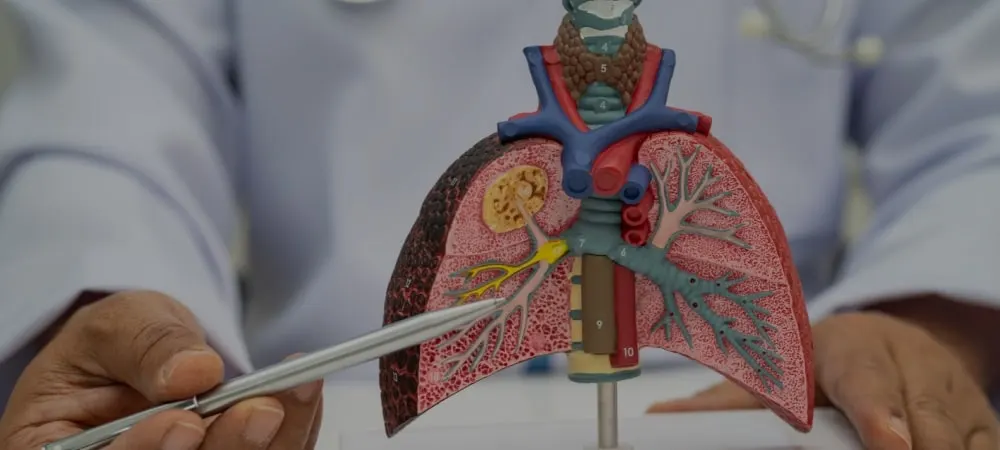
Pleural Cancer
Pleural cancer is also called mesothelioma and is typically associated with asbestos exposure. Mesothelioma develops from the tissue called the mesothelium, which lines the body's internal organs. The type seen in the pleural membrane is called pleural mesothelioma. Mesotheliomas account for 80% to 90% of all cases. This indicates that the vast majority of mesotheliomas originate from the pleura. The disease can progress silently for years. Sometimes it goes unnoticed for years until patients experience symptoms. Therefore, difficulties arise in early diagnosis.
What is Pleural Cancer?
Pleural cancer is not actually a cancer of the lung itself, but rather a type of cancer originating from the thin membrane tissue (pleura) surrounding the lungs. This membrane covers the outer surface of the lung and the inner surface of the chest cavity. Normally, these membranes secrete a small amount of fluid to reduce friction. However, when mesothelioma develops, cells in this structure begin to grow and multiply abnormally.
What Are the Symptoms of Pleural Cancer?
Symptoms of pleural cancer can be quite vague in the early stages of the disease and are often confused with other respiratory diseases. One of the most common symptoms is shortness of breath. This condition is usually caused by fluid accumulation in the space between the lung and the chest wall. Another frequent symptom is chest pain. This pain can be dull or stabbing and often radiates to the shoulders or back. It may intensify, particularly with breathing. A persistent dry cough, unexplained weight loss, loss of appetite, extreme weakness, and a gradually increasing sense of fatigue are among other complaints experienced by patients. In some patients, a noticeable swelling in the rib cage or a sensation of a mass in the pleura may also develop. As the disease progresses, respiratory difficulties that make even daily activities challenging and a general state of debility emerge. These symptoms may not mean much on their own, but when combined, they can point to an underlying serious condition. Especially individuals with a history of asbestos exposure taking such symptoms seriously and consulting a specialist without delay is of great importance for early diagnosis.
What Causes Pleural Cancer?
The best known and strongest cause of pleural cancer is long-term exposure to a fibrous mineral called asbestos. Asbestos has been widely used in the past, particularly in the construction, shipyard, automotive, and insulation sectors. These fibers are too small to be seen with the naked eye and, when inhaled, reach the pleura and accumulate there. The body cannot clear these fibers; over time, this leads to chronic inflammation and genetic alterations in cells in this area. These changes can turn into cancer over the years. In a large proportion of mesothelioma patients, a long period, typically 20 to 50 years, elapses between exposure and the onset of the disease.
Aside from asbestos, though rarely, certain other factors can also lead to pleural cancer. The erionite mineral, which is found in nature and has a structure similar to asbestos, can pose a high risk in some regions (particularly in Central Anatolia). Additionally, having received radiotherapy in the past, genetic predisposition, or contact with certain viral agents (such as the SV40 virus) may also play a role in the development of mesothelioma.
How is Pleural Cancer Diagnosed?
The diagnosis of pleural cancer often comes to the agenda when the disease begins to manifest symptoms. However, since these symptoms are generally vague and can be confused with other diseases, the diagnostic process is conducted carefully and step-by-step. First, a detailed medical history of the patient is taken; specifically, whether there has been asbestos exposure in the past is investigated. Next, a physical examination is performed to evaluate complaints, and lung sounds are listened to. Imaging techniques are among the most commonly used methods in the diagnostic process. It usually starts with a chest X-ray; however, methods such as computed tomography (CT) and magnetic resonance imaging (MRI) are utilized for more detailed information. These imaging scans can show thickening in the pleura, fluid accumulation, or mass formation. If there is fluid accumulation in the chest cavity, a sample is taken from this fluid for cytological examination. However, this method alone does not always provide a definitive diagnosis. A biopsy is usually required to make a definitive diagnosis. This procedure is performed by taking a tissue sample directly from the pleura using a needle or endoscopic methods. The obtained tissue piece is examined under a microscope in a laboratory setting to determine the presence and type of cancerous cells. This examination also reveals which subtype of mesothelioma the disease is. Once diagnosed, staging is performed to determine how far the disease has spread in the body; advanced imaging techniques such as PET-CT are used in this process. Thus, the most appropriate treatment plan can be formulated for the patient.
How is Pleural Cancer Treated?
The treatment of pleural cancer varies depending on the stage of the disease, the spread of the tumor, the patient's general health status, and age. Treatment is usually planned by a multidisciplinary team; meaning different branches such as thoracic surgery, oncology, radiation oncology, and pulmonology work together. The most effective approach is often combined (multimodal) treatments where multiple methods are used together. In early-stage disease and if the patient's general condition is suitable, surgery may be the first option. With surgery, the tumorous tissue in the pleura and sometimes surrounding tissues can be removed. This procedure may be in the form of pleurectomy, where the lung is preserved and only the membrane is stripped, or more comprehensive surgeries where the entire lung is removed. After surgery, chemotherapy or radiotherapy is usually administered to prevent recurrence of the disease. In patients who are not candidates for surgery, treatment is generally carried out with medication. Pleural cancer is attempted to be controlled with chemotherapy, which can slow the progression of the disease. The most frequently preferred chemotherapy protocol is the combination of pemetrexed and cisplatin. These drugs help slow tumor growth and alleviate symptoms. In recent years, new treatment methods called immunotherapy have also begun to be used, particularly in advanced-stage cases. Immunotherapy is administered with special drugs that activate the immune system against cancer cells and yields promising results in some patients. Furthermore, supportive treatments aimed at increasing patient comfort are of great importance. Drainage and pleurodesis procedures can be performed, particularly against frequently recurring fluid accumulations in the chest cavity. Controlling pain, facilitating respiration, and preserving quality of life are an integral part of the treatment process. In short, pleural cancer treatment is planned individually and arranged to consider the patient as a whole, not just the tumor.
Frequently Asked Questions
Pleural cancer and lung cancer are not the same disease. Although both occur in the chest cavity and can exhibit similar symptoms, the tissues from which they originate are different. Lung cancer develops directly from the inner structure of the lung, namely the airways or tissues called alveoli; whereas pleural cancer, or medical name pleural mesothelioma, originates from the membrane tissue surrounding the lung (pleura). Therefore, they differ quite significantly from each other in terms of diagnosis, treatment, and prognosis. Mesothelioma is mostly associated with asbestos exposure; in contrast, lung cancer can be influenced by many factors, primarily cigarette smoking. Although these two diseases are occasionally confused, distinguishing them medically is extremely important for treatment success. Pleural cancer metastasis can particularly be seen in the form of spreading to the peritoneum, liver, or bones. There is usually a very long time interval between asbestos exposure and the onset of pleural cancer. This duration most often varies between 20 and 50 years and can reach even 60 years in some cases. When asbestos fibers are inhaled, the body cannot expel these fibers, and these substances accumulate permanently in the pleura. Over the years, they lead to chronic inflammation and cellular damage here. This damage can turn into cancer over time. Because of this long latency period, individuals may often have forgotten the environments to which they were exposed or may not even be aware of the risk. The answer to the question "What stage is pleural cancer?" varies depending on the level of spread of the cancer to the pleura. Stage 1 pleural cancer is generally confined to a limited area and has a higher chance of surgical treatment. Stage 2 pleural cancer is generally a period when local invasion has begun but there is no distant spread yet. Stage 3 pleural cancer is a period when spread to lymph nodes has begun and requires more aggressive approaches in treatment planning. Individuals working in old buildings, shipyard workers, insulation masters, or people living in the same home with family members working in these sectors should be careful. Because this exposure can appear years later, unexpectedly, as mesothelioma. Pleural cancer is not contagious. That is, this disease is not transmitted from one person to another through coughing, close contact, being in the same environment, or breathing the same air. Cancers generally form as a result of the uncontrolled proliferation of body cells and do not carry the characteristic of passing from person to person like a microbial infection. The asbestos substance causing pleural cancer is an environmental risk factor; however, this is also not transmitted directly from person to person. Only if a person has brought asbestos dust into their home or surroundings through carrier routes such as clothing or hair, do other individuals risk indirect exposure. However, this does not mean the cancer is contagious. In short, pleural cancer is not a disease that will restrict social life or require isolation. Pleural cancer surgery can be applied in the form of partially or completely removing the membrane depending on the stage of the tumor. In suitable patients, pleural cancer can be treated with surgical methods. However, this decision is made by considering the stage of the disease, the extent of spread, the type of tumor, and the patient's general health status. In patients diagnosed at an early stage, who have not spread to other organs and have the physical condition to tolerate surgery, surgical procedures called pleurectomy or, in more advanced cases, extraplevral pneumonectomy can be applied. During pleurectomy, the lung itself is preserved and only the tumorous tissue on the pleura is cleaned. Extraplevral pneumonectomy is a more radical intervention, and along with the lung, the membrane, pericardium, and part of the diaphragm can also be removed. Surgery is usually supported by additional treatments such as chemotherapy and/or radiotherapy. Although not every patient is suitable for surgery, surgical options caught in the early stage of mesothelioma offer a significant chance in terms of prolonging survival and increasing quality of life. After pleural cancer surgery, patients are generally supported with chemotherapy or radiotherapy. Nutrition in pleural cancer should be planned in a way that supports immunity and adapts to the treatment process. Pleural cancer is unfortunately a disease that often goes unnoticed in the early stage. The most important reason for this is that its symptoms are mild or vague for a long time. Complaints arising in the early period such as shortness of breath, chest pain, mild cough, or fatigue can easily be confused with flu infections, asthma, or other lung diseases. Moreover, because the disease progresses slowly, patients may not take symptoms seriously for a long time. However, individuals who have experienced asbestos exposure in the past should take such symptoms seriously and consult a specialist without wasting time. Late-stage pleural cancer is generally a process where symptoms intensify and quality of life decreases. In some cases, it can be detected incidentally during imaging tests performed for other reasons; this can help the disease be recognized at an early stage. However, generally speaking, mesothelioma is mostly a disease diagnosed at an advanced stage. Pleural cancer survival time varies depending on the stage at the time of diagnosis and the applied treatment method. Furthermore, life expectancy can be significantly prolonged in patients who respond well to chemotherapy and immunotherapy. In short, although mesothelioma is generally an aggressive disease, life expectancy can be more promising in certain subtypes and cases responding to treatment. Stage 4 pleural cancer is an advanced stage of the disease and has usually metastasized to other organs. Stage 4 pleural cancer survival time varies depending on the degree of disease spread and the response to treatment. In addition to conventional treatments, immunotherapy is one of the most remarkable innovations in this field. It has been scientifically proven that drugs effective on the immune system, such as Nivolumab and Ipilimumab, prolong survival in mesothelioma patients who are not candidates for surgery. Additionally, in some centers, interventional treatments such as HITOC (Hyperthermic Intratoracic Chemotherapy), which is a heated chemotherapy method applied directly to the chest cavity after surgery, have also started to be administered. Furthermore, research on targeted therapies and nanotechnology-based drug delivery systems continues. Some treatment protocols that are still in the experimental stage may offer new solutions operating more effectively and with fewer side effects in the future. These developments are evaluated as promising steps for the future in mesothelioma treatment. If you are experiencing symptoms such as shortness of breath, chest pain, or unexplained fatigue, consult our Hisar Hospital Pulmonology and Oncology specialists without wasting time. Early diagnosis and correct treatment can improve your quality of life. Get an Appointment
Start with the right assessment for What is Pleural Cancer (Mesothelioma)? Symptoms, Causes, and Treatment
Share your symptoms with our specialist physicians; let us determine the right diagnosis and treatment plan together.
Warning
If your symptoms started suddenly, are progressing rapidly, or significantly restrict your daily life, consult a physician without delay.
Plan your What is Pleural Cancer (Mesothelioma)? Symptoms, Causes, and Treatment journey with our specialists.
Fill in the form or book an appointment to learn about treatment options, the process and preparation.