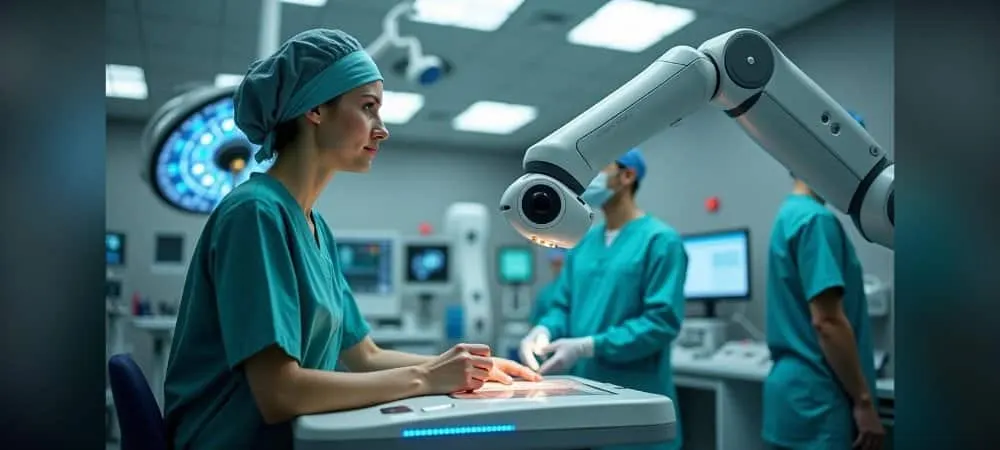
When you experience pelvic organ prolapse, sacrocolpopexy stands out as one of the most effective treatment options. In particular, robotic sacrocolpopexy surgery is a modern surgical method used to correct uterine or vaginal prolapse. The answer to the question of what sacrocolpopexy is, is quite simple: It is a surgery in which prolapsed organs are fixed to the bone using a special mesh. In this article, you will learn in detail what sacrocolpopexy surgery is, in which cases it is applied, the advantages of the robotic method, and the post-operative process.
What Is Sacrocolpopexy and What Does It Mean?
Definition of Sacrocolpopexy
Sacrocolpopexy is a surgical procedure in which vaginal tissues are attached to the lower back bone (sacrum) to support prolapsed organs. During the surgery, the surgeon uses a special synthetic mesh to fix the upper part of the vagina or the uterus to the promontory point of the sacrum in the tailbone region. This mesh supports the prolapsed organs and keeps them in a position close to their natural anatomical location.
The surgery is usually performed to correct vaginal vault prolapse in women who have undergone a hysterectomy. However, robotic sacrocolpopexy can also correct prolapse without removing the uterus. Thus, this method offers you a suitable option when you want to preserve your uterus.
The Relationship Between Pelvic Organ Prolapse and Sacrocolpopexy
Pelvic organ prolapse is a condition where organs such as the uterus, bladder, or rectum sag toward the vagina as a result of the weakening of the pelvic floor muscles and connective tissues. Factors such as vaginal birth, aging, menopause, obesity, chronic cough, or constipation weaken these supporting structures.
When you experience prolapse, symptoms such as a dragging or fullness sensation in the vagina, difficulty in emptying the bladder or bowels, and lower back pain occur. 1 in 10 women requires surgery for uterine or vaginal prolapse. Since this condition affects your quality of life, treatment is essential.
Sacrocolpopexy has been accepted as the gold standard for the treatment of apical prolapse for years. While success rates range between 74-98.8% when performed with open surgery, laparoscopic sacrocolpopexy has a success rate of around 92%. Robotic sacrocolpopexy, on the other hand, shows a high success rate of 97%.
Differences Between Traditional and Robotic Sacrocolpopexy
Traditional open sacrocolpopexy requires a large incision in the abdomen. Although this method is effective, it has disadvantages such as wound site complications, post-operative pain, and long hospital stays.
The laparoscopic method is performed by making a few small incisions in the abdominal region. Surgical instruments and a camera are inserted through these incisions. However, the most important challenges of laparoscopy are the difficulty of suturing and the long learning curve.
Robotic sacrocolpopexy has been applied in gynecology since 2005. The robotic system provides significant advantages to surgeons. The surgeon sees in three dimensions and can magnify the image when desired. The robot's arms can perform all the movements that the human wrist can make. Robotic surgical systems provide seven degrees of freedom of movement in areas with limited range of motion, such as the pelvis. In addition, it offers the opportunity to work more precisely thanks to tremor filtration.
In Which Cases Is Robotic Sacrocolpopexy Surgery Applied?
Robotic sacrocolpopexy surgery is applied in cases where your pelvic organs shift from their normal positions and sag into or out of the vagina. The treatment approach changes according to different organ prolapses, and each condition presents with its own unique symptoms.
Uterine Prolapse
Uterine prolapse occurs when your uterus sags into the vagina due to the weakening of the pelvic floor muscles. You may experience a dragging sensation in the vagina, lower back pain, and discomfort during sexual intercourse. Robotic sacrocolpopexy can correct prolapse without removing the uterus. In this case, the surgery is called sacrohysteropexy, and your uterus is suspended to the sacral bone in its anatomical position using a special mesh.
Depending on the severity of the prolapse, a hysterectomy can also be performed simultaneously. However, when you want to preserve your uterus, the robotic method offers you this possibility.
Bladder Prolapse (Cystocele)
Cystocele occurs when your bladder herniates toward the anterior wall of the vagina. You may experience urinary incontinence, difficulty in fully emptying the bladder, and the need to urinate by pressing with your hand. Frequent urination and recurrent urinary tract infections are also among the symptoms because the bladder does not empty completely.
Robotic surgery offers the opportunity to perform the procedure precisely while correcting bladder prolapse. The surgeon controls the robotic arms to ensure that the sutures are placed more accurately.
Rectal Prolapse (Rectocele)
Rectocele occurs when your rectum bulges toward the vagina. You may experience straining during defecation, a feeling of fullness around the anus, a feeling of incomplete emptying, and the need to remove stool from the vagina by supporting it with your hand. You may also feel discomfort during sexual intercourse.
In advanced rectocele cases, support for the rectum is provided using mesh. This technique facilitates the return of the rectum to its former position and reduces the risk of recurrence. Similarly, the robotic method helps to achieve successful results in complex cases.
Vaginal Vault Prolapse
After a hysterectomy, the top of the vagina may sag out of the vagina. In advanced cases, the vagina turns inside out like a balloon and protrudes. The prolapsed vagina pulls the urinary bladder in the front and the last part of the large intestine in the back downward.
Robotic sacrocolpopexy has success rates of over 90% in the treatment of vaginal vault prolapse. In addition to correcting the top of the vagina during surgery, the urinary bladder and rectum must also be corrected.
Eligibility Criteria for Surgery
You are a suitable candidate for robotic sacrocolpopexy if:
You have previously received unsuccessful treatment for pelvic organ prolapse
You are experiencing prolapse at a young age and want to preserve your anatomical integrity
You have severe prolapse after menopause and complaints that affect your quality of life
You are not suitable for traditional surgery and are looking for a less invasive method
The surgery is also applied in cases of apical prolapse, enterocele, or combined prolapse of multiple pelvic organs.
How Is Robotic Sacrocolpopexy Surgery Performed?
Pre-operative Preparation
The pre-operative preparation process is important for successful results. First, a comprehensive evaluation is performed, and blood tests, chest X-ray, and electrocardiography are taken. The anesthesiologist evaluates these tests to investigate whether there is any condition that prevents the operation.
You should not eat or drink anything after midnight before the surgery. However, clear liquids are allowed up to 2-3 hours before the surgery. You may be asked to perform bowel preparation at night. If you are using anticoagulant medication, these drugs are discontinued before surgery, and low-molecular-weight heparin is started.
Antibiotics are administered before surgery to prevent surgical site infection. You must inform your doctor if you have an allergy to the medication.
Robotic System and Surgical Stages
After general anesthesia is administered, a nasogastric tube and urinary catheter are inserted into the patient. Then, the lithotomy position, similar to the birth position, is given. Your arms are placed closed to the side of your body, and pressure points are supported with pillows.
After the surgical field is cleaned and covered sterilely, the abdomen is inflated with carbon dioxide gas. An incision of approximately 8mm is made at the navel, and a trocar is placed for the camera. Then, 4-5 more small incisions are made in the abdominal region for the robot's arms.
At this stage, you are given a head-down position. The robot is brought closer to the table at an oblique angle. The robot's arms are inserted into your abdomen through the trocars. One of the arms carries a three-dimensional high-definition camera. The other arms carry surgical instruments with 540-degree rotation capability.
The surgeon controls these instruments from the console in the operating room. The bladder is carefully separated from the anterior wall of the vagina, and the rectum from the posterior wall.
Mesh Placement and Fixation Procedure
Surgical mesh is placed on both the anterior and posterior walls of the vagina. The mesh is fixed to the vaginal wall at 6-8 points with prolene sutures. The promontory region of the sacrum bone is prepared.
The tail part of the mesh is fixed to the promontory with appropriate tension. Since excessive tension will increase the risk of erosion, the tension is adjusted by performing a vaginal examination at this stage. The mesh is fixed to the promontory with 2 sutures.
Afterward, the peritoneum leaves are closed over the mesh. Thus, contact of the intestines with the mesh is prevented.
Surgery Duration and Anesthesia
Robotic sacrocolpopexy is performed under general anesthesia. The duration of the surgery varies between 2-6 hours on average. In some studies, the average duration was found to be 203 minutes. The duration may be prolonged depending on the surgical flow.
After the procedure is completed, the robot is detached from the patient, and the trocars are removed after checking for bleeding.
Post-operative Process and Recovery
Hospital Stay Duration
When you wake up after surgery, there may be a catheter in your bladder and a gauze pack in your vagina. There is a vascular access (cannula) in your hand or arm. The urinary catheter is removed on the 1st day after surgery, and you can be discharged afterward.
Your hospital stay is usually 1-2 days. In surgeries performed with the robotic method, this period is shorter than in open surgery. In some cases, you may stay in the ward depending on your condition, or you may be taken to intensive care if there is a medical necessity.
First Days and Things to Consider
For the first 6 hours after surgery, you will not be given food by mouth and will be fed intravenously. Afterward, you will start to be fed with light foods. Drink plenty of fluids and follow a balanced diet containing fruits and vegetables to prevent constipation. Laxative medication may be given if necessary.
For the first 24 hours, you will be asked to take ibuprofen every six hours and use the prescribed painkiller according to the instructions. Pain is usually mild to moderate and is controlled with medication.
After surgery, you are asked to walk, take deep breaths, and cough. Early mobilization accelerates the recovery process. Bed rest after surgery is no longer recommended.
Vaginal discharge may last up to 6 weeks, and the color and amount vary. Use a sanitary pad instead of a tampon for discharge. If the discharge turns into bleeding or an unpleasant odor occurs, consult your doctor.
Full Recovery Process
Full internal healing takes 6-8 weeks. Although you may notice healing within the first week, you must follow activity restrictions. The recovery period varies between 4-6 weeks.
Restrictions you should pay attention to during this period:
Do not lift, pull, or push weights over 5-10 pounds (approximately 2-5 kg) for 6-8 weeks
Avoid sexual intercourse and tampon use for 8 weeks
Do not swim or stay in water for 4-6 weeks
Do not use a vacuum cleaner, do not push heavy doors
Do not drive for 2-4 weeks
Depending on your job type, you can return to work after 4-6 weeks. A return to normal daily activities is achieved in a short time. Practice braking before you start driving.
Follow-up Examinations
You will have a follow-up appointment approximately 6-8 weeks after surgery. Consult your doctor immediately if you experience the following conditions:
Fever above 37.8°C
Heavy vaginal bleeding
Urinary retention problem
You can apply to the outpatient clinic before the appointment date for any situation you see differently or that bothers you.
Advantages and Risks of Robotic Sacrocolpopexy Surgery
Superiority of the Robotic Method
Robotic sacrocolpopexy surgery offers you many technical and clinical advantages. The surgeon works with a three-dimensional image and can magnify the image when desired. Robotic arms have seven degrees of freedom and can perform all movements of the wrist. Thanks to tremor filtration, the surgeon's hand tremors are automatically filtered, and more precise procedures are performed.
You experience less blood loss compared to open surgery. Your hospital stay is shortened, and the recovery process is accelerated. The surgery is completed with only 5 small 8-millimeter incisions in the abdominal region. These incisions provide a significant advantage in terms of cosmetics. You have less post-operative pain, and the risk of complications decreases.
There are also advantages for the surgeon. Better visualization of the pelvis is provided. Easy and accurate plane dissection is performed. Suture and mesh management becomes easier. The learning curve is shorter than traditional laparoscopy.
Comparison with Laparoscopic Sacrocolpopexy
In two randomized controlled trials, robotic and laparoscopic methods were compared. Surgery duration, post-operative pain, and cost were found to be significantly higher in the robot group. Despite this, it was observed that both groups had similar anatomical and functional results 6 months to 1 year after surgery.
Compared to the abdominal approach, longer surgery times were found in the robotic method. On the other hand, the length of hospital stay and blood loss were lower in the robot group. Similarly, in a meta-analysis, it was concluded that robotic surgery is safe, effective, and applicable.
In terms of cost, the robotic method is more expensive. In one study, the cost of robotic surgery was found to be 8508 dollars, laparoscopic 7553 dollars, and abdominal 5792 dollars. The average surgery time was recorded as 328 minutes in the robotic group, 269 minutes in the laparoscopic group, and 170 minutes in open surgery.
Possible Risks and Complications
Robotic sacrocolpopexy surgery has its own unique risks. Damage to the sacral vessels can cause life-threatening bleeding. Damage may occur to nearby organs such as the bladder, rectum, and intestines. In one study, bladder injury was observed, and the surgery was completed by performing primary repair.
Problems related to the mesh may arise. In long-term follow-up, the probability of mesh erosion was reported as 9.9%. Protrusion of the mesh from the vaginal or rectal walls may be seen. In one study, the erosion rate was found to be 2.5%. Also, mesh infection may develop.
Urinary problems include difficulty in completely emptying the bladder. Bowel problems range from temporary ileus to more permanent constipation. Ureteral injuries are also among the possible complications. When general complication rates are examined, complications during surgery were reported as 4.6%, and 7.1% in the perioperative period.
Success Rates
The success rates of robotic sacrocolpopexy surgery are quite high. It has similar cure rates to the open technique, and this rate is between 95-100%. Recently reported long-term success rates are at the 85-90% level. In one review, 350 patients were followed for 13.5 months, and the success rate was found to be 97%.
The probability of permanent correction of the prolapse ranges from 85% to 100%. Patients report significant improvement in their quality of life. Sexual functions improve successfully. Urinary, bowel, and pelvic findings improve. The conversion rate, that is, the rate of transition to open surgery, is at a low level of 3.4%.
Frequently Asked Questions
Is the surgery painful?
You will not feel pain after robotic sacrocolpopexy surgery. Since small incisions are made in the abdominal region, you will experience much less discomfort compared to open surgery. It is sufficient to use a small amount of painkillers during the hospital stay and after discharge. You can usually go home on the second day after surgery. Mild abdominal pain and bloating may be seen in the first week, but these pass in a short time.
Is the uterus preserved or removed?
When you want to preserve your uterus, surgery can be performed without removing the uterus with robotic sacrocolpopexy. Especially if you want to have children in the future or want to preserve your uterus, suspension surgeries offer you a suitable option. In this case, the surgery is called sacrohysteropexy, and your uterus is suspended upward using mesh. However, in some cases, hysterectomy is also recommended. You make the decision together with your doctor according to your condition.
Does the prolapse recur after surgery?
Although the success rate is high, there is a risk of recurrence at a low rate in some cases. If risk factors continue, the prolapse may return. Weight gain, chronic constipation, persistent coughing, and heavy lifting are among these factors. Recurrence may be seen even long after the treatment of bladder prolapse such as cystocele. Therefore, it is important that you control constipation and coughing, maintain your weight, and avoid heavy lifting. Going to your regular follow-up examinations reduces the risk of recurrence.
Does private insurance cover the surgery?
Private health insurance considers pelvic organ prolapse surgery as a medical necessity. Since prolapse seriously affects your quality of life, treatment expenses are covered. Complementary health insurance works integrated with SGK (Social Security Institution). The surgery must be within the scope of SGK. Surgeries for diseases with a Health Implementation Communiqué (SUT) code are covered by insurance. If it is not a pre-existing disease before your policy started, surgery expenses are covered without limits. Contact your insurance company for detailed information.
In Summary, Robotic Sacrocolpopexy
Although pelvic organ prolapse negatively affects your quality of life, you can successfully solve this problem with robotic sacrocolpopexy. The surgery's success rate of over 90%, small incisions, and fast recovery process offer important advantages for you. In general, you stay in the hospital for only 1-2 days and return to your normal life within 4-6 weeks.
If you are experiencing symptoms of prolapse, consult your doctor to evaluate whether the robotic method is suitable for you. By following recommendations such as post-operative weight control, avoiding constipation, and not lifting heavy objects, you can increase your chances of long-term success.
Robotic sacrocolpopexy is an effective method in the treatment of pelvic organ prolapse. It corrects uterine and vaginal prolapse, offering fast recovery and a high success rate.