

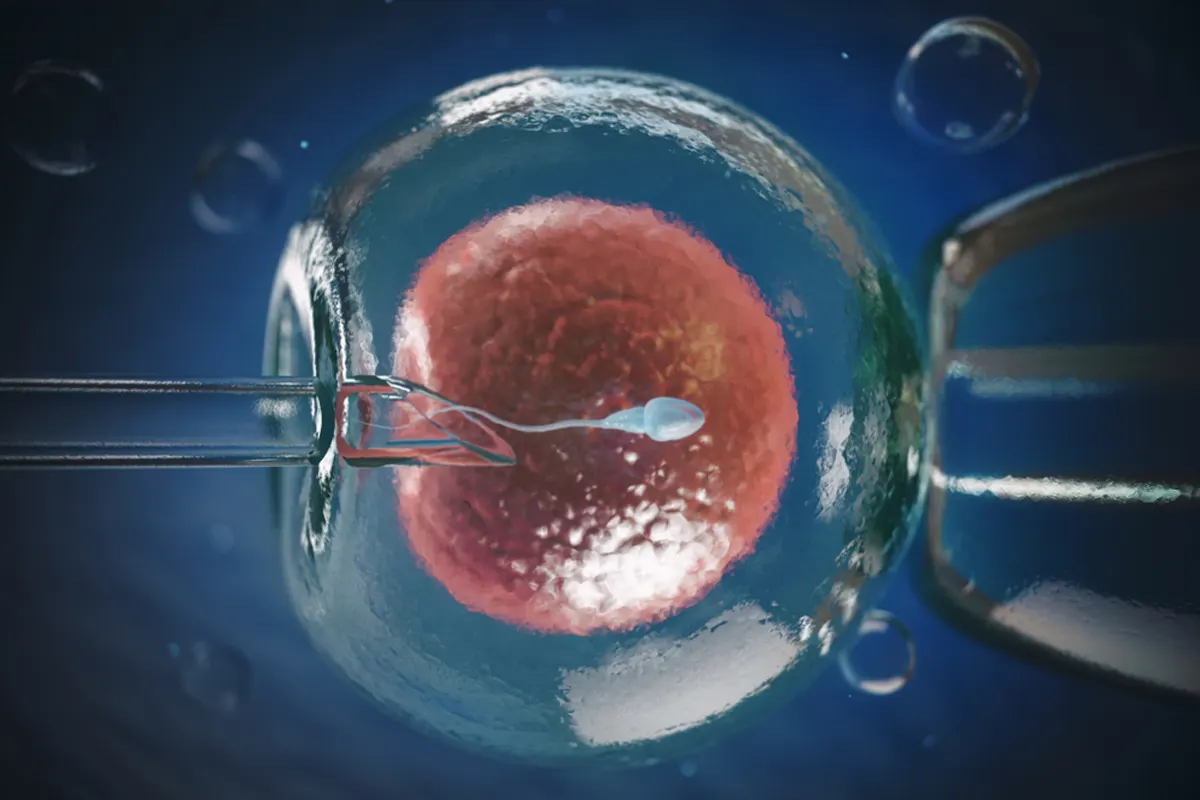
Microinjection (ICSI) involves injecting the sperm into the egg. The procedure is performed in a laboratory; it is expected that 40 to 70% of mature eggs are fertilized, although the rate varies according to quality of eggs and sperms.
How is Microinjection performed?
‘Assisted Hatching’ helps removal of the cells found around the egg and next, the eggs that are most appropriate for microinjection are selected.
On the other hand, sperms of man are subjected to various laboratory procedures with ‘sperm preparation’ techniques and thus, the sperm with highest quality is selected.
Sperm is placed into the egg with micropipette.
The combined sperm and egg are stored in an environment similar to womb, which is called an incubator. Here, fertilization is waited.
Formation of two cores –one from the mother and one from the father- inside the egg implies that fertilization is completed.
What are Differences between Microinjection and In Vitro Fertilization?
All steps, excluding the fertilization stage, are identical in microinjection and in vitro fertilization.
For in vitro fertilization, quality sperms are placed into the same medium with the egg at laboratory settings and the sperm is expected to find and fertilize the egg without any manipulation or spontaneously. In microinjection, only one sperm cell of man is injected into the egg with a special micropipette.
On the other hand, unlike in vitro fertilization therapy that is generally preferred when there is no sperm problem; microinjection is employed in cases of sperm disorders or unexplained infertility.
Who are Candidates for Microinjection?
Cases for which microinjection procedure can be performed are listed below.
Patients with low sperm count or motility
Women who have antibody against sperm cells in their bodies
Individuals who cannot achieve pregnancy with in vitro fertilization
Men who have undergone sperm extraction with MicroTESE
Individuals with unexplained infertility