An umbilical hernia, also known as a belly button hernia, occurs when intestines or fatty tissues protrude through a weak spot in the abdominal wall under the skin.
Laparoscopic umbilical hernia surgery offers a modern and minimally invasive method to treat this condition. Compared to traditional open surgery, this approach requires much less intervention, allowing you to experience less pain after the operation and return to your daily life in a shorter time. Furthermore, most patients treated with this method are discharged after staying in the hospital for only one night. Following this procedure, which generally lasts an average of 60 minutes, most patients can begin consuming liquid food within 5-6 hours.
What is an Umbilical Hernia?
A swelling or protrusion in the navel area can often be a sign of an umbilical hernia. An umbilical hernia, also known as a belly button hernia, is a condition where intra-abdominal organs (usually intestines or fatty tissue) protrude through a weak muscle layer around the navel. This is a common health issue seen in both newborns and adults.
How does an umbilical hernia form?
As a baby develops in the womb, the umbilical cord passes through a small opening in the baby's abdominal wall to connect to the mother. Under normal conditions, this opening closes after birth, but in some cases, this closure does not occur completely. Thus, a weak spot remains in the abdominal wall, and internal organs can protrude through this point.
In adults, an umbilical hernia usually forms due to increased intra-abdominal pressure. The area around the navel, where abdominal muscles lose resistance or are insufficient, weakens over time, allowing internal organs to protrude. The main causes of this pressure increase include:
Obesity
Pregnancy (especially multiple pregnancies)
Previous surgeries in the abdominal region
Chronic coughing
Straining resulting from heavy lifting
Fluid accumulation in the abdominal cavity
All of these can strain your abdominal wall from the inside, creating a foundation for hernia formation.
In whom is it more common?
An umbilical hernia can be seen in both children and adults, but risk factors vary by age. Approximately 20% of babies are born with an umbilical hernia. Premature and low-birth-weight babies are at higher risk. Umbilical hernias in babies are usually harmless and most close on their own within the first two years; rarely, this process may continue until the fifth year.
In adults, women are at higher risk than men, primarily due to the pregnancy factor. The risk of umbilical hernia is even higher in women who have had multiple births. Additionally, overweight individuals, those who have undergone abdominal surgery, and those receiving long-term dialysis treatment are among the risk groups.
As age progresses, the weakening of abdominal muscles and loss of elasticity also increase the risk of umbilical hernia. For this reason, this condition is encountered more frequently in middle age and beyond.
Conditions confused with umbilical hernia
Not every swelling or pain in the navel area means an umbilical hernia. Sometimes other health problems can mimic an umbilical hernia:
Lipomas are fatty cysts that form under the skin and can create swellings that look like an umbilical hernia from the outside. Additionally, ovarian cysts, which are common in women, can create a feeling of fullness around the navel, leading to misconceptions.
Digestive system-related gas, bloating, and indigestion problems can also cause discomfort in the navel area. In some cases, small hematomas (blood collections) that form in the anterior abdominal wall, especially when they appear after trauma, can be mistaken for an umbilical hernia.
A condition called rectus diastasis, which is the separation of abdominal muscles after pregnancy, can also be confused with an umbilical hernia. However, in this case, there is no herniation of internal organs.
To reach an accurate diagnosis, any swelling or pain you notice in the navel area must be evaluated by a specialist doctor. Laparoscopic surgery is a modern and effective method used in the treatment of umbilical hernias after an accurate diagnosis is made.
How is Laparoscopic Umbilical Hernia Surgery Performed?
Laparoscopic umbilical hernia surgery, as a minimally invasive surgical approach, offers many advantages compared to traditional methods. This modern technique makes it possible to repair the hernia inside the abdomen with the help of special instruments and cameras. So, how exactly is this surgery performed?
Pre-operative preparation process
A comprehensive preparation process is required before laparoscopic umbilical hernia surgery. First, tests such as blood tests, a general medical evaluation, X-rays, and an ECG are performed. The anesthesiologist evaluates the patient's suitability for anesthesia before the surgery and provides the necessary information.
Written consent is obtained for the surgery, and the patient is informed by the surgeon about the potential benefits and risks of the procedure. It is important to ask the surgeon all the questions on your mind to prepare for the surgery both physically and psychologically.
You must not eat or drink anything from midnight before the surgery. You must inform your surgeon about the medications you use regularly. Some blood-thinning medications may need to be stopped a few days before the surgery. On the morning of the surgery, you are asked to come to the hospital after 4-6 hours of fasting.
How many incisions are made?
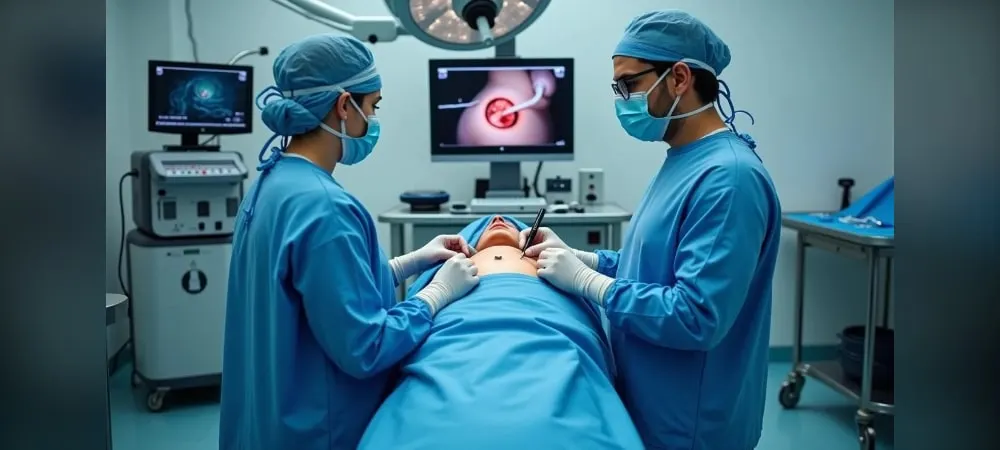
Laparoscopic umbilical hernia surgery is performed without touching the navel area at all. This is an important factor that speeds up the post-operative recovery process. Generally, a total of 3 small incisions are made on the left side of the abdominal wall, 2 of which are 5 mm and 1 of which is 10 mm in size. The number or size of incisions can be increased if necessary, but this is rarely required.
Thanks to the camera inserted through the first incision, the inside of the abdomen is projected onto a giant screen. This allows the surgeon to clearly see even nerves and vessels that are too thin to be seen with the naked eye. The procedure is performed with the help of special instruments inserted through the other incisions.
Stages of the surgery:
The abdominal cavity is inflated with carbon dioxide gas
The camera and surgical instruments are inserted
The hernia sac is found and its contents are returned into the abdomen
The mesh is placed and fixed
How is the mesh placed?
In laparoscopic umbilical hernia surgery, mesh placement is one of the most critical stages of the procedure. First, the organs located within the hernia sac are freed and returned into the abdomen. Then, a synthetic mesh is prepared that is large enough to completely cover the hernia opening and overlap sufficiently with the healthy tissue around it.
The meshes used here are different from standard meshes. Since the mesh is placed directly into the abdomen, near the intestines in closed surgeries, special double-sided meshes called "Dual Mesh" are used. These meshes have two different surfaces:
Muscle side (rough surface): The upper surface of the mesh facing the abdominal wall has a rough structure to grip the muscle tightly
Intestinal side (slippery surface): The lower surface is coated with a special substance to prevent the intestines from adhering
These meshes are fixed to the abdominal wall with special apparatuses that can dissolve over the long term. Thus, the risk of hernia recurrence is minimized.
Possibility of conversion to open surgery
In every surgery started with the laparoscopic method, the need to switch to open surgery may rarely arise. This situation is seen in approximately 5% of cases. Especially when bleeding that is difficult or impossible to control with the laparoscopic technique develops, the surgeon may decide to switch to open surgery for patient safety.
This transition should not be seen as a complication, but as a necessary decision made by the surgeon for the patient's safety. Your surgeon will also mention this possibility during the pre-operative briefing.
After laparoscopic umbilical hernia surgery, patients usually begin to receive liquid food within 5-6 hours and are mostly discharged the next day. This rapid recovery process is one of the most important advantages of the closed surgery method.
6 Basic Advantages of the Laparoscopic Method
There are many advantages to choosing the closed surgery method in the treatment of umbilical hernia. Thanks to modern medical technologies, laparoscopic umbilical hernia surgeries now offer much more positive results compared to open surgery. When we examine the six most prominent advantages of the laparoscopic method in detail, you can better understand why it is preferred more often.
Less pain
In laparoscopic umbilical hernia surgeries, tissue damage is kept at a minimal level. While a large incision is made in traditional open surgery, only three small holes of 0.5-1 cm in size are opened in the closed method. These small incisions ensure that post-operative pain is felt much less.
Furthermore, thanks to the high-resolution camera system, the surgeon sees nerves and vessels that are too thin to be seen with the naked eye by magnifying them. Thus, nerve damage is minimized, and post-operative pain is significantly reduced. It ensures you have a comfortable process compared to traditional surgery.
Rapid recovery
While the recovery process in open surgery usually takes 3-4 weeks, you can return to your normal life within just 1 week after laparoscopic surgery. Since the incisions are small, wound healing is very fast.
You can even take a bath the next day and start your various daily activities. The fact that the incision is shorter also reduces wound complications and speeds up your recovery process.
Aesthetic appearance
Laparoscopic surgery provides a great advantage in terms of cosmetic results. Since small holes opened on the side of the abdomen, away from the navel, are used, almost no scars remain after the surgery. After a short time, it becomes almost impossible to find the location of the surgical incisions.
Compared to the single large 5-10 cm incision in traditional surgery, the 3 holes of 0.5-1 cm made in laparoscopic surgery are much more satisfying aesthetically. It is an ideal solution, especially for people who are concerned about scarring on the navel.
Shorter hospital stay
The length of hospital stay after laparoscopic surgeries is significantly shortened. Many patients are discharged after staying in the hospital for only one night. In some cases, it may even be possible for you to return home on the same day.
You can start receiving liquid food within 5-6 hours after the surgery and can usually be discharged the next day. Compared to open surgery, this duration is quite short and increases your comfort.
Lower risk of infection
Laparoscopic surgery significantly reduces the risk of infection. The infection rate is much lower than in open surgeries. One of the most important reasons for the decrease in the risk of infection is that the incision is small and intra-abdominal organs are exposed to the external environment less.
While the infection rate in hernia surgeries is normally around 1-2% (maximum 5%), thanks to the shorter hospital stay and the smaller surgical area, this rate is even lower in the closed method. Complaints such as wound discharge are also significantly reduced.
Rapid return to daily life
After laparoscopic surgery, you can return to your daily life and work much faster. It is possible to return to work within 1-2 days after closed surgery. While this period can reach 2 weeks in open surgeries, the laparoscopic method provides you with a great advantage.
It provides significant time savings even for those who work desk jobs. The return time to sporting activities such as running, swimming, and cycling is 1-2 weeks after closed surgery. It is an ideal method, especially for athletes and those who work with their bodies.
Post-operative Process and Things to Consider
After a successful laparoscopic umbilical hernia surgery, the recovery process is as important as the surgery itself. Proper care and attention ensure your rapid recovery while also preventing possible complications. Below you can find the important points you should pay attention to after the surgery.
What should be considered in the first week?
The first 24-48 hours after the surgery are the most sensitive period of your recovery. It will be very beneficial for a relative to accompany you during this process. You can remove the dressing on your wound and take a shower the day after the surgery. It is normal to feel mild pain and discomfort in the first few days - in this case, you can use the painkillers recommended by your doctor.
It is recommended that you do not drive for the first 72 hours; this restriction applies even to surgeries performed under local anesthesia. Instead, you can support your blood circulation by taking short-distance walks. Avoid excessive movement in the first few days, but do not remain completely immobile.
Check the surgical area every day and consult your doctor if you notice unusual swelling, redness, or discharge. Also, high fluid consumption is important, especially in the first 48 hours.
Heavy lifting and exercise restrictions
After laparoscopic surgery, patients can usually return to their desk jobs and daily activities after a one-week period. However, you should pay attention to certain restrictions for your abdominal wall to heal completely.
You should avoid lifting loads heavier than ten kilograms for at least six weeks. This process is vital to minimize the risk of the hernia recurring. Initially, you can carry packages lighter than 5 kilograms.
You can start light-paced walks the day after the surgery. The return time to sporting activities such as running, swimming, and cycling is 1-2 weeks after closed surgery. However, for weightlifting and other heavy sports, at least six weeks should be waited, and your doctor's approval should be obtained.
Nutritional recommendations
Your post-operative nutrition both speeds up recovery and prevents problems such as constipation. You do not need to follow a special diet after laparoscopic umbilical hernia surgery - you can return to your pre-operative eating habits immediately.
Choose easy-to-digest and light foods in the first few days. Pay attention to the following nutritional recommendations:
Consume fibrous foods: Vegetables, fruits, and whole grains
Drink at least 2 liters of water per day
Avoid heavy, fatty, and spicy foods in the first weeks
Protein-rich foods support tissue repair and speed up your recovery process. Pay attention to drinking enough water to avoid constipation problems.
Follow-up appointments and monitoring
Your doctor will usually perform your first check-up on the second day after the surgery. During this check-up, your wound healing is evaluated, and your questions are answered. You will be given a prescription when you are discharged - this prescription will include a simple painkiller, a broad-spectrum antibiotic, and your first check-up date.
Since self-dissolving stitches are used in laparoscopic surgery, you do not need to come to the hospital separately to have stitches removed. The surgery report will be given to you upon discharge - this report contains information about the mesh used and important details about the surgery. It is important to keep this report.
Do not hesitate to consult your doctor if you experience an unexpected situation. If you notice any symptoms that you think are abnormal, contact your physician without delay.
8 Frequently Asked Questions
Does a scar remain after laparoscopic surgery?
In laparoscopic surgeries, a total of 3 small incisions are usually made on the side of the abdomen, 2 of which are 5 mm and 1 of which is 10 mm in size. These small incisions fade over time and become almost invisible. Although the incision scar is slightly red and hard at first, it turns to skin color and softens within a year. Compared to the 4-5 cm incision in traditional open surgeries, the laparoscopic method is much more advantageous aesthetically.
Does the hernia form again after the surgery?
Thanks to modern mesh technologies, the recurrence rate of the hernia is quite low. The recurrence rate in umbilical hernia surgeries where mesh is used is around 5% on average. Furthermore, in centers specializing in hernia surgery, this rate can drop to even below 1%. However, smoking, excessive weight, and not complying with post-operative heavy lifting restrictions can increase this risk.
How long does the surgery take?
Laparoscopic umbilical hernia surgery usually takes an average of 60 minutes (between 30-90 minutes) including the preparation stages. The duration of the surgery may vary depending on the size and complexity of the hernia. While small hernias are completed in a shorter time, the duration may extend for large or complex hernias.
Which anesthesia method is used?
General anesthesia is usually used in laparoscopic umbilical hernia surgeries because carbon dioxide gas needs to be given into the abdomen. While there are local, spinal, or general anesthesia options in open surgery, general anesthesia is mandatory in closed surgery. The type of anesthesia is determined according to the patient's general condition and the surgeon's preference.
When can I return to work after the surgery?
Those who work in desk jobs can usually return to work within 1-3 days. The recovery time for jobs that do not require physical strength is around 7-10 days. For those who work with their bodies and jobs that require heavy lifting, this period can extend up to 4-6 weeks. The recovery process can vary from person to person.
Is the mesh permanent in the body?
Yes, the mesh used in the surgery is permanent in the body. Modern meshes are produced from materials that are fully compatible (biocompatible) with the human body and are accepted by the body. The mesh acts as a support skeleton in the abdominal wall, allowing the body's own cells to grip it. Over time, it integrates with the body tissue and remains in place for a lifetime.
Is pain normal after the surgery?
It is normal to feel pain after the surgery, and this usually ranges from mild to moderate intensity. The pain felt in the first few days can be brought under control with simple painkillers. Pain may increase, especially during coughing, laughing, or sudden movements, but it decreases over time. The laparoscopic method ensures you feel less pain compared to open surgery.
Can laparoscopic surgery be applied to everyone?
Although the laparoscopic method offers many advantages, open surgery may be preferred in some cases. Open surgery may be more appropriate for very large hernias, those who have previously undergone abdominal surgery, or those who have health problems severe enough that they cannot receive general anesthesia. The surgeon will make the final decision according to the patient's condition.
In Summary: Laparoscopic Umbilical Hernia Surgery
In conclusion, laparoscopic umbilical hernia surgery offers you many advantages compared to traditional open surgery. First of all, thanks to small incisions, you feel less pain and return to your daily life quickly. Furthermore, the fact that almost no scars remain aesthetically after the surgery is one of the reasons why this method is preferred.
In particular, staying in the hospital for only one night after the surgery is usually sufficient. Thus, your process of returning to your normal life is accelerated. Moreover, the low risk of infection is one of the important benefits provided by the laparoscopic method.
After umbilical hernia surgeries performed with the closed method, you can return to your work in as short a time as a week. You can start light-paced walks the next day and do sports such as swimming and cycling within two weeks. Undoubtedly, it is important that you pay attention to your post-operative nutrition and avoid heavy lifting for the period recommended by your doctor.
Performing the surgery laparoscopically allows your surgeon to work more precisely, as it enables viewing the inside of the abdomen in a magnified way. Ultimately, thanks to this method offered by modern medicine, you can get rid of your umbilical hernia problem in a short time and in a comfortable way.
Laparoscopic umbilical hernia surgery treats umbilical hernia with a minimally invasive method. It provides less pain, rapid recovery, and aesthetic advantages.