Closed gallbladder surgery is the procedure of removing your gallbladder via laparoscopic method. In this method, post-operative pain is almost non-existent, and you are discharged earlier compared to open surgery. Generally, your hospital stay is only one day.
Gallbladder stones are more common in women than in men. At the same time, this condition is more prevalent in obese individuals and those with a family history of gallstones. In this article, we will clearly explain how gallbladder surgery is performed and its advantages for you.
What is laparoscopic cholecystectomy?
Laparoscopic cholecystectomy is one of the most frequently performed surgeries in modern surgery. This method involves the removal of the gallbladder through small punctures rather than making large incisions in the abdomen. Performed under general anesthesia, this procedure stands out as a technique that significantly accelerates the recovery process as well as patient comfort.
What does cholecystectomy mean?
Cholecystectomy means the surgical removal of the gallbladder. Defined as the procedure of removing the gallbladder from the body, this operation is used in the treatment of many health conditions, especially gallstones. Cholecystectomy is recommended in conditions such as biliary colic, cholecystitis, pancreatitis, and cholangitis. This surgical intervention is a definitive solution that significantly increases the quality of life of patients.
Difference between closed gallbladder surgery and open surgery
There are two main methods for the surgical removal of the gallbladder: laparoscopic cholecystectomy (closed) and open cholecystectomy. The main differences between these two methods are:
Incision size: While 3-5 small punctures (5-10 mm) are used in the laparoscopic method, a single large incision of 8-12 cm is made in open surgery.
Recovery time: The closed method provides faster recovery, and the patient is usually discharged within 1-2 days.
Pain level: Post-operative pain is almost non-existent or very minimal after laparoscopic surgery.
Cosmetic result: Laparoscopic surgery leaves smaller scars and is more advantageous aesthetically.
The laparoscopic method is the most frequently used technique because the patient recovers faster and can return to daily life sooner. In addition, much smaller scars remain compared to open surgery, and the risk of infection is lower.
The basic principle of the laparoscopic method
The basic principle of modern surgery is to provide the highest therapeutic effect while causing the least trauma to the patient. In laparoscopic cholecystectomy, the abdominal cavity is first inflated with carbon dioxide gas. This creates the necessary space for the surgeon to work.
The course of the surgery is as follows:
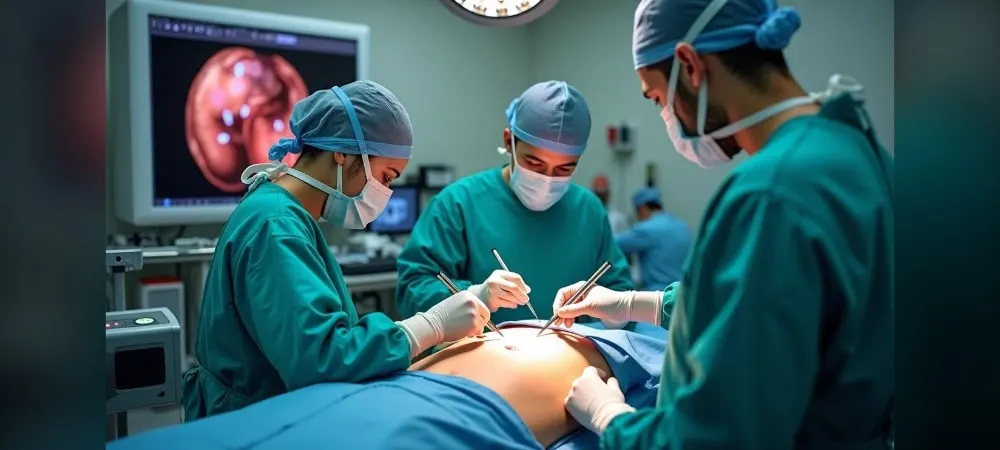
The surgeon makes 3-4 small incisions in the patient's abdomen and places tubes called trocars through these incisions. A camera is inserted through the incision made around the navel, and the surgical procedure is performed while monitoring it on a television screen. The gallbladder is visualized with the aid of the camera; first, its duct (cystic duct) and then its artery (cystic artery) are ligated. Finally, the gallbladder is detached from its attachment site to the liver and removed.
This minimally invasive approach accelerates the recovery process since it is a method where the abdominal muscles are not cut, and only millimetric holes are used for trocar entries. This entire process takes an average of 30-60 minutes, and post-operative patients are usually discharged within a day.
In which cases is laparoscopic cholecystectomy performed?
Gallbladder disorders are serious health problems that can affect many people's lives. Acute biliary colic is the most common indication for laparoscopic cholecystectomy. So, under which circumstances does closed gallbladder surgery become necessary? Let's look at the details.
Gallstones and sludge accumulation
Gallstones in the gallbladder are formed by the crystallization of cholesterol and calcium salts present in bile. These stones can cause pain in the right upper abdomen, nausea, and vomiting, especially after meals.
Gallbladder sludge, on the other hand, can occur as a result of conditions such as prolonged fasting, rapid weight loss, or pregnancy. Over time, sludge can solidify and turn into gallstones, leading to the following problems:
Recurrent abdominal pain
Nausea and indigestion
Bloating and gas
Jaundice in advanced cases
If gallbladder sludge causes continuous complaints or if the risk of complications is high, laparoscopic cholecystectomy is recommended.
Gallbladder inflammation (cholecystitis)
Gallbladder inflammation is the redness and swelling of the gallbladder wall. It usually occurs as a result of gallstones blocking the bile duct.
Symptoms of acute cholecystitis include:
Severe abdominal pain radiating to the back and shoulder
High fever
Nausea and vomiting
Ideal timing is important in cases of inflammation. While surgery is recommended within the first 72 hours for mild and moderate inflammation, in advanced inflammation, surgery can be planned 6-8 weeks after the patient's condition is stabilized.
Polyps and suspicion of tumor
Gallbladder polyps are growths protruding from the inner lining of the gallbladder and are seen in approximately 4-6% of the population. Polyps require surgery under the following conditions:
Being larger than 1 cm
Showing rapid growth
Being found in patients over 50 years of age
Having a broad base
Accompanied by gallstones
Especially in polyps larger than 1 cm, the risk of malignancy is approximately 40%. Therefore, laparoscopic cholecystectomy is the safest option in such cases.
Bile duct obstruction
Bile duct obstruction occurs as a result of millimetric stones spilling into the bile ducts and can cause different problems at different levels.
In cystic duct obstruction, the gallbladder swells and becomes inflamed. If the main bile duct (common bile duct) is blocked, liver function is impaired, and jaundice appears. This condition is called "obstructive jaundice," and if not treated urgently, cholangitis (bile duct inflammation) may develop.
The most serious complication is the obstruction of the common bile-pancreatic duct. In this case, pancreatitis (inflammation of the pancreas) may occur and require intensive care in some patients.
In the treatment of bile duct obstructions, ducts are first opened using endoscopic methods (ERCP), and then the gallbladder is removed laparoscopically. The final treatment step following ERCP is the removal of the gallbladder, and the ideal time for this is 1-2 days after ERCP.
How is closed gallbladder surgery performed?
Once the decision for closed gallbladder surgery is made, there are several important stages from planning to the recovery process. This modern surgical method is performed under general anesthesia and follows a specific step-by-step process.
Pre-operative preparation process
A comprehensive preparation process is required before the surgery. First, the radiological and laboratory tests necessary for diagnosis are performed. You are admitted to the hospital on the morning of the surgery on an empty stomach (after 6-8 hours of fasting). You are examined by the anesthesiologist and prepared for surgery.
If you are using blood-thinning medications, you will be asked to discontinue them 5-6 days before the surgery. However, patients using hypertension medications are recommended to take their medications with half a glass of water on the morning of the surgery.
Special preparations are also made for diabetic patients. Type II diabetic patients who do not use insulin do not take their medications on the morning of the surgery, while blood glucose monitoring and dose adjustment are performed in the hospital for patients using insulin.
Laparoscopic surgery steps
Closed gallbladder surgery generally includes the following steps:
Anesthesia and positioning: Under general anesthesia, the patient is prepared in a supine position.
Preparation of the abdominal cavity: The inside of the abdomen is inflated with carbon dioxide gas to create a surgical working area. This allows internal organs to be seen more clearly and surgical instruments to move comfortably.
Placement of trocars: A total of 4 incisions, usually 2 measuring 5 mm and 2 measuring 10 mm, are made in the abdomen, and tubes called trocars are placed.
Visualization and dissection: The gallbladder is visualized with the aid of the camera inserted around the navel. Then, the duct and artery of the gallbladder are identified and closed with special clips.
Detachment and removal of the gallbladder: The gallbladder is detached from the liver using special instruments and is usually removed through the incision site in the umbilical region.
How long does the surgery take? (30-60 minutes)
Laparoscopic gallbladder surgery takes an average of 30-60 minutes. However, depending on the patient's condition and any difficulties encountered during surgery (inflammation, adhesions), this time can extend up to 60-90 minutes. While it can be completed within 30-45 minutes in simple cases, it takes about 1 hour in a standard case.
These times cover only the surgery itself. When the administration of anesthesia, preparation of the patient, and post-procedure recovery time are included, the length of stay in the operating room is generally around 1.5-2.5 hours.
First hours after surgery
The patient wakes up within about 1 hour after surgery. You can usually start drinking water 2-3 hours later. In some patients, liquid food intake is started within 3-4 hours after surgery.
On the night of the surgery, you may feel mild abdominal pain, shoulder, and back pain. These pains may occur due to the effect of carbon dioxide gas and can be controlled with simple painkillers.
Most patients are discharged the next morning after breakfast. It is recommended that you stay away from fatty foods, fried foods, and egg-containing foods until one week after surgery.
What are the advantages of laparoscopic cholecystectomy?
Laparoscopic cholecystectomy offers many advantages over the open surgery method. This method has become one of the most favored techniques of modern surgery. Here are the significant benefits provided by this surgical method:
Shorter recovery time
The recovery process after gallbladder surgery performed via the laparoscopic method is quite fast. While recovery can take 2-4 weeks in open surgery, this period is only 3-5 days with the laparoscopic method. Many patients feel completely comfortable and return to normal life within 1-2 weeks. Especially young patients and those without comorbid conditions can recover in a much shorter time.
Less pain and complications
Post-operative pain after closed gallbladder surgery is almost non-existent or very minimal. Since small punctures are used instead of large incisions, patients can move more comfortably. Mild complaints such as abdominal pain and back pain that may occur after surgery can be easily controlled with a few doses of painkillers. In addition, the rate of wound infection is quite low, and antibiotic use is often unnecessary.
Small incision and aesthetic advantage
In laparoscopic cholecystectomy, instead of a 10-15 cm incision, only four small openings are created in the abdomen. Each incision is approximately 1 cm in size. Thanks to this minimally invasive approach, very few scars remain on the abdomen. At the same time, the risk of wound inflammation that may develop due to a large surgical wound is significantly reduced. Aesthetically, these small incisions make patients feel better.
Short hospital stay
Laparoscopic cholecystectomy is a surgery that generally requires staying in the hospital for 1 night. In some selected patients, it can be applied as day-case surgery, and the patient can be discharged on the same day. Patients can wake up, get up and walk a few hours after coming out of surgery, and start taking food orally 3-4 hours later. The shortened hospital stay compared to open surgery both increases patient comfort and reduces healthcare expenditures.
Rapid return to daily life
After closed gallbladder surgery, most people can return to their daily lives within 3-5 days and start work after 1 week. Generally, patients can increase their activities within 48 to 72 hours, and many can return to normal activities within a week. Compared to open surgery, the return to daily life is much faster with the laparoscopic method. Since intra-abdominal organs are manipulated less, intra-abdominal adhesions also develop less, which helps prevent long-term complications.
Post-operative recovery and considerations
The process following closed gallbladder surgery proceeds smoothly with proper care and recommendations. The recovery period is just as important as the success of the surgery. Therefore, knowing what you need to pay attention to will be beneficial.
How long does the recovery period last?
The recovery process after laparoscopic cholecystectomy is mostly fast and trouble-free. Patients usually fully recover from the effects of anesthesia 5-6 hours after surgery. Most patients stay in the hospital on the night of the surgery day and are discharged the next day. In some cases, the patient may be discharged on the same day, but a hospital stay between 24-36 hours is usually required.
The return to daily life is quite fast. The vast majority of patients can return to their normal lives within 1-2 weeks. The time to return to work varies depending on the nature of the job you do. Desk job workers can return to work within 1-2 weeks, while heavy laborers can return after 3-4 weeks.
What should the diet be like?
The post-operative diet accelerates your recovery. Only liquids can be consumed for the first few hours after surgery. Transition to normal solid foods can be made the next day. It is recommended to pay attention to the following points for the first month:
Stay away from excessively fatty and gas-producing foods
Consume fibrous foods that facilitate digestion
Drink at least 2 liters of water a day
Avoid eggs and foods containing eggs
Do not consume coffee, acidic drinks, and alcohol
Stay away from spicy foods and pre-packaged foods
Return to physical activity
Physical activity should be started gradually after surgery. You can take short walks in your room on the first day. It is recommended to wait 24-48 hours for bathing and then wash in the form of a shower.
You should avoid heavy lifting, excessively strenuous exercises, and sudden movements for at least 4 weeks. Light-paced walks will support the recovery process. You can gradually return to your normal physical activities after doctor control.
Possible side effects and post-cholecystectomy syndrome
Some temporary side effects may be seen after surgery. Complaints such as pain at incision sites that increases with movement, shoulder pain due to the inflation of the abdomen, and bloating can be controlled with simple painkillers. Pain under the right rib after gallbladder surgery is common, but this condition passes in a few weeks.
A condition called "post-cholecystectomy syndrome" may develop in some patients. This syndrome is seen in approximately 10-15% of those who undergo cholecystectomy and manifests itself with symptoms such as abdominal pain, indigestion, bloating, and diarrhea. These problems usually decrease and disappear within 6-12 months.
Laparoscopic cholecystectomy in summary
In conclusion, laparoscopic cholecystectomy is one of the most effective treatment methods offered by modern surgery. It offers a minimally invasive approach while permanently resolving your gallbladder disorders. Thanks to small incisions, your post-operative pain is very minimal, and your recovery process accelerates.
This surgery provides a definitive solution for you to get rid of the severe pain you experience due to gallstones or inflammation. In addition, staying in the hospital for only one day and rapidly returning to your normal life is a great advantage. Especially being able to return to your business life in a short time is an important plus of this surgery.
Paying attention to your post-operative diet and following your doctor's recommendations will further accelerate your recovery process. Do not forget that this surgery performed with the closed method is also cosmetically advantageous.
Considering all these benefits, laparoscopic cholecystectomy is a preferred surgical method for gallbladder disorders. If you have gallbladder complaints, you can evaluate this modern surgical technique with your doctor. Thus, you can regain your health rapidly and increase your quality of life.
Frequently Asked Questions
We have gathered the most frequently asked questions to answer the questions you are curious about. Simple and clear answers to your questions about gallbladder surgery are here.
How long does laparoscopic gallbladder surgery usually take? The procedure usually takes between one and one and a half hours. However, in most cases, it is completed within 30-60 minutes.
What are the main advantages of the surgery? Laparoscopic cholecystectomy offers smaller incisions, a shorter hospital stay, faster recovery times, less pain, and a lower risk of complications compared to open surgery. In addition, instead of a 10-15 cm incision, only four small openings are created in the abdomen.
How soon can I return to normal activities after surgery? You can start walking and taking food orally six hours after surgery and return to work within 1-2 weeks. Various normal activities such as driving, climbing stairs, lifting weights, or working can be started within a week.
Are there dietary restrictions after surgery? Doctors generally recommend temporarily reducing the intake of fatty foods after surgery. When liquids or diet are tolerated, the patient is discharged on the day they undergo laparoscopic gallbladder surgery or the next day.
Closed gallbladder surgery is a surgery performed with the laparoscopic method and offers a fast recovery process. Post-operative pain is minimal, and patients are usually discharged within a day.