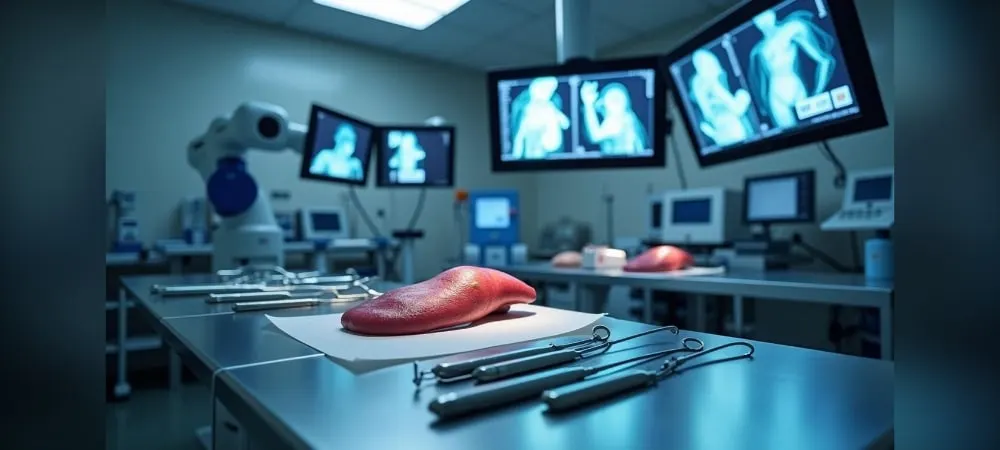
Laparoscopic hepatectomy is a modern and less invasive surgical method used in liver surgeries. Liver surgeries, which were previously performed with large incisions, can now be carried out using a camera and special instruments inserted through small holes.
In cases requiring liver resection (removal of a portion of the liver), this method can provide you with many benefits. Standing out especially with less pain and faster recovery times, this method helps you return to your daily life more quickly. It also offers less blood loss and a lower risk of infection compared to classic open surgeries.
In this article, you will find all the information you are curious about regarding laparoscopic hepatectomy. We will explain topics such as how the surgery is performed, who it is suitable for, and its advantages in clear and understandable language.
What is laparoscopic hepatectomy?
Definition and basic concepts
Laparoscopic hepatectomy, which has started a new era in liver surgery, is a minimally invasive surgical technique in which a portion of the liver (resection) is removed by entering through a few small holes made in the abdominal wall instead of a large incision. In this procedure, a few small holes with a diameter of 0.5-1 cm are made in the abdominal wall, and special surgical instruments and a camera are inserted through these holes.
The basic equipment used during laparoscopic hepatectomy is as follows:
Laparoscope: A thin instrument with a high-resolution camera and light source at the tip
Trocar: Special instruments that allow for making holes in the abdominal wall and the entry of surgical instruments into the abdomen
Insufflator: A device that creates a working space for the surgeon by inflating the inside of the abdomen with carbon dioxide gas
Laparoscopic Hand Instruments: Long and thin versions of surgical instruments
The surgeon performs the surgery by watching it on a screen. The liver piece removed at the end of the surgery is usually taken out through a small incision similar to a cesarean section incision.
Differences from open surgery
While an average incision of 15-25 cm is made in the patient's abdomen in traditional open liver surgery, only a few small holes are sufficient in laparoscopic hepatectomy. In this technique, instead of a large incision extending under the ribs, the procedure is performed by preserving the integrity of the abdominal wall.
The main differences between the two techniques are as follows:
Postoperative pain: Much less pain is felt in laparoscopic surgery
Blood loss: Generally, less blood loss is experienced
Length of hospital stay: Shorter hospital stay (1-4 days)
Recovery process: Return to daily life and work is much faster (1-3 weeks)
Risk of infection: Carries a lower risk of infection
Aesthetic result: Small and inconspicuous scars remain
However, the part of the surgery performed inside the abdomen, i.e., the removal of the tumor, is based on the same oncological safety principles in both methods.
In which cases is it preferred?
Laparoscopic hepatectomy can be preferred in the following cases:
Liver tumors: In the treatment of both benign (hemangioma, adenoma) and malignant tumors
Liver cysts: Especially for hydatid cysts that cause symptoms
Liver metastases: In the treatment of cancer foci that have spread to the liver from other organs
Focal nodular hyperplasia: When it grows and causes complaints
Surgeries where 2 or fewer segments of the liver are removed are the most suitable for laparoscopic surgery. Tumors located on the left side of the liver (segments 2, 3) and on the anterior surface (segments 4b, 5, 6) are technically very suitable for removal by the closed method.
In addition, major surgeries where the right or left half of the liver is completely removed can also be performed laparoscopically. However, since these operations are technically much more difficult, they should be performed by highly experienced surgeons in advanced centers.
Preoperative preparation process
A successful laparoscopic hepatectomy procedure begins long before entering the operating room. A comprehensive preparation process is at least as important for the safety and success of the operation as the surgery itself. During this process, a series of evaluations and examinations are carried out by your surgeon and their team.
Patient evaluation
Preoperative evaluation is carried out with a multidisciplinary approach. First, the liver surgeon, gastroenterologist, and anesthesiologist examine you in detail. During this process:
Medical history and medication analysis: Blood thinners you use (aspirin, etc.), herbal supplements, and accompanying diseases (diabetes, hypertension) are reviewed.
Nutritional status: Protein deficiency (low albumin), which is common in liver patients, can affect surgical success. If necessary, special nutritional support is planned before the operation.
Anesthesia examination: Since liver surgeries can take a long time, heart and lung capacity are evaluated with comprehensive tests (ECHO, PFT, etc.).
In addition, quitting smoking and alcohol and improving nutritional status are also important. This comprehensive evaluation is one of the critical factors that determine your postoperative recovery speed.
Imaging methods
Before laparoscopic hepatectomy, the condition of your liver, the size, location, and spread of the tumor are examined in detail with various imaging techniques. The main imaging methods used in this process are:
CT (Computed Tomography) and MRI (Magnetic Resonance): Shows the location of the tumor, its spread, and its relationship with vascular structures. Thanks to these imaging methods, a three-dimensional map of the liver is created. Especially with three-phase imaging, the relationship of the tumor with the vessels inside the liver (portal vein and hepatic artery) is mapped in 3D.
PET-CT: Used to evaluate whether there is metastatic spread.
Liver Volumetry: This is one of the most critical steps of modern liver surgery. Using computer software, the volume of the liver tissue that will remain after the surgery (FLR - Future Liver Remnant) is calculated. With this calculation made over imaging data, how much liver will remain after the part to be removed is determined with millimeter precision.
If the tissue to remain after surgery is insufficient, the healthy tissue can be made to grow with methods such as Portal Vein Embolization to make the surgery safe.
Liver function tests
Blood tests measure your liver's "synthetic function," i.e., its production capacity, and evaluate whether your liver can handle a major surgery. These tests include:
Liver Function Tests (LFT): AST, ALT, GGT, and especially Bilirubin levels.
Coagulation Panel (PT/INR): Since the liver produces coagulation factors, these values are vital for surgical safety.
Tumor Markers: AFP (Alpha-fetoprotein) for liver cancer or CEA levels for colon metastases are measured for both diagnosis and treatment follow-up.
Besides this, whether there is an underlying liver disease such as cirrhosis is also investigated. Evaluation of liver functions is extremely important for surgical success and safety.
All these preparations are indispensable for creating the most appropriate surgical plan for laparoscopic hepatectomy and ensuring that the operation passes without risk.
How is laparoscopic hepatectomy performed?
After entering the operating room, the laparoscopic hepatectomy procedure begins with all the possibilities of modern technology. This surgery is a delicate surgical procedure that requires special equipment and techniques.
Surgical techniques
Different surgical techniques can be used during laparoscopic hepatectomy. Among these, the two-surgeon technique stands out. In this method, the first and second surgeons perform a more precise and faster hepatectomy simultaneously using a laparoscopic CUSA and ultrasonic dissector.
A simple extracorporeal Pringle maneuver is also used in the surgery. This maneuver reduces the risk of bleeding during surgery by regulating the blood flow coming to and leaving the liver. Thus, surgeons can work more precisely in a clean and dry surgical field.
Equipment used
Various special equipment is used for laparoscopic hepatectomy:
Laparoscopic Hand Instruments: Special instruments that are disposable or reusable, 5 mm in diameter, capable of rotation, and have insulated shafts
CUSA (Cavitron Ultrasonic Surgical Aspirator): An ultrasonic energy device that causes minimal damage to vessels and bile ducts while fragmenting and aspirating liver tissue
Ultrasonic Dissector: A device that can cut liver tissue with the vibrations of two blades and can seal and cut vessels up to 3 mm in diameter
Trocars and Ports: Tubes that allow the entry of instruments through small holes made in the abdominal wall
Imaging System: High-resolution 4K camera and monitors
Operation duration and anesthesia
Laparoscopic hepatectomy is performed under general anesthesia. The operation duration usually varies between 2-6 hours. This time may vary depending on the size of the liver part to be removed and the location of the tumor.
During the surgery, the anesthesia team tries to keep the central venous pressure (CVP) below 5 cmH2O. For this, fluid infusion is reduced. Thanks to low CVP, the risk of bleeding in the liver is significantly reduced, and surgeons can work more safely.
Points to consider during liver resection
During liver resection, surgeons pay attention to some critical points. First of all, bleeding control is the most important issue. The liver has a very rich vascular structure, and the risk of bleeding is high. For a controlled resection, vessels and bile ducts are clipped and closed one by one.
In addition, the abdomen is inflated with carbon dioxide gas during the surgery. In this way, surgeons obtain a wider working space. At the end of the procedure, the gas inside the abdomen is evacuated, and the incisions are sutured in a sterile manner.
Technology and techniques are constantly developing in closed liver surgeries. In the hands of experienced surgeons, this method allows patients to have a much more comfortable recovery process without compromising the oncological success rate compared to open surgery.
Advantages of laparoscopic hepatectomy
Liver surgery performed with the closed method provides numerous benefits to patients compared to open surgeries. Thanks to developing technology, the difficulties brought by liver resection can now be overcome more easily.
Less pain and faster recovery
Patients feel significantly less pain after laparoscopic hepatectomy. The absence of a large scar on the abdominal wall is an important factor in patients feeling well quickly. Performing the surgery through small holes with the help of a camera causes much less tissue trauma, which accelerates recovery.
Shorter hospital stay
While patients who undergo closed liver surgery can usually be discharged within 1-3 days, this period varies between 4-7 days after open surgery. If the operation is not a major cancer surgery, staying in the hospital for one night may be sufficient for the laparoscopic method.
Less blood loss
Blood loss in laparoscopic liver surgery is generally less than in open surgeries. Modern laparoscopic instruments and advanced imaging systems allow the surgeon to see and control the vessels better, thus reducing the risk of bleeding during surgery.
Aesthetic advantages (small incisions)
While an average 20 cm incision is made in open liver surgery, during laparoscopic surgery:
3-4 entry holes of 5-10 mm are used
Since very small incisions are made, the scar is barely noticeable after a month
Much better results are obtained aesthetically
Lower risk of infection
Smaller incisions reduce the risk of infection. The risk of postoperative wound infection or herniation is significantly lower in the laparoscopic method. Besides this, the risk of infection is minimized in minimally invasive surgery because body tissues are less exposed to the external environment.
Faster return to daily life
Daily activities can usually be started within 2-3 weeks in laparoscopic cases, and within 4-6 weeks in open surgery. In some cases, a return to normal life is possible within 1-2 weeks in surgeries performed with the laparoscopic method. Especially in liver surgeries, while the recovery process can take 6-8 weeks in open surgeries, this period can decrease to a few weeks in laparoscopic surgeries.
Another important advantage for metastasis patients is that it offers the opportunity to start chemotherapy faster. A faster recovery process compared to open surgery allows moving to the next stage of treatment without delay.
Who is it suitable for and who is it not for?
The decision for laparoscopic hepatectomy is a process that must be carefully evaluated for each patient. Since each case is unique, whether this modern surgical approach is suitable for you depends on many factors.
Suitable patient profile
Laparoscopic liver surgery is generally recommended for patients in good general health. Especially people with a low risk of infection and who have not had surgery in the abdominal region before are more suitable for this method. The patient's liver function reserve is one of the most important factors determining the success of the operation. Your surgeon will evaluate your suitability with tests to be performed before the surgery.
This surgical method gives more successful results, especially in patients with tumors located on the left side or the anterior surface of the liver. However, the risk of complications may be higher in elderly patients, so patient selection should be made carefully.
Liver tumors and metastases
Laparoscopic hepatectomy can be applied in both benign and malignant liver tumors. Primary liver cancer (hepatocellular carcinoma - HCC) can be treated with this method, especially when caught in the early stage. Removing these tumors, which develop from the liver's own cells, with healthy surgical margins is the most effective treatment method.
However, laparoscopic surgery can also be applied for cancers that have spread to the liver from another organ (metastatic tumors). Especially in colon cancer metastases, surgically clearing the masses in the liver directly increases life expectancy and quality.
Conditions requiring liver resection
Liver resection may be necessary not only in cancer treatment but also in other situations. These include:
Large and symptomatic benign tumors such as hemangioma, adenoma
Liver cysts, especially Hydatid Cyst, known as "dog cyst"
Lesions causing obstruction in the bile ducts
Focal nodular hyperplasia (FNH) - usually does not require surgery, but surgery may be considered in the presence of diagnostic difficulties or symptoms
Contraindications
Not every patient may be a suitable candidate for laparoscopic liver surgery. Some situations where this method cannot be applied:
Patients who cannot tolerate general anesthesia
Those with treatment-resistant coagulation disorders
Hypovolemic shock table
Patients with advanced stage cirrhosis and/or portal hypertension
Patients who have previously had surgery in the abdominal region (due to the risk of adhesions)
Extreme obesity condition (may make viewing with a laparoscope difficult)
Situations where the liver tumor has a close relationship with major vessels
As a result, the decision for the most appropriate surgical approach should be made by taking into account the surgeon's experience and the patient's personal characteristics.
In summary, Laparoscopic Hepatectomy
As a result, laparoscopic hepatectomy is an important innovation that modern medicine has brought to liver surgeries. In this method, the procedure is performed with a camera and instruments inserted through small holes instead of large incisions. Thus, minimal damage occurs to your abdominal wall.
This surgical technique provides you with many benefits. First of all, your postoperative pain is much less. In addition, your hospital stay is shortened, and you return to your daily life faster. Thanks to small incisions, your risk of infection decreases, and no noticeable scars remain on your body.
The laparoscopic method can be preferred in many cases such as liver tumors, metastases, and cysts. However, it may not be suitable for every patient. Your surgeon will recommend the most appropriate treatment method for you with comprehensive evaluations to be performed before the surgery.
Remember that an experienced surgical team and correct patient selection are essential for a successful laparoscopic liver surgery. Therefore, the experience of the center that will perform this procedure is of great importance.
Thanks to laparoscopic hepatectomy, the surgical treatment of liver diseases has now become much more comfortable. Recovery processes that used to take weeks can now be completed in days. Thus, your postoperative quality of life increases significantly.
Frequently Asked Questions
How long does laparoscopic liver surgery take? The surgery usually takes 2-6 hours. This time varies depending on the size of the liver piece to be removed and the location of the tumor.
How much of the liver can be safely removed? Approximately 70-75% of a healthy liver can be safely removed. The remaining healthy tissue has the ability to regenerate itself.
How long does it take for the liver to regenerate itself? Most of the liver regenerates within the first 6-8 weeks. It may take a few months to reach full functional capacity.
How long will I stay in the hospital? You will stay in the hospital for an average of 1-3 days after laparoscopic surgery. This period is 7-10 days in open surgery.
When can I return to normal life? A return to daily life is possible within 1-2 weeks with the laparoscopic method. However, you should wait 4-6 weeks for heavy physical activities.
Is closed surgery suitable for every patient? No. Depending on the size, location, and relationship of the tumor with vessels, your surgeon will recommend the most appropriate method for you.
When should I call my doctor? You should call your doctor immediately in case of fever above 39°C, bleeding, abdominal swelling, severe pain, or shortness of breath.
Laparoscopic hepatectomy is a minimally invasive method used in liver surgeries. It offers less pain, fast recovery, and a low risk of infection.