The surgical process for uterine cancer offers high success rates when diagnosed early, a common type of cancer in women. Uterine cancer, which typically occurs after menopause, requires surgical intervention in its early stages.
Robotic uterine cancer surgery provides a more precise and minimally invasive approach compared to traditional methods. In this article, we will detail how robotic uterine cancer surgery is performed, who it is applicable to, how long the surgery lasts, and the advantages of this modern technique.
What is Robotic Uterine Cancer Surgery?
Robotic surgery in gynecological cancers is a minimally invasive method used in the treatment of uterine cancer. Robotic uterine cancer surgery allows the surgeon to perform high-precision operations through small incisions by controlling robotic arms from a special console.
How the Robotic Surgery System Works
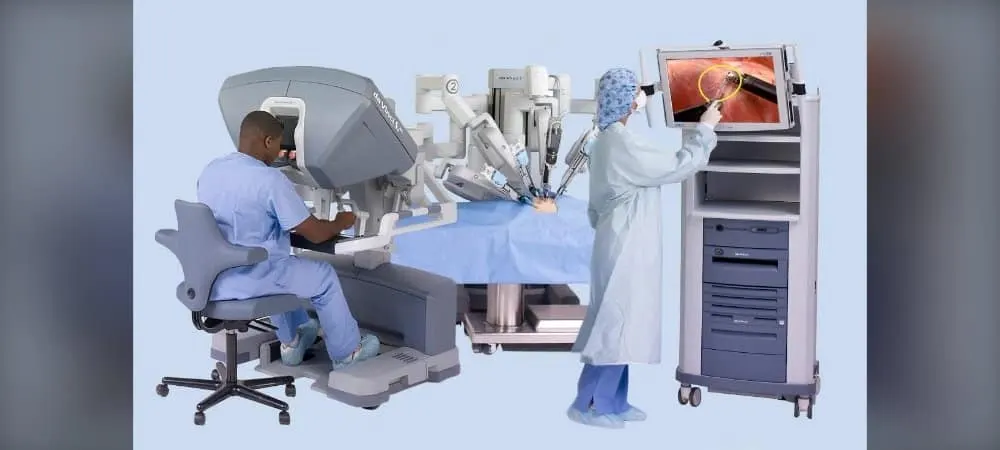
The Da Vinci robotic surgical system consists of three main components: the surgeon's console, the patient console, and the imaging tower. During the surgery, the surgeon sits at the console next to the patient and controls the robotic arms. This system precisely transmits the surgeon's hand movements to the robotic arms on the patient.
The robotic arms can perform movements that are too small and delicate for the human hand. They have a 720-degree range of motion and incorporate 'endowrist' technology that mimics the wrist movements of the human hand. Physiological tremors in the surgeon's hand are completely filtered by the system, allowing for work with millimeter precision.
The high-resolution 3D camera system shows the surgical area in an enlarged view. The surgeon observes the operation area magnified 10-12 times. This three-dimensional image provides the surgeon with excellent depth perception and clarity.
Use of Robotic Technology in Uterine Cancer Surgery
Robotic uterine cancer surgery is performed through small incisions made in the abdominal wall. Robotic arms and cameras are placed inside the abdomen through special tubes called trocars. The surgeon manages the operation while seated at the console.
Access to narrow and deep anatomical structures in the pelvic region is one of the greatest advantages of the robotic system. When lymph nodes need to be cleared in uterine cancer surgery, the precision provided by the system is of great importance. Cancerous tissue can be safely removed while protecting blood vessels and nerves with the help of robotic arms.
During the surgery, a surgeon standing at the patient's head assists the surgeon at the console. The robotic system does not perform the surgery instead, it enhances the surgeon's ability to carry out the procedure more controlled.
Key Differences from Traditional Methods
Open surgery requires large incisions and has a long recovery process. Robotic surgery, on the other hand, is performed with small incisions through a minimally invasive approach, which reduces tissue damage. The risk of pain and complications after surgery is lower.
The robotic system has significant advantages over laparoscopic surgery. While laparoscopy provides 2D images, robotic surgery offers 3D high-resolution images. Laparoscopy has limited range of motion, whereas robotic surgery provides more flexibility than the human wrist.
There is also a difference in surgeon ergonomics. In laparoscopic surgeries, the surgeon works while standing and can become fatigued during long operations. In robotic surgery, the surgeon performs the operation in a comfortable position while seated at the console. Additionally, the robotic system offers advantages, especially in obese patients and cases with previous surgical history.
Who is Robotic Uterine Cancer Surgery Applicable To?
Robotic uterine cancer surgery is performed on patients who meet certain criteria. The patient's overall health status, the stage of cancer, and individual factors determine the suitability of this method.
Early Stage Uterine Cancer Patients
Robotic surgery is a suitable treatment option for early-stage uterine cancer cases. In these stages, cancer is still limited to the inner surface of the uterus and has not spread. Complete removal of cancerous tissue and preservation of healthy tissues are possible with the precision provided by robotic surgery.
Robotic surgery can also be safely applied to patients diagnosed with early-stage cervical cancer. If the cancer has not spread beyond the cervix and remains localized, this method is an ideal option. Especially when the tumor is smaller than 2 cm and with certain precautions, robotic surgery is considered an alternative option.
Some patients wish to preserve their reproductive functions. Robotic surgery may be suitable for such patients because surgeons can remove cancerous tissues in a way that minimally damages reproductive organs. Thus, the chance of becoming pregnant in the future is preserved.
Suitability Criteria in Advanced Cases
In advanced-stage uterine cancer cases, robotic surgery may still be an option, but the surgeon needs to evaluate the situation. Factors such as whether the cancer has spread to lymph nodes or surrounding tissues are taken into account.
In advanced ovarian cancer or cases with widespread disease in the abdominal cavity, closed surgery may not be appropriate. In the presence of a large mass or tumor occupying a significant area in the abdomen, open surgery may be preferred over robotic surgery.
In early-stage ovarian cancer, robotic surgery can be safely performed. The uterus, along with the tumor, ovaries, tubes, lymph nodes, and omentum are removed with this surgery for treatment.
Importance of the Patient's Overall Health Status
The overall health status must be suitable for robotic surgery. For patients with serious health issues such as heart disease or respiratory problems, this method may not always be preferred.
Patients with good overall health status who do not carry high surgical risks are considered good candidates for robotic surgery. Patients without diabetes or other serious chronic diseases and with stable overall health are preferred.
Intracranial pressure increases can pose risks for patients with intracranial masses, and serious lung and heart conditions may prevent closed surgery. In such cases, robotic surgery may also not be suitable.
The patient's age and the stage of cancer are important factors considered. However, age alone is not a barrier; the overall health status is assessed.
Patients with Obesity and Previous Surgical History
Robotic surgery may be preferred for obese patients. This surgical method is suitable for patients with pelvic adhesions and those suffering from severe endometriosis.
Robotic surgery is preferred for patients who have previously undergone surgery in the abdominal area. Managing adhesions due to previous surgeries safely is possible with this method.
Patients who have undergone other surgical interventions in the pelvic region may have complications such as intra-abdominal adhesions. However, the superior vision and precision offered by robotic surgery help overcome such challenges.
In cases of endometrial cancer diagnosis in overweight and obese patients, and in situations with severe endometriosis or scar tissues, robotic uterine surgery is recommended.
How is Robotic Uterine Cancer Surgery Performed?
Robotic uterine cancer surgery occurs in three main stages: pre-operative preparation, the surgical process, and the recovery period. Each stage is meticulously planned for patient safety and successful outcomes.
Pre-operative Preparation Process
A detailed evaluation is conducted before the surgery. Your doctor performs a physical examination and requests blood and urine tests. Imaging tests may include ultrasound, MRI, and CT if necessary.
An anesthesiologist evaluates you before the surgery. Your suitability for general anesthesia is checked. If there are heart, lung, or other organ diseases that could prevent surgery, you may need to be re-evaluated by relevant specialists.
If you are using blood-thinning medications, they should be stopped at least 3-5 days before the surgery. Medications like aspirin can increase the risk of bleeding. You will be asked to stop taking vitamin E, herbal medicines, and other dietary supplements seven days before your surgery.
You will need to fast for 6 hours before the surgery. The night before the surgery, you should take a shower with an antiseptic skin cleanser containing 4% chlorhexidine gluconate. This procedure reduces the risk of infection after surgery.
Steps During the Surgery
On the day of the surgery, a urinary catheter is placed to empty your bladder. Your abdominal area is cleaned with a sterile solution. After general anesthesia is applied, the patient is positioned for gynecological examination.
A small incision is made approximately 3 cm above the navel, and carbon dioxide gas is introduced into the abdomen. Once a pressure of about 15 mmHg is reached, the trocar for the camera is inserted into the abdomen through the navel.
Then, the operating table is tilted approximately 35 degrees head down. Depending on the type of surgery to be performed, a total of four or five small surgical incisions are made. Robotic instruments are placed through these incisions, and the surgeon performs the operation using the robotic system.
Trocars are placed in a straight line or slightly curved in the abdomen, and there must be at least 8 cm distance between two trocars. Once all trocars are placed, robotic instruments are transmitted into the abdomen through the appropriate trocars.
While the surgeon sits at the computer console, they control the precise movement of the robotic arms, surgical instruments, and camera. Members of the surgical team stand beside the operating table to change robotic instruments. The removed uterus is usually taken out through the vagina or small incisions in the abdomen.
The duration of robotic uterine cancer surgery varies from one to four hours, depending on the surgeon's experience and the complexity of the surgery.
Post-operative Recovery Period
Patients are generally discharged within 24 hours after surgery. Some patients may be discharged on the same day, while others may need to stay in the hospital for one night. Depending on whether the surgery is closed or open and its extent, the patient is monitored in the hospital for 1 to 5 days.
It is normal for pain to begin in the surgical area as the effects of anesthesia wear off after surgery. This can be controlled with pain relievers recommended by your doctor. If you experience high fever, severe pain, or bleeding during the home rest period, you should consult your doctor.
The next day, you can return to light regular activities. Early walking, breathing exercises, and early feeding help speed up the recovery process. It is recommended to move to prevent the formation of clots after surgery.
You should regularly take the medications prescribed by your doctor and keep physical activities to a minimum. You may be able to drive within about a week or less and return to exercise within about four to six weeks. Daily dressing changes are done in the first week, and sutures are removed in the second week.
What are the Advantages of Robotic Uterine Cancer Surgery?
Robotic uterine cancer surgery offers significant advantages in terms of patient comfort and treatment outcomes compared to traditional open surgery. This modern approach makes the uterine cancer surgery process safer and more comfortable.
Benefits of the Minimally Invasive Approach
Robotic surgery leaves no large scars on the body as it is performed with small incisions. While traditional open surgery completely opens the abdominal wall, the robotic method only creates a few centimeter-sized holes. These small incisions provide a significant aesthetic advantage.
The minimally invasive approach significantly reduces trauma to surrounding tissues. The goal is to access the diseased area without damaging bones and tissues during surgery. Less tissue damage accelerates the body's self-repair process.
Less Pain and Faster Recovery After Surgery
Thanks to small incisions, the level of pain after surgery is significantly reduced. Patients require less pain medication compared to traditional methods. The reduction in pain allows for earlier mobility.
The recovery process is noticeably shorter compared to open surgery. Patients return to their daily activities and work more quickly. This situation is a significant advantage, especially for working patients. Light activities can be started the day after surgery, and a return to normal life is possible within 2-3 weeks.
Possibility of Precise Surgical Intervention
The robotic system provides high-resolution three-dimensional images. The surgeon sees the surgical field magnified up to 12-16 times. This excellent view allows for clear differentiation of small vessels and nerves.
Robotic arms have the capacity to rotate 540 degrees. Precise movements that the human hand cannot perform are accomplished with this system. Additionally, physiological tremors in the surgeon's hand are completely eliminated. Thus, surgical interventions can be performed with millimeter accuracy.
Shorter Hospital Stay
While patients stay in the hospital for 5-7 days with open surgery, this duration is reduced to 1-2 days with the robotic system. In some uterine cancer patients, discharge may be possible the next day. This quick discharge process is a significant gain in cancer surgeries.
A shorter hospital stay reduces costs as well. Additionally, patients have the opportunity to recover in the comfort of their homes. Early discharge allows for quicker initiation of post-operative treatments such as chemotherapy or radiotherapy.
Less Blood Loss and Lower Risk of Complications
The precise movement capability of the robotic system significantly reduces blood loss. Bleeding that occurs during surgery is detected and stopped early thanks to high-resolution cameras. Therefore, the need for blood transfusions is minimized.
Small incisions significantly reduce the risk of infection. The small size of the wound decreases the likelihood of infection development. The complication rates are lower compared to traditional methods. Both intraoperative and postoperative complications are less common.
Frequently Asked Questions
Is robotic surgery applicable in every uterine cancer case?
Robotic surgery is not suitable for every patient. Patient selection depends on the type of disease, stage, overall health status, and the difficulty of the surgery. If the patient has a medical condition that prevents closed surgery or if the disease planned for surgery is not suitable for closed surgery, robotic surgery cannot be performed.
In patients with heart or lung diseases, if there are conditions that would prevent total sedation, robotic-assisted surgery may not be an option. Some advanced-stage cancers, severe obesity, or patients with a history of previous major abdominal surgeries may not be preferred for robotic surgery. The most accurate decision regarding the applicability of robotic surgery is made by the patient's doctor after a comprehensive evaluation and necessary tests.
In Summary: Robotic Uterine Cancer Surgery
Robotic uterine cancer surgery offers significant advantages compared to traditional methods. With a minimally invasive approach, you experience less pain, faster recovery, and shorter hospital stays. High success rates are observed, especially in early-stage cancers.
However, it may not be suitable for every patient. It is recommended to have a comprehensive discussion with your doctor to evaluate your overall health status, the stage of cancer, and individual factors. Choosing an experienced surgeon directly affects the success of the surgery. To find out if robotic surgery is the right option for you, it is advisable to consult a specialist gynecological oncologist.
Robotic uterine cancer surgery offers more precise and safer operations with its minimally invasive method. Learn about the benefits and application details of this surgery in this article.
Is uterine cancer surgery risky?
Like any surgical procedure, robotic uterine cancer surgery carries certain risks. However, these risks are significantly lower compared to traditional methods. Possible complications include bleeding, infection, damage to the bladder and nearby organs, anesthesia-related issues, and blood clots in the legs.
Robotic hysterectomy may take longer than traditional open hysterectomy, and longer surgeries can increase the risk of complications. Nevertheless, surgical risks can be minimized by choosing the right specialist, conducting thorough pre-operative tests, and the surgeon's experience. With an experienced surgeon and ideal operating room conditions, most of these risks can be effectively prevented.
When can I return to normal life after robotic uterine cancer surgery?
The recovery process after robotic surgery is noticeably shorter compared to traditional open surgery. Most patients can return to their daily lives within 1-2 weeks. The hospital stay after surgery is generally 1 night for myomectomy and hysterectomy surgeries, and 2 nights for uterine cancer surgeries.
Light activities can be started the day after surgery. Depending on your doctor's discretion, you may be able to drive within about a week or less. Returning to exercise occurs within about four to six weeks. A complete recovery requires a process of 4-6 weeks. During this time, it is extremely important to rest, avoid heavy lifting, and pay attention to your nutrition.
The spread of cancer can also vary during the surgery. Early-stage uterine cancer surgeries generally take less time, while situations requiring the clearing of lymph nodes may extend the duration. The average duration for cervical cancer surgeries is between 1 to 1.5 hours. However, this duration can vary depending on additional procedures and complications.
How long does uterine surgery take?
The duration of robotic uterine cancer surgery varies from one to four hours, depending on the surgeon's experience and the complexity of the surgery. Factors affecting the duration include the size of the uterus, whether the patient has had previous surgeries, and whether other reproductive organs are being removed along with the uterus.