Tendons are tough, fibrous tissues that connect your muscles to your bones, enabling your joints to move. However, your tendons can become damaged due to sports injuries, accidents, or chronic conditions. Tendon repair surgery is a treatment method involving the repair or replacement of damaged tendons. In this article, we will examine in detail what tendon repair surgery is, who and in which situations it is performed, the surgical process, and the hospital stay after tendon repair surgery.
What is Tendon Repair Surgery?
When the fibrous tissues connecting the muscles in your body to the bones are injured or torn, tendon repair surgery comes into play. This surgical intervention aims to restore the function of damaged tendons.
Structure and Functions of Tendons
Tendons undertake critical tasks in your body as strong connective tissues composed primarily of collagen. Thanks to their fibrous structure, they transmit the force generated by your muscles to the bone, ensuring coordinated and controlled movement.
Tendons in the hand are divided into two main groups:
- Flexor Tendons: Tendons that bend your fingers and wrist
- Extensor Tendons: Tendons that allow the fingers and wrist to straighten
Your tendons perform three fundamental functions in body mechanics. By providing power transmission, they transfer the energy generated when the muscle contracts to the bone, making the initiation of movement possible. They also help keep your joints properly aligned. By absorbing some of the sudden loads that occur during movement, they protect your bones.
The Purpose of Tendon Repair Surgery
Tendon repair surgery is the procedure of surgically re-repairing a tendon that has lost its function due to injury, rupture, or laceration. The primary goal of surgical intervention is to re-establish the continuity of the tendon.
During the surgery, torn or damaged tendon ends are joined using special suture techniques. This procedure aims to restore normal movement as much as possible and reduce functional loss in the long term.
Severed or torn tendons do not heal on their own. Therefore, surgical intervention is required. During the surgery, the cut tendon ends are located and sutured, with the aim of repairing the tendon and regaining hand functions.
Different approaches can be planned depending on the condition of the tendon. Direct repair, reattachment to the bone, or debridement of the damaged part can be performed. In some cases, advanced repair options such as reconstruction may be necessary.
The Difference Between Tendon Repair and General Tendon Surgery
Tendon surgery encompasses a range of procedures involving repairing or replacing damaged tendons. In other words, tendon repair is a specific approach within this broad category.
Tendon repair involves the surgeon bringing together the torn ends and suturing them in partial tears. In cases of complete tears or severe damage, a graft may be used. The graft can be taken from your own tissue or from a donor source.
General tendon surgery can be performed in different ways. Achilles tendon surgery is performed in case of a rupture of the Achilles tendon, which provides stability in the foot. Tendon lengthening surgery is preferred for functional disorders associated with muscle shortness. In tendon transfers, a piece taken from another healthy tendon replaces the damaged tendon to restore a functional structure.
During repair, sutures, screws, anchors, or other fixation devices are used to secure the tendon. Open surgery or minimally invasive methods may be preferred depending on the size of the damage.
Who is Tendon Repair Surgery Performed On?
Tendon repair surgery is not a treatment exclusive to professional athletes. People of all ages and from all walks of life can experience tendon damage and require surgical intervention.
Patients with Sports Injuries
Tendon injuries are a very common condition among athletes. This risk is higher especially for those who actively play sports. Your tendons can be overloaded during running, jumping, or sudden twisting movements.
Achilles tendon ruptures, rotator cuff tears, biceps tendon ruptures, and finger tendon injuries are common among athletes. Many professional athletes such as Kobe Bryant, Sergio Agüero, and Cenk Tosun have suffered tendon injuries during their careers.
Sudden and uncontrolled movements in sports requiring high physical exertion cause damage to tendons. Surgical treatment is preferred in young and active athletes and patients with high functional expectations. Surgery lowers the risk of re-rupture and provides better strength recovery.
Those Experiencing Tendon Damage After an Accident or Trauma
Work accidents and traffic accidents are among the common causes of tendon injuries. Tendon integrity can be disrupted as a result of sharp instrument injuries or sudden strain.
Sharp-penetrating trauma, crushes, and sudden strains lead to tendon damage. Flexor and extensor tendons in the hand and wrist are vulnerable to injury due to their superficial location. Carpenters, cashiers, musicians, and people who work at computers for long periods experience tendon disorders more frequently due to repetitive movements.
Crush and pull-type injuries occur with high-energy traumas. In situations such as getting caught in a door or remaining under a heavy object, the tendon is not the only structure affected. Surrounding soft tissues, bones, nerves, and blood vessels can also be damaged.
There is no treatment option other than surgical repair. Severed or ruptured tendon cases are usually two-stage operations.
Patients with Degenerative Tendon Diseases
With age, tendons lose their elasticity and their blood supply decreases. This situation increases the risk of tears or inflammation developing even with minor strains.
Degenerative tendon injuries occur with the structural weakening of the tendon tissue over time. Recurrent microtraumas, metabolic and hormonal factors, and certain systemic diseases accelerate this process.
Surgery comes to the agenda in advanced tendinitis or tear cases that do not respond to medication and physical therapy. If the degenerative process is at an advanced level or a complete rupture has developed, surgery may be required.
The Need for Tendon Repair in Children
Tendon surgery in children must be approached carefully due to ongoing growth and development. A potential incorrect intervention can negatively affect the child's growth process.
Pediatric tendon surgery requires special approaches. The tissue structure of children is different from adults, and their healing processes also vary.
Tendon Repair in Elderly Patients
Tendon surgery in the elderly can be more challenging due to factors such as decreased tissue elasticity and slow healing. Age-related tendon tears or degeneration are common problems requiring surgery.
The patient's age, activity level, and expectations are decisive in the decision for surgery. Surgery is the most reliable path in patients with prominent functional loss.
In Which Situations Is Tendon Repair Surgery Performed?
The type and severity of the damage to your tendons determine whether surgical intervention is necessary. While mild injuries usually heal with rest and physical therapy, surgery is inevitable in severe damage.
Complete Tendon Tear
In cases of complete tear or severe damage, a graft is used in place of the damaged tendon. The graft can be taken from your own tissue or from a donor source. Large or complete tears usually require surgical intervention.
Complete ruptures or cuts in tendons require surgery. Tears leading to loss of function in the tendon are treated surgically. In such injuries, tendon repair surgery stands out as the only option.
The surgery is usually performed by repairing the tear or transferring another tendon or tissue to the tear area. The surgical approach varies depending on the size, location, and affected tendon.
Partial Tendon Tear
If the tendon is partially torn, the surgeon can bring the torn ends together and suture them. However, when there is partial damage to the tendon and the healthy part of the tendon is functioning, non-surgical treatments can be applied.
A partial tear occurs when a portion of the tendon fibers is damaged. Since the tendon is not completely ruptured, movement is usually present but painful, weak, and unreliable. Patients describe stabbing pain, weakness, a catching sensation during a specific movement, and increased complaints with recurrent strains.
Treatment in partial tears is determined according to the rate of the tear, which part of the tendon is affected, and the level of functional loss. In small and stable tears, a conservative approach with rest, splinting, edema-pain control, and progressive exercises can be successful. However, in high-grade partial tears or if there is mechanical locking and progressive loss of strength, surgical evaluation may be required.
Chronic Tendon Injuries
Damage related to tendon malnutrition developing on a degenerative basis can be treated without surgery. However, if the degenerative process is at an advanced level or complete rupture has developed, surgical options may come to the agenda.
Degenerative tendon injuries occur with the structural weakening of tendon tissue over time and the loss of its elasticity. Decreased tendon blood supply with age, recurring microtraumas, metabolic and hormonal factors, certain systemic diseases, and long-term incorrect loading can accelerate this process.
In such situations, the tendon can be damaged even without major trauma, in the form of a tear of the weakened tissue with minor strain. Therefore, the patient may sometimes state that they made a very simple movement and the injury happened instantly.
Tendon Rupture Situations
A tendon rupture is the sudden partial or complete separation of a tendon. It is most often triggered by situations such as sudden loading, jumping-running, falling, or heavy lifting. Achilles tendon rupture, rotator cuff tears, biceps tendon ruptures, and hand-finger tendon ruptures fall into this group.
Clinically, a popping sound or sensation, sudden severe pain, inability to move, or marked loss of strength are common. In some ruptures, pain decreases rapidly, but loss of function continues. For example, in the event of an Achilles tendon rupture, deterioration in walking and severe pain occur.
The treatment of rupture varies depending on the location of the tendon, the patient's age, activity level, and the type of rupture. Surgical options stand out especially in complete ruptures where loss of function is prominent or tendon ends are separated. The treatment of serious injuries such as tendon rupture usually requires surgical intervention.
How Is Tendon Repair Surgery Performed?
Before deciding on surgery, your doctor performs a detailed examination. This process is critical for the success of tendon repair surgery.
Preoperative Preparation and Evaluation
First, your physical examination is performed and information about your medical history is obtained. Then, a definitive diagnosis is made with various imaging tests. While evaluating whether you are suitable for surgery, blood clotting disorders or conditions carrying a risk of infection are taken into consideration.
Tests such as blood tests, physical examination, ECG, and chest X-ray are performed by the anesthesiologist. If you have an accompanying disease, you are referred to branch physicians such as cardiology, internal medicine, or chest diseases.
It is sufficient to inform your physician whether you have a chronic disease or about the medications you routinely use. You should not eat or drink anything as of 12:00 AM on the day before the surgery. In this procedure performed under general anesthesia, you are asked to come with at least 8 hours of fasting to reduce the risk of anesthetic drugs showing side effects in your body.
You must definitely stop using alcohol and blood-thinning medications at least ten days before the operation. Otherwise, the risk of bleeding during the procedure or the risk of the resulting bleeding not being stopped increases. Similarly, you need to stop aspirin and similar drugs 1 week before the surgery.
If you smoke, you should quit at least 15 days before the surgery. Quitting smoking is expected in the pre- and post-operative period in terms of wound healing.
Anesthesia Options
Local anesthesia, regional block, or general anesthesia is preferred depending on the region and severity of the injury. Local, regional, and general anesthesia techniques can be used in hand surgery.
Local anesthesia is performed with the help of drugs given under the skin to numb small areas. Local anesthesia is possible in small tendon cuts in hand fingers. You can leave the hospital immediately after the surgery, and you will not have problems eating and drinking water.
Regional anesthesia is applied by identifying the passage points of the nerves with the help of ultrasound or a nerve stimulator. General or regional anesthesia is generally more comfortable in large areas such as the shoulder or Achilles tendon. This method prevents early postoperative pain in addition to numbing the arm during the surgery.
Surgery is performed by putting you to sleep with general anesthesia. It is generally used in children, patients with poor psychological status, and patients who will undergo operations in multiple regions.
Surgical Techniques and Application Steps
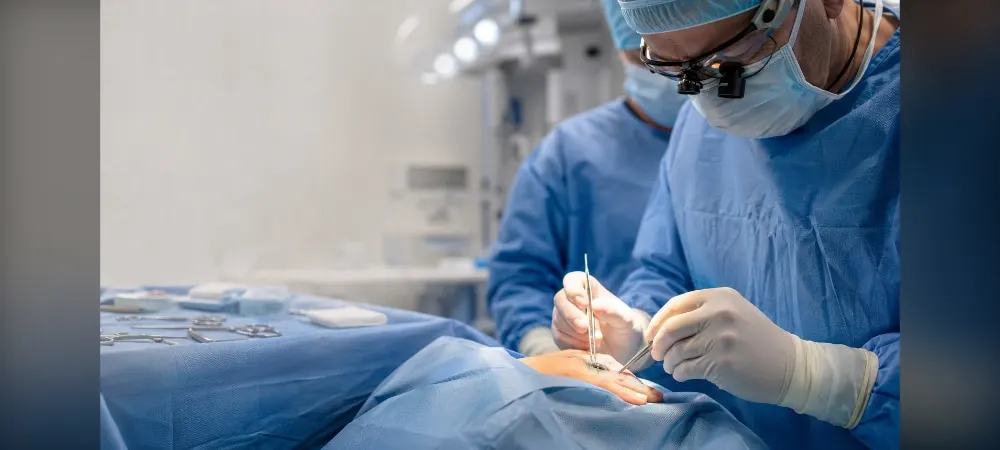
A three- or four-centimeter incision is made in the procedure area. A surgical incision is performed to reach the damaged tendon. The size and location of the incision depend on the tendon used and the surgical techniques.
While the ankle is held in a neutral position, irregular torn ends are cleaned. Tendon ends are joined using a non-absorbable suture using the modified Kessler, Bunnell, or Krackow technique. Tendon repair or graft is applied depending on the severity of the injury.
The repaired tendon is secured using sutures, screws, anchors, or other fixation devices. The surgery is concluded by casting the region. The incision is closed using sutures or staples.
The surgery takes around an hour, including the sleep and wake-up times of anesthesia. The duration of the surgery varies depending on the region and whether there is an undetected blood vessel, nerve, or tendon cut, but it usually takes 2-4 hours.
Length of Hospital Stay After Tendon Repair Surgery
Blood pressure, pulse, and blood oxygenation are monitored for 30-60 minutes after surgery. After tendon repair is performed, you stay in the hospital for a few days according to your needs. The care and follow-up process in the hospital starts immediately after surgery.
Frequently Asked Questions
How long does tendon repair surgery take?
The duration of the surgery varies depending on the type and complexity of the procedure performed. Tendon surgeries are usually performed within a few hours. However, in more complex cases, the duration may be longer.
Finger tendon surgery is usually completed in 1-2 hours. The duration may be prolonged depending on the case. Achilles tendon surgery is an operation that takes about 30 minutes. Casting is applied after the surgery, and this takes about 5 minutes.
In general, the duration of tendon surgery is between 1-3 hours. The duration may vary depending on the surgical area and whether there is an undetected blood vessel, nerve, or tendon cut.
How does the postoperative recovery process progress?
The recovery process varies depending on several factors. The type and location of the tendon injury, the surgical procedure performed, your general health status, and your compliance with postoperative care affect the result. In general, the initial recovery process can take a few weeks, and the complete recovery process can take a few months.
The complete recovery process for hand tendon surgery usually takes 8-12 weeks. The complete recovery time for hand tendon repair generally varies between 3-6 months. A hand protection splint is used for the first 4-6 weeks.
After Achilles tendon surgery, casting is applied for about 2 weeks, followed by boot treatment for about 4 weeks. Physical therapy is also applied during this period, and a return to normal life can be achieved around the 6th week.
The recovery process of small tears can generally range from a few weeks to a few months. Complete recovery of large tears may take longer. The postoperative recovery process can take 6 months or even a year.
When does physical therapy start?
The physical therapy process aims to restore the hand's mobility and strength. Starting physical therapy after surgery is important to prevent adhesion formation and positively contribute to movement.
Physical therapy is mandatory after tendon surgery. Physical therapy is definitely required to regain mobility. Physical therapy is a process as important as the surgery. In cases where adequate physical therapy is not performed after surgery, tendons adhere to each other and motion restriction occurs.
The physical therapy plan varies according to the surgical approach and the patient's condition. Rehabilitation is usually planned in a controlled manner from the early period of recovery and can progress gradually over months. Protecting the tendon in the early postoperative period is essential.
What are the postoperative risks?
Tendon surgery carries risks like every surgery. However, the complication rate is low in expert hands. With modern surgery and correct rehabilitation, the risk rate is around 2-5%.
Common risks include infection, bleeding, scarring, nerve or blood vessel damage, re-rupture of the tendon, stiffness and motion restriction, allergic reactions, chronic pain, delayed healing, and deep vein thrombosis. The most important risks in Achilles tendon surgery are wound site problems, infection, and anesthesia-related risks.
Problems encountered after hand tendon repair include tendon adhesions, motion restriction, infection, and re-injury of the tendon. The risk of re-rupture is not completely zero. Uncontrolled loading, especially in the early period, can increase this risk.
When can normal activities be resumed?
The time to return to normal activities varies depending on the type of surgery and the recovery process. Return to daily life is achieved around the 6th week after Achilles tendon surgery and rehabilitation.
Return to sports varies according to the individual and the type of sport. Although the return to walking is earlier, activities such as running, jumping, and sudden changes of direction require a more advanced level of recovery. The time to return to sports has been found to be between 5 and 7 months on average.
In Summary: Tendon Repair Surgery
Tendon repair surgery is an effective solution to repair your damaged tendons. Tendons damaged due to sports injuries, accidents, or age-related wear usually require surgical intervention. It is important to discuss in detail with your doctor before deciding on surgery. Thus, the most suitable treatment plan for you can be determined.
The postoperative recovery process progresses successfully with regular physical therapy and doctor check-ups. Remember that postoperative care is just as critically important as the surgery itself. Therefore, fully implementing your doctor's recommendations is essential for complete recovery. Be patient and carefully follow every stage of the process.