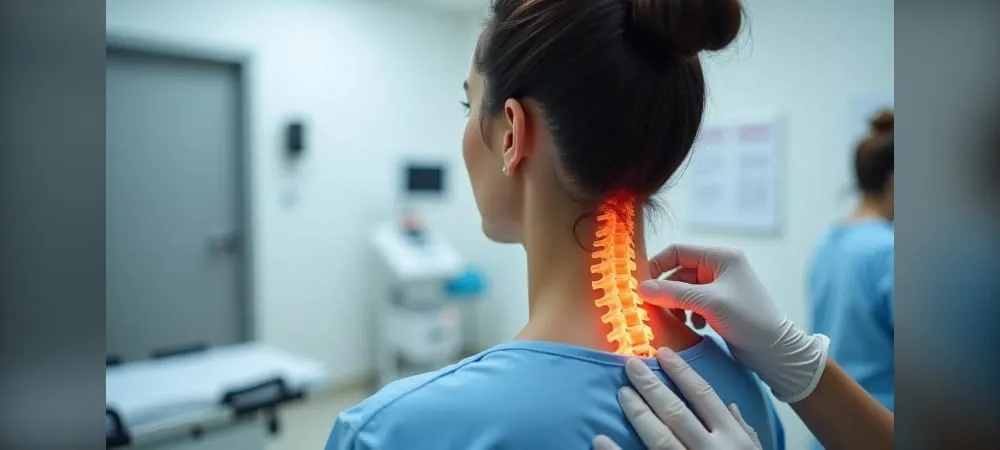
Cervical foraminotomy is a surgical procedure performed to relieve pressure on the spinal cord caused by a herniated disc in the neck. During the surgery, the nerve passage in the spine is enlarged to reduce the effect of the pressure. It is particularly preferred for patients experiencing arm pain, numbness, and chronic neck pain.
In this article, you will find answers to questions such as what cervical foraminotomy is, why it is performed, who it is for, how the surgical process proceeds, and the length of hospital stay afterward. We will also discuss the risks of the surgery and the recovery process in detail.
What Is Cervical Foraminotomy?
Foraminotomy is a surgical procedure designed to treat conditions caused by the compression of spinal nerves. The term foraminotomy is derived from the word foramen, which refers to the openings in the spine where nerve roots exit from the spinal cord.
Cervical foraminotomy focuses specifically on spinal problems in the neck region. In this procedure, the surgeon enlarges the openings called foramina to alleviate nerve compression. This reduces pain and improves function.
During the surgery, the skin at the back of the neck is incised, and the adjacent neck muscles are separated to visualize the lamina. Then, using special bone-cutting instruments, the part of the herniated disc pressing on the nerve and abnormally enlarged bone spurs are removed.
Nerve Compression in the Cervical Spine
Nerve compression in the cervical spine occurs when tissues surrounding the spinal cord exert pressure. This pressure hinders the normal function of the spinal cord and carries a high probability of leading to permanent damage in the long term.
Conditions that lead to nerve compression include herniated discs, bone spurs, and spinal stenosis. When the size of these bony tunnels, called the foramen, decreases, there is not enough space left for the nerve roots. As a result, pressure builds up on these structures.
Compression of the nerve root in the cervical region usually manifests as neck or arm pain, numbness, weakness, and a tingling sensation. Muscle weakness in the arms negatively affects daily activities and quality of life.
Purpose of the Surgery
The primary goal of cervical foraminotomy surgery is to relieve the pressure on the spinal cord and nerve roots. It aims to treat conditions that cause nerve root compression, such as herniated discs, bone spurs, or spinal stenosis.
The surgery aims to improve quality of life by alleviating pain and restoring function. Additionally, correcting or preventing the progression of neurological symptoms is among the important goals of this surgery.
It is particularly preferred for patients who experience arm pain and have minimal neck pain. The main advantage of this surgery is that it does not require fusion of the neck, thereby preserving as much movement as possible.
Cervical foraminotomy is a suitable option for patients with significant nerve compression symptoms who do not respond to conservative treatments. In some cases, it can be performed in conjunction with other spinal surgery methods such as cervical laminectomy.
In Which Situations Is Cervical Foraminotomy Performed?
Herniated Disc and Nerve Compression
When discs in the cervical spine wear out or herniate, they can press on nerve roots. In this case, cervical foraminotomy is employed to relieve the pressure on the spinal cord. Since a herniated disc exerts pressure on sensitive spinal nerves, pain may be felt in the neck, shoulder, arm, and back, depending on the affected nerve.
When deciding on surgery for patients with nerve root compression, it is necessary to distinguish whether the condition causing the pressure is due to soft herniated tissue or hard bone. If an osteophyte in the bone tissue is causing this pain, the surgical option may come to the forefront.
Anterior cervical foraminotomy is primarily associated with cervical radiculopathy. This condition is linked to damage secondary to the compression of a nerve root in the cervical spine. Surgery is indicated in cases of unilateral radiculopathy that has developed due to posterolateral osteophyte protrusions or a disc fragment.
Chronic Neck Pain
When chronic neck pain is mentioned, the first disease that comes to mind is a herniated disc. Pain that cannot be controlled with physical therapy and medication and that affects the quality of life may require surgical intervention.
If persistent pain and weakness affect daily activity and there is no reduction in pain despite conservative treatment, surgical options are recommended. The patient experiences pain, weakness, tingling, and numbness. Over time, these pains and symptoms may also manifest in other parts of the body, such as the hip.
Arm Pain and Numbness
Neck pain accompanied by arm pain brings to mind a herniated disc. It usually manifests as neck or arm pain, numbness, weakness, and a tingling sensation. Pain that starts in the neck and radiates to the arm occurs when discs in the neck region press on nerve roots.
Symptoms such as numbness or tingling in the arm and hand, and loss of strength in the arm muscles are observed. In this type of pain, the patient may feel that they have difficulty carrying their arm. Patients with advanced herniated discs may experience numbness and loss of strength in their hands.
Pain that increases with neck movement, numbness felt in the fingers and arms, and especially weakness in the hands and fingers are effective factors in the decision to operate. Symptoms such as difficulty gripping objects, loss of reflexes in the arms, and involuntarily dropping objects are also important.
Failure of Conservative Treatments
It is important to know that the natural course of cervical radiculopathy is quite benign. The vast majority of patients (75-90%) recover completely over time with non-surgical treatment methods. Therefore, surgery is considered only as a last resort in specific and mandatory situations.
Unbearable arm pain that does not respond to at least 6-12 weeks of strong conservative treatment is among the indications for surgery. In the case of pain radiating to the arm that is resistant to medical treatment and loss of strength, a decision for closed herniated disc surgery is made.
Patients with progressive or significant motor weakness and signs of spinal cord compression (myeloradiculopathy) require surgical evaluation. If there is a neurological deficit, surgery may be required without waiting for conservative treatment.
Who Is Cervical Foraminotomy Performed On?
Patients with Nerve Root Compression
Appropriate patient selection is the determining factor for the success of cervical foraminotomy surgery. This method is meaningful, especially in patients with unilateral complaints and single or two-level root compression. The patient's complaints should be evaluated together with pre-surgical imaging studies, and nerve root compression in the lateral canal or foramen should be confirmed.
Posterior cervical foraminotomy is an approach that can be preferred for laterally located disc herniations and isolated foraminal stenosis. In young patients with a laterally located soft disc fragment, the success rate of the posterior approach is higher than that of anterior discectomy. As the patient's age advances and foraminal bone stenosis increases, surgical success decreases.
This method can be applied in multi-level foraminal stenosis without central canal stenosis. It can also be considered for root symptoms that persist after anterior discectomy and fusion surgery. When the appropriate patient is selected, symptomatic improvement is achieved in rates reaching 91-97%.
Patients with Cervical Radiculopathy
Patients with cervical radiculopathy are the main target group for this surgery. Persistent radicular pain that has not responded to any conservative treatments and progressive neurological deficit are the main indications. In the presence of radicular symptoms due to foraminal compression, decompression provides successful results.
Soft foraminal disc herniations can be removed, and decompression can be achieved in foraminal stenosis due to osteophytes or facet arthropathy. For acute soft foraminal disc herniations, sudden onset of symptoms is a typical finding. Therefore, before surgery is performed, it is necessary to try conservative treatment methods such as anti-inflammatory treatment, physical therapy, epidural injections, or root blocks.
Conditions Not Suitable for Surgery
Conversely, in some cases, cervical foraminotomy is not appropriate. This method is contraindicated in cases of myelopathy due to anterior central compression. Posterior laminaforaminotomy is not recommended in the presence of cervical deformity and instability.
The presence of a tracheostomy, previous cervical radiotherapy, and disc herniations at the cervicothoracic junction are contraindications. Patients with significant medical comorbidities that increase the risk of surgery, anesthesia, or complications may not be suitable candidates. Patients with bilateral symptoms may not benefit from this surgery alone.
It is not recommended for patients with extruded or migrated disc herniations, spondylolisthesis, or spinal stenosis. It should also not be applied to patients whose disc height has decreased by more than 50%, who have a history of previous surgery at the same level, and who have a bleeding diathesis.
How Is Cervical Foraminotomy Surgery Performed?
Pre-Surgical Preparation
After the decision for surgery is made, the patient goes through a detailed preparation process. During the consultation with the surgeon, medical history, medications used, and concerns about the surgery are addressed. At this stage, the patient undergoes a comprehensive medical evaluation, including physical examination and imaging studies such as MRI or CT scans.
Blood tests are performed to check for underlying health problems such as anemia or clotting disorders that could affect surgery and recovery. It is extremely important to provide a complete list of all medications, including over-the-counter drugs and supplements. Patients are instructed not to eat or drink for a certain period before the surgery, usually after midnight the night before.
Since cervical foraminotomy is usually performed under general anesthesia, patients need to arrange for someone to take them home after the procedure. It is necessary not to drive or operate heavy machinery for at least 24 hours after the surgery. Creating a comfortable resting area at home, ensuring easy access to necessary items, and removing obstacles that could pose a tripping hazard are also part of the preparation process.
Surgical Process
On the day of the procedure, the patient arrives at the surgical center or hospital and completes the registration process. A nurse performs a final assessment, checks vital signs, and confirms the procedure. After entering the operating room, the anesthesiologist administers general anesthesia. The patient is usually placed face down on the operating table, as this position provides the surgeon with the most optimal access to the spine.
The surgeon makes an incision in the skin at the back of the neck. The incision is usually 1-2 cm long, depending on the location and extent of the procedure. Then, the surgeon carefully moves the muscles and tissues aside to reach the foramen opening where the spinal nerves exit from the spinal cord. Adjacent neck muscles are separated and pulled to both sides to visualize the back part of the bone surrounding the spine, called the lamina.
Then, using special bone-cutting instruments, the part of the herniated disc pressing on the nerve and abnormally enlarged bone spurs are shaved off. The surgeon relieves the pressure on the affected nerve by removing the bone spurs, herniated disc material, or other obstacles causing nerve compression. After the pressure on the nerve is relieved, the incision is closed using stitches or staples, and a sterile dressing is applied to protect the surgical site.
First Hours After Surgery
Immediately after the procedure, the patient is taken to a recovery room. Here, they are kept under observation while waking up from the effects of anesthesia, and vital signs are checked regularly. Post-surgical pain is normal and is controlled with painkillers given intravenously or orally.
The use of a neck brace is usually recommended to protect the incision in the neck region and spinal stability. This helps recovery by restricting neck movements. A few hours after the surgery, liquid foods are started, and as tolerated, a transition to solid foods is made. In order to reduce the risk of blood clotting and regulate bowel movements, small movements in bed and starting short walks with the assistance of a nurse or physiotherapist are encouraged, usually a few hours after surgery or the next day.
Hospital Stay After Cervical Foraminotomy
The length of hospital stay usually varies between 1 and 3 days. Most patients can go home on the day of the surgery, but some may need to stay in the hospital for one night for observation. The hospital stay can also be stated as 1-2 days.
Doctors make the decision to discharge after ensuring that the patient's pain control is achieved, they can perform basic movements independently, and they do not carry a risk of complications. Patients need someone to accompany them on the journey home and to assist them during the initial recovery period.
Risks and Complications of the Surgery
Like any surgical procedure, cervical foraminotomy carries certain risks. Although more than 90% of patients recover without complications, it is important to be aware of the potential risks. While the rate of minor complications is around 3-4%, the risk of serious complications is 1-2%.
Risks That May Occur During Surgery
During the surgery, situations such as nerve damage, excessive bleeding, and leakage of cerebrospinal fluid may occur. Damage to the nerve root leads to pain in the arm, weakness in muscle groups, and sensory disturbances. Vertebral artery injury is a rare but serious complication.
Cerebrospinal fluid leakage may leak out from the wound site after surgery. In this case, an additional intervention may be required for a spinal catheter or repair of the wound site. Although the risk of bleeding is low, the use of anti-inflammatory drugs may increase this risk.
Spinal cord injury is rare but can cause paralysis. Excessive blood loss may occur in the prone position, especially in obese patients. Air embolism and spinal cord ischemia due to hypotension are also dangers of the sitting position.
Post-Surgical Complications
6 weeks after surgery, neck irritation is seen in 18% of patients. Within the first 30 days, residual radicular pain continues in 8% of patients and may require surgical revision. The development of a new neurological deficit is a rare situation.
Infection can develop in the skin incision area, the surgical site, or the bone. There are also serious infection risks such as meningitis and abscess formation. Deformity may develop in the neck after surgery, and additional surgical intervention may be required for cervical spine instability.
Temporary nerve root paralysis is the most common neurological complication. These usually resolve within 6 days. The longest root, C5, is the most affected. Respiratory distress or pneumonia is usually temporary.
Risk Factors
The duration of pre-surgical radicular pain has been identified as a risk factor for poor outcomes. Concomitant spondylolisthesis or mediolateral disc protrusion increases the risk of surgical failure and complications. Cervical spinal instability may occur due to aggressive resection of the facet joint.
Frequently Asked Questions
How Long Does the Surgery Take?
One of the topics patients are most curious about before surgery is how long the operation will take. Cervical foraminotomy surgery is usually completed within a few hours. The duration varies depending on how many levels will be treated and the complexity of the surgery.
While single-level intervention takes less time, multi-level operations naturally take longer. The surgeon's experience and the technique used also affect the duration. Additional time for the patient's entry into the operating room and anesthesia preparation should be taken into account.
How Does the Recovery Process Proceed?
The recovery process varies depending on the type of surgery performed. Patients usually show improvement within a few weeks to a few months. In the first few days, swelling and discomfort in the surgical area are normal.
During the first week, you should focus on resting and gradually increase your activity level. Light walking is recommended to support blood circulation, but avoid heavy lifting or strenuous activities. By the second week, many patients begin to feel a significant reduction in pain and discomfort.
Physical therapy and regular check-ups are recommended during the post-surgical recovery process. This makes it possible to strengthen the muscles around the spine and increase mobility.
Will There Be Pain After Surgery?
Post-surgical pain is normal and is controlled with painkillers prescribed by the doctor. It can usually be controlled with prescription drugs. You may feel discomfort in the surgical area; this situation will gradually decrease over time.
Resting after surgery and getting enough sleep supports the body's recovery process. Rest helps reduce pain and speed up recovery. Healthy nutrition and adequate fluid intake are also important factors that support the recovery process.
When Can Normal Activities Be Resumed?
The time to return to work varies. A medical report of 2-4 weeks is usually given for desk workers, and 6-12 weeks for those doing physical work. While many patients can return to light work within 1-2 weeks, those working in physically demanding jobs may need 4-6 weeks or more.
Short-term computer use can be started 2-4 weeks after surgery. Light activities such as walking can be started after 2-4 weeks. Swimming may be appropriate after 6-8 weeks. For weight lifting, running, and contact sports, it is usually necessary to wait 3-6 months.
It is usually recommended to wait at least 2-4 weeks to drive. The surgeon's approval must be obtained.
In Summary, Cervical Foraminotomy
Cervical foraminotomy is an effective solution for neck-related nerve compression that does not respond to conservative treatments. Undoubtedly, before making a decision for surgery, at least 6-12 weeks of conservative treatment should be tried. When the appropriate patient is selected, the success rate is quite high.
The recovery process varies from person to person, but most patients feel significant improvement within a few weeks. If you work in a desk job, you can return to work after 2-4 weeks. If you do physical work, this period can reach 6-12 weeks.
Following your doctor's recommendations, going to regular check-ups, and completing your physical therapy program in full are of critical importance for a successful result.