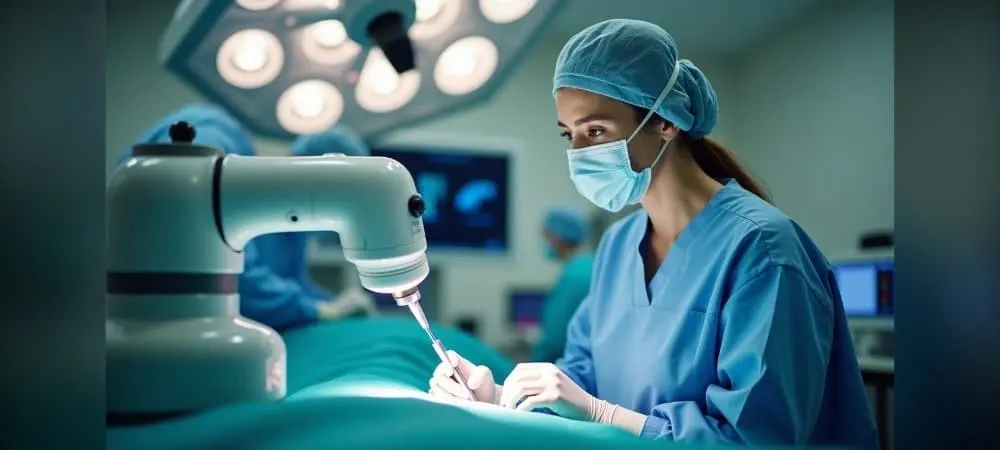
Robotic myomectomy is a modern surgical technique that allows for the removal of uterine fibroids using a minimally invasive method. Compared to traditional surgery, this less invasive approach offers significant advantages such as less pain, shorter recovery time, and minimal tissue damage.
What is Robotic Myomectomy?
Robotic myomectomy is a treatment method that enables the removal of fibroids from the uterus using robot-assisted surgical systems. The surgeon performs the operation via the da Vinci robotic system, which provides precise movement capabilities, facilitating the removal of complex fibroids.
Fibroids and Treatment Options
Fibroids are smooth, benign tumors that develop in or around the uterus. These structures, which develop from the smooth muscle wall of the uterus, can occur singly or in clusters. Their sizes range from dimensions barely visible to the human eye to sizes that can distort the structure of the uterus.
There are different options for fibroid treatment. Hormone therapy aims to shrink fibroids using drugs called GnRH agonists. However, when this treatment is stopped, the fibroids rapidly return to their original size. Myomectomy allows for the individual removal of fibroids in the uterus while preserving fertility. In the embolization procedure, the vessels feeding the fibroids are blocked to shrink them. Hysterectomy is a method where the uterus is completely removed along with the fibroids.
Robotic myomectomy is performed using the principles of laparoscopic surgery. The surgeon manages the robotic arms via a console, and these arms have the ability to work with millimetric precision.
Key Features of Robotic Surgery
Robotic surgery is defined as performing operations through small incisions using the da Vinci system. Thanks to wrist-modeled instruments, intuitive motion control, and high-resolution three-dimensional imaging features, the surgeon can perform more complex interventions using a closed surgical method.
The surgeon sitting at the console clearly sees a three-dimensional image of the surgical area. The mobility of the robotic arms is quite high, and hand tremors are not transmitted to the robotic arms. The system executes the commands given by the surgeon precisely and simultaneously.
Differences from Hysterectomy
The main difference between robotic myomectomy and hysterectomy is whether the uterus is preserved or not. In a myomectomy surgery, only the fibroids are removed, and the entire uterus is not taken. Conversely, in a hysterectomy surgery, the uterus is completely removed.
Myomectomy is provided especially for women who plan to become pregnant. Since the integrity of the uterus is not compromised, the chance of conception continues. Hysterectomy, on the other hand, is generally preferred for women who have too many fibroids in the uterus and do not wish to have children. There is a possibility of new fibroids developing again after a myomectomy, and therefore, post-operative follow-up is important.
Who Is Robotic Fibroid Surgery For?
Fibroids do not always show symptoms, but over time, they can lead to serious complaints in some women. Robotic fibroid surgery is a treatment method recommended for certain symptoms and conditions. The decision for surgery is made according to the complaints caused by the fibroid, and not every fibroid requires surgery.
Excessive Bleeding and Pain Complaints
Excessive and prolonged bleeding during menstrual periods is the most common symptom of fibroids. Even a 2 cm fibroid located in the inner lining of the uterus can cause heavy menstrual bleeding. An increase in the amount of bleeding and its duration leads to the development of anemia. In addition to this, you may experience an increase in menstrual pain and a feeling of pain in the groin area.
Pain during sexual intercourse occurs depending on the location of the fibroids. In some cases, a feeling of swelling and fullness in the abdominal area is also seen. The presence of one or more of these complaints may indicate that the fibroids now require surgical treatment.
Infertility and Pregnancy Problems
Fibroids can cause infertility depending on their location and size. If women suffering from infertility have fibroids, natural pregnancy can be achieved in 40% of them after the fibroid removal surgery. Especially submucosal and intramural fibroids can cause miscarriage.
A fibroid that presses on the wall of the uterus and pushes the boundaries of the uterine cavity can have negative effects on the implantation of the embryo into the uterus. In studies, fibroids have been held responsible for 5% of infertility in women. The larger the fibroid size, the closer it is to the inner wall of the uterus, and the greater the number, the more it hinders pregnancy.
10% of pregnant women have fibroids. Negative pregnancy outcomes are seen in 10-40% of pregnant women with fibroids. Preterm birth risk, premature rupture of membranes, and miscarriages can be counted among these. The risk of bleeding after birth is 6 times higher in expectant mothers with fibroids.
Size and Location of the Fibroid
The decision for fibroid surgery is not made based on the size of the fibroid, but based on the complaints caused by the fibroids. The number, size, and location of the fibroids are important in surgical planning. Even if the size of a submucosal fibroid is small, it can cause miscarriage, and therefore it should be removed by surgery before pregnancy.
Those Who Want to Have Children in the Future
Robotic myomectomy is preferred especially in women who want to have children. There is no problem with conception after a fibroid surgery performed without damaging the uterus. It is recommended that women who have undergone myomectomy wait 3 to 6 months for pregnancy planning.
How Is Robotic Myomectomy Performed?
The surgical process begins with a careful preparation phase and continues with the technological possibilities offered by the robotic system. Performed under general anesthesia, this procedure proceeds with precise steps under the control of the surgeon.
Pre-operative Preparation
Before the surgery, blood tests, chest X-ray, and electrocardiography are performed. The anesthesiologist evaluates these results to investigate whether there is any condition that prevents the operation. The patient's medical history is examined in detail, and a physical examination is performed.
On the day of surgery, 6 hours of fasting and abstinence from water are applied. After the informed consent form is signed, hospitalization is carried out. After anesthesia is administered, the patient is placed in the lithotomy position, and their arms are placed closed towards the side of the body.
Robotic System and Equipment Used
There are three main components for robotic fibroid surgery. The first is the console where the gynecological surgeon controls the scope and instruments using hand controls. The second is the robotic cart with arms that hold the instruments. The third is the camera that provides 3D images of the surgical area.
Wristed instruments that convert the surgeon's hand movements into precise micro-movements to perform surgery are used. The tips of these instruments have the ability to rotate 540 degrees around their own axes. The robotic system cannot be programmed and does not perform any movement on its own; it is completely controlled by a gynecological oncologist specialized in their field.
Step-by-Step Surgical Process
After the patient is sterilized and draped, a urinary catheter and a manipulator are placed inside the uterus. An incision of approximately 8mm is made in the navel, and a trocar is inserted. Thanks to this instrument, the abdomen is inflated with carbon dioxide.
Usually, 4-5 small incisions are made in the abdominal area. Again, 8mm incisions are made from appropriate places for the robot's arms, and trocars are inserted. The part where the robot's arms are located is brought closer to the patient, and the robotic arms are inserted into the patient's abdomen through the trocars. This process is called 'docking'.
One of the arms carries the camera that provides high-resolution three-dimensional images. The other arms carry instruments specialized according to the movements the surgeon wants to make in the surgical field. The surgeon moves to the console section where they will perform the operation.
Removal of Fibroids and Uterine Repair
The surgeon manages from the three-dimensional screen, and the fibroid is cleared from the uterine tissue. Bleeding control is ensured, and after the fibroid is removed, the tissues in the uterus are repaired. An important part of the procedure is the assistant surgeon who stands at the operating table next to the patient and manually manipulates an accessory port to help with tasks such as fine suturing. When the procedure is completed, the robotic instruments are removed, and the small incisions made are closed.
Advantages of Robotic Fibroid Surgery
The advantages provided by robotic fibroid surgery manifest themselves both during and after the surgery. Thanks to modern technology, patients experience a more comfortable treatment process and return to daily life more quickly.
Minimally Invasive Approach
Robotic myomectomy is the most advanced form of minimally invasive surgery. Instead of large incisions in traditional open surgeries, small holes with a diameter of usually 7 mm are opened in the abdominal area. Robotic surgeries are performed through an average of 4 small incisions. Thanks to this approach, the damage to tissues is minimized, and the body experiences less trauma.
Less Blood Loss and Pain
Blood loss during surgery is much less compared to open surgery. Thanks to the high image quality and precise movement capability of the robotic system, incisions on the uterus are closed quickly and securely. Post-operative pain is quite mild, and in some cases, there may be no need for painkillers. Due to the small incisions, the patient feels less pain.
Rapid Recovery Process
The recovery time is extremely short. The length of hospital stay is much shorter compared to open surgeries. Patients can usually be discharged within 24 hours after surgery. The time to return to normal activities is significantly shortened, and patients return to their daily lives and work within 1 week. Especially movements such as lying down, getting up, sitting, and walking are easier to perform.
Small Surgical Scars
Since entry is made through a few small incisions, the surgical scar is very small. After the surgery, minimal scars that do not disturb the body aesthetically remain. The risk of opening, bleeding, or infection is much lower. Cosmetic results increase patient satisfaction.
Preservation of Fertility
The fertility rate is preserved in robotic myomectomy. Since robotic arms can mimic wrist movements in all axes, the incisions in the uterus are closed in a multi-layered and secure manner after the fibroid is removed. This feature is safe for future pregnancies. Patients become ready to try to conceive within 4-6 months. The risk of uterine rupture is minimized.
High Precision and Image Quality
The surgeon sees the surgical field in 3D and high quality with the robotic system. The surgical area can be magnified up to 10 times and observed clearly. The robot arms do not transmit human hand tremors and work with millimetric precision. Unlike the 2D image in the classic laparoscopic method, a sense of depth is provided. This technology allows the surgeon to perform even the most complex procedures with confidence.
Post-operative Recovery and Points to Consider
The recovery process progresses rapidly after robotic myomectomy, and patients return to their normal lives in a short time. However, there are important points to consider during this process.
Length of Hospital Stay
The length of hospital stay after robotic fibroid surgery is quite short. In laparoscopic or robotic myomectomy, the patient can be discharged on the same day or the next day. Usually, the patient spends the first night after surgery under observation in the hospital and is discharged the next day. After an open myomectomy, the length of hospital stay can be 2-3 days.
You may feel mild to moderate pain in the first few days. Painkillers recommended by the doctor should be used regularly. Attention should be paid to the hygiene of the surgical area, and the incisions should be kept clean and dry.
Return to Normal Activities
The process of returning to normal activities after robotic fibroid surgery is much faster than open surgery. While a 2-3 week rest period is recommended after laparoscopic surgery, this period extends to 4-6 weeks after open surgery. You should avoid heavy lifting and strenuous movements.
You should stay away from heavy physical activities and rest sufficiently for the first few weeks. Heavy lifting should be avoided for a month. Sexual intercourse is generally permitted 4-6 weeks after the procedure. Sexual intercourse should be avoided before the uterus has completely healed.
You may experience menstrual irregularities after the surgery. The first few menstrual periods may be more painful or heavier than normal. To prevent constipation, sufficient fluid should be taken, and fibrous foods should be consumed.
Pregnancy Planning
You need to wait for a certain period for pregnancy planning after robotic myomectomy. For most women, waiting 3 to 6 months is recommended. In some cases, especially if many or deep fibroids have been removed, this period can extend up to 6-12 months.
The period recommended worldwide for the uterine wall to heal safely is 6 months. If the incision in the uterine wall is very small and not deep, this period can be reduced to 3 months, while in cases where the incision is large, it may be recommended to avoid pregnancy for up to 1 year after surgery. You need to wait three to six months or longer before trying to conceive to allow the uterus enough healing time.
Your doctor will follow your healing status with ultrasound and inform you of the safest time for pregnancy. If you become pregnant before the uterus has fully healed, the risk of uterine rupture during pregnancy may increase.
Possible Risks and Complications
The complication rate of robotic fibroid surgery is low. Still, there are some risks. You should definitely consult your doctor if situations such as intense and prolonged bleeding, severe abdominal pain, high fever and chills, and foul-smelling vaginal discharge occur.
In the near future after surgery, filling of the place where the fibroid was removed with blood and hematoma formation can be seen. This area can be a focus of infection. Although the risk is small, there is a risk of infection after robotic myomectomy treatment.
The probability of fibroids forming again after they are surgically removed varies depending on the type of fibroid, the number, and the patient's age. While the probability of recurrence of multiple fibroids in women between the ages of 25-35 is 20%, this rate is below 5% for single fibroids in those over 35.
In Summary, Robotic Myomectomy
Robotic fibroid surgery is one of the most effective treatment methods offered by modern gynecological surgery. Thanks to its minimally invasive approach, you get less pain, rapid recovery, and small surgical scars. Especially if you plan to have children in the future, you can get rid of your fibroids while preserving your fertility.
The high precision and three-dimensional imaging technology offered by the robotic system ensure successful results even in complex cases. You are usually discharged within 24 hours after surgery and return to your normal life in a short time. By following your doctor's recommendations, you can complete the recovery process smoothly and take a step towards a healthy future.
Frequently Asked Questions
Does the robot perform the surgery? No, the robot does not perform the surgery. Contrary to popular belief, in robotic surgery, all control is with the surgeon. The surgeon performs the surgery using robot arms, and thanks to these arms, they can move in many more directions. The robotic system is completely controlled by the surgeon, and there is absolutely no chance for the robot to make decisions on its own.
Is artificial intelligence used in the surgery? Artificial intelligence is not used. In the da Vinci robotic system, the robot is completely controlled by the surgeon. There is no chance for the robot to move on its own outside the surgeon's request or not to fulfill the surgeon's command.
Is the patient left alone during the surgery? Absolutely not. An anesthesia team waits at the patient's head during the surgery. However, while the surgeon performs the operation at the console of the robot in the operating room, another surgeon or assistant and a nurse are at the patient's head.
How long does robotic fibroid surgery take? The surgery usually takes 2-4 hours. This duration may vary depending on the patient's condition and the number of fibroids.
Will I feel pain after the surgery? Pain after robotic surgery is usually minimal. It can be controlled with mild painkillers. Thanks to small incisions and less tissue trauma, the need for painkillers decreases.
Can robotic fibroid surgery be applied to every patient? Not every patient may be suitable for robotic surgery. Before the surgical intervention, your doctor will evaluate your condition and determine the most appropriate treatment method.
Is the cost of robotic surgery high? Robotic surgeries may be more costly than traditional methods due to the advanced technology used. However, many insurance companies can cover the cost of robotic surgery in certain situations.
Do fibroids recur after surgery? The risk of fibroids recurring depends on the type of fibroids and the success of the surgery. The precision of robotic surgery greatly reduces this risk.
Robotic myomectomy is a modern surgical technique that allows for the removal of uterine fibroids using a minimally invasive method. It offers the advantages of less pain, rapid recovery, and minimal tissue damage.