Your spine surgeries may not always yield the expected results. In fact, there is no single presentation known as a failed spine surgery. Insufficient postoperative recovery, persistent pain, new symptoms, or implant issues can manifest in various ways. This is where revision surgery for spine operations comes into play.
In this article, we will answer the questions of what revision spine surgeries are, why revision spine surgeries are performed, and who they are suitable for. We will examine revision options in detail, especially for patients who continue to experience postoperative pain.
What Is Revision Spine Surgery?
If you are experiencing problems following a previous spine surgery you underwent, a second surgical intervention may be necessary. The answer to the question of what revision spine surgeries are begins precisely here.
Definition of Revision Surgery
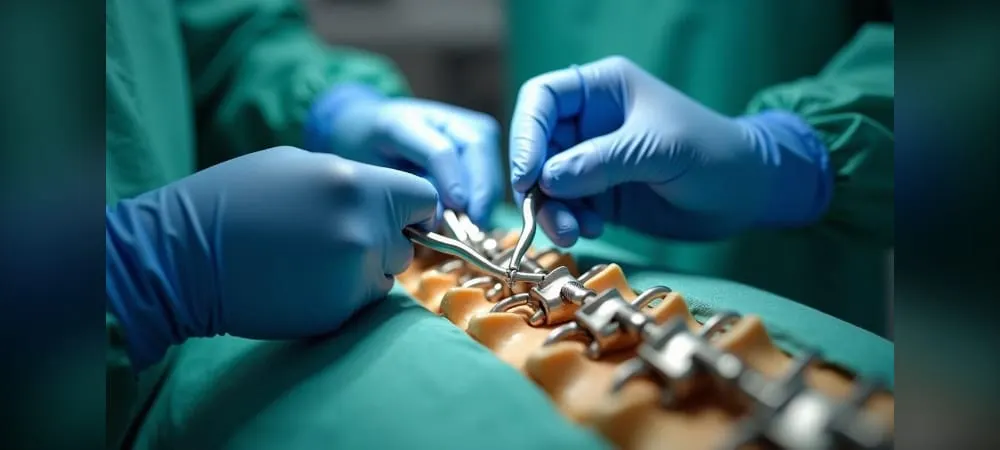
Revision spine surgery is a procedure performed to correct problems that occur following previous surgical interventions. Simply put, after the initial surgery, the patient may experience pain, restricted mobility, or other problems in the spine. In such cases, you may need additional surgical intervention.
Spine revision surgery is a surgical procedure performed to correct problems stemming from previous spine surgeries, improve newly developed faulty outcomes, or fix newly developed spinal problems. Such surgeries are necessary to resolve complications arising from the initial operation or to treat new problems that emerge over time.
Patients who have previously undergone spine surgery and continue to experience persistent or newly onset pain may require revision spine surgery. Revision surgery that needs to be performed at the exact same level as the previous operation can be particularly challenging.
Differences Between Primary Surgery and Revision
Revision surgery is performed in a more complex anatomical environment compared to primary surgery. Scar tissue, deformed implants, and altered anatomical reference points challenge both the technical capacity and experience of the surgeon.
Because residual scar tissue in the region makes it difficult to distinguish surrounding tissues, the risk of nerve damage and infection during surgery may increase. Therefore, revision surgeries should be planned in centers with special expertise in spinal deformity and instrumentation.
It should also be noted that the success rate of revision surgery is known to vary. Not every failed surgery scenario implies the need for revision surgery. A decision is made by evaluating your general condition, the intensity of your complaints, and imaging findings together.
Purpose of Revision Surgery
The primary objectives of revision spine surgery are: to relieve pain, achieve functional recovery, perform corrective interventions, and resolve complications.
The primary goal is to alleviate persistent or recurrent pain occurring after the previous surgery. Correcting movement difficulties and functional losses caused by deterioration in the spine is also an important objective.
Revision can be performed to correct structural problems such as spinal curvature or slippage. Treating complications such as infection, implant problems, or spinal collapse that occurred during the initial surgical intervention is also an important answer to why revision spine surgeries are performed.
Spine revision surgeries are generally quite complex and challenging procedures requiring a high level of expertise. They aim to improve your quality of life, reduce pain, and restore the functional integrity of the spine. Therefore, the success of revision surgery is largely directly proportional to the quality of bone fusion.
In Which Cases Is Revision Surgery Required?
The answer to the question of why revision spine surgeries are performed encompasses various complications and conditions. While problems arising after surgery can sometimes resolve with observation, in certain cases a second surgical intervention becomes inevitable.
Implant-Related Complications
Screws and rods placed in the spine largely complete their functions once bone fusion is complete. However, if fusion does not occur, the implants continue to be subjected to constant loading, and fatigue fractures develop over time.
The absence of bone fusion is called pseudarthrosis. This condition is the most frequent trigger for implant complications. Screw loosening, rod breakage, and titanium cage collapse generally develop on this background.
When screw loosening or rod breakage is observed, a decision for surgery is not made automatically. First, the level of your complaints is evaluated, and then whether fusion has occurred is clarified using computed tomography. While close monitoring may be sufficient in some cases, revision surgery comes to the agenda in others.
Recurrent Disc Herniations
The most common reason for spine surgery revision surgery is recurrent lumbar disc herniation. Recurrent lumbar disc herniation is reported at a rate of 3-21% after lumbar disc surgery.
The surgical technique applied for discectomy, the condition of the disc, as well as heavy lifting and smoking habits, influence the risk of recurrence. When a herniation recurs at the same level after the initial surgery, the approach is shaped according to the current stability of the spine.
If spinal stability is preserved, a second discectomy may be attempted. However, underlying instability is present in a significant portion of recurrent disc herniations. Stabilizing the segment with screws offers a more permanent solution in these patients.
Bone Fusion Problems
In patients with low bone density, standard screws cannot provide adequate fixation. Advanced osteoporosis, rheumatological diseases, active smoking, morbid obesity, long-term steroid use, and diabetes are factors that increase the risk of pseudarthrosis.
Bone fusion problems can remain silent for months or even years. An increase in pain and loss of function that emerge after an initially favorable process necessitate a comprehensive imaging evaluation.
Infection and Wound Site Problems
Postoperative infection ranges between 0.7-12%. While the incidence is less than 3% in patients who undergo disc surgery alone, this rate rises up to 12% in cases where screws and rods are used.
The risk of infection varies according to the type of surgery. It has been determined as 7% in deformity surgery, 5% in trauma surgery, and 10% after neuromuscular deformity correction surgery. In the early period, complaints of severe pain, wound healing problems, drainage, redness, and swelling occur.
The treatment of infection in the presence of implants is controversial. In early-onset infections, since fusion has not occurred, not removing the instruments may be the primary preference. In late-onset infections, however, removing the instruments is the primary treatment option.
Progression of Neurological Findings
Certain findings require urgent evaluation. A sudden or progressive decrease in leg or arm strength, impairment in bladder or bowel control, fever accompanied by redness and drainage at the wound site, and a resurgence of previously controlled pain are conditions requiring urgent evaluation.
The decision for revision is based on the exact concordance between imaging findings and your complaints. If you have no complaints while imaging shows an implant problem, intervention may not be necessary.
Sagittal Balance Disorders
Sagittal balance disorders must certainly be kept in mind in patients with back pain. It has been demonstrated that sagittal balance is the most important and reliable radiological indicator for the condition of a patient with a spinal deformity.
Lack of alignment in the sagittal plane can result in pain and inadequate quality of life scores. While positive imbalance in the sagittal plane leads to a decrease in quality of life scores, correcting it postoperatively demonstrates significant improvement.
Who Is Eligible for Revision Surgery?
The answer to the question of who revision spine surgeries are performed for depends on the patient profile and the nature of the complaints. Revision spine surgery is considered in patients who continue to have postoperative pain, in whom imaging detects an implant complication or mispositioning, whose neurological findings are progressing, or whose quality of life has declined due to sagittal imbalance.
Patients with Persistent Postoperative Pain
The persistence or increase of pain despite the initial surgery is the most frequently encountered reason for revision evaluation. Nucleotomy syndrome occurs in 15 percent of all patients who undergo spine surgery. This condition can occur even if the surgery was successful from an anatomical standpoint.
Pain may remain the same as before the surgery or recur after the surgery. This pain, which typically radiates to the arms and legs, can be due to multiple causes. Unnecessarily delaying surgery for months or weeks can cause continuous or chronic damage to neural structures.
If your postoperative pain does not subside or increases again, if leg or arm weakness has begun, or if problems develop at the wound site, consult a spine surgeon without delay. These findings may point to a complication requiring revision.
Patients with Implant Complications
Revision may be required in the event of displacement or breakage of implants placed during surgery. However, the decision for revision must be based on the exact concordance between imaging findings and the clinical presentation.
If the patient is asymptomatic while imaging shows an implant problem, intervention may not be necessary. Conversely, if the patient is experiencing severe complaints and there is accompanying pathology on imaging, revision planning is initiated. Therefore, not every failed surgery scenario implies revision surgery.
Patients Experiencing Functional Loss
Certain conditions require urgent revision evaluation. Progressive neurological loss, bladder or bowel dysfunction, high-grade implant breakage or migration, severe sagittal imbalance, and functional loss are among these conditions.
Spine infection coupled with implant involvement and severe pain persisting despite adequate conservative treatment are also among the conditions requiring revision. The decision is made by evaluating the patient's general condition, the intensity of complaints, and imaging findings together.
Conditions Unsuitable for Revision
Revision surgery is not suitable for everyone. Patients with untreated or uncontrolled major depression, bipolar disorder, psychosis, alcohol or substance addiction may have difficulty sustaining the necessary lifestyle changes during the postoperative period.
In patients with eating disorders such as binge eating disorder or night eating syndrome, performing revision surgery before these problems are resolved is not recommended. Similarly, patients who refuse vitamin and nutritional supplementation or fail to use them regularly may experience serious nutritional complications, especially postoperatively.
Drug addiction constitutes an absolute contraindication for revision surgery. Patients with active substance use may fail to show the necessary compliance in the pre- and postoperative periods. Furthermore, patients who fail to attend follow-ups and do not adhere to diet and exercise recommendations are also not suitable candidates for revision surgery.
How Does the Revision Surgery Process Proceed?
Once the decision for revision is made, the process proceeds step by step. Each stage directly affects the success of the surgery and the quality of recovery.
Preoperative Evaluations
Evaluations to be performed before revision are much more comprehensive than those for the primary surgery. First, full-spine standing radiographs are taken, and sagittal and coronal balance analysis is performed. These imaging studies are special radiographs taken in a standing position.
Subsequently, implant integrity and fusion control are performed using computed tomography. Neural structures and soft tissue are evaluated with MRI. These examinations show the location of the scar tissue and its effect on neural structures.
Bone density measurement is an indispensable part of the revision process. Bone quality is determined via DEXA measurement. If bone density is low, the holding power of the screws weakens, and the success rate declines.
Current evaluations of systemic diseases are performed. Nutritional status and levels of vitamin D and calcium are checked. These values are of vital importance for bone fusion.
Surgical Planning and Technical Selection
Revision surgery requires greater technical expertise, detailed planning, and experience than the first surgery. During the surgical target-setting phase, new fusion levels are planned to achieve postural balance to the maximum extent.
Since each patient's condition is different, the revision surgery plan is tailored individually. Techniques used include methods such as screws, plates, grafts, and spinal fixation. The surgeon accesses the spine through previous incisions or new incisions to correct the problem.
Revision operations are much riskier and take longer compared to the initial surgery. Due to screws that need to be changed, adhesions to neural tissue, and old fusion regions, the duration of the surgery is prolonged.
Postoperative Recovery Process
Revision spine surgery is generally performed under general anesthesia. Patients are discharged after staying in the hospital for a few days. The recovery process can vary depending on the type of surgery and general health status.
Return to normal life is generally achieved within 6-12 weeks. However, while the minimum follow-up period is 4 months, the maximum follow-up period can be 2 years and 10 months. Regular follow-ups are essential throughout this period.
Patients' pain scores drop from 7.1 preoperatively to 2.4 postoperatively. Although radicular pain resolves in 19.44% of total patients, persistent lower back pain may continue. This condition develops due to repeated paraspinal muscle stripping.
Factors Increasing Success Rates
The success rate of revision surgery is somewhat lower compared to the primary surgery. The success rate of 85-95% in the initial discectomy is at the level of 70-85% in revision surgery. Therefore, you need to adjust your expectations according to this reality.
A systematic approach is applied in the pre- and postoperative periods to support bone fusion. Anti-osteoporotic medications, vitamin D, and calcium replacement are administered. A smoking cessation program has a proven positive effect on fusion.
Nutritional optimization and protein supplementation should be provided. Diabetes control should be performed to target HbA1c. These medical treatments support bone health and increase the chance of success.
The experience of the surgeon performing the surgery is the most decisive factor. Revision surgeries should be planned in centers with special experience in spinal deformity and instrumentation. Microsurgical techniques are the standard approach in revision surgery.
Frequently Asked Questions
Many questions arise in your mind when making a surgery decision. We answer the most frequently asked questions about revision spine surgeries and revision surgery.
How long does revision surgery take?
The duration of revision spine surgery varies depending on the complexity of the operation. Factors such as residual scar tissue from the first surgery, replacement of implants, and expansion of fusion affect the duration.
While a simple revision can take 2-3 hours, in complex cases this duration can extend up to 6-8 hours. For instance, while replacing just a loose screw takes a short time, multi-level fusion revision takes significantly longer.
The surgeon's experience and preoperative planning play an important role in shortening the duration. Revision operations are much riskier and longer than the initial surgery.
What are the risks of revision surgery?
After answering the question of why revision spine surgeries are performed, you also need to know their risks. As with any surgical procedure, spine revision surgery carries a risk of infection.
There is a risk of rejection of the implant materials used by the body, although modern materials have reduced this risk. There is a possibility of nerve damage during surgery, but this probability is quite low.
Leakage of cerebrospinal fluid from the operation site is called a CSF fistula. Studies show that complication rates in revision surgery can be 15-25% higher compared to primary surgeries.
Due to altered anatomy, scar tissue, and reduced tissue elasticity, revision surgery is more complex. Residual scar tissue from the previous operation can make bleeding control difficult. Therefore, the answer to who revision spine surgeries are performed for is suitable patients who can accept these risks.
How many times can a revision be performed?
Surgery can be performed for a second and even a third time at the same level. However, technical difficulty and the risk of complications increase with each repeated surgery due to increased scar tissue.
After the second recurrence, fusion surgery is generally preferred. It is important that each case is evaluated individually and the decision for surgery is made by an experienced spine surgeon.
The success rate decreases with each revision. The success rate of 85-95% in the initial discectomy is at the level of 70-85% in revision surgery. Nevertheless, the vast majority of patients undergoing revision surgery with the correct indication show significant improvement.
What is the recovery period after revision?
The process of returning to normal life after revision surgery proceeds similarly to the primary surgery. Patients generally stay in the hospital for about 3-4 days. Following this period, the discharged patient should rest at home for about 7-10 days.
While the minimum follow-up period is 4 months, the maximum follow-up period can be 2 years and 10 months. Patients' pain scores drop from 7.1 preoperatively to 2.4 postoperatively.
It should be particularly noted that although radicular pain resolves in 19.44% of total patients, persistent lower back pain may continue. Regular check-ups and adherence to doctor recommendations throughout this period are important steps of the recovery process.
In Summary, Revision Spine Surgery
Although revision spine surgery is a complex process, when applied with the correct indication, it can significantly improve your quality of life. The important thing is that a comprehensive evaluation is performed by an experienced spine surgeon. If your postoperative pain persists or new complaints arise, you should seek an expert opinion without wasting time.
Therefore, not every failed surgery requires revision. However, if there are implant problems, recurrent herniation, or neurological findings, revision surgery can be the most effective solution. Adherence to doctor recommendations and regular check-ups throughout the process significantly increase your chance of success.