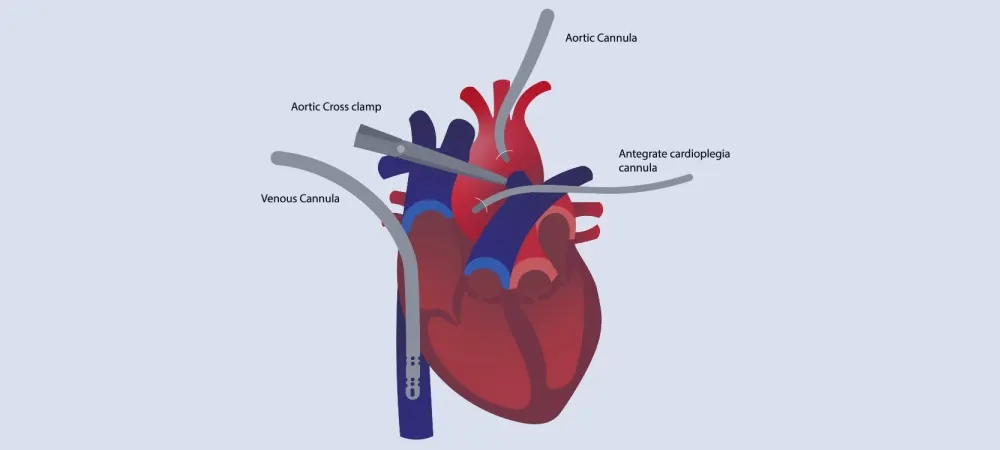
The Miami Method
The Miami method is a minimally invasive approach in heart surgery. While traditional surgery involves opening the chest down the middle (sternotomy), this method allows doctors to reach the heart through small, unilateral incisions (approximately 5 cm) between the ribs without the need for bone cutting. As a result, because the breastbone is not cut, major surgical trauma is eliminated and the patient's recovery process is shortened.
What is the Miami Method?
In the Miami method, the surgeon makes an incision approximately 5 cm long between the ribs (usually on the right side of the chest). Through this small incision, the heart is reached with the help of long surgical instruments and/or a camera system (endoscope). Thus, the breastbone is not cut at all, and the surgical field is opened to a minimal extent. Minimally invasive techniques are modern medical interventions performed with the least amount of harm to the body. Since minimally invasive surgery is performed through small incisions, the recovery time is usually shorter. The Miami method is actually an approach that can treat many different heart surgery problems. For example, chamber defect closure procedures such as atrial septal defect (ASD) and patent foramen ovale (PFO), Maze surgeries for atrial fibrillation, heart valve (aortic-mitral-tricuspid) repair or replacement, and even heart tumor removal can be performed with minimally invasive methods. This method is an alternative to many open-heart surgeries, especially heart valve diseases.
What are the Advantages of the Miami Method?
The main advantage of the Miami method is that the surgical trauma is much less. Because only a small incision is made during the surgical procedure, patients feel much less pain. Blood loss during surgery is also significantly reduced because small incisions are used. This reduces the need for blood transfusions and post-operative complications. The risk of infection remains low because a large wound area is not created, which also shortens the hospital stay. Scarring is also minimal. Since the breastbone is not opened, a large cosmetic scar does not form; only a small scar of a few centimeters remains. Other advantages include:
Less Pain and Trauma: Surgical trauma is minimized in procedures performed with a small incision. Studies show that patients feel significantly less pain with minimally invasive approaches compared to open surgery. Minimally invasive heart surgery provides less pain and a shorter hospital stay compared to traditional methods.
Less Blood Loss: Blood loss is much lower with small incisions compared to traditional sternotomy. This reduces the need for blood transfusions and the risk of anemia.
Lower Risk of Infection: The small size of the incision narrows the wound surface and decreases the likelihood of infection development. This facilitates the patient's recovery.
Rapid Recovery: The small size of the wound area and the fact that the bone is not cut enable the patient to start walking in a short time. Research shows that patients are discharged in a shorter time with this method and return to their daily activities faster. Following minimally invasive heart surgery, patients can usually return to their daily activities within a few days.
Cosmetic Advantage: Since the breastbone is not cut, a large suture scar does not form, leaving a more aesthetically acceptable appearance on the patient's chest. This is also a positive psychological advantage for the patient.
In Which Cases Can the Miami Method Be Applied?
The Miami method is a surgical technique that can be applied to all cardiac pathologies except bypass (another minimally invasive surgical technique is used for bypass patients).
- Aortic valve diseases (stenosis/insufficiency)
- Mitral valve diseases (stenosis/insufficiency)
- Tricuspid valve diseases (stenosis/insufficiency)
- Ascending aortic aneurysm (aortic vessel enlargement)
- Congenital heart anomalies / holes inside the heart (ASD)
- Masses inside the heart (tumor-thrombus)
- Double valve diseases
- Multiple valve diseases
What are the Advantages of the Miami Method Over Other Methods?
The biggest difference between the Miami method and open surgery is that the breastbone is not opened. While the sternum is cut and lifted in traditional open-heart surgery, this method only involves intervention through small incisions from the side. This difference provides a distinct reduction in complication risks. Minimally invasive heart valve surgery is an advanced method applied to solve heart valve problems. Since the breastbone is not cut, complications such as bone healing issues, wound site problems, and bleeding are significantly reduced. Consequently, the Miami method increases patient comfort by applying less trauma and shortens the hospital stay and rehabilitation period.
Is Every Patient Suitable for the Miami Method?
The Miami method is suitable for many patients, but a doctor's examination and opinion are required. Experts emphasize that patients with additional risk factors, especially advanced age, obesity, or chronic lung and kidney disease, find this method more advantageous. For example, in elderly individuals or those who have previously undergone heart surgery, not cutting the sternum reduces the risk of additional complications. This method may not be preferred in some patients. One of the most important limiting factors is porcelain aorta, which is a condition where the aorta is advancedly calcified and hardened. In a heavily calcified aorta, placing a vascular path or performing cannulation becomes difficult; in this case, performing the surgery safely is challenging. In addition, it is evaluated whether certain anatomical differences in the heart structure and circulatory system are suitable for the Miami approach. The surgeon decides whether to apply the Miami method by considering the patient's general condition, age, and test results.
Frequently Asked Questions
In the Miami method, small incisions are made from the side of the chest (armpit / under the breast) instead of the sternotomy (cutting the breastbone down the middle) performed in open surgery. Thus, blood loss and infection risk are reduced, patients experience milder pain, and the recovery process is accelerated. Since a long incision and a bone cut are made in open-heart surgery, both the pain is greater and the hospital stay is usually longer. These disadvantages are minimized in the Miami method. This method is considered particularly advantageous for high-risk patients with additional diseases such as advanced age, obesity, or respiratory/kidney disorders. However, most patients with heart valve disease whose diagnostic tests such as angiograms are suitable can be operated on using the Miami method. Every patient is different; detailed examination and imaging of the patient are required before making a decision. Various clinical and imaging tests must be performed to determine whether the patient is suitable for this method before applying the Miami method. First, the patient's general condition is evaluated through a physical examination. Cervical range of motion, pain level, and neurological findings are carefully examined. Then, imaging methods such as X-rays, computed tomography (CT), and magnetic resonance imaging (MRI) if necessary, are used to obtain detailed information about the cervical spine and surrounding structures. These tests reveal whether there are conditions that may pose an obstacle to the Miami method, such as aortic vascular pathology, carotid artery pathology, lung and kidney disorders in the patient. If it is to be used after cardiovascular surgery, the vascular structures in the related area are also evaluated with Doppler ultrasound or angiography. Bringing all these findings together, the physician decides whether the patient can safely use a Miami collar. The duration of minimally invasive heart surgeries varies depending on the scope of the procedure but is generally completed within a few hours. This duration may vary depending on the patient's condition and the procedure to be performed, but the Miami method can generally provide a time advantage compared to open surgery. Post-operative intensive care and ward stays are also short; many patients can be discharged a few days after surgery (4-5 days). Whether it is suitable for each patient must be evaluated by the cardiovascular surgeon based on the type of disease, the scope of the surgery, and the patient's general health status. Roughly, it can be applied to all heart valve disorders, and all tumors and holes in the heart.
You can apply to our expert Cardiovascular Surgery team for a detailed evaluation of heart valve diseases, rhythm disorders, or minimally invasive surgery.
Book an appointment now for accurate diagnosis, personalized treatment options, and Miami method suitability analysis. Do not postpone your health.