The main artery leaving the heart is called the aorta. Various injuries may occasionally occur in the aorta, the largest artery. In such cases, aortic surgery may be required. While aortic surgery was previously performed only as open surgery, with advancing technology, closed methods called EVAR and TEVAR have also begun to be used. You can read the rest of the article to learn more comprehensive answers to questions such as what EVAR and TEVAR are and how they are performed.
What Is EVAR?
EVAR is the abbreviation of the term "Endovascular Aortic Repair." It is a medical procedure and is generally used in the treatment of abdominal aortic aneurysms. An abdominal aortic aneurysm is the enlargement of the main artery in the abdominal region. EVAR is a minimally invasive technique that does not require surgery. The EVAR procedure is performed by using a small catheter inserted through an arterial access point. This catheter offers the patient a less invasive and faster recovery process. The catheter is advanced through the vessel to the aneurysm area, and a stent graft (generally in the form of a metal mesh) is placed. The stent graft attempts to prevent the aneurysm from growing or rupturing by strengthening the aneurysm area.
What Is TEVAR?
TEVAR, also known as Transcatheter Aortic Stent Graft, is an endovascular procedure. The term "TEVAR" means "transcatheter aortic endovascular repair with an aortic stent graft" in Turkish. This procedure is a surgical intervention method used in the treatment of aortic diseases such as aortic aneurysms and aortic dissections.
TEVAR is performed with a minimally invasive approach without requiring open surgical intervention. During the procedure, a stent graft placed into the aorta through a catheter via an arterial access point is used. The stent graft is placed in the area of the aneurysm or tear, enabling the aneurysm or dissection to be treated. TEVAR is used especially to treat abnormalities in various regions of the aorta caused by aneurysm or dissection. It can also be effective in certain narrowing conditions such as aortic coarctation.
TEVAR is an important advance in modern medicine and is considered an effective option in the treatment of aortic diseases. However, like every medical intervention, the TEVAR procedure also carries risks, and medical advice should be sought to determine the most appropriate treatment plan for each patient.
How Is It Diagnosed?
A number of diagnostic methods can be used to diagnose EVAR (Endovascular Aortic Stent Graft) and TEVAR (Transcatheter Aortic Stent Graft). These methods include:
Physical Examination: A physical examination is performed taking into account the patient's symptoms and medical history. This can help detect the signs of the aneurysm or aortic dissection, an enlarged aorta, or other complications.
Imaging Tests:
Computed Tomography (CT): CT scanning is used to obtain detailed images of the aorta. It helps determine the size, location, and shape of the aneurysm or dissection.
Magnetic Resonance Imaging (MRI): MRI provides detailed images of the aorta and helps evaluate the aneurysm or dissection as well as the surrounding tissues.
Angiography: Angiography provides X-ray images of the aorta by injecting a contrast agent through a catheter.
Echocardiography: Echocardiography uses sound waves to obtain images of the heart and aorta. This method can help in diagnosing aortic dissection or aneurysm.
Blood Tests: Blood tests can be used to detect the damage caused by conditions such as aneurysm. For example, the D-dimer test can measure markers of bleeding and clotting.
Diagnosis of EVAR and TEVAR generally requires the use of a combination of these diagnostic methods. The diagnostic process is carried out by a cardiologist or vascular surgeon and is performed taking into account the patient's symptoms, risk factors, and imaging findings. The appropriate treatment option is determined according to the diagnostic result, and the best care is provided to the patient.
How Is the Surgery Performed?
EVAR (Endovascular Aortic Stent Graft) and TEVAR (Transcatheter Aortic Stent Graft) surgery is a minimally invasive method and generally includes the following steps:
Anesthesia: The patient is given general anesthesia or local anesthesia. The anesthesiologist determines the most appropriate type of anesthesia according to the patient's condition and general health status.
Preparation of Access Points: The vessels in the patient's groin are prepared under sterile conditions so that the surgical team can gain access. Catheters and surgical instruments are inserted through these points.
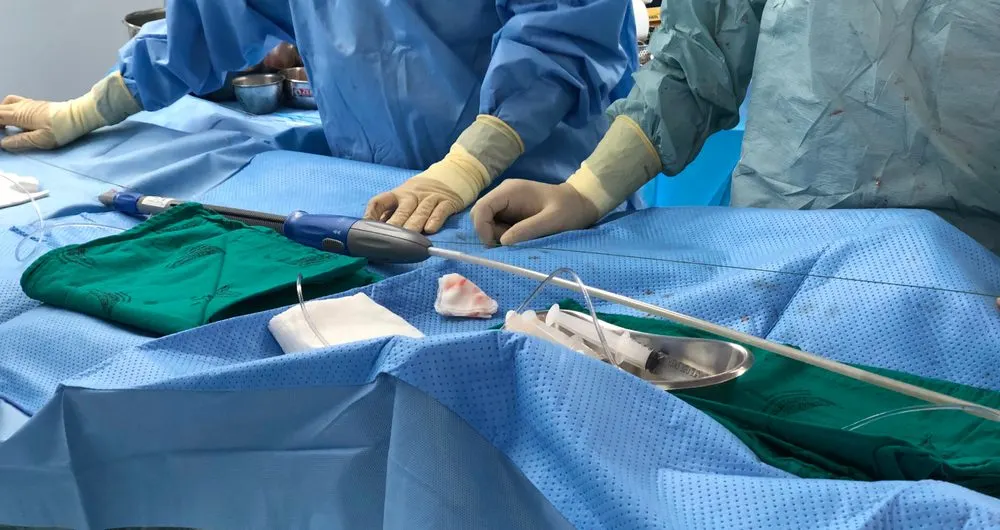
Placement of the Stent Graft via Catheter: The surgeon inserts a thin catheter into the aorta through an arterial access point. This catheter is used together with a guide tube. The stent graft is brought to the damaged or enlarged area of the aorta through the guide tube.
Placement and Expansion of the Stent Graft: The stent graft is expanded toward the upper part of the damaged area. This enables the correction of the aneurysm or dissection. The graft is placed against the aortic wall and helps regulate blood flow.
Control and Completion: Imaging methods are used to ensure that the stent graft has been placed correctly and that blood flow is normal. The surgeon confirms that the graft is stable and that the aneurysm or dissection has been treated. Then the catheters are removed and the access points are closed.
EVAR and TEVAR surgery is generally completed in a short time and provides a less invasive approach compared to open surgery. This can speed up the patient's postoperative recovery process and reduce the risk of complications. Depending on the patient characteristics determined by the surgeon, the location of the aneurysm or dissection, and the patient's general health status, the EVAR or TEVAR method is preferred.
Frequently Asked Questions?
You can find answers to frequently asked questions about EVAR and TEVAR later in the article. EVAR (Endovascular Aortic Stent Graft) and TEVAR (Transcatheter Aortic Stent Graft) are two different methods used in the treatment of aortic diseases. The main difference between them is which region is treated. EVAR is used in the treatment of abdominal aortic aneurysms, while TEVAR is used for the treatment of thoracic aortic aneurysms and aortic dissections. In other words, EVAR focuses on the abdominal region, and TEVAR focuses on the chest region. These methods are performed using minimally invasive surgical techniques and have the advantage of being less invasive compared to open surgery. Both methods are effective and safe options in the treatment of aortic diseases. EVAR (Endovascular Aortic Stent Graft) and TEVAR (Transcatheter Aortic Stent Graft) methods have high success rates. However, the success rate may vary depending on the patient's condition, the severity of the disease, and other factors. EVAR (Endovascular Aortic Stent Graft) and TEVAR (Transcatheter Aortic Stent Graft) methods have many advantages:
Less Invasive: EVAR and TEVAR procedures involve smaller incisions compared to open surgery, and the procedure is carried out through catheters inserted into the body. This reduces postoperative pain, the risk of infection, and recovery time for patients.
Shorter Operation Time: EVAR and TEVAR methods generally have a shorter operation time. They are performed more quickly than open surgery, which reduces the time patients spend on the operating table.
Less Blood Loss: The minimally invasive approach reduces blood loss. This also reduces the need for transfusion and helps patients recover more quickly in the postoperative period.
Rapid Recovery Process: With EVAR and TEVAR methods, the length of hospital stay in the postoperative period may be shorter, and the time to return to normal activities is reduced.
Lower Risk of Complications: Because EVAR and TEVAR are less invasive than open surgery, they carry a lower risk of complications. The likelihood of risks related to infection or anesthesia is lower.
EVAR (Endovascular Aortic Stent Graft) and TEVAR (Transcatheter Aortic Stent Graft) methods are generally more commonly used in older adults. However, the age range of use may vary depending on the patient's condition and the aortic disease.
Aortic aneurysms are generally seen more frequently in advanced age. For this reason, EVAR and TEVAR methods are generally used in adults aged 60 years and over. However, in some cases these methods may also be applied to younger patients. The EVAR procedure can last approximately 1 to 3 hours. However, the duration may vary depending on the patient's condition and treatment requirements. The potential risks associated with EVAR (Endovascular Aortic Stent Graft) and TEVAR (Transcatheter Aortic Stent Graft) methods are as follows:
Bleeding: Bleeding may occur during or after surgery. In this case, blood transfusion or additional intervention may be required.
Infection: An infection may develop at the surgical site. Antibiotic treatment or surgical drainage may be required.
Stent Complications: Complications such as leakage, blockage, displacement, or expansion may occur with stents. In this case, revision surgery may be required.
Vascular Injury: Damage may occur in the vessels through which the stent is placed or the catheters pass. In this case, blood flow problems may arise.
Endoleak: Leakage may occur around the stent graft; in this case, the aneurysm may expand again and may need to be corrected.
Organ Injury: Nearby organs may be damaged during stent placement. In this case, impairment of the functions of the affected organ may occur.
Anesthesia Complications: Complications related to anesthesia, anesthesia side effects, or reactions may occur.
These risks may differ for each patient and should be taken into account during the preoperative evaluation. Patients can be treated safely by the expert doctors and state-of-the-art equipment available at Hisar Hospital Intercontinental. If you have problems with your aorta, you can apply to Hisar Hospital for early diagnosis and treatment.