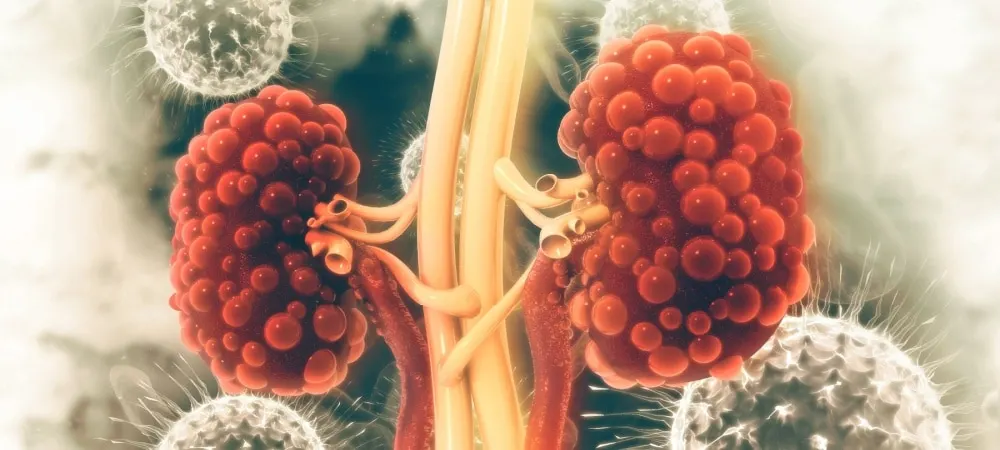
Polycystic Kidney Disease
Polycystic kidney disease is a health condition whose effects become quite prominent over time. The word "polycystic" means "containing many cysts" and describes the essence of this disease. It is a progressive disease characterized by the gradual proliferation and enlargement of fluid-filled sacs in the kidneys. Over time, these cysts begin to compress the kidney tissue and disrupt its healthy structure.
What is Polycystic Kidney Disease?
Polycystic kidney disease is a genetic condition characterized by the formation of numerous fluid-filled sacs, namely cysts, within the kidneys. Over time, these cysts grow, compress the kidney tissue, impair its function, and may eventually initiate a process leading to kidney failure. Polycystic kidney disease is a genetically rooted alteration that affects the form and function of the kidneys. It typically begins silently and may remain entirely asymptomatic for years. Most people become aware of the disease through high blood pressure, lower back pain, blood in the urine, or the incidental finding of enlarged, cystic kidneys on an ultrasound.
How Does Polycystic Kidney Disease Occur?
Polycystic kidney disease occurs as a result of genetic mutations that lead to the formation of numerous fluid-filled cysts in the kidneys. It is most commonly associated with abnormalities in the PKD1 and PKD2 genes. These gene mutations affect the normal growth and fluid regulation mechanisms of cells, leading to cyst formation. Over time, the cysts enlarge and damage the kidney tissue, which causes progressive loss of kidney function. The disease is mostly inherited and is transmitted in two types: autosomal dominant polycystic kidney disease or, rarely, autosomal recessive polycystic kidney disease.
What Are the Symptoms of Polycystic Kidney Disease?
Polycystic kidney disease generally progresses slowly, and the symptoms of polycystic kidney disease in infants appear over the years. Early-stage adult-type polycystic kidney disease is often asymptomatic, but it can be diagnosed early through a careful family history and imaging. Symptoms can vary from person to person and may become more severe depending on the stage of the disease. When polycystic kidney disease is accompanied by liver involvement, the patient may develop abdominal fullness due to cyst burden, liver enlargement, and in some cases, portal hypertension. The most common symptoms are:
Pain in the lower back, flank, or abdomen,
High blood pressure (hypertension),
Blood in the urine (hematuria),
Frequent urination,
Urinary tract infections,
Kidney stones,
Sensation of a mass in the abdomen,
Headache,
Fatigue and weakness,
Decreased kidney function (in advanced stages).
How is Polycystic Kidney Disease Diagnosed?
The most fundamental step for the diagnostic criteria of autosomal dominant polycystic kidney disease is imaging the cysts in the kidneys. Ultrasonography is generally the first method resorted to. This method is frequently preferred to make a diagnosis even in the early stages of the disease. It has been scientifically determined how many cysts in the kidneys are significant for diagnosis according to specific age ranges, especially in individuals with a family history of polycystic kidney disease. A diagnosis of polycystic kidney disease in utero is usually made by a detailed ultrasound examination performed during pregnancy, and this condition can set the stage for congenital kidney failure. In adults as well, computed tomography (CT) or magnetic resonance imaging (MRI) is preferred in cases where sufficient findings cannot be reached with ultrasound or when a more detailed evaluation is required. These methods both clearly demonstrate the structure of the cysts and reveal whether there are cysts in other organs such as the liver.
In addition to imaging, genetic tests can be performed to confirm the genetic aspect of the disease. Genetic analysis is recommended especially when there is difficulty in the differential diagnosis of the disease in patients without a family history or in individuals planning to have children. These tests investigate whether there are mutations in the PKD1 and PKD2 genes causing the disease. To support the diagnosis, blood tests are also performed to examine kidney functions (such as creatinine and glomerular filtration rate), and urinalysis is used to evaluate the presence of blood or protein in the urine. Consequently, the diagnosis of polycystic kidney disease is made by evaluating clinical findings, family history, imaging methods, and, when necessary, genetic tests together. The earlier the diagnosis is made, the better the course of the disease can be managed.
How is Polycystic Kidney Disease Treated?
There is currently no definitive cure for polycystic kidney disease (PKD). A multifaceted treatment approach is applied to slow down the progression of the disease, alleviate symptoms, and prevent complications. Polycystic kidney disease treatment is planned according to the stage of the disease, the severity of symptoms, and the individual's general health status.
One of the most important treatment goals for autosomal dominant polycystic kidney disease is controlling blood pressure. High blood pressure causes polycystic kidney disease to both accelerate the loss of kidney function and impose an additional burden on cardiovascular health. Therefore, patients are generally prescribed ACE inhibitors or ARB class blood pressure medications. In addition, a low-salt diet and regular exercise also contribute to blood pressure control.
Pain management is also important in polycystic kidney disease. As cysts grow, they can create pressure around the kidney and cause lower back or flank pain. While painkillers are sufficient in mild cases, drainage or surgical removal of enlarged cysts may be required in cases of severe pain. These procedures must be carefully planned and evaluated on a case-by-case basis.
Urinary tract infections are common in polycystic kidney disease patients and can further damage the kidneys if not treated early. Therefore, antibiotic therapy should be started promptly when infection symptoms appear. Similarly, kidney stones can also negatively affect the course of the disease. If the presence of stones is detected, they should be intervened appropriately.
Frequently Asked Questions
The age of starting dialysis in polycystic kidney disease varies from person to person. In the case of AD polycystic kidney disease, which is the most common form, kidney functions generally deteriorate progressively between the late 30s and 60s. On average, about half of the patients reach end-stage renal disease between the ages of 50 and 60, at which point dialysis or a kidney transplant is required; however, the type of genetic mutation (especially the PKD1 mutation), lifestyle, blood pressure control, and concomitant diseases can accelerate or slow down this process. The course of polycystic kidney disease can be slowed down through nutrition. The diet plan must definitely be personalized according to the individual's kidney function, blood values, and accompanying diseases. In general, sodium (salt) intake should be restricted because excess salt can both accelerate cyst development and force the kidneys further by raising blood pressure. Daily salt consumption should be limited to 2-3 grams. Protein intake should also be regulated carefully. While excessive protein consumption can increase the burden on the kidneys, insufficient protein intake can cause muscle loss. This balance is determined by a dietitian and a nephrology specialist according to the stage of the patient. In advanced-stage disease, foods high in potassium and phosphorus (such as bananas, potatoes, nuts, dairy products) may be restricted. Processed foods, ready-made meals, refined sugar, and excessive caffeine consumption should also be reduced as much as possible. Polycystic kidney disease is not a disease directly associated with cancer. In very rare cases, the risk of developing renal cell carcinoma (renal cell cancer) may increase. This risk is higher especially in individuals with a family history and long-term kidney failure. Still, such malignant tumors do not develop in the vast majority of polycystic kidney disease patients.
If suspicious changes such as sudden growth, thick wall structure, and internal irregularity are observed in the cysts growing in the kidneys, a differential diagnosis must be made using advanced imaging and, when necessary, methods such as a biopsy. Therefore, regular follow-up is very important in individuals diagnosed with polycystic kidney disease. Polycystic kidney disease is a genetically based, progressive, and chronic disease. Today, there is no treatment method that completely eliminates the disease, that is, destroys the cysts formed in the kidneys; however, it is possible to slow down the progression of the disease. Kidney functions can be preserved for many years with appropriate drug treatments, blood pressure control, healthy lifestyle habits, and regular follow-up. Early diagnosis ensures a more controlled course of the disease. If kidney failure develops in advanced stages, treatments such as dialysis or kidney transplantation come into question. Therefore, the disease does not completely resolve, but it can be managed effectively. Polycystic kidney disease is largely a genetically transmitted disease. The most common form is the autosomal dominant type, and in this case, the transmission of the diseased gene from one parent is sufficient for the disease. The risk of carrying the disease in each child is 50%. In the rarer autosomal recessive form, receiving the defective gene from both parents is required for the disease to appear. This form usually manifests symptoms during childhood. Due to its genetic structure, screening of first-degree relatives of individuals diagnosed with polycystic kidney disease is also recommended. Whether polycystic kidney disease patients can fast or not varies depending on the stage of the disease, kidney functions, medications used, and accompanying health problems. Patients with stable kidney functions in the early stage can fast with the approval of their doctors; however, the inability to take in fluids throughout the day can lead to fluid loss in the body (dehydration), especially in hot weather, straining the kidneys. This situation can cause further damage to the kidney tissue compressed by cysts. In addition, changing medication times may be objectionable in patients requiring blood pressure medications or other regular treatments. In advanced stages, especially in individuals with kidney failure or undergoing dialysis treatment, fasting is generally not recommended. Every polycystic kidney disease patient considering fasting must consult their physician for a personal evaluation.
If you suspect you have polycystic kidney disease, do not delay.
Our Hisar Hospital expert Nephrology team is by your side for accurate diagnosis and a personalized treatment plan.
Contact us now to make an appointment.
Start with the right assessment for What is Polycystic Kidney Disease? Symptoms, Causes, Diagnosis and Treatment Methods
Share your symptoms with our specialist physicians; let us determine the right diagnosis and treatment plan together.
Warning
If your symptoms started suddenly, are progressing rapidly, or significantly restrict your daily life, consult a physician without delay.
Plan your What is Polycystic Kidney Disease? Symptoms, Causes, Diagnosis and Treatment Methods journey with our specialists.
Fill in the form or book an appointment to learn about treatment options, the process and preparation.