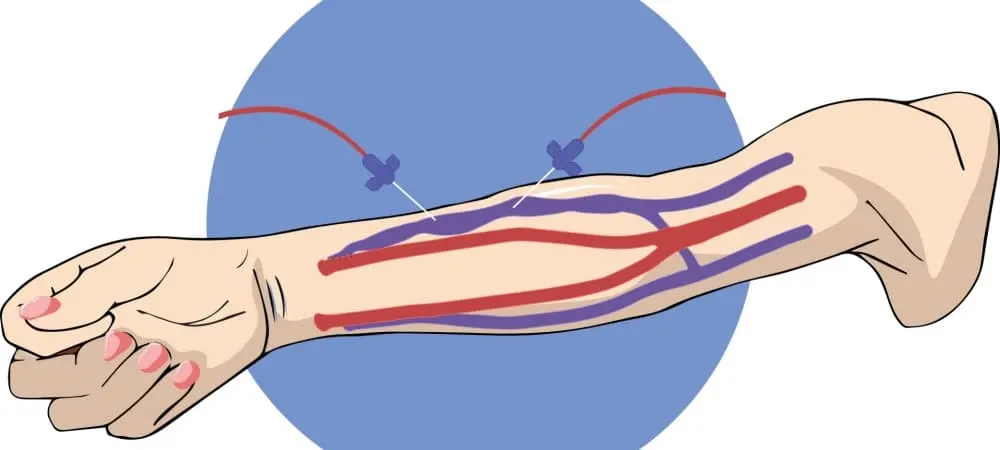
Dialysis Fistula Interventions
Dialysis fistula interventions are procedures performed to resolve issues with vascular access routes used by patients undergoing regular dialysis treatment due to kidney failure. A reliable vascular access is essential for dialysis, and this is usually provided by a surgically created structure called an arteriovenous (AV) fistula. Over time, problems such as narrowing, blockage, reduced blood flow, or clotting may develop in this fistula. Interventions are performed to eliminate such problems, ensure the fistula continues to function, and guarantee that the patient's dialysis treatment continues without interruption.
What Are Dialysis Fistula Interventions?
Dialysis fistula surgery refers to medical procedures performed to ensure the continued function of the fistula, which is the vascular access used by patients undergoing long-term dialysis treatment due to kidney failure. The fistula is a vital access route that allows blood to reach the machine quickly and safely; however, problems such as narrowing, blockage, or clotting may develop in this vascular structure over time. Types of dialysis fistulas are classified according to the location of the arteriovenous anastomosis, such as radiocephalic, brachiocephalic, and brachiobasilic. These interventions aim to resolve these problems before they worsen, ensure that dialysis treatment continues without disruption, and preserve the patient's quality of life. Interventions are mostly performed using minimally invasive methods; that is, the problematic area is reached by entering through the vessel instead of open surgery. The goal is to prevent the total loss of the fistula through dialysis fistula care, make it reusable, and save the existing fistula without the need for creating a new vascular access for the patient. In this respect, interventions are not just a technical procedure, but also a protective approach that ensures the continuity of the patient's dialysis process.
What Are the Symptoms of Dialysis Fistula Problems?
Although the symptoms of problems that arise during the dialysis fistula process often start with minor changes that can be ignored, they can turn into serious warnings over time. One of the most prominent signs is the weakening or complete disappearance of the vibration felt over the fistula, or the flow sound called a bruit. This vibration is normally easily felt with the fingertips and is a sign that the fistula is open. If this vibration is not felt or is weaker than usual, it usually means there is a narrowing or blockage in the fistula. In addition, if the machine cannot draw enough blood during dialysis, the nurse has difficulty with needle insertion, or it constantly gives alarms, this suggests there is a problem with the fistula. Pain, swelling, bruising, redness, or increased temperature in the fistula area may indicate infection or increased intravascular pressure. Furthermore, swelling in the arm or hand where the fistula is located and prominence of the veins also indicate impaired circulation. If the patient notices such symptoms early and informs the healthcare team, the chance of intervention before the fistula loses its function is much higher.
Why Do Dialysis Fistula Problems Occur?
Fistula problems are usually the result of structural changes that develop over time or external factors. One of the most common causes is the narrowing that occurs in the vessel wall over time. These narrowings are seen more frequently in areas where needles are constantly inserted because repeated entries cause micro-trauma to the vessel. This damage to the vessel causes thickening of the vessel wall and slowing of blood flow. When the flow slows down, clot formation becomes easier. This clotting, called thrombosis, can cause sudden blockage of the fistula. In addition, the patient's general health status is also an important factor. Conditions such as diabetes, hypertension, and low blood pressure negatively affect vascular health and pave the way for fistula problems. In some patients, inserting needles into the same spot repeatedly or applying them with incorrect techniques can also trigger problems. Infections can lead to inflammatory conditions both in the skin area where the fistula is located and inside the vessel, creating a risk of both blockage and fistula loss. Considering all these reasons, regular follow-up, correct needling techniques, and the patient's self-observation are of great importance for protecting fistula health.
How Are Dialysis Fistula Problems Diagnosed?
Correctly identifying a problem in a dialysis fistula is critical for both timely intervention and preventing the fistula from losing its function. The diagnostic process usually begins with both the patient's own observations and regular examinations by the dialysis team. The doctor or nurse listens to the fistula area with a stethoscope and evaluates the direction and strength of the flow by palpation. However, examination alone is not enough. Color Doppler ultrasonography is usually used for more detailed examination. Dialysis fistula Doppler is used to evaluate the vessel flow, patency, and possible narrowings of the fistula. With this method, factors such as blood flow velocity in the vessel, narrowing, or the presence of a clot are clearly observed. In some cases, a special imaging method called fistulography may be applied. In this procedure, contrast material is injected into the vessel and the internal structure of the fistula is evaluated in detail under X-ray guidance. The dialysis fistula needle is carefully inserted before each session using a special opening technique for the fistula, and blood circulation is established. After the diagnosis is made, a decision for intervention is taken and an appropriate treatment plan is made. Early diagnosis extends the life of the fistula and allows the patient to continue the dialysis process without interruption.
How Are Dialysis Fistula Interventions Performed?
The earlier a problem detected in the fistula is intervened, the higher the success rate of the procedure. Dialysis fistula interventions are usually performed in interventional radiology units and mostly under local anesthesia. Balloon angioplasty is one of the most frequently applied methods. In this procedure, the narrowed vessel area is reached via a catheter, and the vessel is dilated by inflating a special balloon at that point. The balloon dilation procedure allows the vessel to regain its elasticity and blood flow to return to normal. If a clot has formed in the vessel, thrombolysis (clot-dissolving medication) or thrombectomy (mechanical clot removal) procedures are applied. In some patients, if there is a possibility of re-narrowing in the vessel opened with a balloon, a metallic stent is placed in this area to keep the vessel open. Depending on the condition of the intervened area, the procedure time is usually short, and the patient can often be discharged on the same day. Surgical intervention is preferred only in advanced vascular problems where results cannot be obtained with minimally invasive methods. Thanks to all these procedures, the fistula is made functional again, and the patient's dialysis process is continued safely. The dialysis fistula healing time usually varies between 4 to 6 weeks. During this process, the vessel matures sufficiently.
Frequently Asked Questions
Fistula surgery for dialysis is usually an artificial vascular access created in the patient's arm by connecting an artery to a vein. The goal is to provide high-volume and continuous blood flow during dialysis. In this way, the patient can achieve sufficient purification in dialysis sessions held several times a week. Blockage is usually caused by narrowing in the inner wall of the vessel. As blood flow slows, the risk of clot formation increases. In addition, damage to the vessel wall, low blood pressure, diseases such as diabetes, and inappropriate needling techniques can facilitate blockage. Symptoms of narrowing include a feeling of weak flow in the fistula, the machine's inability to draw blood during dialysis, increased alarm sounds in the inlet or outlet line, and bruising, swelling, or discomfort in the fistula area. A blocked fistula is a condition that requires immediate intervention. An interventional radiologist or vascular surgeon should be consulted without delay. Usually, procedures such as dissolving the clot (thrombolysis) or removing it mechanically (thrombectomy) under imaging guidance are applied. Sometimes balloon dilation may also be required. The procedure is usually performed in the angiography unit. Local anesthesia is applied to the patient, and a thin catheter is inserted into the vessel. The problematic area is reached, and if there is a narrowing, it is dilated with a balloon; if there is a clot, it is cleaned. It is usually possible for the patient to be discharged on the same day after the procedure. Pain during the procedure is minimal because local anesthesia is mostly applied. There may be a slight feeling of discomfort afterward, but this usually passes in a short time and can be controlled with painkillers. A special balloon placed inside the narrowed vessel is inflated to dilate the vessel. This procedure is called angioplasty. Balloon dilation allows the fistula to become functional again and usually yields successful results. In some cases, a stent may need to be inserted to prevent the vessel from narrowing again. A stent is a small metal cage placed inside the vessel that supports the vessel wall and keeps it open. Re-narrowing or blockage may develop in intervened fistulas. Therefore, regular follow-up is very important. Especially after balloon dilation (angioplasty) procedures performed in vessel segments prone to narrowing, re-narrowing may develop in the same area over time. This occurs due to cellular accumulation in the vessel wall during the body's natural healing process. In addition, chronic diseases that affect vascular structure, such as diabetes and hypertension, also increase the risk of recurrent blockage. Recurrent blockages depend not only on anatomical reasons but also on how the patient uses their fistula. Constantly needling the same spot, not applying compression for a sufficient time, or straining the fistula during dialysis can increase this risk. However, this does not mean that the intervention was unsuccessful; on the contrary, keeping the fistula under regular control and intervening in a timely manner when necessary makes long-term use possible. For this reason, a fistula that has been intervened before must be followed up regularly, and even the smallest symptom should be taken seriously. Fistula problems are usually evaluated and intervened by interventional radiology specialists. However, depending on the severity of the condition, they also work in coordination with vascular surgery or nephrology departments. Dialysis fistula swelling may be an expected situation in the early period of a newly opened fistula; however, if there is excessive swelling or pain, a physician's evaluation is essential. For the most accurate guidance, it is best for the patient to apply to their dialysis center or the nephrologist they are followed by.
Dialysis Fistula Interventions at Hisar Hospital
As Hisar Hospital Intercontinental, we aim to protect the vascular access routes of our patients undergoing dialysis treatment and ensure they can use them safely for a long time. Thanks to the multidisciplinary approach of our interventional radiology and nephrology departments, dialysis fistula problems are detected in the early stages and treated with modern, minimally invasive methods.
If you are experiencing decreased flow, swelling, pain, or problems during dialysis in your fistula, you can consult our expert Nephrology physicians without delay. Your health is in safe hands at Hisar Hospital with personalized evaluation, rapid diagnosis, and effective treatment opportunities.
Contact us for detailed information and appointments.