Peripheral Artery Disease (PAD)
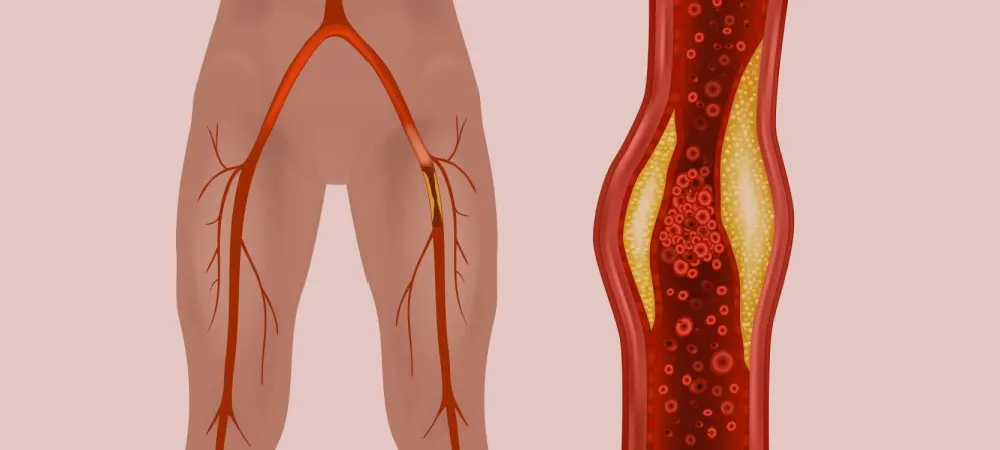
Peripheral artery disease is a condition, most commonly seen in the legs, where cholesterol and fat deposits (atherosclerosis) form plaques on the vessel walls, reducing blood flow. As these plaques progress, the affected area does not receive sufficient oxygenated blood. Causes of peripheral artery disease include smoking and hypertension. Furthermore, the presence of the disease indicates that similar blockages may develop in the heart or brain vessels, increasing the risk of heart attack and stroke. Therefore, peripheral artery disease is not only a condition that reduces quality of life but also serves as a warning for serious cardiovascular complications.
What is Peripheral Artery Disease (PAD)?
Peripheral artery disease is a serious circulatory disorder that occurs when the arteries carrying blood to the extremities of the body narrow or become completely blocked over time. This condition, which often progresses unnoticed, develops as fat and cholesterol-containing plaques (atherosclerotic plaques) within the vessels harden and narrow the vessel walls. As these plaques increase, blood flow is restricted, and tissues cannot be adequately nourished with oxygen.
For this reason, peripheral artery diseases are not just a circulatory problem but also a vascular health issue that can significantly affect quality of life in the long term. Plaque accumulation narrows or completely blocks the vessel over time. Consequently, sufficient blood cannot be transported to the muscles and tissues. If circulatory insufficiency progresses, peripheral artery disease can cause pain during walking, rest pain, and impaired wound healing.
What Are the Symptoms of Peripheral Artery Disease?
In peripheral artery disease, cramping or pain in the calf, thigh, or buttock, especially after exertion or exercise, subsides shortly after stopping. The reason for this symptom is that the muscles do not receive enough of the blood they require. While about a quarter of patients experience this typical complaint, others may have milder symptoms or none at all. Peripheral artery aneurysm can often progress without symptoms and carries a risk of rupture. Other symptoms include:
Reduction in hair and nail growth on the affected foot or leg,
The affected side being colder than the other foot,
Paleness in skin color,
Bruising or bluish color changes.
In advanced cases, rest pain occurs. In this situation, pain is felt even while standing and lasts for a long time. As vascular disease progresses, wounds on the leg or foot heal slowly or may not heal at all and can even become infected. These wounds are usually seen on the toes, heel, or leg and, if left untreated, can lead to tissue loss.
How is Peripheral Artery Disease Diagnosed?
For diagnosis, the physician takes a detailed history and performs an examination, then resorts to certain tests. First, the doctor asks about complaints of leg pain during walking, nail and skin problems, and family history. During a peripheral artery examination, pulses are evaluated and blood flow is checked. A peripheral artery examination includes physical assessment and imaging methods. Weakened pulses in the arteries or a bruit (whooshing sound) due to blood flow may be detected with a stethoscope. Additionally, findings such as wounds, paleness, or infection on the leg skin are sought. Peripheral artery angiography is a method used to visualize blockages in the vessel.
With the ABI test, blood pressures in the ankle and arm are compared. If necessary, other non-invasive tests such as exercise ABI, a 6-minute walk test, or Doppler ultrasonography can also be applied. A peripheral artery Doppler test is performed to evaluate the blood flow passing through the vessel. Advanced examinations include angiography. By injecting contrast material into the vessel, the exact location and degree of stenosis are determined via X-ray, CT, or MR angiography. These methods are used to clarify which part of the leg has narrowing and to what extent.
How is Peripheral Artery Disease Treated?
Peripheral artery disease treatment can be supported by lifestyle changes and medications. To achieve these goals, lifestyle changes are recommended first. Smoking both accelerates plaque formation and causes existing narrowings to worsen. When diabetes and peripheral artery disease occur together, the healing process may slow down. For overweight patients, losing weight helps control blood pressure and blood sugar, improving vascular health. Exercises such as daily regular walking strengthen circulation in the legs.
Another important pillar of treatment is medication use. Cholesterol-lowering statins slow down plaque progression and prevent the worsening of atherosclerosis. Especially if leg pain is severe, medications such as cilostazol that can help improve circulation may be prescribed.
How is Peripheral Artery Disease Surgery Performed?
Peripheral artery surgery is performed to open or bypass a blocked vessel. With angioplasty, the balloon at the tip of the catheter is inflated to open the narrowed part of the vessel. Then, if necessary, a metallic stent (intravascular support) is placed inside. Angioplasty is a less invasive method than open surgery; it is usually performed under local anesthesia with small incisions, and the patient's hospital stay is short. The patient can move quickly after the procedure, but in some cases (especially in long-segment blockages), complete patency may not be achieved with a balloon, and re-narrowing (restenosis) may develop. Since angioplasty can be performed without general anesthesia, the risk is lower, but it is not always possible.
Bypass surgery is a procedure to create a new path to bypass the blockage. Surgically, a bridge (graft) is constructed over the blocked artery using a vein taken from the patient's own leg (saphenous vein) or an artificial graft (synthetic vessel). For example, for a blockage in the large femoral artery below the thigh, a new vascular connection can be placed between the thigh and lower leg arteries. Open surgery requires larger incisions in the skin and has a longer recovery time. Because bypass can effectively restore blood flow in the long term, it is the preferred method for advanced stenosis and blockages. Regular follow-up (such as Doppler ultrasound) is important after surgery because there is a possibility of graft blockage again. The success rate is high in appropriate patient selection; different bypass techniques such as femoro-popliteal (thigh-lower leg) or aorto-bifemoral can be applied depending on the location of the blocked vessel.
While surgical bypass is recommended for very long and complex blockages, angioplasty may be sufficient for short-segment narrowings. In both methods, the goal is to restore blood flow to the affected area, relieve pain, and support wound healing.
Frequently Asked Questions
This disease is usually followed by cardiovascular surgery and cardiology (internal medicine) specialists. Vascular surgery is the relevant specialty for foot and leg vascular problems, and the cardiology department is for evaluating heart disease risks. Family physicians or internal medicine specialists can also refer the patient for an initial examination. Risk factors for peripheral artery disease include age, high cholesterol, and obesity. The most important risk factor is smoking. Diabetes, high blood pressure, high cholesterol, excess weight, and a sedentary lifestyle are also the main factors that negatively affect vascular health.
Having family members with vascular disease such as heart attack or stroke at a young age also creates a genetic basis that increases personal risk. Especially in diabetic patients, as the damage process in vessel walls accelerates, peripheral artery disease occurs more frequently and more severely in this group of individuals. In people with these factors, plaque formation occurs faster in the artery walls. If there is narrowing or blockage in the arteries in the foot, burning or cramping pain occurs in the foot, especially while walking. A burning or throbbing sensation may occur in the feet while lying down at night or at rest. The skin on the sole of the foot becomes cold, shiny, or pale, and nail growth slows down. There may be frequent injuries, skin infections, or non-healing ulcers on the foot. These findings are signs that blood flow to the foot is insufficient. In general, in arterial diseases, blood going to the affected area decreases. In the legs, this manifests as pain that increases with walking and muscle cramps that subside with rest. There may be weakness, numbness, and a feeling of heat loss in the affected leg. Shiny skin, coldness, hair loss, and slow-healing wounds or ulcers are other symptoms of vascular disease. In similar vascular narrowings in the hands and arms, color changes and coldness can be seen in the fingers. Blocked vessels in the leg most commonly manifest as cramps or pain in the calf or thigh muscle during walking. This pain goes away when you take a break (classic claudication). Lactate and peripheral artery disease are two important options evaluated together due to circulatory disorders. In peripheral arteries, when leg muscles do not receive enough oxygen, energy production occurs anaerobically, and lactate increases during this process. This may be the reason for the emergence of symptoms such as pain in the muscles.
In advanced cases, there may be leg pain even at rest. Additionally, coldness, numbness, shiny skin, nail thinning, or hair loss may be seen in the affected leg. Non-healing wounds or skin ulcers may also appear at an advanced stage. Pulses in the leg with vascular blockage weaken or disappear. In general, leg pain, skin changes, and wound problems are symptoms of vascular narrowing in the leg.
Did you notice pain, coldness, color changes, or non-healing wounds in your legs?
Treatment success increases when peripheral artery disease is detected in the early stages. You can learn about personalized diagnosis and treatment options by making an appointment with our Hisar Hospital Cardiovascular Surgery specialists.
Start with the right assessment for What is Peripheral Artery Disease (PAD)? Symptoms, Causes, and Treatment
Share your symptoms with our specialist physicians; let us determine the right diagnosis and treatment plan together.
Warning
If your symptoms started suddenly, are progressing rapidly, or significantly restrict your daily life, consult a physician without delay.
Plan your What is Peripheral Artery Disease (PAD)? Symptoms, Causes, and Treatment journey with our specialists.
Fill in the form or book an appointment to learn about treatment options, the process and preparation.