What Is Chronic Kidney Disease?
Chronic kidney disease is the gradual loss of kidney function, resulting in the inability to filter waste products, toxins, and excess fluid from the blood. In the early stages of chronic kidney disease, symptoms are often vague. In later stages, symptoms such as the need for frequent urination, nausea, shortness of breath, and darkening of the skin may occur. While there is no definitive cure for chronic kidney disease, early diagnosis and taking necessary precautions can help prevent the progression of the disease. Chronic kidney disease is a health condition characterized by the kidneys' inability to perform vital functions, such as clearing waste and maintaining normal blood pressure, as a result of gradual damage. Although kidney failure can sometimes occur acutely, meaning temporarily, it is mostly chronic. In other words, kidney failure is usually a long-term health problem that worsens over time. The bean-shaped kidneys, located just below the ribs on both sides of the spine, have many functions in the body. Some of these are:
Removing waste products and excess water from the body,
Helping in the production of red blood cells,
Helping to keep blood pressure under control,
Ensuring the maintenance of fluid-electrolyte balance,
Protecting bone health.
If the kidneys are gradually damaged for at least 3 months, one or both kidneys may eventually become unable to perform the functions listed above, and symptoms of chronic kidney disease may appear. Kidney diseases are usually called chronic. The main reason for this is that the damage to the kidneys progresses gradually. If chronic kidney disease is not diagnosed in the early stages and an appropriate treatment procedure is not applied, a clinical picture of chronic kidney disease, also known as end-stage renal disease, may emerge.
What Are the Symptoms of Chronic Kidney Disease?
Chronic kidney disease findings are usually mild at first. Symptoms may vary from person to person. For example, in children, symptoms of chronic kidney disease may include growth retardation and weakness in motor skills. The main symptoms seen in patients are:
Increased need for urination,
Nausea and vomiting,
Loss of appetite,
Fatigue and weakness,
Urinating more or less than usual,
Sleep problems,
Difficulty concentrating,
Muscle cramps due to fluid-electrolyte imbalance,
Swelling in the hands, feet, and ankles,
Dryness and itching of the skin,
High blood pressure (hypertension),
Shortness of breath due to fluid accumulation in the lungs in advanced stages,
Chest pain due to fluid accumulation around the heart,
Metallic taste in the mouth.
Symptoms of end-stage chronic kidney disease may also include anemia, bone disease, and nerve disease.
How Does Chronic Kidney Disease Occur?
Chronic kidney disease can occur for many reasons. Chronic health problems such as diabetes and high blood pressure play an important role among the causes of chronic kidney disease. Uncontrolled diabetes can cause kidney damage by harming the vessels or nerves leading to the kidneys. In addition, hypertension, which is the high pressure of blood in the vessels, can also cause the kidneys to be damaged over time. Accordingly, the main causes of chronic kidney disease are:
Type 1 or type 2 diabetes,
High blood pressure,
Glomerulonephritis, which is the inflammation of the small structures in the kidneys called glomeruli that perform the filtering function,
Interstitial nephritis, characterized by inflammation of the structures called tubules, which are responsible for sending waste that the body does not need to urine after absorbing water and organic substances in the blood,
Polycystic kidney disease, a genetic disorder in which fluid-filled cysts form in the kidneys,
Long-term obstruction of the urinary tract due to health problems such as prostate enlargement or kidney stones,
Vesicoureteral reflux, which causes urine to flow back into the kidneys,
Recurrent kidney infections.
In addition to those listed above, there are differences between acute kidney failure and chronic kidney disease. While chronic kidney disease develops over time due to the reasons listed above, acute kidney failure can occur within hours or days due to reasons such as certain medications used, urinary tract diseases, or severe dehydration. Chronic kidney diseases are a common health problem known to affect approximately 10-14% of the population worldwide. Anyone can encounter chronic kidney disease for any reason. However, some factors may increase the risk of the disease. Some risk factors for chronic kidney disease are:
Diabetes,
Cardiovascular disease,
A family history of kidney disease such as polycystic kidney disease,
Being in an older age group,
Long-term use of painkillers,
Autoimmune health problems such as lupus,
Harmful habits such as smoking,
Additionally, pregnancy can also increase the risk of kidney disease. During pregnancy, the filtration rate of the kidneys increases by approximately 50% to clear waste and toxins that could harm the baby. If there is pre-existing kidney disease before pregnancy or if the kidneys cannot adapt sufficiently to pregnancy, chronic kidney disease may develop during pregnancy.
How Is Chronic Kidney Disease Diagnosed?
In chronic kidney disease, findings such as itching, swelling in the ankles, and darkening of the skin usually appear in the advanced stages of chronic kidney disease. Experts may diagnose the disease during a routine blood or urine test in some cases. Among the diagnostic criteria for chronic kidney disease, the result of the eGFR test, which is a blood test that measures the glomerular filtration rate, plays an important role. The eGFR test helps measure the amount of blood that the filtering structures called glomeruli in the kidneys clean per minute. Under normal conditions, the eGFR test result is over 90 in healthy individuals. A result below 15 indicates that the kidneys are no longer able to perform their function. In this case, the indications for chronic kidney disease can be serious, and the patient may need dialysis or a kidney transplant.
In addition to these, experts may also resort to additional blood tests such as blood urea nitrogen or urine tests to help evaluate whether there is protein leakage. The main diagnostic methods for chronic kidney disease can be listed as follows:
Blood tests to evaluate the glomerular filtration rate and the levels of waste products such as creatinine and urea in the blood,
Urine test to investigate whether there is protein (albumin) or blood in the urine,
Imaging tests such as ultrasound, CT urography, or MRI to examine the structure of the kidneys.
In some cases, experts may also decide to take a tissue sample from the kidneys, i.e., perform a kidney biopsy, to understand the cause of the damage in the kidneys.
How Is Chronic Kidney Disease Treated?
The stages of chronic kidney disease are very important for planning the treatment process. As the name suggests, chronic kidney disease refers to kidney disease that worsens over time. In other words, there is no definitive cure for the disease. Initially, experts usually apply treatment procedures aimed at controlling symptoms and preventing the progression of the disease. If chronic kidney disease is caused by a health problem such as diabetes or hypertension, experts may start medication for these diseases. In addition, diuretic (water pill) medications may be prescribed to help remove excess fluid from the body. Besides these, some studies also show a relationship between chronic kidney disease and vitamin D. According to these studies, vitamin D treatment in chronic kidney disease patients may reduce the risk of serious complications.
When chronic kidney disease progresses, the kidneys become unable to sufficiently filter toxins and excess fluid from the body. In this case, patients may need treatment procedures such as dialysis or kidney transplantation to survive. Accordingly, the main treatment methods for advanced chronic kidney disease are:
Dialysis: Dialysis, which can be performed with two different methods as hemodialysis and peritoneal dialysis, helps clean the blood by taking over the function of the kidneys. In hemodialysis, blood is cleaned via a special machine and returned to circulation. In peritoneal dialysis, a small tube is placed into the patient's abdominal cavity. Dialysis solution is sent into the abdominal cavity through this catheter. The fluid remains in the abdominal cavity for a certain period to filter harmful substances from the blood, and then it is drained out through the same catheter.
Kidney transplantation: The definitive treatment method for chronic kidney disease patients is kidney transplantation. The transplant can be performed with a kidney taken from a living donor who has tissue compatibility with the patient or from a cadaveric donor who has been declared brain dead. During the transplant surgery, the new kidney is placed in the patient's groin area. There is no need to remove the diseased kidney. After the transplant, the patient may need to use immunosuppressive drugs for life to prevent organ rejection.
Changing the diet may also be necessary for chronic kidney disease. Experts recommend limiting daily sodium (salt) intake to less than 1 teaspoon, including the salt in consumed foods and drinks. In addition, depending on the results of blood tests, experts may limit the consumption of foods containing minerals such as potassium, phosphorus, and calcium. Furthermore, a lower-protein diet may be required to minimize the level of waste products in the blood. A sample chronic kidney disease diet might look like this:
Instead of foods high in potassium such as oranges, potatoes, spinach, and tomatoes, choose vegetables and fruits such as cabbage, carrots, green beans, grapes, and strawberries,
Focusing on vegetables, fruits, and whole grains instead of high-protein foods such as meat, eggs, milk, and cheese.
Patients' adherence to the treatment plan prepared by doctors can help prevent the progression of the disease.
Frequently Asked Questions
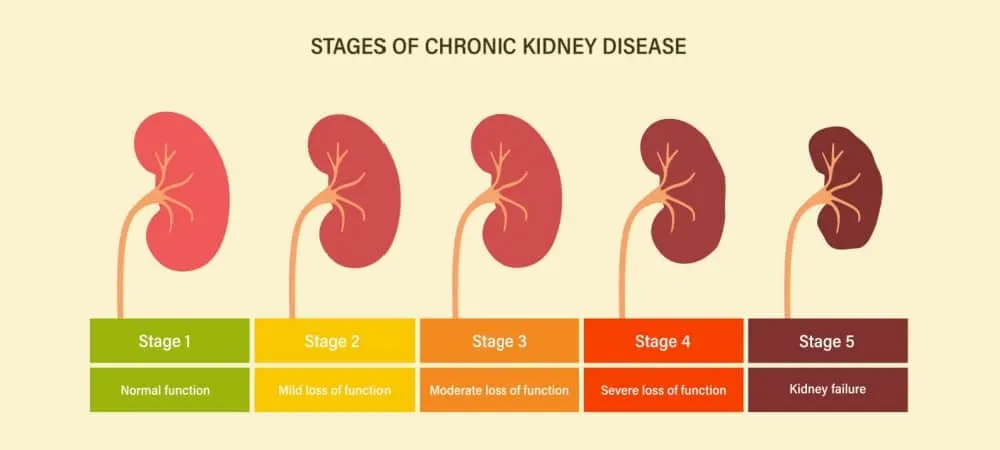
Health problems such as polycystic kidney disease that can cause chronic kidney disease are genetic in origin, but chronic kidney disease can occur for many reasons, including lifestyle habits, chronic diseases such as diabetes and hypertension, and inflammation in the kidneys. As chronic kidney disease progresses, it can lead to various complications in the body. The most prominent of these are high blood pressure, anemia, bone diseases, fluid accumulation in the lungs, nerve damage, and electrolyte imbalances. In addition, failure to control high blood pressure can increase the risk of heart disease. Chronic kidney disease is classified into five stages according to the glomerular filtration rate (GFR) test, which evaluates the filtering capacity of the kidneys. In the first stage, GFR is above 90 mL/min/1.73 m². Although the kidneys appear to be working normally, symptoms such as protein leakage in the urine may appear. In the second stage, GFR drops to between 60-89 mL/min/1.73 m² and mild loss of kidney function begins to be seen. The kidneys can still filter waste, but some patients may have symptoms such as high blood pressure or mild protein leakage in the urine. In the third stage, GFR drops to between 30-59 mL/min/1.73 m² and moderate kidney failure develops. At this stage, patients may feel symptoms such as fatigue, bloating, and changes in the amount of urine.
In the fourth stage, GFR drops to the 15-29 mL/min/1.73 m² level and severe kidney failure is seen. The kidneys become unable to sufficiently clear waste from the body. As a result, an increase in blood pressure, anemia, bone diseases, and significant deterioration in general health may be seen. Finally, in the fifth stage, GFR is below 15 mL/min/1.73 m². This clinical picture is called end-stage renal disease. At this stage, the patient needs treatments such as dialysis or kidney transplantation to survive. If chronic kidney disease is not treated in the early stages, the kidneys may eventually lose their function completely, and the need for a kidney transplant may arise. Unlike acute kidney failure, chronic kidney disease usually progresses gradually. For this reason, it is difficult for patients to notice symptoms at the beginning. Taking necessary precautions with early diagnosis can slow down the progression of the disease.
Chronic kidney disease may not show symptoms in the early stages, but early diagnosis is critical in preventing the progression of the disease.
If you are experiencing symptoms such as frequent urination, fatigue, or dry skin, contact Hisar Hospital Nephrology Specialists immediately.
Make an Appointment | Get Information About the Nephrology Department
Start with the right assessment for What Is Chronic Kidney Disease? Symptoms, Causes, and Treatment Methods
Share your symptoms with our specialist physicians; let us determine the right diagnosis and treatment plan together.
Warning
If your symptoms started suddenly, are progressing rapidly, or significantly restrict your daily life, consult a physician without delay.
Plan your What Is Chronic Kidney Disease? Symptoms, Causes, and Treatment Methods journey with our specialists.
Fill in the form or book an appointment to learn about treatment options, the process and preparation.