Lazy eye, known medically as amblyopia, is a condition in which one eye develops less than the other and has poorer vision. It rarely affects both eyes. This condition, which usually appears in childhood, occurs when the coordination between the brain and the eye has not developed sufficiently. If lazy eye is not treated, the weaker eye may retain permanently reduced vision. Early diagnosis and treatment, with glasses, occlusion therapy or special eye exercises, can help correct this condition.
What Causes Lazy Eye?
Lazy eye occurs when there is a mismatch between the way the eyes focus on the objects they look at. Its most common causes are other vision problems or structural problems in the eyes. Some factors that may contribute to the development of lazy eye are:
Strabismus: Strabismus is a condition in which the eyes cannot align parallel to each other and is one of the most common causes of lazy eye. While one eye focuses on the correct target, the other may drift in a different direction. To prevent double vision, the brain ignores the image coming from the misaligned eye, and over time lazy eye develops in that eye.
Anisometropia: Anisometropia is a condition in which the two eyes have different refractive errors. For example, one eye may have high myopia (inability to see distant objects) or hyperopia (inability to see near objects), while the other eye has normal vision. This difference causes the brain to rely more on one eye than the other, and lazy eye may develop in the less-used eye.
Cataract: A cataract that develops at birth or in early childhood prevents light from focusing properly on the retina due to cloudiness in the lens of the eye. This can lead to reduced vision and lazy eye.
Drooping eyelid (Ptosis): A drooping eyelid can block vision by covering the front of the eye. When this occurs especially in childhood, it adversely affects visual development and may cause lazy eye. Ptosis usually requires surgical intervention.
Premature birth: Premature birth or low birth weight can lead to problems in the development of the eye and visual system. In these babies, the retina and other visual pathways may not be fully developed, which can increase the risk of lazy eye.
Genetic factors: Lazy eye may be seen more frequently in people who have similar eye problems in the family. Genetic factors can increase risk factors such as strabismus, high refractive errors or other vision problems.
How Is Lazy Eye Diagnosed?
Early detection of lazy eye is very important for preventing permanent vision loss. During the examination, the eye doctor takes the patient's history, evaluates general eye health and measures visual acuity. The first step in diagnosing lazy eye is usually a comprehensive eye examination. The doctor may request some of the following tests for a definitive diagnosis:
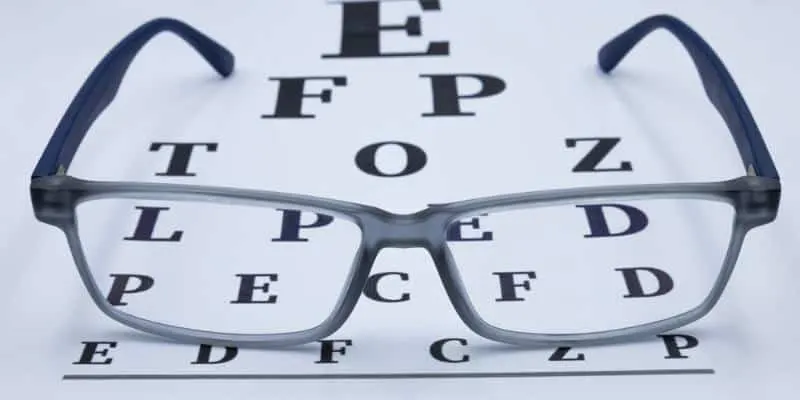
Visual acuity tests: Visual acuity tests are used to determine how well each eye sees. These tests are usually performed using vision testing tools such as the Snellen chart or picture vision charts. Children usually try to identify letters or shapes from a certain distance. Tests performed by covering one eye can help determine which eye has lazy eye.
Refraction tests: Refraction tests are used to determine the refractive errors of the eyes. These tests help the eye doctor measure the ability to see distant or near objects. They are performed using automated devices called autorefractometers or manual methods such as retinoscopy.
Eye movement and alignment tests: Eye movement and alignment tests are used to evaluate how the eyes move and align together. These tests help detect eye alignment problems such as strabismus. The doctor observes eye movements by asking the person to focus on an object and evaluates how both eyes work together.
Cover test: The cover test is a frequently used test to identify lazy eye. In this test, the doctor covers one eye to evaluate the vision of the other eye. This test can help determine which eye has lazy eye and the degree of amblyopia.
How Is Lazy Eye Treated?
The goal of lazy eye treatment is to repair and strengthen the connection between the brain and both eyes. Lazy eye treatment may include:
Eye patching: Patching is one of the most common and effective treatment methods for lazy eye. In this treatment, the stronger eye is covered for set periods to encourage the weaker eye to work harder and develop. The duration of treatment varies depending on the child's age and the degree of lazy eye. Patching periods typically range from several hours a day to the full day.
Using glasses: Wearing glasses can correct the refractive errors that cause lazy eye. Correcting refractive errors such as myopia (inability to see distant objects), hyperopia (inability to see near objects) or astigmatism can restore brain-eye coordination by allowing both eyes to focus clearly. Once vision improves, the brain may begin to use both eyes to see.
Medicated eye drops: The eye doctor may instill medicated eye drops into the child's stronger eye. The medication temporarily blurs the healthy eye, which causes the brain to use the weaker eye to see.
Surgical intervention: Surgery is rarely needed in the treatment of lazy eye. However, in some cases, surgery may be required to correct the underlying problems causing lazy eye. For example, conditions such as strabismus (eye misalignment) or ptosis (drooping eyelid) can be surgically corrected to support lazy eye treatment. Lens problems such as cataracts may also require surgical intervention.
What Should Be Considered After Lazy Eye Treatment?
After lazy eye treatment, regular eye checkups are very important for the treatment process to continue successfully and for possible recurrences. Wearing glasses or using the eye patch for the prescribed period and fully following the doctor's recommendations are essential. After treatment, the doctor may recommend activities that support eye health and eye exercises. In addition, it is very important for parents to carefully observe their children's vision behavior and to take them to the doctor as soon as possible if they notice any change, for early diagnosis and treatment.
Frequently Asked Questions
Lazy eye can be understood as one eye seeing less than the other and is usually detected during routine eye examinations. Children may feel discomfort when one eye is covered or may have difficulty with certain activities (reading, playing sports). In addition, signs of eye misalignment such as strabismus can also be a sign of lazy eye. In babies, lazy eye may be recognized by the eyes not moving together properly or by one eye constantly drifting. It can also be detected during routine eye examinations. While looking at toys or shiny objects, a baby may use one eye less or may show restlessness when one eye is covered. Parents may notice that the baby has difficulty focusing their eyes or constantly tilts their head in a certain direction. Lazy eye usually cannot be corrected with laser treatment, because this condition stems from a weak connection between the brain and the eye rather than from refractive errors in the eye. Treatment is mostly carried out with methods such as glasses, patching therapy and vision therapy. Lazy eye may develop depending on genetic factors, and the risk may be higher in children with a family history of lazy eye. Genetic predisposition can be effective together with other conditions that may lead to lazy eye, especially strabismus or refractive errors. People with lazy eye usually see blurry and unclear images with the lazy eye. Depth perception may be weak, which makes three-dimensional vision and distance estimation difficult. Lazy eye generally progresses during early childhood, up to around 7-8 years of age, and may become permanent if not treated by that age. Therefore, early diagnosis and intervention are very important to stop the progression of lazy eye and improve vision. Lazy eye can be temporary and vision can fully recover when it is diagnosed early and appropriate treatment methods are applied. However, if untreated, there is a risk that it becomes permanent. If lazy eye is not treated, it can lead to serious vision loss, including permanent vision problems such as blindness in the affected eye. Therefore, follow-up and attention to treatment are necessary. Lazy eye does not directly cause myopia, but children with lazy eye may have refractive errors such as myopia. Lazy eye is generally caused by a refractive error in one eye or by problems such as strabismus. The degree of lazy eye is generally determined not by the visual acuity scale, but by the difference in vision between the eyes. This difference is described by how much less one eye sees than the other and is not measured as a degree. The severity of lazy eye is generally classified using the visual acuity test. "Mild" amblyopia is generally classified as visual acuity of 6/9 to 6/12, "moderate" amblyopia as worse than 6/12 to 6/36, and "severe" amblyopia as worse than 6/36. Measurement is usually made by accepting that the healthy eye has normal vision (6/6 or better). The glasses used in lazy eye treatment vary according to the patient's specific condition. The most commonly used types of glasses include prescription glasses, prismatic glasses and occlusion glasses that cover the healthy eye to make the lazy eye work harder. Lazy eye exercises usually consist of special techniques and activities recommended by the eye doctor or vision specialist. These activities include eye covering, pencil tracking, line drawing and dot-connecting exercises. In adults, lazy eye may progress if it was diagnosed and not treated in childhood. If lazy eye is not treated in childhood, vision problems may persist in adulthood and may become permanent. Lazy eye can cause headaches. Lazy eye causes the images from the two eyes sent to the brain to differ. When the brain struggles to combine these different images, this may lead to headaches. In lazy eye, visual acuity is usually not expressed as a percentage. People with lazy eye usually state how much less the affected eye sees compared to the other eye. For example, it may be stated that one eye sees 20% less. Therefore, rather than stating visual ability as a percentage, lazy eye is diagnosed and treated based on differences between the eyes and symptoms.
Lazy eye is a serious health problem that can lead to permanent vision loss if early diagnosis and treatment are not planned. Early diagnosis can be made with regular eye examinations. Therefore, it is very important for parents to have regular eye checkups and, when they notice signs of lazy eye in their children, to make an appointment at the eye outpatient clinic of the hospital and begin treatment.
Start with the right assessment for What Is Lazy Eye?
Share your symptoms with our specialist physicians; let us determine the right diagnosis and treatment plan together.
Warning
If your symptoms started suddenly, are progressing rapidly, or significantly restrict your daily life, consult a physician without delay.
Plan your What Is Lazy Eye? journey with our specialists.
Fill in the form or book an appointment to learn about treatment options, the process and preparation.