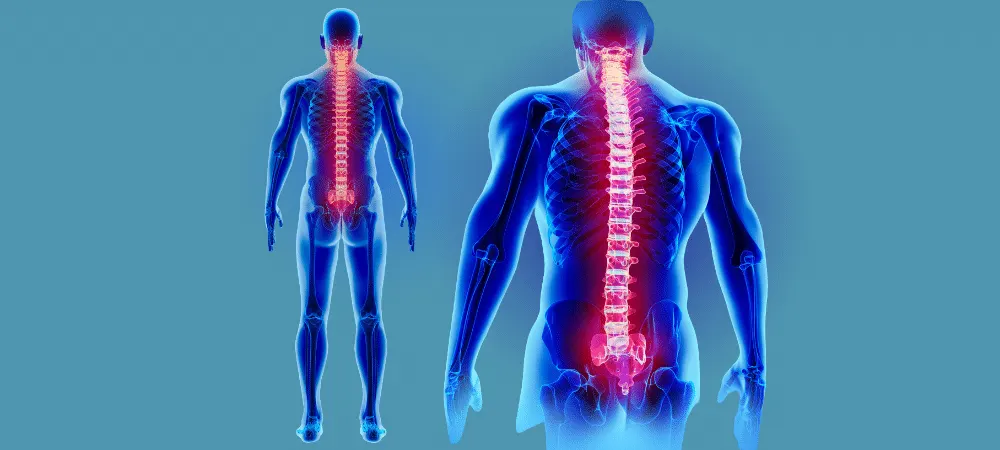
Facet joint syndrome is a condition that develops as a result of damage over time to the small joints (facet joints) located at the back of the spine and providing connection between the vertebrae, frequently leading to lower back or neck pain. These joints provide both mobility and stability to the spine. However, when wear and tear, inflammation, or mechanical deterioration occurs in these joints due to various reasons, pain becomes inevitable. While this pain may be transient for many people, in some cases it can become severe and persistent enough to make daily life difficult. Particularly, an increase in pain during prolonged sitting, standing, or sudden movements of the lower back are among the clear clues of this syndrome.
What is Facet Joint Syndrome?
Facet joint syndrome is a painful condition that arises as a result of structural deterioration, wear and tear, or inflammation of the facet joints in the spine over time. Located at the back of the vertebrae, these small joints provide both flexibility of movement and stability to the spine. However, degenerative changes developing in these joints due to various reasons affect nerve endings along with surrounding tissues, leading to pain that increases with movement, particularly in the lower back or neck region. Cervical facet joint syndrome develops due to the degeneration of the small joints in the cervical vertebrae and causes pain during head and neck movements.
What Are the Symptoms of Facet Joint Syndrome?
Although facet joint syndrome most frequently occurs in the lower back and neck regions, it can affect any segment of the spine. Symptoms of facet joint syndrome include localized pain in the lower back or neck, stiffness, morning stiffness, and discomfort that increases with movement. At the same time, lumbar disc herniation and facet joint syndrome can be seen together. This situation can make it difficult to distinguish between disc-derived and joint-derived pain. Symptoms may vary from person to person, but the following complaints generally stand out:
Localized, dull, or aching pain in the lower back or neck region,
Discomfort that increases after standing or sitting for long periods,
Pain that becomes pronounced during backward bending movements,
Muscle spasms,
Limited spinal movement, decreased flexibility,
Sometimes pain radiating to the hips, thighs, or shoulders (though it usually does not extend below the knee).
These symptoms can worsen and become chronic over time. It is quite typical for pain to increase especially upon waking in the morning or after remaining immobile for long periods.
What Causes Facet Joint Syndrome?
The primary cause behind the emergence of facet joint syndrome is the gradual wear, tear, or inflammation of the facet joints located in the spine. These joints ensure that the vertebrae connect to each other healthily with age and provide the mobility of the spine. However, with aging, the cartilage tissue in these areas begins to thin. Losing their slipperiness and elasticity, the joint surfaces rub against each other over time, paving the way for both mechanical damage and inflammatory reactions. As a result, changes develop in the joint that cause pain, stiffness, and limitation of movement. Although aging is the most common cause of this process, it is not solely responsible. Frequently encountered factors in daily life such as past traumas, poor posture habits, long-term desk work, and carrying heavy loads can also trigger the syndrome by increasing the load on the joints. Facet joint degeneration can be observed at an earlier age, particularly in individuals who perform jobs that constantly strain the spine or in athletes. At the same time, congenital spinal curvatures such as scoliosis or past spinal surgeries can disrupt the structural balance of the facet joints and accelerate the development of the syndrome. All these factors turn into a vicious cycle that leads to inflammation and pain in the joint over time.
How is Facet Joint Syndrome Diagnosed?
The diagnosis of facet joint syndrome primarily begins with taking a detailed medical history of the patient. The physician carefully inquires about exactly where the pain is felt, when it started, which movements increase or decrease it, and how it affects the patient's quality of life. Then, the range of motion of the spine is evaluated through a physical examination, and it is observed in which positions the pain is triggered. Particularly, pain that increases when the patient bends their lower back or neck backward may suggest a problem originating from the facet joint. However, imaging methods are also utilized to make a definitive diagnosis. While X-ray films can reveal structural changes or calcification in the spine, MRI imaging provides more detailed information about the status of soft tissues. In some cases, computed tomography (CT) allows the degeneration on joint surfaces to be seen more clearly. One of the most decisive methods in diagnosis is the diagnostic facet joint block. In this method, a local anesthetic is injected around the suspected facet joint. If the patient's pain decreases significantly after the injection, it is confirmed that the problem originates from that joint. This application is of great importance both for confirming the diagnosis and for formulating the treatment plan.
How is Facet Joint Syndrome Treated?
Treatment for facet joint syndrome is planned with physical therapy, medication, and, if necessary, injection applications according to the patient's level of complaints. The primary goal in treatment is to control pain, maintain joint movements, and improve the patient's quality of life. Drug therapy is generally applied in the first stage. Non-steroidal anti-inflammatory drugs (NSAIDs) are used to relieve pain and inflammation. Muscle relaxants can be given to resolve muscle spasms, and analgesic medications can be given for a short period in cases of severe pain. However, these drugs provide temporary relief and do not offer a permanent solution. Alongside drug therapy, the physical therapy and rehabilitation process is very important. Exercises that strengthen the muscles around the spine, posture correction work, and flexibility-increasing movements help both reduce pain and prevent future strains. Facet joint syndrome exercises should aim to strengthen the muscles supporting the spine and increase joint range of motion. Physical movements for facet joint syndrome should especially include stretching, balance, and posture-correcting exercises; swimming is a recommended exercise because water reduces the load on the spine and works the muscles. However, some exercises must be performed with caution. For example, squats and facet joint syndrome, if not performed carefully, can increase the load placed on the lumbar vertebrae; therefore, the movement must be performed with correct technique and under expert supervision. Additionally, methods such as manual therapy, hot-cold applications, and electrotherapy can also be supportive. If sufficient benefit cannot be achieved with these methods, interventional treatment options come into play. One of these is facet joint injection. A local anesthetic and steroid injection are administered into the target joint. This application can both temporarily reduce pain and support the accuracy of the diagnosis. For patients seeking a longer-lasting solution, radiofrequency ablation can be applied. In this method, the nerves carrying the pain are deactivated using special heat energy, thereby cutting off pain transmission.
Surgical intervention is a rarely resorted option and is generally considered in cases where all other methods remain ineffective and quality of life is severely impaired. However, most patients can get rid of their pain without the need for surgery with the right treatment plan. What is important during the treatment process is for the patient to review their lifestyle, exercise regularly, and learn to move in a way that protects their spine.
Frequently Asked Questions
Facet joint syndrome manifests itself with dull and established pains that are triggered by certain movements and are generally felt in the lower or upper parts of the spine. Experiencing stiffness and pain in the lower back or neck region, especially when getting out of bed in the mornings or after remaining immobile for a long time, is one of the distinct signs of this syndrome. Facet-derived pains are different from sharp and stabbing pains seen in nerve compressions. They have a character that is more dull, increases over time, and is triggered by certain movements. Therefore, paying careful attention to the type of pain and how it occurs plays a major role in understanding the syndrome. Facet joint pain manifests itself with region-specific pains depending on which region's joints of the spine are affected. The most frequently encountered form is the type affecting the lower back (lumbar) region, and facet syndrome developing here causes localized pain in the lower part of the lower back. This pain sometimes can radiate towards the hip or the upper part of the thigh. However, it generally does not extend below knee level. Cervical facet joint involvement in the neck region can show reflection towards the shoulders or the scapula along with pain felt in the nape of the neck. Rarely, it can also be seen in the thoracic (back) region. Especially if the pain becomes pronounced when the lower back or neck is bent backward, meaning when pressure is placed on the spine, this indicates a disorder originating from the facet joint. In other words, the location of the pain and how it radiates in the body are quite important for the physician to make a correct diagnosis. Facet joint syndrome is largely a degenerative condition developing due to age. As the human body ages, the cartilage structures in the spine wear out and lose their elasticity over time. In this process, particularly the facet joints wear and tear due to the constant loads they are exposed to. With the thinning of the cartilage tissue, the joint surfaces begin to rub against each other more. This causes inflammation and pain. A facet joint block is a minimally invasive procedure used both to make a diagnosis and to provide treatment. When used for diagnostic purposes, the physician injects a local anesthetic around the suspected facet joint. If the patient's pain decreases significantly shortly after the injection, this indicates that the pain truly originates from that joint. When performed for therapeutic purposes, a certain amount of corticosteroid is added to the injection aiming both to reduce pain and to calm the inflammatory process in that area. Although its effect varies from person to person, it can provide relief lasting for weeks or months in some patients. Facet joint injection is an effective method generally applied to alleviate pain and reduce inflammation. However, it is not a permanent solution. After the injection, pain may ease for a few weeks or months, and in some patients, this period can be even longer. However, because the underlying degenerative process continues, it is possible for the pain to return over time. For patients expecting permanence, the injection provides more of a temporary relief. In the long term, it should be supported with exercises and lifestyle changes. Facet joint syndrome is not a life-threatening disease. However, when left untreated, it can severely degrade the quality of life. Constant pain, restriction of movement, and sleep problems can negatively affect a person's both physical and psychological health. Therefore, its danger stems from creating a chronic picture that makes daily life difficult rather than being fatal. Physical therapy is one of the most effective treatment methods for facet joint syndrome. Physical movements for facet joint syndrome should particularly include stretching, balance, and posture-correcting exercises. Regularly applied physical therapy programs strengthen the muscles around the spine, correct posture disorders, and reduce the load placed on the joints. Although the syndrome does not completely disappear, symptoms can be controlled thanks to physical therapy, and the patient's quality of life is significantly increased. Facet joint syndrome tends to progress over time because it is a degenerative disease. Especially when left untreated or when a lifestyle that places a load on the spine is maintained, pains can become more frequent and severe. However, with early diagnosis and correct treatment, this progression can be slowed down and kept under control for a long time. Resting for the first few hours after a facet joint block is recommended. There may be mild pain, bruising, or a feeling of numbness at the injection site. This is usually temporary. Heavy physical activities should be avoided on the day of the procedure, and the area should be kept clean. If pain intensifies within a few days or unexpected reactions develop, a physician must definitely be consulted. Resting for the first few hours after a facet joint block is recommended. There may be mild pain, bruising, or a feeling of numbness at the injection site. This is usually temporary. Heavy physical activities should be avoided on the day of the procedure, and the area should be kept clean. If pain intensifies within a few days or unexpected reactions develop, a physician must definitely be consulted.
Facet joint syndrome is a disorder that can recur. Symptoms can return, especially if movements that strain the spine continue, physical therapy is neglected, or incorrect posture habits are maintained. Therefore, the post-treatment period is at least as important as the treatment itself.
Do not underestimate pain for your spinal health!
If you feel continuous pain in your lower back or neck region, learn personalized diagnosis and treatment options by consulting Hisar Hospital specialist physicians.
Make an Appointment or contact our Physical Therapy and Rehabilitation clinic.
Start with the right assessment for What is Facet Joint Syndrome? Symptoms, Causes, and Treatment Methods
Share your symptoms with our specialist physicians; let us determine the right diagnosis and treatment plan together.
Warning
If your symptoms started suddenly, are progressing rapidly, or significantly restrict your daily life, consult a physician without delay.
Plan your What is Facet Joint Syndrome? Symptoms, Causes, and Treatment Methods journey with our specialists.
Fill in the form or book an appointment to learn about treatment options, the process and preparation.