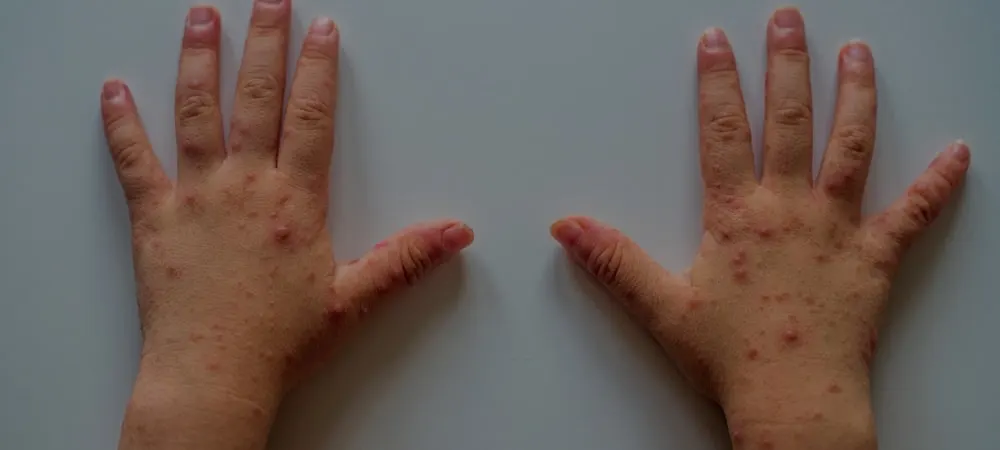
Hand, foot and mouth disease is a contagious and rash-causing illness triggered by viruses. The risk of occurrence is higher in infants and children. It generally manifests as painful blisters developing on the mouth, hands, and feet of children. However, rashes can also be seen in other parts of the body such as the arms and legs, buttocks and genital organs, chest, and back.
Hand, foot and mouth disease, which is primarily caused by the coxsackievirus A16, can also arise from other viruses such as enteroviruses and echoviruses. Since it can stem from infections by various viruses, it is possible to contract the disease more than once. It is highly contagious and can spread rapidly in environments where children under the age of 5 gather together (nursery schools, schools, daycares, etc.). Less commonly, hand, foot and mouth disease can occur in adults. It is generally a mild health problem. It tends to resolve spontaneously in about 7-10 days. Hand, foot and mouth disease, which has no specific treatment, can be prevented with certain care recommendations and precautions. Outbreaks can be prevented by halting the spread of hand, foot and mouth disease through preventive measures.
What is Hand, Foot and Mouth Disease (Coxsackie Virus)?
Hand, foot and mouth disease is a contagious and viral illness that generally affects children. In most cases, hand, foot and mouth disease is caused by the Coxsackie virus type A16. However, in addition to this, Enterovirus 71, Coxsackie viruses A5, A7, A9, A10, Coxsackie B virus (B2, B5), and certain echoviruses can also play a role in the development of the disease.
Hand, foot and mouth disease, which can sometimes manifest as major outbreaks, has a moderate degree of contagiousness. Transmission can occur through body fluids and stool (feces) of an individual infected with viruses. It is a rash-causing health issue and can be seen in the form of outbreaks, especially in crowded environments. It is most contagious during the first days of the infection before rashes appear. Rashes can dry up within approximately 10 days after they appear. During this period, the contagiousness of the infection may be lower. However, viruses can remain active in the stool for several weeks after the rash and symptoms subside. Mostly seen in infants and children, this condition can also affect adults. An increased risk of infection may be observed in adults with immunodeficiency.
What Are the Symptoms of Hand, Foot and Mouth Disease?
Symptoms of hand, foot and mouth disease can be flu-like during the incubation period. In this initial stage, symptoms can be mild or severe. Generally, it may present with high fever, runny nose, sore throat and abdominal pain, loss of appetite, and fatigue. A few days later, additional symptoms may manifest. These symptoms may include:
Rashes on the soles of the feet, palms, buttocks, genital organs, knees, and elbows
Painful white, red, or gray blisters around the mouth, on the tongue, inner cheeks, and gums
Swollen lymph nodes in the neck
Sore throat
Irritability in infants and children
Loss of appetite
The developing rash-like lesions can be approximately 2-6 mm in size. They may persist for an average of 7-10 days and cause itching. However, in children under the age of 2, the elimination of the virus from the body and the clearing of the infection may take longer. Some lesions may rupture and lead to superficial ulcers.
Enteroviruses leading to hand, foot and mouth disease can cause certain health problems related to the central nervous system. Encephalitis, acute cerebellar ataxia, Guillain-Barre syndrome, acute transverse myelitis, and benign intracranial hypertension are central nervous system disorders that enteroviruses may cause.
How Does Hand, Foot and Mouth Disease Occur?
Infection with hand, foot and mouth disease viruses can develop as a result of the viruses entering a person's upper respiratory tract or digestive system via the oral route. Microorganisms are found in the nose and throat secretions of individuals such as saliva, phlegm, and runny nose, in bullae (fluid-filled blisters), and in stool. Viruses can spread through close contact with these individuals, contact with stool, sneezing and coughing, and contaminated surfaces and nesnes (surfaces and objects). Enteroviruses swallowed via oral secretions begin to multiply in the pharynx and intestines. The incubation period of hand, foot and mouth disease viruses is approximately 3-6 days. The multiplying and increasing viruses continue to spread to the lymph nodes. Reaching the regional lymph nodes, the infection can affect multiple organs such as the skin, heart, liver, brain, and spinal cord, etc.
The transmission routes of hand, foot and mouth disease are as follows:
Shaking hands, hugging, or kissing an infected person
Sneezing and coughing of an infected person
Direct contact with the rashes of an infected person
Touching the nose, eyes, and mouth after contact with the stool, saliva, or phlegm of an infected person
Sharing plates, forks, spoons, glasses, towels, pillows, and clothing with infected individuals
Touching the nose, eyes, and mouth after touching dirty surfaces such as doorknobs, surfaces, and belongings
An infected individual is most contagious during the first week of the illness. Furthermore, contagiousness may continue even when symptoms disappear. The infection can progress asymptomatically in adults and infect other people.
How is Hand, Foot and Mouth Disease Diagnosed?
Diagnosis of hand, foot and mouth disease can be established based on clinical findings. Areas with rash and itching can be identified through physical examination. In some cases, swab samples can be taken from sores, stool, and the throat and examined in a laboratory to detect the virus. Additionally, swab samples and samples obtained via biopsy can differentiate Herpes simplex and Varicella-zoster viruses. Samples taken from lesions can prove the presence of coxsackieviruses and enteroviruses.
The hand, foot and mouth disease virus remains detectable in stool for 6 weeks after the infection occurs. For the oral cavity and pharynx, this period may be less than 4 weeks. Serology tests are not sufficient tests for diagnosing hand, foot and mouth disease, but they can be used for monitoring during the treatment period.
How is Hand, Foot and Mouth Disease Treated?
There is no specific treatment method for hand, foot and mouth disease. There is currently no antiviral treatment aimed at clearing the infection caused by viruses. This condition, which generally follows a mild course, can be improved with home care recommendations. Prescribing medications is frequently associated with relieving or controlling symptoms. Since hand, foot and mouth disease does not stem from bacteria, antibiotic therapy is not administered. It typically tends to resolve spontaneously within 1 to 2 weeks. To assist in this recovery process, the following practices may be recommended:
Pain relievers and fever reducers for fever and pain
Numbspray (anesthetic sprays) for mouth and throat pain
Gargling with saltwater for sore throats
Your doctor may prescribe appropriate medications for additional symptoms. Certain changes in the dietary pattern may need to be made. Increasing water consumption may be requested to minimize fluid loss in individuals. Staying away from crowded environments and ensuring isolation can prevent the spread of the disease. In this case, rest can be provided by staying away from collective environments such as schools, nurseries, and workplaces.
Frequently Asked Questions
Hand, foot and mouth disease is a contagious and rash-causing infection caused by viruses that generally affects children. The Coxsackie A16 virus is most frequently responsible. It manifests with painful blisters in the mouth, hands, and feet.
The disease can be transmitted through direct contact with the saliva, phlegm, nasal discharge, stool, and rashes of infected individuals. It can also spread via coughing, sneezing, or contact with contaminated surfaces.
Early symptoms such as high fever, fatigue, loss of appetite, sore throat, and runny nose can be seen. Afterwards, painful rashes and blisters form on the hands, feet, buttocks, inside and around the mouth. Irritability in infants and swelling in the lymph nodes can also be observed.
Yes. Because different types of viruses can lead to the disease, a person can contract the same illness more than once.
In some cases, the virus can spread to the central nervous system. It can lead to neurological disorders such as encephalitis, Guillain-Barre syndrome, and acute transverse myelitis.
Hand, foot and mouth disease, which can affect children and adults, can spread rapidly especially in collective environments such as nurseries and schools. Therefore, early diagnosis and proper care are important. For evaluation, diagnosis, and monitoring processes related to hand, foot and mouth disease, you can schedule an appointment from our Department of Pediatrics and contact Spec. Dr. Hilmi Bayırlı.
Start with the right assessment for What is Hand, Foot and Mouth Disease? Symptoms, Transmission Routes and Treatment
Share your symptoms with our specialist physicians; let us determine the right diagnosis and treatment plan together.
Warning
If your symptoms started suddenly, are progressing rapidly, or significantly restrict your daily life, consult a physician without delay.
Plan your What is Hand, Foot and Mouth Disease? Symptoms, Transmission Routes and Treatment journey with our specialists.
Fill in the form or book an appointment to learn about treatment options, the process and preparation.