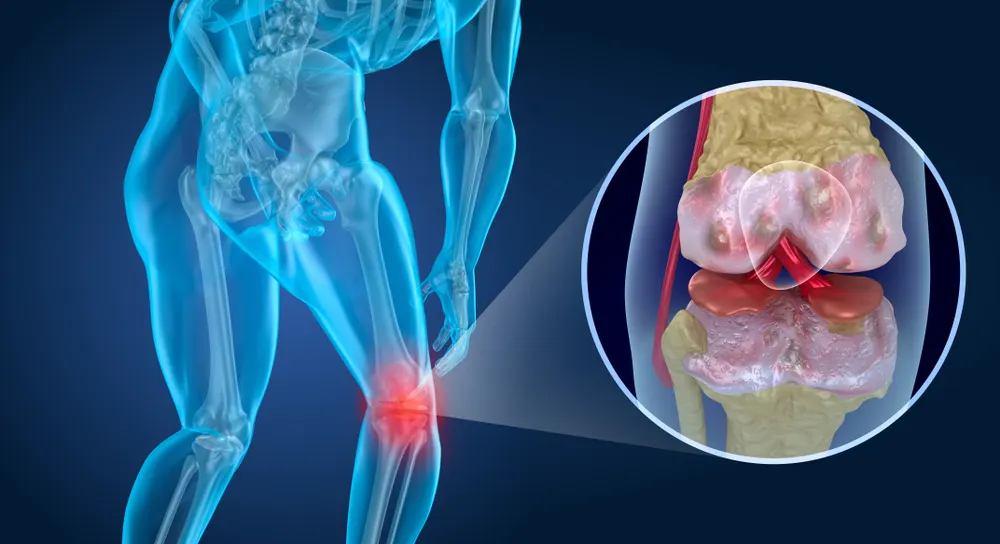
Commonly known as 'kireçlenme' (joint calcification), arthrosis is the wearing away of the joints that connect bones, without inflammation. Contrary to popular belief, no calcium deposits are seen. The joint surfaces wear down and the cartilage begins to deteriorate. It usually affects large joints such as the knee, hip or shoulder. It presents as joint pain that restricts movement in daily activities. Swelling, numbness and stiffness of the joints are among the symptoms that may be seen with this wear. It may arise from increased load on the joints caused by weight gain and from the loss of tissue elasticity with aging. Joint injuries and repetitive stress are also among the risk factors. Diagnosis is made with radiological imaging techniques after physical examination and evaluation of symptoms. For this type of physical condition, treatment can start with conservative management. Regular physical therapy is very beneficial. Medication may be used to relieve pain and alleviate symptoms. In advanced cases, joint replacement can be performed surgically. In the long term, to keep the patient's quality of life from declining, patients need to be educated about regulating physical activity, weight control and healthy nutrition.
What Is Joint Osteoarthritis (Arthrosis)?
Joints connect bones and allow movements to be carried out smoothly. These joints can wear over time for various reasons, but the body repairs such wear. With aging, loss of the tissue's healing capacity, excessive load on joints beyond what can be repaired, or causes such as rheumatoid arthritis, the protective covering at the ends of bones wears away. This wear is called arthrosis. It is characterized by wearing of the joint surfaces, loss of cartilage and decrease in synovial fluid. Physiologically, two bones should move without rubbing against each other, but in joint osteoarthritis, as the joint surface wears, bones begin to rub against each other.
Most commonly, large joints such as the knee, hip, wrist, shoulder and spinal joints are affected. If five or more joints in the body are affected, it is called polyarthrosis. Generally, mild or severe pain is felt. Edema and redness may be seen. Due to the symptoms, difficulty bending or lifting heavy objects may be experienced.
A person who generally maintains a healthy and active lifestyle can reduce the risk of joint osteoarthritis. Exercises performed in an uncontrolled manner or with more weight than one can carry may damage the joints.
What Are the Symptoms of Joint Osteoarthritis (Arthrosis)?
The main symptoms are joint pain, stiffness and restricted movement. These types of symptoms most often appear as age advances.
Joint pain: Joints may ache during or after movement.
Joint stiffness: Joints may feel stiff after waking up or after a period without active movement.
Loss of flexibility: Movements such as bending the arm or leg or rotating the shoulder may not be possible at their most efficient level.
Crepitus (grating sound): Sound may be produced when the cartilage rubs against the joint surface and surrounding tissues during joint movement.
Osteophyte (bone spur): Protrusions and abnormal bone growth develop as a result of deterioration of the bone tissue beneath the joint cartilage.
Edema: As a result of joint osteoarthritis, surrounding tissues may also be affected and inflammation may occur. Edema may be seen due to inflammation.
The severity of symptoms may vary depending on individuals' genetics, lifestyle, weight and other factors. In some people these symptoms come and go, while in others they may follow a more chronic course. If arthrosis symptoms are severe, individuals may struggle to continue their daily lives. Environmental factors can also change the perception of pain. If a person is under intense stress or lives in a cold climate, the severity of joint pain may change.
What Are the Causes and Risk Factors of Joint Osteoarthritis?
Cartilage tissue is a sturdy tissue that enables nearly friction-free joint movement. When this tissue deteriorates, the bones connected by the joint begin to rub against each other. This wear can be seen in wrist and finger joints that are constantly in motion, or in knee joints that bear most of the body's load. Unlike these, people may also be predisposed to arthrosis. When characteristics called risk factors are present in a person, it indicates a high risk of joint osteoarthritis.
Age: The risk of rheumatic diseases is higher at older ages.
Sex: According to studies, joint osteoarthritis is seen more frequently in women, but the reason is unknown.
Excess weight: The risk of osteoarthritis increases as the load carried, especially on hip and knee joints, increases. Additionally, proteins produced by fat tissue have the capacity to cause inflammation in the joint area.
Joint injuries: The likelihood of osteoarthritis is high in a joint that has been damaged during sports or as a result of an accident. The risk of osteoarthritis in a joint is higher than in a non-injured joint, even many years after the injury.
Repetitive stress and excessive use of the joint: If there is repetitive stress on a joint from daily activity or regularly performed sports, this is a risk factor.
Genetic factors: Even if it is not passed from mother or father to child, if there is a family history of arthrosis, the likelihood of the person having it is high.
Certain metabolic diseases: Some metabolic diseases similar to diabetes may increase the likelihood of osteoarthritis.
If a person is experiencing symptoms and has risk factors, it is extremely beneficial to consult an orthopedic specialist or physical therapy specialist before the symptoms affect daily life, and to get information about what can be done. Hisar Hospital Intercontinental provides all kinds of healthcare services, including Physical Therapy and Rehabilitation, and Orthopedics and Traumatology.
What Are the Diagnostic Methods for Joint Osteoarthritis?
For diagnosis, a medical history is first taken and a physical examination is performed to evaluate the symptoms. Information such as an accident or injury the person has had, a previous surgery, or the presence of arthrosis in the family should be provided to the doctor. Generally, blood tests are normal. A diagnosis can be made by taking an X-ray of the area where the symptoms are reported. The worn cartilage structure and, if in an advanced stage, osteophytes in the bone can be seen on X-ray.
If the arthrosis is at an early stage and symptoms have not worsened, it can be detected with magnetic resonance imaging (MRI).
What Are the Treatment Options for Joint Osteoarthritis?
Joint osteoarthritis is chronic and has no definitive cure. The goals of arthrosis treatment include reducing wear, preserving joint mobility, not lowering the person's quality of life, and not leading to more severe rheumatic diseases.
Often in the early stages of the disease, conservative treatment can be applied so that the person's daily life is minimally affected and quality of life is not reduced. Symptoms of arthrosis can be alleviated through pain relievers to reduce pain, selecting a correct exercise program that protects the joints, and physical therapy. If the person eats healthily, the strength of bone and cartilage tissue also increases. With a proper diet program, obesity can be avoided and tissues can be strengthened, thereby reducing the risk of joint osteoarthritis.
Since inflammation can accompany wear in arthrosis, anti-inflammatory medications may be given in inflammatory conditions such as edema and redness.
A sudden increase in pain resembling a flare-up is seen especially in the knee, and to prevent this, an intra-articular cortisone injection may be given. Physical therapy can provide relief of symptoms, but the course of the disease may not change.
If the patient has already presented with advanced joint osteoarthritis, or if medication and conservative treatment have been insufficient, surgical treatment is considered. Joint replacement and joint arthroscopy are among these methods. Joint replacement, commonly performed for degenerative joint diseases such as arthrosis, involves fitting worn joint surfaces with prostheses made of metal, ceramic and reinforced plastic parts. Metal parts have been further developed as a result of advances in metallurgy. Thus, the prostheses used are both lightweight and durable.
Another surgical treatment method is joint arthroscopy. In this method, fiber optic devices allow visual examination of the inside of the joint, and treatment is provided without opening the joint, only through small incisions. In this way, the post-operative wound healing period is shorter and physical therapy movements can be started earlier.
For treatment options, you can consult specialist physicians from the Physical Therapy and Rehabilitation, and Orthopedics and Traumatology departments at Hisar Hospital Intercontinental.
What Are the Long-Term Effects of Joint Disease and Lifestyle Recommendations?
After treatment is started, lifestyle changes should be made whether arthrosis is at an early or late stage. These changes are necessary so that symptoms lighten and do not worsen further.
Low-intensity exercises or yoga can be done to increase and strengthen joint mobility. If pain is felt in the joint while performing any movement, do not push further and rest. A physical therapy specialist may recommend exercises for the patient to do at home. Learning these movements well and performing them correctly is important to avoid harming the joints.
Weight is one of the risk factors for joint diseases. If a person is overweight, the joints are affected by this, and this effect can be reduced with a proper diet program.
Warm or cold applications can be used to reduce pain. A warm compress helps muscles relax and pain subside. A cold compress can reduce muscle pain and muscle spasm, which can worsen joint pain especially after exercise.
Frequently Asked Questions About Joint Osteoarthritis (Arthrosis)
Arthrosis can affect any joint in the body. Not every joint pain means arthrosis; a person may simply have sprained their wrist. Pain that increases with movement and is chronic should be watched. In arthrosis, weight-bearing joints are frequently affected. These joints are the knee, hip and spinal joints. Finger and wrist joints, which are used a lot and where wear can be high, are also commonly affected joints. After taking a detailed medical history and performing a physical examination, the doctor evaluates the symptoms. A diagnosis can be made by taking an X-ray of the joint where the person feels discomfort. In advanced cases of joint osteoarthritis, surgical treatment may be necessary. The recovery process continues with physical therapy, affecting the person's quality of life as little as possible. Physical therapy is extremely supportive especially in early stages, in cases with mild symptoms, and after surgical treatment. If you have joint pain that has not gone away for a while and that increases with movement, or if you have been diagnosed with arthrosis and want to strengthen your joints with physical therapy, you can make an appointment with the Orthopedics and Traumatology or Physical Therapy and Rehabilitation departments at Hisar Hospital Intercontinental and consult specialist physicians.
Start with the right assessment for What Is Joint Osteoarthritis (Arthrosis)?
Share your symptoms with our specialist physicians; let us determine the right diagnosis and treatment plan together.
Warning
If your symptoms started suddenly, are progressing rapidly, or significantly restrict your daily life, consult a physician without delay.
Plan your What Is Joint Osteoarthritis (Arthrosis)? journey with our specialists.
Fill in the form or book an appointment to learn about treatment options, the process and preparation.