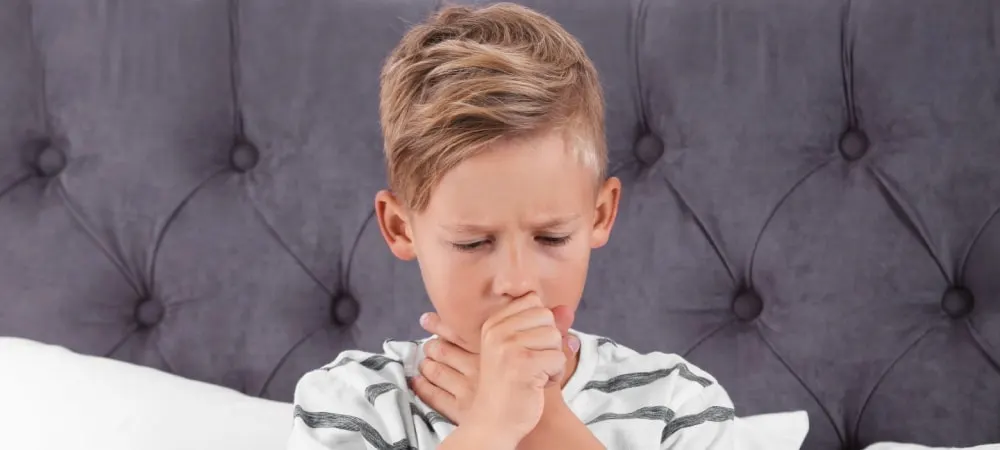
Cough is one of the most important defense and respiratory reflexes of the human body. Thanks to coughing, foreign substances in the airways can be expelled from the body. Cough is a common condition in adults as well as in children. However, when a child's cough does not go away, the cause of the cough needs to be investigated. So what causes a cough that does not go away in children? What should be done for a child who is coughing? You can find answers to your questions about persistent cough in children in the rest of our article.
What Causes Cough in Children?
Cough can arise in both children and adults due to various causes. Compared with adults, children may be more susceptible to foreign pathogens in their surroundings. This can increase the risk of children who attend school catching bacterial and/or viral infections more often. For this reason, among the causes of cough in children, viral infections such as flu and common cold come right after allergic diseases. A respiratory tract illness such as influenza is usually accompanied by a sore throat, nasal congestion/discharge, and then a severe, dry cough. Under normal circumstances, cough is expected to resolve within 2 weeks at most with appropriate drug treatment. A prolonged and worsening cough may be a sign of a chest infection in the child. In this case, it is recommended to seek help from a chest diseases specialist without delay.
Persistent Cough in Children
Cough is one of the most important ways the body defends itself against foreign pathogens under normal circumstances. It is divided into two categories: acute cough and chronic cough. Once exposure to the foreign pathogen ends, the cough is also expected to resolve. A cough that resolves within an average of 2 weeks to 1 month is referred to as acute cough. In some cases, cough may continue even after the factors causing it, such as a respiratory tract infection, have gone away. According to experts, a cough lasting longer than 8 weeks in adults and longer than 4 weeks (1 month) in children is defined as chronic cough. So what causes a cough that does not go away in children? The causes of persistent cough in children can be listed as follows:
Postnasal drip: Postnasal drip, also known as nasal discharge, is listed among the most important causes of persistent cough. In humans, mucus is continuously produced by certain glands in the nose and throat. Mucus production has important functions, such as humidifying the inhaled air and trapping foreign pathogens coming from outside. However, due to health problems such as common cold, flu, sinusitis, or allergic rhinitis, mucus production may increase and the mucus may become thicker. The flow of mucus from the nasal cavity into the throat is referred to as postnasal drip. In children with postnasal drip complaints, cough usually arises due to the need to clear the throat. At the same time, nasal congestion is also frequently seen in these children.
Asthma: Another important cause of persistent cough in children is asthma. Asthma symptoms may differ from child to child. Asthma is a chronic inflammatory disease of the bronchi. In other words, it is a condition in which the airways of the lungs become inflamed without being related to any microbial infection. As a result of this inflammation, the bronchi become more sensitive to internal and external triggers and gradually begin to swell and thicken. Over time, the airways narrow and symptoms such as wheezing and shortness of breath may appear. In some cases, the only sign of asthma in children may be a persistent dry cough. This condition is referred to as cough-variant asthma.
Bronchiolitis: Bronchiolitis, which usually affects children under 2 years of age and is characterized by inflammation of the small airways in the lungs, is one of the causes of persistent cough in children. Viruses such as rhinovirus and influenza can cause bronchiolitis. When these viruses enter the small airways of the lungs, they cause the airways to become inflamed and swollen. The swelling of the airways can cause the child to struggle to breathe and to cough. Symptoms related to bronchiolitis generally go away within a few weeks. However, because the bronchioles of small children, that is, their small airways, are narrower, symptoms such as cough may continue for a longer time.
Reflux: Reflux can briefly be defined as the backflow of stomach contents into the esophagus due to various causes. When reflux is mentioned, the first thing that comes to mind is the condition also described as heartburn or acid regurgitation. In addition, cough is one of the most common symptoms of reflux in both adults and children.
Allergy: Allergy is also one of the leading causes of persistent cough in children. Allergy can be briefly described as the body's immune system perceiving normally harmless foreign substances as harmful and switching to defense against them. Allergic cough in children may be accompanied by symptoms such as runny nose, nasal congestion, wheezing, and redness of the eyes.
Psychogenic causes: In some cases, the cause of cough seen in children may be psychological factors. To diagnose psychogenic cough, other factors that could cause the cough must first be evaluated and ruled out.
In addition to those listed above, exposure of the child to harmful environmental factors such as cigarette smoke can trigger coughing fits in children. JTNDaWZyYW1lJTIwd2lkdGglM0QlMjI1NjAlMjIlMjBoZWlnaHQlM0QlMjIzMTUlMjIlMjBhbGlnbiUzRCUyMmNlbnRlciUyMiUyMHNyYyUzRCUyMmh0dHBzJTNBJTJGJTJGd3d3LnlvdXR1YmUuY29tJTJGZW1iZWQlMkZlY05fY0pseHduayUyMiUyMHRpdGxlJTNEJTIyWW91VHViZSUyMHZpZGVvJTIwcGxheWVyJTIyJTIwZnJhbWVib3JkZXIlM0QlMjIwJTIyJTIwYWxsb3clM0QlMjJhY2NlbGVyb21ldGVyJTNCJTIwYXV0b3BsYXklM0IlMjBjbGlwYm9hcmQtd3JpdGUlM0IlMjBlbmNyeXB0ZWQtbWVkaWElM0IlMjBneXJvc2NvcGUlM0IlMjBwaWN0dXJlLWluLXBpY3R1cmUlM0IlMjB3ZWItc2hhcmUlMjIlMjBhbGxvd2Z1bGxzY3JlZW4lM0UlM0MlMkZpZnJhbWUlM0U=
Symptoms Accompanying Cough
Cough alone may be a sign of a health problem, but in some cases other symptoms may also accompany the cough. Parents are advised to pay close attention to symptoms that come along with cough. If cough is a sign of a viral infection, symptoms may include high fever and runny nose/nasal congestion. If the cause of a persistent cough in a child is asthma, symptoms such as dry cough, wheezing, and difficulty breathing may appear. In addition, a cough with phlegm due to postnasal drip syndrome, along with runny nose or nasal congestion, is commonly seen. If cough in a child is accompanied by symptoms such as nausea, diarrhea, or vomiting, this may indicate an infection that also affects the digestive system. Symptoms such as diarrhea and vomiting can cause children to lose fluids, and as a result, the balance of fluids and electrolytes in the body may be disrupted. For this reason, in such cases it is important to consult healthcare professionals without delay.
What Should Be Done for Cough?
Cough is a bothersome condition for both adults and children. In particular, nighttime coughing fits that increase due to a cause such as reflux can prevent the child from sleeping and make them restless. So what should be done for a persistent cough in children? For a cough lasting longer than 4 weeks that does not go away in children, it is first important to visit a healthcare facility and get help from a doctor who specializes in the field. Along with this, some methods that can be applied at home may help ease the child's complaints. These methods can be listed as follows:
When cough is accompanied by nasal congestion, cleaning the child's nose with saline solutions may help the child breathe comfortably and ease their symptoms.
Very hot or very cold air can cause the cough to worsen. For this reason, care should be taken that the environment where the child is does not become too hot or too cold.
The cause of a persistent cough in a child may be gastroesophageal reflux. In this case, it is recommended not to feed the child late at night and to keep their head elevated while lying down. Using anti-reflux pillows available on the market may help in this regard.
If symptoms such as high fever, vomiting, or diarrhea occur together with cough, fluid loss may occur in children. To prevent fluid loss, babies should be breastfed at frequent intervals and children should be given plenty of fluids.
Running a steam bath for the child before bedtime or helping them take a lukewarm shower may help moisten the airways and ease the cough.
Keeping environmental factors that may trigger allergies in children, such as dust, pollen, and scented products, away from the child's surroundings is important.
Smoking should be avoided in environments where children are present.
For mothers and fathers, their child's health is more important than anything else. Please do not neglect to have your children's check-ups done as well. We wish you healthy days.
Start with the right assessment for Causes and Treatment of Persistent Cough in Children
Share your symptoms with our specialist physicians; let us determine the right diagnosis and treatment plan together.
Warning
If your symptoms started suddenly, are progressing rapidly, or significantly restrict your daily life, consult a physician without delay.
Plan your Causes and Treatment of Persistent Cough in Children journey with our specialists.
Fill in the form or book an appointment to learn about treatment options, the process and preparation.