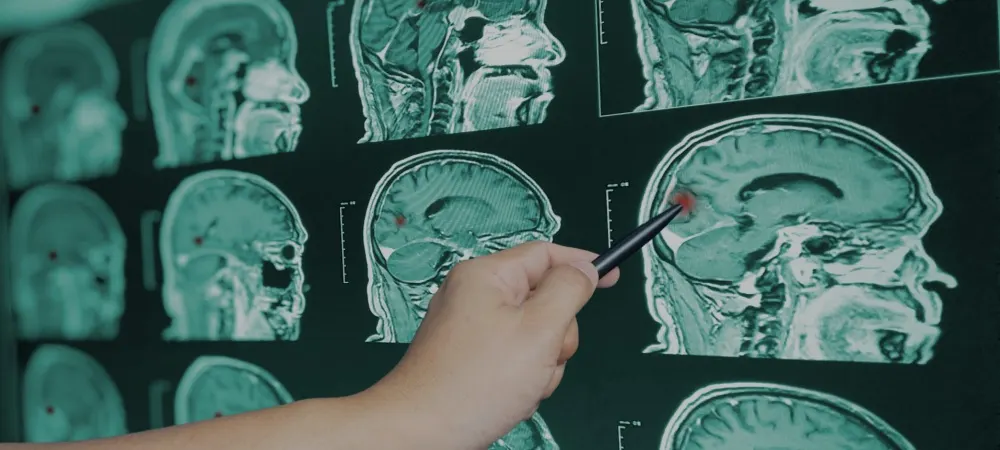
Brain Hemorrhage
A brain hemorrhage is a condition where blood leaks out of a vessel due to the tearing or rupturing of blood vessels in the brain. This leaked blood damages the brain tissue, which is normally completely protected, because the brain has limited space within the skull. Any increase in pressure occurring in this space exerts pressure on surrounding tissues, which can lead to serious neurological consequences.
This condition can often be serious enough to result in paralysis, loss of consciousness, or even sudden death. However, it should be remembered that not every brain hemorrhage is the same. Whether it occurs within the brain tissue, between the meninges, or between the brain and the skull determines the severity, treatment, and outcomes of the hemorrhage.
What is a Brain Hemorrhage?
A brain hemorrhage is a serious and often life-threatening condition caused by the spreading of blood leaking from vessels into the brain tissue due to the tearing or damage of blood vessels within the brain. Our brain has a delicate structure and is located in a limited space within the skull. Any hemorrhage developing in this limited space disrupts brain functions by exerting pressure on surrounding tissues. The blood spreading into the brain tissue not only causes physical pressure but also prevents cells from receiving oxygen and nutrients, can lead to inflammatory responses, and may cause permanent damage. This condition often develops suddenly and must be recognized immediately.
What Are the Symptoms of a Brain Hemorrhage?
The symptoms of a brain hemorrhage vary depending on the location and severity of the hemorrhage. Brain hemorrhage symptoms usually manifest as sudden headache, loss of consciousness, and speech impairment. However, the following symptoms are common signs that should be taken into account:
Sudden and severe headache: Usually described as “the worst headache I have ever experienced in my life.”
Nausea and vomiting: Increased pressure in the brain can lead to nausea.
Confusion or loss of consciousness: Can be seen as drowsiness, unresponsiveness, or complete loss of consciousness.
Difficulty speaking: There may be situations such as difficulty pronouncing words, nonsensical speech, or inability to speak.
Visual disturbances: Double vision, blurred vision, or sudden vision loss may occur.
Numbness/loss of strength in an arm or leg: Numbness or loss of movement, especially on one side of the body, may be prominent.
Seizures: Can manifest as epilepsy-like seizures.
Loss of balance and dizziness: Inability to stand or staggering while walking may be seen.
These symptoms can worsen over time. Subconjunctival hemorrhage (eye redness) should not be neglected as it can be a harbinger of a serious condition like a brain hemorrhage. In children, brain hemorrhage is among the emergencies frequently seen after traumatic events. Symptoms of brain hemorrhage in children may vary by age group, but weakness and fainting are common. Symptoms of brain hemorrhage in infants often manifest as restlessness, vomiting, and enlargement of the head circumference. An infant who has suffered a brain hemorrhage may face developmental problems if not treated immediately. Therefore, it is vital to seek medical help as soon as symptoms appear.
What Causes a Brain Hemorrhage?
The factors that cause a brain hemorrhage are quite diverse, and often multiple risk factors combine to trigger this condition. High blood pressure is at the top of the most common causes. Hypertension that is not brought under control for a long time weakens the walls of brain vessels, and vessels can rupture with a sudden increase in pressure. This condition is seen especially in individuals of middle age and older. High blood pressure is one of the factors that most increase the risk of brain hemorrhage. Causes of brain hemorrhage include high blood pressure, head trauma, and vascular anomalies. Another important cause is head trauma. Traumatic brain hemorrhages are frequently observed, especially in young individuals, due to falls, traffic accidents, or severe impacts. Symptoms of a brain hemorrhage due to impact may include nausea, changes in consciousness, and seizures. In the elderly, a brain hemorrhage can occur due to trauma after a fall or weakness in the vascular structure.
In addition, congenital or acquired vascular abnormalities also increase the risk of hemorrhage. For example, aneurysms, which are bubble-like structures that form on the vessel wall, can grow over time and rupture, leading to serious hemorrhages. Similarly, abnormal vascular connections called arteriovenous malformations (AVMs) also carry a risk of hemorrhage. The unconscious or long-term use of blood-thinning medications is another factor that increases the possibility of brain hemorrhage, especially in elderly individuals. Tumors, blood clotting disorders, diabetes, smoking and alcohol use, and illicit drugs (especially those that damage vascular structure, such as cocaine) are among the other causes that should not be ignored. The risk of brain hemorrhage can indirectly increase due to stress because stress can cause blood pressure to rise.
A brain hemorrhage often occurs when accumulated risks suddenly result in an event. Therefore, it is vital not only to know the symptoms but also to understand and, if possible, prevent the underlying causes.
How is a Brain Hemorrhage Diagnosed?
The diagnosis of a brain hemorrhage must be made both quickly and accurately. This is because it is an emergency health problem where even seconds are of great importance. The diagnostic process usually begins with the patient's clinical symptoms. Findings such as sudden loss of consciousness, paralysis, speech impairment, or severe headache may lead the doctor to suspect a brain hemorrhage. At this point, imaging methods play as vital a role as the physical examination.
The first method used in diagnosis is computed tomography (CT) of the brain. Tomography provides clear information about the location, size, and spread of the hemorrhage in a short time. Since blood can be clearly seen in the tissue, especially in the first hours, CT is the most preferred method for rapid diagnosis. If a more detailed examination is required, magnetic resonance imaging (MRI) can be used. MRI can provide information about tumors, vascular abnormalities, or old damage, if any, in addition to the hemorrhage.
If it is necessary to clarify the cause of the hemorrhage, brain angiography comes into play. With this method, brain vessels are imaged in detail, and problems such as aneurysms and AVMs can be detected. In some special cases, especially if there is a suspicion of subarachnoid hemorrhage, the presence of blood can be investigated by taking spinal fluid (lumbar puncture). This is a method usually resorted to when a diagnosis cannot be made with other methods.
How is a Brain Hemorrhage Treated?
The treatment of a brain hemorrhage is planned by considering the location, cause, and size of the hemorrhage, as well as the patient's general health status. The approach to treatment often begins with an emergency intervention process. Because blood accumulating in the brain can endanger vital functions by creating pressure on tissues. Therefore, the first goal is to stabilize the patient's vital signs and stop the spread of the hemorrhage. In the first stage, the patient is usually taken to the intensive care unit. Here, vital functions such as respiration, blood pressure, and pulse are closely monitored. Some special medications are used to reduce intracranial pressure and control edema. If necessary, respiratory support is provided to the patient, and fluid balance is meticulously monitored.
In some cases, it is observed that the hemorrhage creates serious pressure on the brain. In such cases, it may be necessary to drain the blood surgically. Especially in large-volume hemorrhages or if vascular problems such as aneurysms are detected, neurosurgery comes into play. Brain hemorrhage surgery can be performed urgently depending on the severity and region of the hemorrhage. The blood clot is cleared surgically, and the ruptured vessel is repaired if necessary. In aneurysms, the vessel is either clipped or intervened from within the vessel with endovascular procedures. Thanks to these methods, both the hemorrhage is brought under control and the risk of recurrence is reduced. In patients using blood thinners, special protocols can be applied to reverse the effects of these drugs.
Treatment is not limited to emergency intervention and surgery. The period after a brain hemorrhage is also very important in terms of the recovery process. Many patients may experience neurological losses due to the effect of the hemorrhage. Infants who have suffered a brain hemorrhage are usually kept under long-term neurological follow-up. Therefore, physical therapy and rehabilitation processes are definitely included in the treatment plan. Individual support programs are prepared for problems such as loss of movement, speech impairment, or memory problems. In addition, secondary risks are reduced through measures such as blood pressure control, diabetes management, and the protection of vascular health.
Frequently Asked Questions
A brain hemorrhage is a medical emergency. Even at the slightest suspicion, 112 should be called without wasting time, or the nearest emergency department should be visited. Intervention in the first minutes of the hemorrhage is of vital importance. There are many factors that increase the risk of brain hemorrhage, and these often accumulate for years without being noticed. The primary risk is uncontrolled high blood pressure; it increases the possibility of hemorrhage by weakening vessel walls over time. Smoking and alcohol use multiply the risk by damaging vascular health. A family history of cerebrovascular diseases, unconscious use of blood-thinning medications, vascular abnormalities, diabetes, high cholesterol, stress, and obesity are also among the risk factors. In addition, behavioral factors such as a lifestyle open to trauma or substance use can also increase the risk of brain hemorrhage, especially at a young age. The recovery process varies from person to person. The size of the hemorrhage, its location within the brain, age, and general health status affect this process. While recovery may be possible within a few weeks in mild cases, a rehabilitation period that can last for months may be required in severe cases. Psychological support and family support are at least as important as medical support in this process. If the areas of the brain that control movement have been damaged, loss of strength or complete loss of movement on one side of the body may occur. While this condition may be permanent, it can improve over time with early intervention and regular rehabilitation. Every individual's recovery process is different; while some patients can return to their former functions completely, lifestyle changes become inevitable for others. If risk factors are not eliminated, yes, it can recur. Especially if there are vascular problems such as an aneurysm or if blood pressure cannot be brought under control, a second hemorrhage may occur. Therefore, regular doctor check-ups and medication use should not be neglected. Although a brain hemorrhage cannot always be completely prevented, it is a largely preventable health problem. The most effective precaution is to bring high blood pressure under control. In addition, quitting smoking, regular exercise, a balanced diet, avoiding alcohol, managing stress, and not neglecting doctor check-ups play an important role in protecting brain health. Furthermore, being conscious about the medications used and protecting oneself from blows to the head are other precautions that can be taken. In short, adopting a healthy lifestyle can significantly reduce the risk of brain hemorrhage. In cases of brain hemorrhage, the first area to consult is neurology or the emergency department. In advanced treatment and follow-up, neurosurgery specialists come into play. In the rehabilitation process, physiotherapists, speech therapists, and psychologists are involved in the process.
If you or your loved one shows symptoms of a brain hemorrhage, apply to the emergency department without wasting time. Hisar Hospital specialist physicians are with you with advanced diagnostic and treatment methods. Contact us to make an appointment immediately.
Start with the right assessment for What is a Brain Hemorrhage? Symptoms, Causes, Diagnosis, and Treatment Methods
Share your symptoms with our specialist physicians; let us determine the right diagnosis and treatment plan together.
Warning
If your symptoms started suddenly, are progressing rapidly, or significantly restrict your daily life, consult a physician without delay.
Plan your What is a Brain Hemorrhage? Symptoms, Causes, Diagnosis, and Treatment Methods journey with our specialists.
Fill in the form or book an appointment to learn about treatment options, the process and preparation.