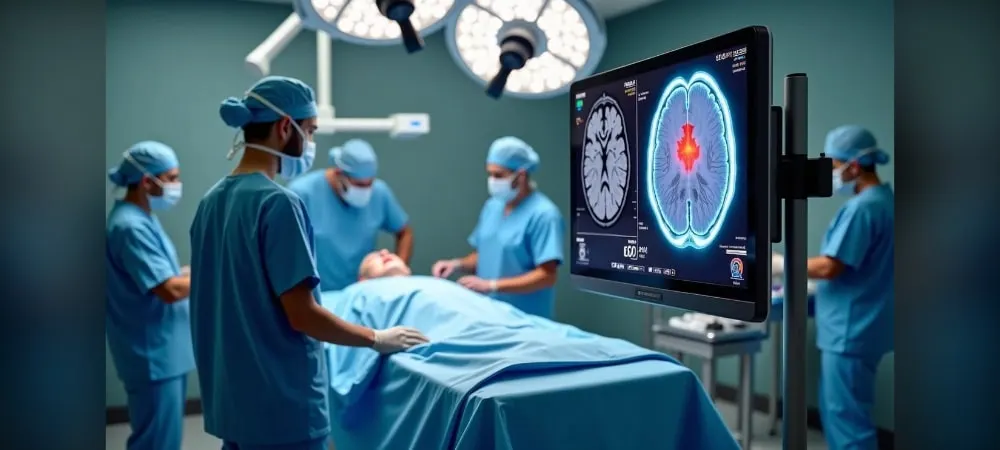
Neuronavigation systems are high-tech assistive tools that allow you to operate with millimetric precision in brain surgery. Minimizing the risk of damage to healthy tissues during brain tumor surgeries, this technology significantly facilitates the work of surgeons.
Simply put, neuronavigation is a reliable application that provides guidance to the surgeon during the operation. This system aims to remove only the tumoral tissue by clearly defining the boundaries of brain tumors in particular. At the same time, the neuronavigation device is modern surgical equipment that minimizes margins of error during surgeries, thereby increasing the success rate.
In situations where millimetric errors can lead to irreversible consequences, such as brain tumors, the neuronavigation system provides great assistance to doctors. In this article, we will explain to you in a clear and understandable language what neuronavigation is, how it works, and especially how it is used in brain tumors.
What is neuronavigation?
Neuronavigation systems, which are among the most effective applications of modern technology in brain surgery, represent advanced technology that provides real-time guidance to the surgeon during the operation. This technology offers the opportunity to work among complex structures in the brain with millimetric precision and helps the surgeon reach the targeted area in the safest way.
Why is it used in surgeries?
Neuronavigation plays a critical role, especially in brain and spine surgeries. In these delicate operations where even millimetric errors can lead to irreversible consequences, the neuronavigation device minimizes risks by operating with a margin of error close to zero.
This system clearly defines the borders of the tumor and ensures that only the tumoral tissue is removed. At the same time, it significantly reduces the risk of damaging healthy brain tissue and nerve pathways. Especially in deeply located brain tumors, it increases the success of the surgery by ensuring that the lesion is reached via the shortest and safest route.
Similarity to navigation systems
The neuronavigation system works similarly to the GPS technology we use in our daily lives. Just like car navigation, it guides the surgeon to reach their destination via the shortest and safest route.
This technology creates a three-dimensional map of the brain using MRI and CT scans taken before the surgery. Thanks to this map, the surgeon can instantly see which region of the brain they are in during the operation and progress toward the target area.
How does it assist surgery?
The neuronavigation system supports the surgeon in many aspects:
Precise guidance: The surgeon can view the location of the tumor, nerves, and vessels with millimetric precision during the operation.
Smaller incision: By ensuring the tumor is reached through the shortest route, it allows for a smaller skin incision and bone opening.
Shortening the operation time: It shortens the surgical duration by enabling the surgeon to find the target area quickly and accurately.
3D imaging and determining tumor boundaries: By providing a three-dimensional image of the brain and the tumor, it enables the surgeon to better orient themselves toward the tumor's borders during the operation.
Consequently, neuronavigation is not a surgical technique on its own, but an assistive application for the surgeon that increases the safety and efficacy of brain surgery.
How does the neuronavigation system work?
Neuronavigation systems are a technological miracle that guides complex brain surgeries almost like a roadmap. This system consists of three main components: the imaging system, the computer system, and the tracking system. Each of them allows the surgeon to work inside the brain with millimetric precision.
Use of MRI and CT scans
The operation of the neuronavigation system begins with the pre-operative preparation process. First, high-resolution, special thin-slice Magnetic Resonance (MRI) and Computed Tomography (CT) scans are obtained from the patient. These images are used to determine the exact location of the tumor or other lesions, as well as the anatomical structure of the brain.
Once the imaging process is complete, the acquired data is transferred to the computer system of the neuronavigation device via special software. This transfer process allows the creation of a digital copy of the patient's brain structure. The transferred images are processed in a way that clearly shows the boundaries of the tumor and critical regions of the brain.
Creating a 3D brain map
The MRI and CT images transferred to the computer system are superimposed (fused) using special software and converted into a three-dimensional brain model. This model includes all anatomical structures of the brain, the tumor, and important nerve pathways. Additionally, the system displays the tumor in color, making it easier to distinguish from healthy tissue.
When the patient is brought into the operating room, a special frame or markers are placed on the patient's head. Following this, the surgical area is introduced to the computer in three dimensions with the help of a special probe moved over the skin surface. This process is called "setup" or "registration." During this process, the three-dimensional model on the computer is matched with the patient's real anatomy.
Guidance provided by the device to the surgeon
Once the registration process is complete, the neuronavigation system becomes a real-time guide that the surgeon will use throughout the operation. Thus, a roadmap to reach the region where the surgery will be performed is generated for the surgical team.
During the surgery, the surgeon can track their exact point in the brain, the exact location of the tumor, and the distance to important brain structures instantly on the screen using special instruments and probes in their hand. When the surgeon moves the instruments in their hand by 1 mm, the screen displays the same movement with millimetric accuracy. This is almost like opening a virtual window inside the brain.
The neuronavigation system also works integrated with the surgical microscope, intraoperative ultrasound, and other imaging devices, offering comprehensive guidance and visual information. Thus, the surgeon can clearly see the location of tumors, aneurysms, or other pathological structures during the operation and reach the target area without harming healthy tissues.
The role of neuronavigation in brain tumors
Brain tumors are among the most challenging health issues requiring precision in treatment. Neuronavigation systems act almost as a "digital compass" for surgeons, especially in brain tumor surgeries, and significantly increase the success of the operation.
Determining tumor boundaries
Neuronavigation technology is a reliable system that clearly defines the boundaries of the tumor in brain tumor surgeries. Thanks to this technology, the surgical procedure is made safer by fully visualizing all boundaries of the tumor and its relationship with delicate tissues during the operation.
To separate the tumor from healthy tissue, the neuronavigation system displays the tumor in color, thereby allowing the surgeon to identify the tumor boundaries more easily. Furthermore, by converting pre-operative scans into a three-dimensional model, detailed information is obtained about the exact location and size of the tumor.
Not harming healthy tissues
The greatest challenge in brain surgery is removing the tumor without damaging healthy brain tissues. Neuronavigation minimizes the risk of damaging the healthy tissue and nerves of the brain. It is of critical importance, especially for tumors close to vision, speech, or movement centers, to ensure these delicate regions are not damaged during the operation.
The use of neuronavigation contributes to performing the surgery more safely by minimizing potential damage to healthy tissue during the procedure. Thus, it makes it possible to treat the tumor without leaving neurological deficits postoperatively.
Advantage in deeply located tumors
Neuronavigation provides a great advantage, especially in deeply located brain tumors. This technology offers significant contributions in reaching diseases in critical and deep locations of the brain and ensures that the tumor is reached via the shortest, most accurate, and safest route.
In deeply located brain tumors, how the surgeon will reach the tumor is a major problem. The neuronavigation system aims to remove the vascular tangle via the shortest and safest route without harming the brain. At the same time, it is possible to benefit from neuronavigation via stereotactic biopsy in the definitive diagnosis of deeply located tumors as well.
Enabling greater tumor resection
The most important goal in brain surgeries is to remove the tumor as much as possible or completely while preserving normal brain tissue. The neuronavigation system provides great support to surgeons in realizing this goal.
In benign tumors, complete clearance of the tumor becomes easier thanks to neuronavigation. In malignant tumors, it becomes possible to remove all or a larger portion of the tumor, if feasible.
Using intraoperative ultrasound combined with neuronavigation provides serious benefits in tumor removal. Since the resection width of the tumor can be monitored simultaneously and in three-dimensionally during the operation, it is better understood whether the tumor has been completely removed.
Whereas this technology used to define the boundaries of the surgeon out of concern of "will I cause damage while approaching?" in the past, it now ensures reaching the tumor via the shortest and safest route, minimal contact with healthy tissues, and a clearer definition of tumor borders.
Which diseases is it used for?
Neuronavigation technology is a valuable tool used in the treatment of a wide variety of diseases in brain and nervous system surgery. This technology makes the treatment process safer for both patients and surgeons by providing millimetric precision in surgical procedures.
Benign and malignant brain tumors
Neuronavigation systems are most commonly used in brain tumor surgeries. This technology provides a more effective treatment by showing the surgeon the exact location and boundaries of the tumor in the treatment of both benign and malignant tumors. It provides great convenience, especially in defining the depth, diameter, and relationship of the tumor with neighboring brain structures.
Additionally, neuronavigation technology is utilized in stereotactic biopsy procedures performed for the definitive diagnosis of deeply located tumors. Thus, the tissue sample necessary for the definitive diagnosis of the tumor can be obtained with minimum damage.
Brain hemorrhages
In the treatment of brain hemorrhage, neuronavigation helps in precisely determining the location of the hemorrhage and reaching the hemorrhage area via the shortest route. Used in different surgical techniques such as decompression, craniectomy, or craniotomy, this system provides great convenience to the surgeon in clearing blood clots and bringing the source of bleeding under control.
Thanks to modern microscopic surgical techniques, neuronavigation systems, and advanced imaging methods, the risk of complications in brain hemorrhage surgeries has significantly decreased.
AVMs and cavernomas
Neuronavigation systems are of vital importance in the treatment of vascular structural disorders such as arteriovenous malformations (AVMs) and cavernomas. These systems ensure that the vascular tangle is distinguished from normal brain tissue and give the surgeon the opportunity to better define these complex structures.
With neuronavigation, it becomes possible to reach the vascular tangle via the safest route, thus minimizing the risk of damaging healthy brain tissue.
Epilepsy surgery
In epilepsy treatment, neuronavigation is used to precisely determine the brain region causing seizures and for surgical interventions targeting this region. Deep or superficial brain electrodes can be placed more safely and accurately thanks to neuronavigation.
Hydrocephalus
Especially in surgeries for hydrocephalus patients with small ventricles, neuronavigation systems are used to place ventricular catheters more accurately, shortening the surgical duration and reducing the risk of repeated operations thanks to a more accurately placed shunt system.
Spine surgeries
Neuronavigation systems also offer significant advantages in spine and spinal cord surgeries. They are used in the treatment of spinal tumors, correct placement of screws, and other surgical interventions targeting the complex structure of the spine.
Thanks to spinal neuronavigation, surgeons can visualize the patient's spinal anatomy in three dimensions and track the instant positions of surgical instruments. This technology makes spine surgeries safer and more effective while reducing the risk of complications and accelerating the patient's recovery process.
Advantages of neuronavigation
Neuronavigation technology used in brain surgery provides many important benefits for patients. While making surgeries safer and more effective, this modern system also positively affects the recovery process of patients.
Surgery with a smaller incision
Thanks to neuronavigation systems, brain surgeons can now perform surgeries with smaller incisions. Since this technology ensures reaching the tumor via the shortest and safest route, smaller incisions can be made on the skin and skull. Thus, a less invasive surgical experience is possible for patients. Furthermore, the minimally invasive surgical technique contributes to patients experiencing less pain and recovering faster in the postoperative period.
Shorter surgery duration
The use of the neuronavigation device helps significantly shorten the surgical duration. By enabling the surgeon to find the target area faster and more accurately, it reduces the time spent on the operating table. Shortening the surgery time also decreases the duration patients remain under anesthesia, lowering anesthesia-related risks. Concurrently, shortening the operation duration also reduces the risk of complications that may arise during the surgery.
Reduction of bleeding risk
Less blood is used in surgeries performed with the neuronavigation system. The system significantly reduces the risk of bleeding by showing the surgeon critical vessels inside the brain. Lowering the bleeding risk accelerates the patient's postoperative recovery while also reducing the need for blood transfusion. This is of great importance, especially in brain tumor surgeries, to keep blood loss to a minimum.
Fast recovery and discharge process
In surgeries performed using neuronavigation technology, the recovery process of patients is faster, and hospital stay durations are shortened. Since the surgical wound is smaller, it heals faster, which allows patients to return to their daily activities sooner. In other words, the patient can return to social life much quicker. In patients who do not develop complications, discharge can usually be achieved within a total of 4 days (1 day in intensive care and 3 days in the ward).
Decrease in the risk of complications
Neuronavigation systems minimize complications that may occur during brain surgery. Risks of complications such as nerve damage, bleeding, and infection decrease. By providing access to the lesion without harming surrounding neural tissue in deeply located brain lesions, it lowers the probability of neurological problems arising. Consequently, patients experience fewer complications after surgery and lead a higher quality of life.
As a result, neuronavigation systems represent an important technological advancement in brain surgery that increases patients' quality of life both during and after surgery, accelerates the recovery process, and reduces risks.
Frequently asked 7 questions
Answering patient questions in the field of brain surgery is an important part of the treatment process. We have compiled the most frequently asked questions and answers about neuronavigation systems for you.
Is neuronavigation a painful procedure?
Absolutely not. Neuronavigation is not a surgery by itself, but a technological system that assists surgery. Since you are under anesthesia during the operation, you do not feel any pain. The device is only used to guide the surgeon and does not cause you to suffer any agony.
Can it be used in every brain surgery?
The neuronavigation system can be used in various conditions such as brain tumors, epilepsy, hydrocephalus, brain hemorrhages, arteriovenous malformation (AVM) treatment, and spine surgeries. It is preferred more particularly in precision-requiring and deeply located lesions. However, every case is special, and your surgeon will decide on the most appropriate method for you.
Is special preparation required before surgery?
No special preparation outside of standard surgical preparations is required for neuronavigation. Prior to surgery, detailed MRI or CT scans related to the area to be operated on are obtained. These images are converted into a three-dimensional model and loaded into the neuronavigation device used in the surgery. These procedures do not require you to do anything.
Is the neuronavigation device safe?
Neuronavigation systems are generally very safe and significantly reduce the margin of error in surgical operations. However, no matter what technique is used, there is always a margin of error, even if very small. Since the structure of brain tissues differs in every person, this rate varies from person to person. Therefore, this technology must be used by specialist surgeons who have received special training.
Does this system prolong surgery duration?
On the contrary, the neuronavigation device shortens the surgery duration. It reduces surgery time by enabling the surgeon to reach the target area faster and more accurately. Thus, the duration you remain under anesthesia is shortened, and associated risks are decreased.
Are surgeries performed with neuronavigation more expensive?
Neuronavigation prices may vary depending on the type of surgery, hospital policy, and other factors. Since it is an application requiring high technology, its initial cost may be high. However, considering the shorter hospital stay and lower risk of complications, it can be more economical in the long run.
Does every hospital have this technology?
Neuronavigation systems are only found in healthcare institutions performing medical applications that require high technology. It is applied by surgical branch specialists who have been trained in this technique. Therefore, this technology is not available in every hospital. If a brain surgery operation is required, it is recommended that you apply to a healthcare institution where the neuronavigation technique is used.
In summary, neuronavigation in brain tumors
Ultimately, neuronavigation technology emerges as an assistive system that revolutionizes brain surgery. Thanks to this technology, brain tumor surgeries are now safer, faster, and more successful. Particularly in the treatment of brain tumors, it ensures that the tumor is removed without harming healthy tissues by clearly defining its boundaries.
The use of neuronavigation in brain tumor surgeries significantly facilitates the work of surgeons by offering the opportunity to work with millimetric precision. Additionally, by ensuring that deeply located tumors are reached via the shortest and safest route, it shortens the surgery duration and reduces the risk of complications. Thus, patients experience smaller incisions, less bleeding, and a faster recovery process.
This technology, which works just like car navigation, guides through the complex structure of the brain thanks to three-dimensional maps created from pre-operative scans. Concurrently, neuronavigation offers major advantages in the treatment of epilepsy, hydrocephalus, brain hemorrhages, and spinal disorders in addition to brain tumors.
Undoubtedly, neuronavigation is not a treatment method by itself, but a support technology that makes surgical procedures safer and more effective. Nevertheless, it has become an indispensable part of modern brain surgery. Looking at all these advantages, neuronavigation systems represent an important technological development that increases the postoperative quality of life of patients, accelerates the recovery process, and minimizes risks.
For patients diagnosed with a brain tumor, consulting an expert neurosurgeon using neuronavigation technology is one of the most important steps in the treatment process. Consequently, safer and more successful surgeries are possible with the opportunities offered by this technology.
Neuronavigation provides surgeons with guidance with millimetric precision in brain tumor surgeries. It helps in removing the tumor without damaging healthy tissues.