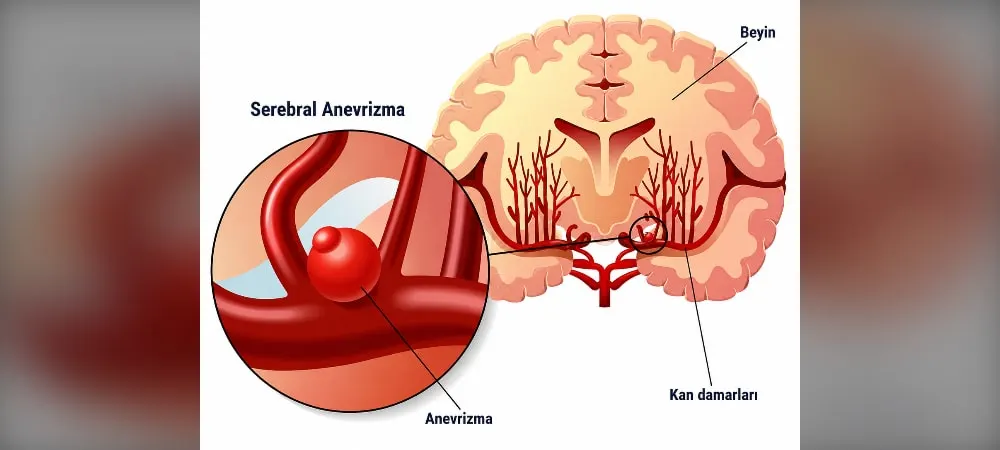
What is an aneurysm? It is a protrusion or ballooning that occurs as a result of the weakening of the wall of an artery in your brain. It often appears like a piece of fruit hanging from a branch on a brain MRI or CT scan. In one out of every 10 people, the rupture of this balloon can lead to a brain hemorrhage and manifests itself with symptoms such as severe headache, nausea, and sensitivity to light.
A brain aneurysm is actually the bulging and ballooning of a weakened blood vessel in the brain. This is also called an aneurysm in the brain or a bubble in the brain, and its size is quite small - usually ranging between 0.3 cm and 2.54 cm. High blood pressure, smoking, and advanced age are among the most common causes of brain aneurysms.
Most brain aneurysms show no symptoms until they rupture. However, regular health check-ups are important, especially for people with a family history. In this article, we will briefly provide information about aneurysms and explain what a brain aneurysm is, its symptoms, and how it is treated in clear and understandable language.
What is an aneurysm?
Aneurysm, an important term in medical terminology, is a medical term that describes a ballooning that occurs at a weak point in an artery wall. This condition is an expansion or swelling caused by a weakness in the wall of a blood vessel. It occurs when the vessel wall loses its integrity and elasticity and bulges outward. This ballooning part has a much thinner and weaker structure compared to a normal vessel.
First, you should know that an aneurysm starts as a weak point in the blood vessel wall and swells into a bubble shape due to blood pressure. This weakening can increase over time, creating a dangerous situation. When the wall of an aneurysm thins, it can rupture at its weakest point, causing bleeding.
Most common locations in the body
Although aneurysms can form in different parts of the body, they are more common in certain areas. They most commonly form in the brain arteries (Circle of Willis) and the aorta. They can also occur in critical areas such as the brain, heart, and major arteries.
A notable point is that aneurysms are much more common in arteries than in veins. Specifically:
- Brain vessels
- Aorta (the body's main artery)
- Abdominal aorta
- Peripheral arteries
Aneurysms in these areas carry different levels of risk. Research has shown that aneurysms are more prevalent in adults. A brain aneurysm is a serious disease that affects approximately 3% of all adults and whose incidence increases with age.
What is an aneurysm in the brain?
A brain aneurysm is a ballooning that occurs as a result of the weakening of the artery wall in the brain and is often seen at the branching points of vessels. Also known as a cerebral aneurysm or intracranial aneurysm, this condition is formed by the weakening or swelling of the wall of a blood vessel in the brain.
Brain aneurysms often resemble a round fruit on a branch and are usually located at the base of the brain. The most common area is the network of blood vessels at the base of the brain called the Circle of Willis.
However, the rupture of a brain aneurysm is called a subarachnoid hemorrhage and can lead to serious consequences. This bleeding occurs in the space between the brain and the thin tissue covering the brain. Approximately half of the patients who experience an aneurysm rupture lose their lives due to the hemorrhage and other medical problems caused by the bleeding.
Today, thanks to advanced medical imaging methods, a significant portion of brain aneurysms can be diagnosed and treated before bleeding occurs. The annual rupture risk of brain aneurysms is approximately 1%.
How does a cerebral aneurysm form?
The formation of a brain aneurysm is closely related to the weakness in the artery wall and blood pressure. First, a weakness or defect occurs in the middle muscle layer (tunica media) of the three layers of the vessel wall. This weakness expands over time due to the pressure created by the heart pumping blood into the arteries, turning into a ballooning.
Aneurysms mostly form at the branching points of vessels because these areas are weaker. They are especially common in the network of vessels at the base of the brain called the Circle of Willis. The aneurysm wall, which thins over time, can rupture at its weakest point, causing a brain hemorrhage. In this case, bleeding usually occurs in the space between the brain and the thin membrane covering the brain, which is called a "subarachnoid hemorrhage."
Who is it more common in?
A brain aneurysm is a disease that affects approximately 3% of all adults and whose incidence increases with age. Despite this, it can be seen at any age, but it is more common in adults between the ages of 30-60. Interestingly, it is more common in women than in men.
There are some factors that increase the risk of developing a brain aneurysm:
- High blood pressure: One of the most important risk factors
- Smoking: Increases the risk of both formation and rupture
- Excessive alcohol consumption: Can cause weakening of the vessel wall
- Genetic factors: The risk is higher in people who have a first-degree relative with an aneurysm
- Certain hereditary diseases: Such as polycystic kidney disease, Ehlers-Danlos syndrome
- Drug use: Especially cocaine use increases the risk
In addition, aneurysmal brain hemorrhages account for a significant portion of all spontaneous subarachnoid brain hemorrhages, and the incidence rate is 15 per 100,000. In more than 70% of these hemorrhages, patients are found to have a cerebral vascular aneurysm when examined.
Why do brain aneurysms occur?
The weakening of the walls of the brain arteries is the main reason underlying the formation of an aneurysm. As a result of this weakening, when the vessel wall is not strong enough to withstand blood pressure, bubble-like swellings occur. Many factors play a role in the formation of these swellings.
High blood pressure and vessel weakness
High blood pressure is one of the most important risk factors for the formation and rupture of brain aneurysms. Constantly high blood pressure weakens the artery walls, increasing the risk of ballooning in these areas over time. In particular, uncontrolled hypertension can lead to irregularities and thinning of the vessel wall, causing the aneurysm to grow.
Research shows that approximately 40-50% of the adult population is affected by hypertension and half of the patients are unaware of their high blood pressure. Furthermore, two out of every three people over the age of 65 are affected by hypertension.
Genetic factors and hereditary diseases
Genetic factors play an important role in people with a family history of brain aneurysms. The risk of developing an aneurysm is four times higher in people who have a first-degree relative with an aneurysm. The risk is even higher if two or more first-degree relatives have a brain aneurysm.
Some hereditary diseases also increase the risk of aneurysm:
- Connective tissue disorders such as Ehlers-Danlos syndrome
- Polycystic kidney disease
- Marfan syndrome
- Hereditary hemorrhagic telangiectasia
However, new research has shown a link between genes on chromosomes 2, 8, and 9 and the risk of brain aneurysm.
Smoking, alcohol, and lifestyle effects
Smoking is a significant risk factor for both the formation and rupture of an aneurysm. Smoking causes the artery walls to weaken and damages blood vessels, increasing the risk of aneurysm. The rate of aneurysm expansion in patients who smoke is 6-8 times higher than in those who do not.
In addition, excessive alcohol consumption contributes to the formation of aneurysms by weakening the vessel walls. In particular, the use of drugs such as cocaine increases the risk of aneurysm by raising blood pressure.
Head trauma and infections
In some cases, an aneurysm can also develop after head trauma. Serious blows to the head can create weakness in the vessel walls, paving the way for the formation of an aneurysm.
Additionally, some blood infections can trigger the development of an aneurysm. Infections can cause inflammation in the vessel wall and, consequently, weakening.
It is estimated that approximately 3-5% of the Turkish population has an aneurysm in their brain vessels. Every year, approximately 7000-8000 of these aneurysms rupture, causing blood to flow into the space around the brain, potentially leading to stroke, brain damage, or death.
What are the symptoms of a brain aneurysm?
Brain aneurysms are mostly silent and can remain for a long time without showing symptoms. First, it should be stated that aneurysm symptoms usually appear when the bubble ruptures or leaks. However, in some cases, unruptured aneurysms can also lead to various complaints.
Sudden and severe headache
The most fundamental and typical symptom of a ruptured brain aneurysm is a sudden, severe headache. Patients often describe this as the "worst headache of my life." This pain is the most important sign of a ruptured aneurysm and is a condition that requires emergency medical intervention.
The headache may worsen, especially during straining, heavy lifting, exercising, or sexual activity. Furthermore, research shows that 30% of aneurysmal subarachnoid hemorrhages occur during sleep. In some patients, "warning headaches" may even be seen before the hemorrhage; studies show that 15-50% of patients experience sudden headaches due to leakage 6-20 days before the rupture.
Visual disturbances and sensitivity to light
Symptoms experienced by patients after an aneurysm hemorrhage include:
- Blurred or double vision
- Extreme sensitivity to light (photophobia)
- Drooping eyelid
- Dilation of the pupil
- Sudden vision loss
These symptoms, especially when seen together with a sudden severe headache, can be a harbinger of an aneurysm that is about to rupture or has just ruptured, and you need to seek medical help immediately.
Nausea and loss of consciousness
Other important symptoms seen in the case of an aneurysm hemorrhage are:
- Severe nausea and vomiting
- Neck stiffness or nuchal rigidity (usually appears 6-24 hours after the hemorrhage)
- Loss of consciousness or confusion
- Speech disorders
- Seizures
- Weakness or paralysis on one side of the body
Blood released when an aneurysm ruptures can damage brain tissue and increase intracranial pressure. It can also lead to a condition called hydrocephalus by blocking the normal flow of cerebrospinal fluid within the skull.
Symptoms of an unruptured aneurysm
Unruptured aneurysms mostly do not show symptoms. According to the Brain Aneurysm Foundation, there are approximately 6 million people in America with an unruptured aneurysm, and 50-80% of these may never rupture. However, in some cases, the aneurysm can grow and put pressure on surrounding brain tissues and nerves.
Symptoms that can be seen in this case:
- Pain above or behind the eye
- Dilated pupil
- Vision difficulties or double vision
- Numbness on one side of the face
- Dizziness
- Seizures
Especially in a person without diabetes, the sudden development of a drooping eyelid is a symptom that creates high suspicion for the presence of an aneurysm.
If you are experiencing any of the above symptoms, it is vital that you consult a doctor as soon as possible. Every year in America, approximately 30,000 people experience a brain hemorrhage due to an aneurysm rupture, and approximately 40% of these people lose their lives.
How is a brain aneurysm diagnosed and treated?
When a brain aneurysm is suspected, the diagnosis and treatment process can be life-saving. Doctors use various imaging methods to confirm the presence of an aneurysm and determine the treatment plan.
CT and MRI imaging methods
When you apply to the hospital with a sudden and severe headache, a brain computed tomography (CT) is performed first. This test is the first step used to investigate the presence of a brain hemorrhage. During a CT scan, contrast material is usually injected to see the vessels better. If no hemorrhage is seen on the CT but your symptoms are consistent with an aneurysm, a cerebrospinal fluid sample may be taken from the waist.
Magnetic Resonance (MRI) imaging is the first-line test used in the diagnosis of unruptured brain aneurysms. The MR angiography examination takes about 15-20 minutes and does not require any drug injection. This method can detect the presence of an aneurysm by showing the vessels and arteries in the brain in detail.
Cerebral angiography
Catheter angiography (DSA) is considered the "gold standard" method for the diagnosis and treatment planning of brain aneurysms. In this procedure, a thin, flexible tube (catheter) is usually inserted into an artery in the groin and reached to the brain vessels. A special dye is injected to make the vessels visible.
This method shows the exact location, size, and vascular structure of the aneurysm most clearly. The cerebral angiography procedure takes about an hour, and the patient can usually be discharged on the same day.
Surgical clipping
Surgical clipping is a surgical technique applied to close the aneurysm. Under general anesthesia, the neurosurgeon opens a part of the skull to reach the aneurysm and places a small clip, usually made of titanium, on its neck. This clip prevents blood flow from entering the aneurysm, eliminating the risk of rupture.
The hospital stay after the procedure is usually 5-7 days. It takes about 10 days for the stitches to be removed, and full recovery can take anywhere from a few weeks to a few months.
Endovascular treatment
Endovascular treatment (closed method) is a less invasive procedure performed from inside the vessel without opening the skull. The aneurysm is reached through a thin catheter inserted into the artery in the groin area. The aneurysm is filled with platinum coils to prevent blood from entering it.
After this method, patients are usually discharged within 2-3 days and can return to their normal lives within a week. Today, endovascular treatment has become the first choice in brain aneurysm treatment.
Things to consider after treatment
The recovery process after treatment varies depending on the method applied. Follow-up angiography after endovascular treatment is performed after 6-12 months and 2 years, while after surgical clipping, it is performed within the first week and after 1-2 years.
During the recovery process, you should avoid heavy lifting, strenuous activities, and driving. You should also quit smoking, keep your blood pressure under control, and use the medications recommended by your doctor regularly. If unusual symptoms such as pain or swelling in the groin area lasting longer than a week develop, you should consult your doctor immediately.
8 Frequently asked questions about brain aneurysms
1. Does a brain aneurysm recur?
A treated brain aneurysm may recur in some cases. The success rate in aneurysms treated with the clipping method is quite high, and recurrence is not seen in more than 97% of fully closed aneurysms. In those treated with endovascular methods (coils, stents), the risk of recurrence is around 15-20%. The probability of aneurysm recurrence is higher, especially in patients who continue to smoke, whose blood pressure is not controlled, or who consume excessive alcohol.
2. Is a brain aneurysm genetic?
Yes, a brain aneurysm is partially genetic. The probability of having an aneurysm in the siblings of a person who has previously had a brain aneurysm is four times higher. The risk of aneurysm is high in some congenital diseases: hereditary connective tissue disorders such as Ehlers-Danlos syndrome, polycystic kidney disease, and people with a family history of aneurysm are at higher risk. New research shows that genes on chromosomes 2, 8, and 9 may increase the risk of brain aneurysm.
3. Is surgery risky?
Like every surgical procedure, brain aneurysm surgery also has risks. In unruptured aneurysms, surgical mortality is reported as 2.6% and morbidity as 10.9% on average. If the aneurysm has ruptured, the risk increases. The size and location of the aneurysm and the general condition of the patient affect the risk factors. However, remember that an untreated aneurysm can lead to more serious consequences.
4. What is the recovery process after surgery?
The recovery process varies according to the method applied. After endovascular treatment (closed surgery), patients are usually discharged within 2-3 days and can return to their normal activities within a week. After open surgery (clipping), patients stay in the hospital for about 5-7 days, and full recovery can take 4-6 weeks. There may be temporary symptoms such as fatigue, pain, confusion, and dizziness after surgery.
5. Is an asymptomatic aneurysm dangerous?
Asymptomatic (no symptoms) aneurysms are generally not dangerous, but there is always a risk of rupture. An aneurysm becomes dangerous when it ruptures. The annual rupture risk is approximately 1-2%. Larger aneurysms (>10mm) carry a higher risk, and the rupture risk is increased 11-fold. The probability of rupture of aneurysms over 25mm within 2 years is 70%.
6. What should people with a brain aneurysm pay attention to?
People diagnosed with an aneurysm should have their blood pressure checked regularly and keep high blood pressure under control. They should also not do heavy sports, not lift heavy objects, and avoid activities that may cause sudden increases in blood pressure. They should stay away from smoking and alcohol consumption, not use painkiller medications without a doctor's recommendation, and go to their regular check-ups.
7. Can an aneurysm be treated with medication?
It is not possible to treat brain aneurysms with medication. The purpose of aneurysm treatment is to eliminate the risk of brain hemorrhage that may develop due to the rupture of the aneurysm, and this can only be achieved with surgical clipping or endovascular treatment. If left untreated, there is always a risk of the aneurysm rupturing.
8. Can an aneurysm be understood before it ruptures?
Yes, thanks to advanced medical imaging methods, unruptured aneurysms can be detected. They are usually detected incidentally during brain MRI or CT scans performed for other reasons. Large aneurysms can sometimes cause symptoms such as eye pain, double vision, facial numbness, or headache. The sudden development of a drooping eyelid in a person without diabetes is an important clue regarding the presence of an aneurysm.
Conclusion
In conclusion, a brain aneurysm is a serious health problem that can pose a life-threatening risk. This ballooning that occurs on the wall of a vessel in the brain can lead to a brain hemorrhage when it ruptures. It is vital that you seek medical help without delay, especially when you experience symptoms such as sudden and severe headache, nausea, and sensitivity to light.
Early diagnosis of an aneurysm greatly increases the success of treatment. Today, thanks to advanced imaging methods, aneurysms can be detected and treated before bleeding occurs. Therefore, it is important to have regular health check-ups if you are in the risk group.
There are effective methods such as surgical clipping and endovascular treatment in the treatment of brain aneurysms. The success rates of these treatments are quite high. However, quitting smoking, keeping blood pressure under control, and adopting healthy lifestyle habits are vital in the post-treatment process.
Remember that the risk of brain aneurysm can increase with high blood pressure, smoking, and genetic factors. Therefore, keeping these risk factors under control, exercising regularly, and eating healthy are among the preventive measures. Additionally, if there is a family history of brain aneurysm, you can consult your doctor and have screening tests done.
In light of all this information, it is important to be aware of brain aneurysms and take action to reduce risk factors. Acting quickly if you experience suspicious symptoms can be life-saving. Ultimately, with the diagnostic and treatment opportunities offered by modern medicine, a brain aneurysm is a treatable health problem.
What is an aneurysm, what are the symptoms of a brain aneurysm, and how is it treated? Learn the causes, symptoms, and treatment methods of an aneurysm in this article.
Fill Out the Form for Detailed Information and Contact!
Start with the right assessment for What is an Aneurysm? What is a Brain Aneurysm? What Are Its Symptoms?
Share your symptoms with our specialist physicians; let us determine the right diagnosis and treatment plan together.
Warning
If your symptoms started suddenly, are progressing rapidly, or significantly restrict your daily life, consult a physician without delay.
Plan your What is an Aneurysm? What is a Brain Aneurysm? What Are Its Symptoms? journey with our specialists.
Fill in the form or book an appointment to learn about treatment options, the process and preparation.