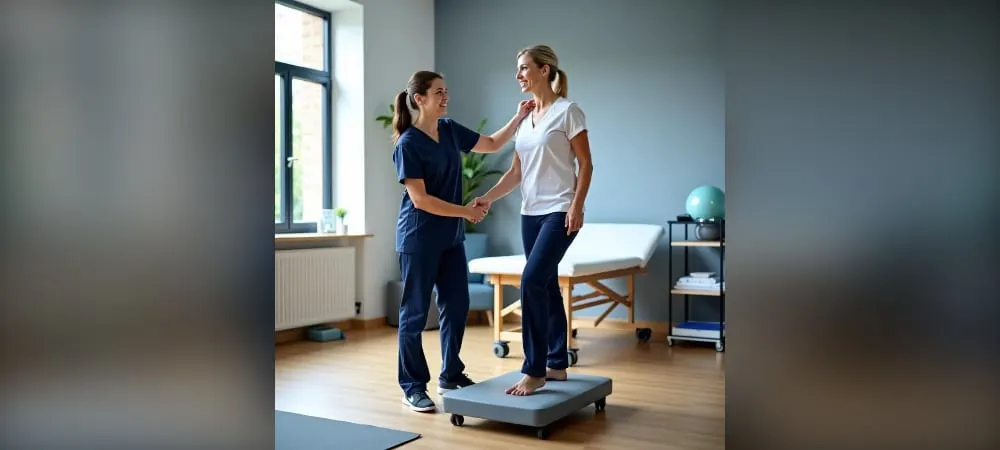
Dizziness and balance problems you experience due to vestibular system issues can negatively affect your daily quality of life. Vestibular rehabilitation therapy can help you manage these symptoms. Although this treatment may not completely resolve the underlying issue, it enables you to keep your symptoms under control.
In this article, you will find answers to what the vestibular system is, why vestibular system rehabilitation is performed, and how it is carried out. We will also cover topics such as the peripheral vestibular system, the vestibular system in infants, and the ear vestibular system.
What is the Vestibular System?
In your inner ear, there is a special structure that allows you to perceive your balance and position in space. The vestibular system constantly sends information to the brain by detecting your head movements. Thanks to this system, you maintain your balance while walking and see your surroundings clearly when you turn your head.
The vestibular system is located right next to your hearing organ. Although it covers a very small area, it has a complex structure. It consists of three main components: the semicircular canals, the utricle, and the saccule.
Ear Vestibular System
The vestibular system in the inner ear plays a critical role in balance control. Structurally, it contains three semicircular canals. These canals stand at right angles to each other and are filled with fluid.
When you move your head, the fluid in the canals also moves. The fluid movement stimulates the sensitive hair cells on the canal walls. These cells convert mechanical movement into electrical signals.
The semicircular canals detect the rotational movements of your head. They detect movements such as looking right and left, and tilting the head. The utricle and saccule, on the other hand, undertake a different task.
There are calcium carbonate crystals inside these two small sacs. The crystals sense gravity and linear movements. You feel movements such as going up and down in an elevator or accelerating in a car.
The vestibular system also regulates eye movements through the signals it sends to the brain. Because of this, the image does not blur while you are walking or running, even though your head is shaking. The brain moves your eyes in the exact opposite direction of your head's movement.
Peripheral Vestibular System
The peripheral part of the vestibular system includes structures in the inner ear. The vestibular nerve, vestibular ganglion, semicircular canals, and otolith organs make up this section.
The peripheral system collects movement information and transmits it to the brain. When the hair cells are stimulated, signals go to the brainstem via the vestibular nerve. From there, they are distributed to different regions of the brain.
The vestibular nuclei in the brainstem process the incoming information. It also combines this with data coming from the eyes, muscles, and joints. These three systems work together to provide your balance.
When there is a problem in the peripheral vestibular system, dizziness occurs. Incorrect or incomplete information is transmitted to the brain. You experience imbalance, nausea, and visual blurring.
Vestibular System in Infants
The vestibular system begins to develop in the womb. The inner ear begins its development in the 3rd week of embryonic life. By the fifth month, it is fully completed.
The vestibular system of babies starts working as soon as they are born. This is the first system to become active. Activities in the subsequent period support its development.
In infants, the vestibular system forms the basis of all senses. It helps other senses work in a balanced way. It ensures a sense of security against gravity.
The system also contributes to the development of muscle strength. It provides the information necessary for bilateral coordination. It supports the correct functioning of the senses of vision and hearing.
It provides information on moving and establishing balance. Your baby understands whether they are moving, stopped, or which direction they are turning in. Therefore, it is important to engage in activities that require movement.
In Which Conditions is Vestibular Rehabilitation Performed?
Vestibular system rehabilitation is offered as a treatment option for various balance and dizziness problems. This exercise-based therapy program yields effective results in different disease groups. After a correct diagnosis is made, it is initiated under the supervision of a specialist.
Vertigo and Dizziness
BPPV, known as dislodged crystals, is the most common cause of dizziness. It occurs when the crystals in the inner ear move out of their normal positions. Although treated with canalith repositioning maneuvers, imbalance persists in some patients.
If you have remaining complaints after treatment, vestibular system rehabilitation comes into play. It accelerates the brain's adaptation process. It also benefits patients who experience blurred vision during movement.
Dizziness caused by vestibular migraine is also among the conditions requiring rehabilitation. It is applied during periods of imbalance outside of migraine attacks. Individuals experiencing motion sickness can also benefit from this treatment.
Meniere's Disease
An increase in fluid pressure in the inner ear causes Meniere's disease. During attack periods, severe dizziness, tinnitus, and hearing loss are observed. However, rehabilitation is not applied during the acute attack period.
Vestibular system rehabilitation is recommended for persistent imbalance during periods between attacks. The fluctuating course of the disease can affect treatment success. If the period between attacks is long, you will benefit more from rehabilitation.
Patients experiencing attacks less frequently than once a month are particularly good candidates. Although the treatment success rate is low in patients with a fluctuating course, the chance of success increases with correct patient selection.
Labyrinthitis and Vestibular Neuritis
Vestibular neuritis is the inflammation of the balance nerve due to a viral infection. It manifests itself with sudden onset severe dizziness. Nausea, vomiting, and imbalance accompany it.
Acute symptoms last 3-5 days. Drug treatment is applied during this period. After acute symptoms pass, vestibular rehabilitation should be initiated. Early-initiated rehabilitation accelerates brain adaptation.
The typical rehabilitation duration is 6-12 weeks. At the end of this period, eighty-five percent of patients return to normal life. The development of BPPV after vestibular neuritis is frequent. It is seen at a rate of approximately ten to fifteen percent.
Labyrinthitis, on the other hand, is the inflammation of the balance structures in the inner ear. Hearing-related problems may also accompany it. Rehabilitation is applied during the recovery period.
Traumatic Brain Injury
Balance problems may develop after head trauma. Traffic accidents, falls, or sports injuries lead to this condition. Motor problems, coordination disorders, and loss of balance are observed.
In traumatic brain injury, the rehabilitation program is tailored according to the patient's needs. It includes balance exercises, walking drills, and coordination activities. Early-initiated rehabilitation accelerates the recovery process.
Patients at Risk of Falling
Balance problems and falls are seen with increasing frequency in the elderly. Vertigo, loss of balance, and decreased muscle strength increase the risk of falling. Falls cause not only physical injuries but also fear of movement and loss of self-confidence.
Approximately thirty percent of individuals over the age of sixty-five fall at least once a year. Vestibular system rehabilitation is particularly beneficial in fall prevention programs. Structured exercises reduce the frequency of falls by forty to fifty percent.
Patients with a previous history of falling, those who develop balance problems after a stroke, and those with gait disorders benefit from this treatment.
How is Vestibular System Rehabilitation Performed?
Vestibular rehabilitation is built on scientifically based exercise programs. It is applied to correct complaints due to inner ear and balance system disorders. The program usually lasts 6-8 weeks. Exercise instruction is provided with the assistance of a specialist in the first week, and you continue as a home program in the following weeks.
Treatment is built on four basic mechanisms. The first is gaze stabilization. It ensures maintaining visual focus during head movement. The second is habituation. It aims to reduce symptoms through the repetition of triggering movements and positions. The third is substitution. It involves the increased use of visual and sensory information in balance control. The fourth is adaptation. It enables the central nervous system to learn to correct errors.
Eye Movement Control Exercises
The reflex that ensures your eyes stay focused while your head is in motion can sometimes be disrupted. Gaze stabilization exercises correct this problem. If you experience blurred vision during movement, these drills will benefit you.
The X1 exercise is the basic drill. Fix your eyes on an object and turn your head right and left. You should perform the movements as quickly as possible. Nausea and vomiting are the measure of your speed.
The X2 exercise is a more advanced level. You fix your eyes on an object, and while you move your head to one side, the object is moved in the opposite direction. This exercise strengthens brain adaptation.
Ocular motor drills are also included in the program. Hold a card at arm's length, keep your head steady and follow the card with eye movements. Then gradually speed up. Additionally, you can perform the exercise of focusing on your fingers as they are brought closer to your face.
Balance Training Exercises
Balance drills are an important part of vestibular rehabilitation. Romberg stance, tandem stance, and single-leg exercises are standard components. You try to maintain balance during static and dynamic movements.
You may need to exercise on variable surfaces. You can work on a hard floor, sponge, or pillow. You experience various positions by standing with eyes open or closed.
You exercise in environments where vestibular, visual, and sensory stimuli change. For example, a lamp is placed on the patient's waist or shoulders. Weight-shifting work is performed to drop the light onto targets determined on the wall.
Improving somatosensory and visual systems is also aimed. Techniques such as reducing the support base and changing visual stimuli are used. These techniques help you cope with the challenges you may encounter in daily life.
Walking Exercises
Walking exercises with head turns are included in the program. You walk inside the room first with your eyes open, then with your eyes closed. You can repeat the same drill on an inclined surface.
Stair climbing activities are performed. You carry out this movement with eyes open and closed. Treadmill walking can also be applied. Activities in virtual reality or optical flow environments are used in current protocols.
Stepping forward on heels is a useful exercise. Walking on tiptoes also helps you develop balance. You step forward and then backward by placing your feet so that the toes of one foot touch the heel of the other foot.
Stretching and Strengthening Movements
Brandt-Daroff exercises are an example of the habituation principle. Cawthorne-Cooksey exercises are also included within the standard program. Eye-head coordination drills are applied regularly.
Relaxation, flexibility, and strengthening movements support body balance. Proprioceptive exercises can also be added to the program. Conditioning exercises increase the level of cardiovascular endurance. They raise tolerance to head and body movements.
Strengthening specific muscle groups related to walking and balance is important. Visual and sensory feedback techniques are used. Virtual reality-based rehabilitation is applied in current protocols.
Benefits and Risks of Treatment
Before starting the treatment process, you should know what vestibular system rehabilitation will bring you and in which situations you need to be careful. This information helps you build realistic expectations and start treatment prepared.
Benefits of Vestibular Rehabilitation
Vestibular system rehabilitation reduces your complaints by activating the brain's adaptation mechanisms. It accelerates the central compensation process, and brings dizziness and postural disorders under control. You feel safer in daily life, and the difficulties you experience in participating in active life decrease.
The frequency and severity of dizziness attacks drop significantly. Eighty-five to ninety percent of patients see recovery within 4-12 weeks. An early-initiated program, when applied within the first 4 weeks, makes the results 6 months later forty percent better.
It makes a serious contribution to fall prevention. It prevents falls that could lead to bone fractures, especially in the elderly age group. Structured exercises and postural balance drills reduce the frequency of falls in elderly patients by forty to fifty percent. This rate significantly lowers the risk of injury due to falls.
You experience improvement in your visual problems. You regain your ability to read and focus while your head is moving. Visual clarity during movement increases. Spatial orientation problems decrease.
Your social life is positively affected. Patients who shut themselves at home with the fear of "What if I get dizzy" regain their self-confidence and return to social life. The treatment prevents you from experiencing anxiety and isolating yourself from society. Your quality of life increases, and the recovery process accelerates.
Your dependency on medication decreases. It is a safe, effective, and non-invasive form of treatment. It can be successfully applied in patients of all age groups.
Possible Risks and Considerations
The problems you may encounter during vestibular rehabilitation are generally mild and manageable. At the beginning of the exercises, you may experience nausea, a temporary increase in the feeling of imbalance, and headache. These symptoms are considered normal and pass quickly.
Some patients notice a temporary increase in their symptoms during the exercise. These situations are brought under control by adjusting the intensity and duration of the exercises. If you report it to your specialist, the program is adapted for you.
Patient compliance is of critical importance. You must perform home exercises regularly 2-3 times a day, for 15-20 minutes in each session. Keeping an exercise diary, performing symptom scoring, and attending control visits regularly directly affect the results. Skipped exercises can prolong your recovery by weeks.
In some cases, treatment is not applied or is postponed. Rehabilitation is not initiated during an acute Meniere's attack. The program is not applied in the first 72 hours of acute vestibular neuritis. The program is modified or delayed in patients with an active central neurological event, severe cardiac instability, and neck movement restriction.
As a result of long-term unsuccessful rehabilitations, some patients may resort to compensatory strategies. Avoiding provocative movements and restricting neck mobility can become a common approach. However, these restrictions are not appropriate under all conditions and can be harmful in the long run.
You should not have the expectation that vestibular rehabilitation will completely eliminate the impairment under all conditions. In some patients, symptom control and an increase in quality of life are targeted instead of complete recovery.
Frequently Asked Questions
There are topics that patients wonder about the most during the treatment process. These questions serve as a guide on what to expect and how to prepare throughout the program.
How long does the treatment last?
Vestibular system rehabilitation is generally applied in the form of 4-8 week programs. However, the duration varies depending on the type of disease and the degree of your remaining balance reserve. While some patients recover within 6 weeks, the process may extend up to 6 months in others.
Programs lasting a total of 6 to 12 weeks, with 1-2 sessions per week, are common. Daily sessions are planned between 50-60 minutes. In conditions like dislodged crystals, even single-session interventions can be a solution.
It is important for you to start treatment as early as possible. There is a delay in recovery when visual and motor experience is delayed. You may see a slight increase in your symptoms within the first 2 weeks. This condition is known as the habituation response and is normal. Noticeable recovery begins from the third and fourth weeks. Maximum benefit is seen in the sixth and eighth weeks.
Is it necessary to do home exercises?
Most vestibular system exercises are designed to be performed at home after being planned by a specialist. Home exercises are as important as clinical applications. Regularly performed exercises support the brain's adaptation process.
Generally, rehabilitation is carried out in two ways. In the first method, a program specific to you is prepared, then taught, and you apply it at home. The physiotherapist visits you at home at certain intervals or gets information by phone. The second method is preferred more. The program prepared specifically for the patient is applied in the center for 4-8 weeks with the assistance of a specialist on certain days of the week.
Accurate diagnosis and detailed evaluation are of critical importance. The specialist demonstrates how to perform the exercises in the correct form. Expert supervision is important, especially during the initial phase and when the program is updated. Self-performed exercises can reduce the response. Unconsciously performed drills can worsen symptoms or increase the risk of falling.
In case of which symptoms should I consult a doctor?
Certain symptoms may manifest themselves during exercises. If you experience sudden changes or fluctuations in your hearing, a specialist evaluation is required. If pain, a sense of pressure, and fullness develop in your ear, it must be reported. Consult your doctor if you experience newly starting or increasing ringing in your ears.
If you feel pain in your neck or back during exercises, the program should be adjusted. Recurrent dizziness attacks require specialist evaluation. Risk of falling while walking, dizziness accompanied by hearing loss, and a long-lasting feeling of imbalance are important warning signs.
Some serious symptoms require immediate medical attention. Sudden and severe headache, double vision or vision changes, weakness or numbness in the limbs are emergency situations. If you experience difficulty in speaking, difficulty understanding speech, loss of consciousness, or fainting, apply immediately. Early intervention minimizes complications.
Does treatment provide full recovery?
You should not have the expectation that vestibular rehabilitation will completely eliminate the impairment under all conditions. When treatment is successful, permanent recovery is generally achieved. However, in some patients, symptom control and an increase in quality of life are targeted instead of complete recovery.
For chronic conditions like Meniere's disease, the strategy is directed towards increasing compensation. In vestibular neuritis, the goal is to prevent permanent loss of function. The group with unilateral permanent labyrinthine loss of function benefits the most from treatment.
If a new vestibular event develops, exercises can be restarted. Imbalance may develop again after the program, but this indicates a new problem. Permanent recovery is expected after successful treatment.
Vestibular Rehabilitation in Summary
Vestibular rehabilitation is an effective treatment method in keeping your dizziness and balance problems under control. Undoubtedly, when applied with a correct diagnosis and under the supervision of a specialist, the vast majority of patients see significant improvement. Although complete recovery is not always possible, your symptoms decrease and your daily quality of life increases.
Doing home exercises regularly and continuing without skipping specialist check-ups directly affects your success. When you start treatment early, results come faster. Be patient and adhere to the program. Vestibular rehabilitation offers you the opportunity to return to your normal life with confidence.