Which symptoms does prostate enlargement (Benign Prostatic Hyperplasia) cause?
Prostate enlargement (Benign Prostatic Hyperplasia) can lead to complaints such as an increased need to urinate at night, a feeling of needing to urinate frequently, and a weak or irregular urinary stream.
In addition, a feeling of a full bladder, incomplete emptying of the bladder, recurrent urinary tract infections, bladder stone formation, and urinating mostly small amounts at night are also among the general complaints reported by patients.
How is prostate enlargement diagnosed?
Prostate enlargement is diagnosed through physical examination, laboratory tests, and ultrasonography and MRI studies.
Physical examination is a technique used to help evaluate the patient's reproductive system and general health. Laboratory tests are used to measure the size of the prostate and certain chemical values. In addition, ultrasonography or magnetic resonance imaging (MRI) is used to visualize the tissues inside the prostate.
What are the treatment methods for prostate enlargement?
Drug therapy: This treatment option is often used as the first choice for complaints caused by prostate enlargement. For patients with prostatic hyperplasia, medications commonly referred to as alpha blockers are used. These are drugs used to correct urinary flow. In addition, antiandrogens or hormone regulators may be used to prevent prostate growth.
Surgical treatment: Transurethral resection (TUR) is used as a surgical treatment option for prostate enlargement. In addition, other surgical procedures such as Resume, Holep, clipping, and open surgical operations are also widely used. In these operations, the part of the prostate inside that grows and blocks urinary flow is removed.
Medical herbal treatments: Herbal treatments may also be used in the management of prostate enlargement. Some herbal products may be used to prevent prostate growth. These include sabal, serenoa repens, dwarf palm, black seed (Nigella sativa), black seed oil, and radish seed extract.
Prostate embolization treatments: This is a procedure in which the arteries supplying the prostate are closed by entering through the groin vein. It is an outpatient treatment performed under local anesthesia, and rapid recovery is generally achieved. Bleeding, infection, sexual dysfunction, and urinary incontinence, which are encountered with surgical treatment, do not occur with this procedure. For prostate enlargements that do not respond to drug therapy, it should be selected as a second-line option before surgery.
Apart from these treatment methods, if the prostate has become very large, that is, above 70–85 grams, transurethral resection is generally not sufficient in such cases. The recommended method for these patients is the "open prostatectomy" operation. In this operation, a large part of the prostate is usually removed through an incision made in the lower abdominal region.
With open prostatectomy, complaints related to prostate enlargement may be eliminated; however, side effects such as infection, bleeding, impotence, and urinary incontinence are seen more frequently. For this reason, the application of non-surgical treatments is of greater importance, especially in the patient group with large prostates.
What is prostate embolization?
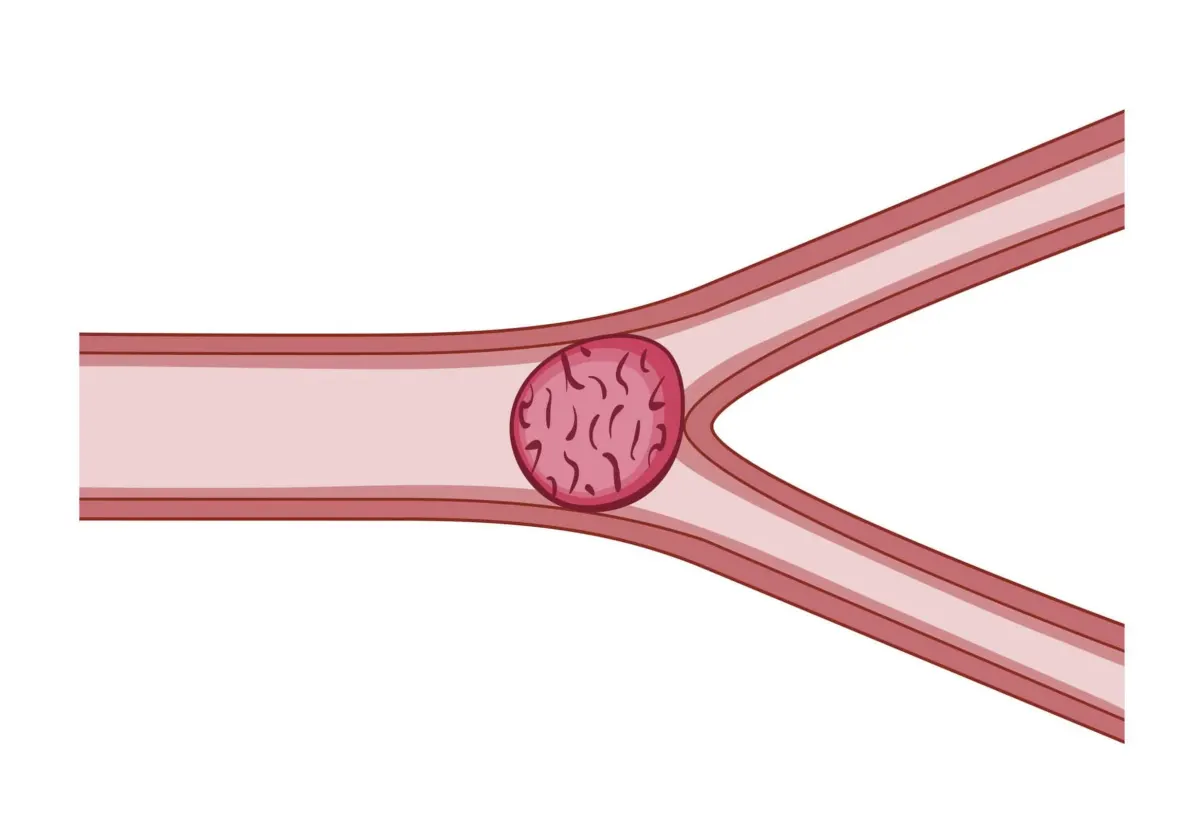
Prostate embolization is defined as the interruption of natural blood flow by blocking it with microparticles delivered into the prostate gland through a small catheter.
This procedure is generally used for the treatment of benign prostatic hyperplasia (BPH), an enlargement of the prostate gland. Prostate embolization is considered an option that is also used to reduce the risks and side effects of surgical procedures.
The particles used in embolization block part of the blood flow to the prostate gland, preventing the prostate from growing. This procedure is generally preferred over standard surgical procedures because of its lower risks and shorter recovery time.
How is prostate embolization performed?
Prostate embolization is a treatment method aimed at reducing the size of the prostate by blocking blood flow to the prostate.
Before the procedure, the patient's PSA values, ultrasound, or multiparametric prostate MRI studies are reviewed, the procedure is explained to the patient in detail, and the patient's consent is obtained.
This method is a procedure generally used to treat prostate enlargement or pain. Prostate embolization is usually performed with a catheter and local anesthesia. Anesthesia is used to numb the area where the groin vein is accessed.
The catheter is placed through a vessel close to the prostate gland. The catheter is used to deliver microscopic spheres and particles used during embolization into the vessel. The particles, called small pellets, are spheres that occlude the vessels.
Prostate embolization generally requires a short hospital stay for patients. Afterwards, your doctor may recommend routine check-ups or other treatment options. After prostate embolization, most patients can return to normal daily activities the next day.
What are the advantages of prostate embolization?
Compared with other treatment methods, the risk of pain, bleeding, or other complications during the procedure is very low.
The procedure time is shorter than the procedure times of surgical procedures.
The risk of affecting the patient's quality of life during and after the procedure is very low.
It provides a short recovery time and successful application of results.
The patient does not need to receive general anesthesia during the procedure.
No surgical instruments need to be applied to the patient during the procedure.
Since many catheters are not used during the procedure, it increases the patient's comfort.
The risk of radiation exposure during the procedure is very low.
The patient does not need to be hospitalized during the procedure.
Urinary incontinence and sexual dysfunction, which are seen with other treatments, are not seen after this procedure.
Which patients is prostate embolization more suitable for?
Prostate embolization is most suitable for men with Benign Prostatic Hyperplasia (BPH – benign prostate enlargements).
This treatment is expected to reduce the size of the prostate gland and alleviate the complaints of treated patients. Prostate embolization is a suitable option that should be tried before surgery, especially for patients who do not respond to the classic medical treatments of BPH.