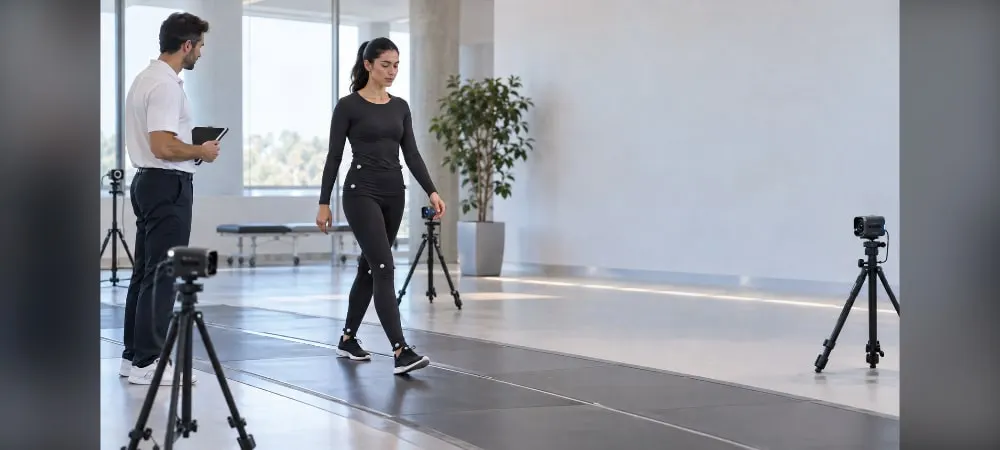
The Gait Analysis Test is an important evaluation method that converts your walking movements—which you perform without even realizing in daily life—into numerical data. In fact, this test is a comprehensive examination process used in the field of physical therapy and rehabilitation to determine the source of your walking-related problems.
Applicable to individuals older than four years of age, gait analysis is performed by experts to evaluate your gait disorders and plan your treatment process. Particularly three-dimensional gait analysis, performed with the help of reflective markers and infrared cameras, is frequently preferred not only for medical purposes but also in the field of sports. This method plays an active role in the treatment of many diseases.
In this article, you will learn in detail what gait analysis is, who it is applied to, how it is performed, and the benefits it provides. Thus, you will understand whether this evaluation method is suitable for yourself or your loved ones.
What is Gait Analysis?
The act of walking, which you perform unconsciously in your daily life, is actually an extremely complex process. Gait analysis is a scientific method that evaluates this complex process with objective and numerical data. This evaluation involves measuring the functions of the neuromuscular-skeletal system and interpreting the results through numbers and graphs.
The difference between walking and gait analysis
Walking is a chain of rhythmic movements repeated in order to get from one place to another. This action, which allows your body to move at the desired speed and direction, actually requires excellent neuronal control. While performing this basic movement, your brain, spinal cord, peripheral nerves, muscles, bones, and joints work together.
Gait analysis, on the other hand, is the systematic examination of the act of walking. Going beyond simple observation-based evaluations, this analysis provides numerical data for every moment of the gait, allowing you to define gait disorders objectively and reliably. In particular, it plays an important role in diagnosis, treatment planning, and evaluation processes by making measurements related to gait kinematics and kinetics.
Gait cycle and its phases
The gait cycle is the process from the heel strike of one foot on the ground to the next heel strike of the same foot. Each gait cycle consists of two main parts:
· Stance phase: Covers approximately 60% of the gait cycle and includes the period when your foot is in contact with the ground. This phase is divided into five sub-phases: initial contact, loading response, mid-stance, terminal stance, and pre-swing.
· Swing phase: Makes up the remaining 40% of the cycle and covers the period when your foot is in the air. This phase is also divided into three sub-phases: initial swing, mid-swing, and terminal swing.
During this cycle, the deviations of your center of gravity in the horizontal and vertical planes are controlled. Therefore, normal gait requires both your central and peripheral nervous systems to work in harmony with the locomotor systems.
The main purpose of gait analysis
The main purpose of gait analysis is to increase the efficiency of your gait and reduce the energy you expend during walking. Thus, you get tired less in your daily life and your mobility increases.
In addition, thanks to this analysis, experts can objectively evaluate your gait disorders, distinguishing primary pathologies from compensatory mechanisms. It is extremely useful for monitoring treatment efficacy, especially in neurological diseases such as cerebral palsy, stroke, and Parkinson's, as well as in orthopedic disorders, sports injuries, and prosthesis-orthosis applications.
This analysis performed by experts not only helps you understand what your problem is, but also assists in creating a treatment plan specific to you. Therefore, gait analysis is a highly valuable evaluation tool in the physical therapy and rehabilitation process.
Who is Gait Analysis Performed On?
Gait analysis is an important diagnostic method that can be applied to different patient groups and used to evaluate various health problems. This analysis can be applied to individuals of any age starting from four years of age. The ability to walk independently is very important for diagnosis. Therefore, performing gait analysis on children under the age of four is generally not appropriate.
Neurological diseases (Cerebral palsy, Parkinson's, etc.)
Neuromuscular diseases are disorders that occur as a result of disrupted communication between the nervous system and muscles. Gait analysis is of great importance in evaluating gait, especially in patients in this group. These patient groups include:
· Cerebral palsy patients: It is an effective method in determining the treatment protocol, especially in children. Various treatments, including surgery, are planned according to the results.
· Parkinson's patients: Gait analysis is used to evaluate gait parameters in individuals with movement disorders, primarily Parkinson's.
· Post-stroke patients: It is applied to guide the rehabilitation process.
· Spina Bifida and Spinal Cord injuries: It is valuable for detecting gait disorders.
Computerized motion analysis systems also help explain the pathophysiological mechanisms of neurological diseases.
Orthopedic disorders
Gait analysis provides important information in many disorders concerning the musculoskeletal system:
· In evaluating joint movements in arthritis patients
· In tracking extremity deformities before and after treatment
· In post-amputation prosthetic applications
· Following the use of hip/knee joint prostheses
· In evaluating the device efficacy of patients using orthoses
Especially in amputees, gait analysis is performed before the prosthesis and repeated for control purposes after the prosthesis is fitted.
Following sports injuries
In actively exercising individuals, gait analysis is used to evaluate injuries and track treatment outcomes. This method is effective in:
· Evaluating the healing process in tendon, ligament, and muscle injuries
· Determining the time for athletes who have undergone surgery to return to competitions
· Objectively monitoring performance development
Additionally, it helps identify biomechanical inefficiencies and imbalances to reduce the risk of injury in athletes.
Developmental follow-up in children
Gait analysis is a valuable tool in monitoring the developmental process in children. In this context, it is used for:
· Evaluating gait disorders such as intoeing and flat feet
· Early detection of developmental disorders
· Measuring the effectiveness of pediatric orthoses and walking aids
When gait disorders in children are not noticed in time, they can lead to more serious health problems in later periods.
Individuals with gait disorders
Gait analysis can be applied to all individuals with a gait disorder, regardless of the cause:
· Those experiencing balance and coordination problems
· Elderly individuals at risk of falling
· Those with abnormalities in parameters such as step length and cadence
· Determining the most appropriate device for people using different walking aids
However, appropriate treatments are initiated after the evaluation, and the gait analysis is repeated for control purposes, preferably at 6 months and at the earliest 3 months later.
Things to Consider Before and After Gait Analysis
Once you schedule an appointment for a gait analysis, there are certain preparations you need to make prior to the test. Completing these preparations correctly ensures that the test results are reliable. It is also important in terms of correctly establishing your treatment plan during the post-analysis process.
Hygiene and clothing preparation before the analysis
Before coming in for the gait analysis, you need to pay attention to your personal hygiene. For your comfort during the analysis, you can bring a t-shirt, shorts, or tights with you.
Why is it important to come with a full stomach?
You must definitely have a full stomach when coming in for the gait analysis. The main reason for this is to ensure that your energy level is sufficient to accurately evaluate your performance. Coming to the analysis on an empty stomach will result in a low energy level, which may also affect your walking performance.
Ideally, it is recommended to consume your main meal 2-4 hours before the analysis. This duration will be sufficient for your stomach to empty and the digestion process to be completed. Additionally, consuming a light snack containing 50 grams of carbohydrates and 5-10 grams of protein 30-60 minutes before the analysis can be effective in boosting your performance.
However, avoiding foods high in fat and fiber will facilitate gastric emptying and prevent stomach problems that may occur during the test. Similarly, it is recommended that you do not consume foods high in fiber such as raw vegetables, fruits, and legumes before the test.
Comparison before and after treatment
Gait analysis is performed at the beginning and end of your treatment process to obtain comparative results. Appropriate treatments are initiated after the initial evaluation, and the gait analysis is usually repeated for control purposes at the earliest 3 months, preferably 6 months later.
Depending on the analysis results, a customized exercise program, physical therapy protocol, or orthopedic intervention may be planned for you. Control analyses performed after treatment offer the opportunity to objectively evaluate the effectiveness of your treatment.
The important thing is that the pre- and post-treatment analyses are performed under the same conditions and with the same parameters. Thus, your progress during the treatment process can be demonstrated with concrete data and necessary adjustments can be made to your treatment plan.
Benefits and Areas of Use of Gait Analysis
Three-dimensional gait analysis holds great value in modern medicine for both diagnosis and treatment processes. Thanks to detailed measurements and evaluations, it enables you to offer effective solutions for many different diseases.
Its role in treatment planning
Gait analysis is the foundational building block of your treatment process. Offering the opportunity for early diagnosis, especially by allowing you to quickly and accurately detect the root cause of the problem, a customized and targeted treatment plan can be created based on the objective data obtained.
The analysis results provide guiding information to the treatment team. It plays a critical role in treatment planning, particularly in musculoskeletal problems, neurological diseases, and sports injuries. Thus, the effectiveness of your treatment can be monitored throughout the process and necessary adjustments can be made.
Through pre- and post-treatment comparison, progress during the rehabilitation process can be seen with concrete data. This allows for an objective evaluation of treatment success.
Evaluation of orthoses and walking aids
Gait analysis allows you to objectively evaluate the effectiveness of the orthosis or walking aids you use. The functionality of the device is tested by performing analyses with and without the orthosis.
In fact, in many cases, analyses are performed with different walking aids to determine the most suitable device for you. This is of great importance in selecting appropriate orthoses, especially for diabetic foot patients.
In individuals using prosthetics, the suitability and function of the prosthesis are evaluated through analysis, and necessary adjustments are made.
Is there a need for annual check-ups?
Gait analysis is generally performed when deemed necessary before and after any intervention (surgery, orthosis use, etc.). Unless your doctor directs you otherwise, there is no need to have it done continuously.
However, an analysis may be requested again following changes in your condition, new complaints, or changes in the treatment plan.
Contribution of gait analysis to the physical therapy and rehabilitation (PTR) process
In the physical therapy and rehabilitation process, gait analysis is not only an evaluation tool but also the backbone of your treatment plan. The analysis aims not only to reduce your pain but also to increase your quality of daily life.
Thanks to gait analysis, the effectiveness of your rehabilitation processes can be increased, and your functional independence and quality of life can be elevated. It is used especially in athletes to improve performance and reduce the risk of injury.
The analysis process can take 30-60 minutes depending on your motor and cognitive abilities. The data obtained during this time are carefully evaluated by your rehabilitation specialist, and your treatment plan is shaped accordingly.
In short, gait analysis has become an indispensable tool in modern physical therapy approaches for both diagnosis and planning treatment processes.
Frequently Asked Questions
We have gathered the most frequently asked questions to answer the queries on your mind during your treatment process and to enlighten you with accurate information. These questions consist of the topics our patients coming to our center are most curious about.
At what age range is gait analysis performed in children? Gait analysis can start to be performed 3 months after your child begins to walk independently. For three-dimensional gait analyses, your child is required to be at least 4 years old, provided they meet certain height and weight criteria.
Should gait analysis be performed on every child? No, gait analysis is not required for every child. This analysis is performed if deemed necessary after a clinical examination in children with walking and foot-strike problems.
How long does a gait analysis take? While observational gait analyses performed only by taking video recordings take around 15 minutes, three-dimensional gait analyses take approximately 2-2.5 hours.
Who can perform gait analysis? Three-dimensional gait analysis must be performed by an experienced team specialized in the field. This team may include physiotherapists, technicians, engineers, and movement scientists.
Are there different types of gait analysis? Yes, analysis types vary according to their purposes. While pedobarographic evaluations only show foot pressure values, observational analyses are done via video recording. Three-dimensional analyses, on the other hand, offer a comprehensive evaluation with computerized equipment.
Should gait analysis be performed continuously like an annual check-up? No, gait analysis is performed when deemed necessary before and after any intervention (surgery, orthosis use, etc.). Unless your doctor directs you otherwise, there is no need to have it performed continuously.
What causes gait disorders? There are many factors that negatively affect walking. These can be classified as neurological problems, developmental issues, genetic factors, and trauma-related causes.
Are gait analysis, foot analysis, and walking analysis the same thing? No, while gait analysis is a method where the entire body is evaluated, foot analyses only cover the evaluation of foot pressure in static standing and during walking.
What kind of problems can gait disorders lead to in the future if left untreated? Gait disorders that are not treated in a timely manner can cause more serious problems in later ages. Deterioration in joint alignments, adverse postural changes in upper and lower level joints, pain, and getting tired easily are examples of these problems.
Gait Analysis in Summary
In conclusion, gait analysis is a valuable evaluation method that converts your walking movement—which you do not notice in daily life—into numerical data. Thanks to this test, experts can find the real source of your walking problem and prepare a treatment plan specific to you.
Applicable to individuals of any age older than four, gait analysis provides great benefits especially if you experience conditions such as cerebral palsy, Parkinson's, or stroke. At the same time, it is effective in guiding your treatment process if you have orthopedic problems or have suffered a sports injury.
During the test, your movements are recorded in three dimensions thanks to special markers placed on your body, and experts use this data to better understand your problem. All you need to do during this process is to complete your pre-test preparations correctly and follow the instructions of the expert team.
However, remember that gait analysis is not a check-up that needs to be done regularly every year. It is only repeated before and after treatment when deemed necessary by your doctor. Thus, the success of the treatment is objectively evaluated.
A properly performed gait analysis in the physical therapy and rehabilitation process not only reduces your pain but also increases your daily quality of life. When gait disorders are detected early and appropriate treatment is initiated, you can prevent more serious problems that may occur in the future.
Gait analysis is not just a test, but an important step on the path to a better quality of life.